Silence & sleep
Snoring and sleeping position: what changes on your side
Published on ·5 min read

Snoring is a noise produced by soft tissue in the throat vibrating as air passes through a narrowed space. The narrower the passage, the faster the air moves, and the more the tissue vibrates. It is a mechanical phenomenon, and that is why a simple change of position can alter its intensity.
This article describes what position changes, what pillow height does, and what falls entirely outside the bedding department. It promises no end to snoring: no pillow makes that promise seriously, and some forms of snoring are a matter for a doctor.
Why the back position encourages snoring
Lying on your back, everything soft in the throat is pulled backwards by gravity. The base of the tongue moves back, the soft palate and uvula drop, and the section available for air shrinks. Air then has to move faster for the same volume, and that accelerated flow makes relaxed tissue vibrate. It is the mechanism most often described behind positional snoring, the kind that appears on the back and eases in other positions.
Two elements make it worse. Muscle relaxation during deep sleep first, which makes tissue more mobile than when awake. Then evening alcohol, which deepens that relaxation, explaining why the same person snores more on some nights. Nasal congestion also plays a part: with a blocked nose you breathe through the mouth, and mouth breathing encourages the soft palate to vibrate.
What switching to your side changes
On your side, gravity no longer pulls the tongue towards the back of the throat but sideways, which leaves more room for air. Many people notice a drop in snoring intensity when sleeping on their side, and it is the first thing common sense suggests trying before anything else. It has to be said plainly: it does not work for everyone, and some people snore in every position.
The real difficulty is staying there, because the body returns to its back during the night without deciding to. A few props help you hold the side position without thinking about it. They cost nothing and can be tested over a few nights, changing one element at a time so you learn what actually works. One simple rule applies: the more comfortable the position, the longer it holds through the night, which is exactly what a pillow at the right height is for.
- ·A pillow wedged behind your back prevents rolling over during the night.
- ·A pillow hugged to the chest steadies the torso and stops it rolling forward.
- ·A pillow between the knees keeps the pelvis straight and makes the position bearable for hours.
- ·A cool, dark bedroom limits the position changes caused by discomfort.
- ·Avoiding alcohol late in the evening, which deepens the relaxation of throat tissue.
Pillow height and the airway
Pillow height acts on the angle of the neck, and so on the geometry of the airway. A pillow that is too high pushes the chin towards the chest: the neck bends and the throat closes, exactly the opposite of what you want. A pillow that is too low lets the head tip backwards, the mouth falls open and breathing becomes oral. Between the two, a height that keeps the head in line with the spine leaves the passage in its most neutral position.
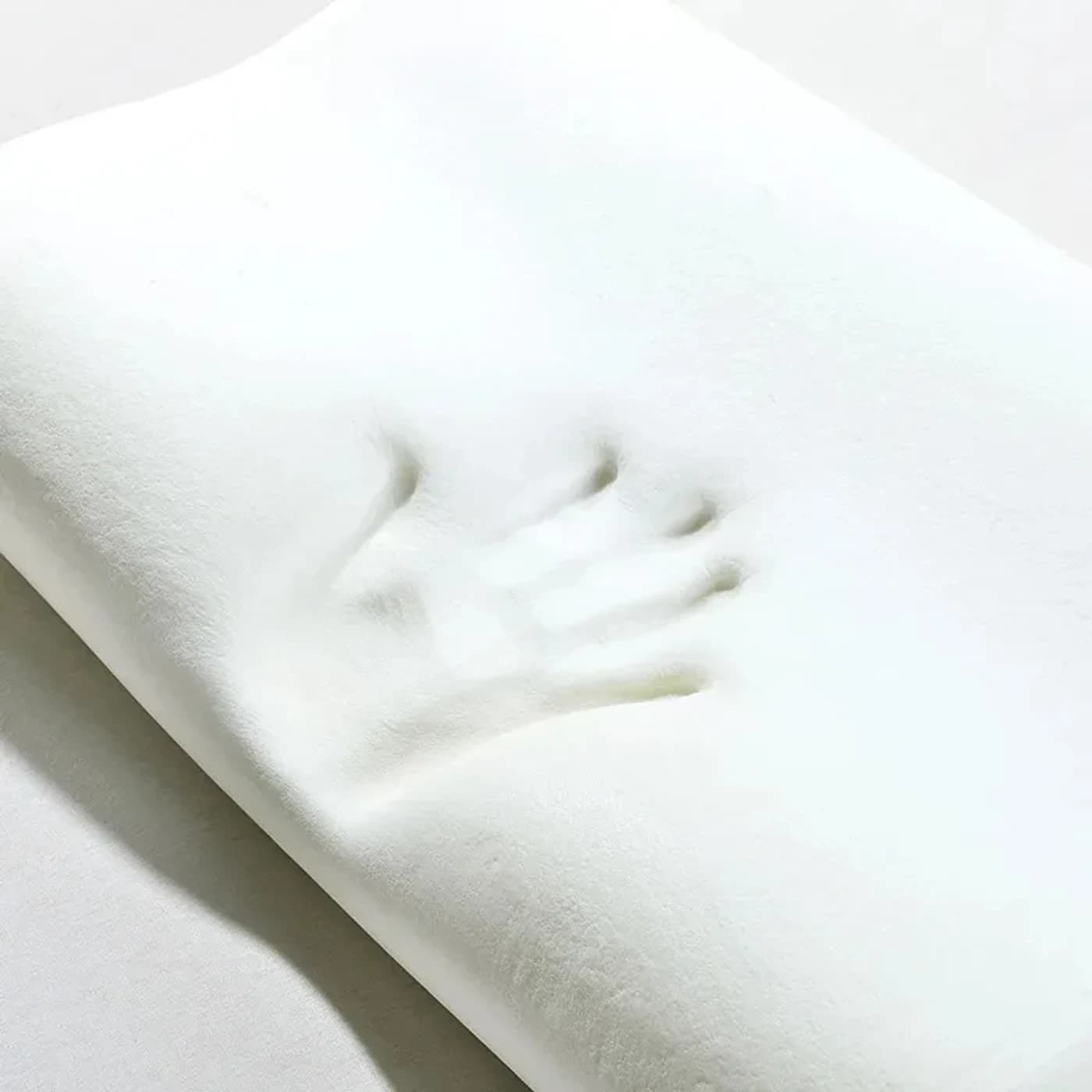
That setting also changes with position: the gap to fill on your side is roughly the width of the shoulder, and far smaller on your back. Le Nuage 50 addresses that with two wave heights on the same pillow, 10 cm for the side and 7 cm for the back, switched by turning it over. It is a posture adjustment, not an anti-snoring device, and nothing more should be promised of it.
What position has nothing to do with
Part of snoring depends neither on the pillow nor on position. The shape of the airway, chronic nasal congestion, a deviated septum, tobacco, weight, alcohol and certain medicines all enter the equation. Changing position can reduce intensity for some people and change nothing for others. This advice concerns comfort and posture, it does not replace medical advice. That is why an honest answer is usually a list of factors rather than a single cause, and why the same advice produces very different results from one household to the next.
One case must be flagged without ambiguity. Loud, regular snoring, together with breathing pauses noticed by a partner, waking with a choking sensation, repeated morning headaches or marked daytime sleepiness, calls for medical advice without delay. That picture is not treated with bedding, and no product in this house should be presented as an answer to it. In that case the useful step is a medical consultation, and everything else, sleeping position included, waits for what it concludes.
The back position encourages snoring because gravity narrows the airway. Sleeping on your side removes that effect for many people, and the right pillow height keeps the neck neutral instead of folding the throat. None of this promises snoring will stop, and snoring with breathing pauses is a matter for a doctor.
Frequently asked questions
Why do people snore more on their back?+
Because gravity pulls the base of the tongue back and lets the soft palate drop, narrowing the airway. Air then moves faster and makes relaxed tissue vibrate. That is the mechanism most often described behind positional snoring.
Does sleeping on your side stop snoring?+
Not necessarily. Many people notice lower intensity on their side, because the tongue no longer falls towards the back of the throat, but some snore in every position. No position guarantees that snoring stops.
What pillow height is right if you snore?+
A height that keeps the head in line with the spine, with the chin neither tucked to the chest nor tipped back. On your side, fill the gap between ear and shoulder. If snoring comes with breathing pauses, see a doctor before buying anything.
The SEY Maison Circle
Every month, an exceptional piece. Never reissued.
The Drops principle: one high-end furniture piece per month, in a numbered edition. Once it's gone, it never comes back. Circle members are notified 48 h early, access each drop 24 h before everyone else, and receive our guides before publication.
Discover the Drops →