
The art of the home
The ideal bedroom for sleep: the complete point by point checklist
Published on ·6 min read
A bedroom that lets you sleep is not a magazine bedroom. It is a room tuned to a few simple physical parameters, three of which really count: temperature, noise and light. The rest, air, bedding, clutter and colours, adds comfort and calm, but never replaces those three.
Here is the complete checklist, point by point, with a figure attached wherever one exists. It takes ten minutes to go through, and most of the corrections cost nothing. It also helps you sort: knowing what is a free adjustment and what is a purchase avoids spending in the wrong place.
Temperature and noise, the two physical settings
The body has to lower its core temperature by about one degree to fall asleep, and it does so faster in a cool room. Recommendations converge between 16 and 19 °C, with tolerance up to about 22 °C. Above 24 °C, falling asleep takes longer and deep sleep decreases. In summer the first measure is free: close shutters and curtains from the morning, then air the room widely once the outside temperature drops below the room's, often after midnight.
When the bedroom stays warm despite that, a ceiling fan changes how it feels without air conditioning, but it is only worth it if it is quiet: the sleep disturbance threshold sits around 35 dB in the bedroom, while a pedestal fan runs closer to 45 to 55 dB. The Boréal 107 runs between 30 and 34 dB, under that threshold, with a remote, a timer, reverse winter mode and retractable blades. On outside noise, a door bottom seal and a thick curtain bring the perceived level down by a few decibels.
- ·Target temperature: 16 to 19 °C, tolerance up to 22 °C.
- ·Target noise: under 35 dB at pillow level.
- ·Shutters closed from morning in summer, wide airing at night once outside air is cooler.
- ·Any cooling device placed out of direct flow onto the face.
Light and air, what you set in the evening
Darkness is the third non-negotiable parameter. A genuinely dark bedroom removes the light signals that pull you back into light sleep without fully waking you. The test is simple: once in bed with the lights off, wait two minutes; if you can still make out your hands, there is too much light left. The usual sources are device LEDs, street lighting, an illuminated alarm clock and the strip under the door. A blackout curtain and a piece of tape over the LEDs settle most cases.
Air matters too, more than people think. A bedroom closed all night with two people sees its carbon dioxide level climb, and that heavy air shows up as a groggy waking rather than as discomfort during the night. The right method is not a permanently ajar window, which cools without renewing much: it is a full ten minute airing morning and evening, window wide open and door open to create a draught.
Bedding, the item that ages without warning
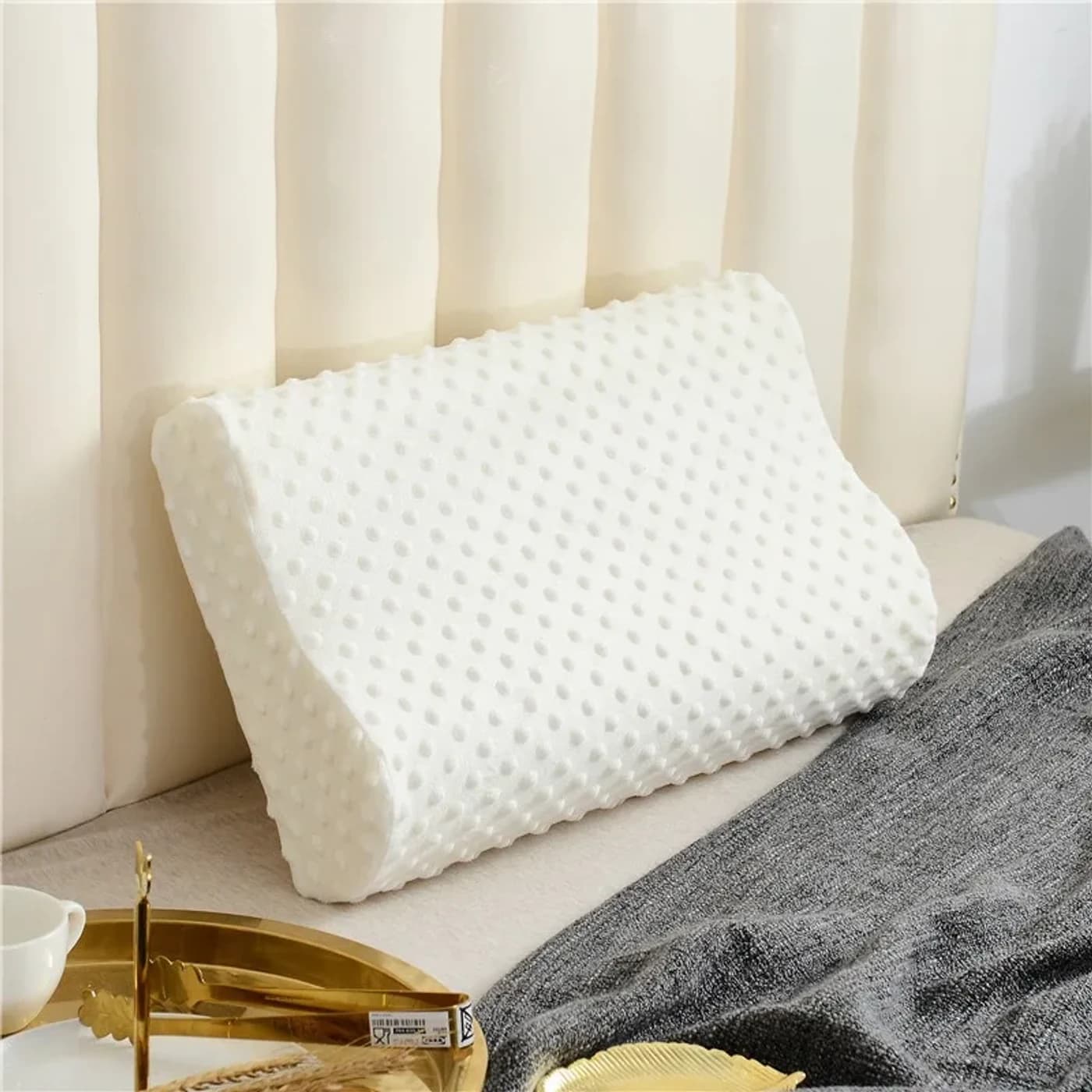
Two dates are enough to sort this out. A mattress lasts more like eight to ten years, a pillow generally flattens within two to three. The second is the one most often forgotten, even though it governs head and back alignment all night. The marker to aim for does not change: seen from the side, the head should stay in line with the back. On your side you need height to fill the gap between shoulder and ear; on your back, far less.
The Nuage 50 answers that double need in a single product. It is a memory foam pillow in a 50 × 30 cm format, with two wave heights: 10 cm for side sleeping, 7 cm for back sleeping, switched by flipping it over. It comes on its own at 55 € or with its textured polyester and cotton cover at 65 €, and the second pillow is 20 % off in the cart. The jacquard cotton covers are cut to the wave shape, come in six colours at 22 € each, with three bought and two free.
Clutter and colours, what the room says
The last layer of the checklist is not physical, it is mental. A cluttered bedroom keeps a visible to-do list alive at exactly the moment the brain needs to let go. The sorting that helps is not about decoration but about work objects: laptop, files, the waiting laundry basket, sports gear. Getting those three or four categories out of the room does more for sleep than any purchase, and it takes one evening.
Colours work on the same register. Muted, low contrast shades, earthy, sand, deep blue, greyed green, reflect less light and calm the visual reading of the room. Pure white walls and glossy surfaces do the opposite and bounce the smallest light source. Finally, evening light should come from low lamps with warm light rather than from a ceiling fixture: it is the height and colour of the light, not only its intensity, that tell the body the day is over.
- ·Darkness: blackout curtain, LEDs covered, no illuminated clock facing the bed.
- ·Air: ten minutes of full airing morning and evening.
- ·Bedding: mattress eight to ten years, pillow two to three years, height matched to position.
- ·Clutter: laptop, files and waiting laundry out of the bedroom.
- ·Evening light: low warm lamps, ceiling light off an hour before bed.
A bedroom that lets you sleep comes down to three physical conditions, 16 to 19 °C, under 35 dB, real darkness, then four comfort points: air, bedding, clutter, colours. Most of these corrections are free. The ones that are not, pillow and cooling, are chosen once the others are set.
Frequently asked questions
What is the ideal bedroom temperature for sleeping?+
Between 16 and 19 °C, with tolerance up to about 22 °C. Above 24 °C, falling asleep takes longer and deep sleep decreases measurably. In summer, closing the shutters from the morning and then airing widely once outside air cools down is the most effective and cheapest measure.
How do you know if your bedroom is dark enough?+
Lie down with the lights off and wait two minutes. If you can still make out your hands in front of you, there is too much light left. The usual sources are device LEDs, street lighting, an illuminated alarm clock and the strip under the door. A blackout curtain settles most cases.
Should you sleep with the window open?+
Not necessarily all night. A window left ajar cools the room without renewing much air, and lets noise in. A full ten minute airing morning and evening, window wide open and door open to create a draught, renews the air far more effectively.
The SEY Maison Circle
Every month, an exceptional piece. Never reissued.
The Drops principle: one high-end furniture piece per month, in a numbered edition. Once it's gone, it never comes back. Circle members are notified 48 h early, access each drop 24 h before everyone else, and receive our guides before publication.
Discover the Drops →Also worth reading
Ceiling fan in a child's bedroom: safety, height, noise and loft beds
Read the article →
Paying for a ceiling fan in three interest-free instalments: how it works, what it costs, what to know
Read the article →
Inside a ceiling fan box: what is supplied, what is missing, what to prepare
Read the article →