Silence & sleep
Feeling hot and sweating at night: the solutions that work
Published on ·5 min read
Many people describe the same scene. The bedroom feels bearable at bedtime, then around two or three in the morning the head is damp, the neck sticks to the pillow, you hunt for the cool side and cannot find it any more. This is not a matter of willpower or tiredness, it is a matter of heat exchange.
This article explains why heat gathers at the head, what traps it inside a pillow, what releases it, and in which order to act. The general rule is simple: the room first, the bedding next, the pillow last. Each of those three layers can be fixed, and the three add up.
Why the head and neck get hot
To fall asleep, the body has to lower its core temperature by about one degree. It does so by shedding heat through the skin, mainly through uncovered, well supplied areas: hands, feet, face, scalp and neck. At night most of the body sits under a duvet, so most of the exchange happens at the head. It is the part left outside, and it is also the part pressed into the pillow.
That pressure changes everything. On the contact surface, skin no longer touches air but a material. Heat and moisture stay trapped between the two and form a small warm pocket that keeps rising in temperature for an hour or two. That is exactly what flipping the pillow is meant to escape. The cool side works, but only for a few minutes, because the problem is not the face of the pillow, it is the lack of air movement.
What traps heat, what releases it
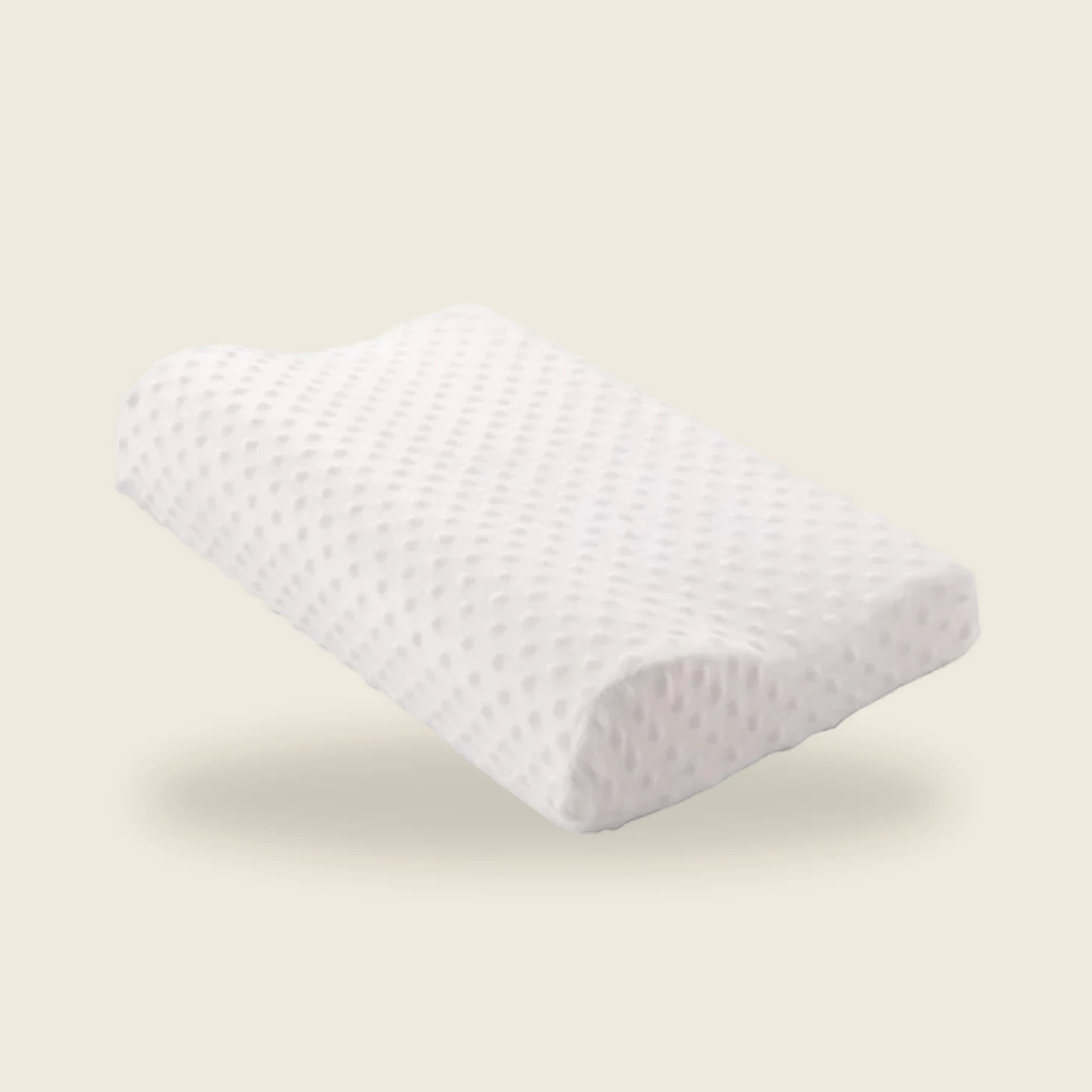
Memory foam moulds to the skull and neck. That is what makes it useful for support, and it is also what increases the contact surface. The larger the contact surface, the larger the area that cannot breathe. This is not a manufacturing flaw, it is the physical trade-off of support. It is easily offset, not by changing the filling, but by working on the layer that actually touches the skin.
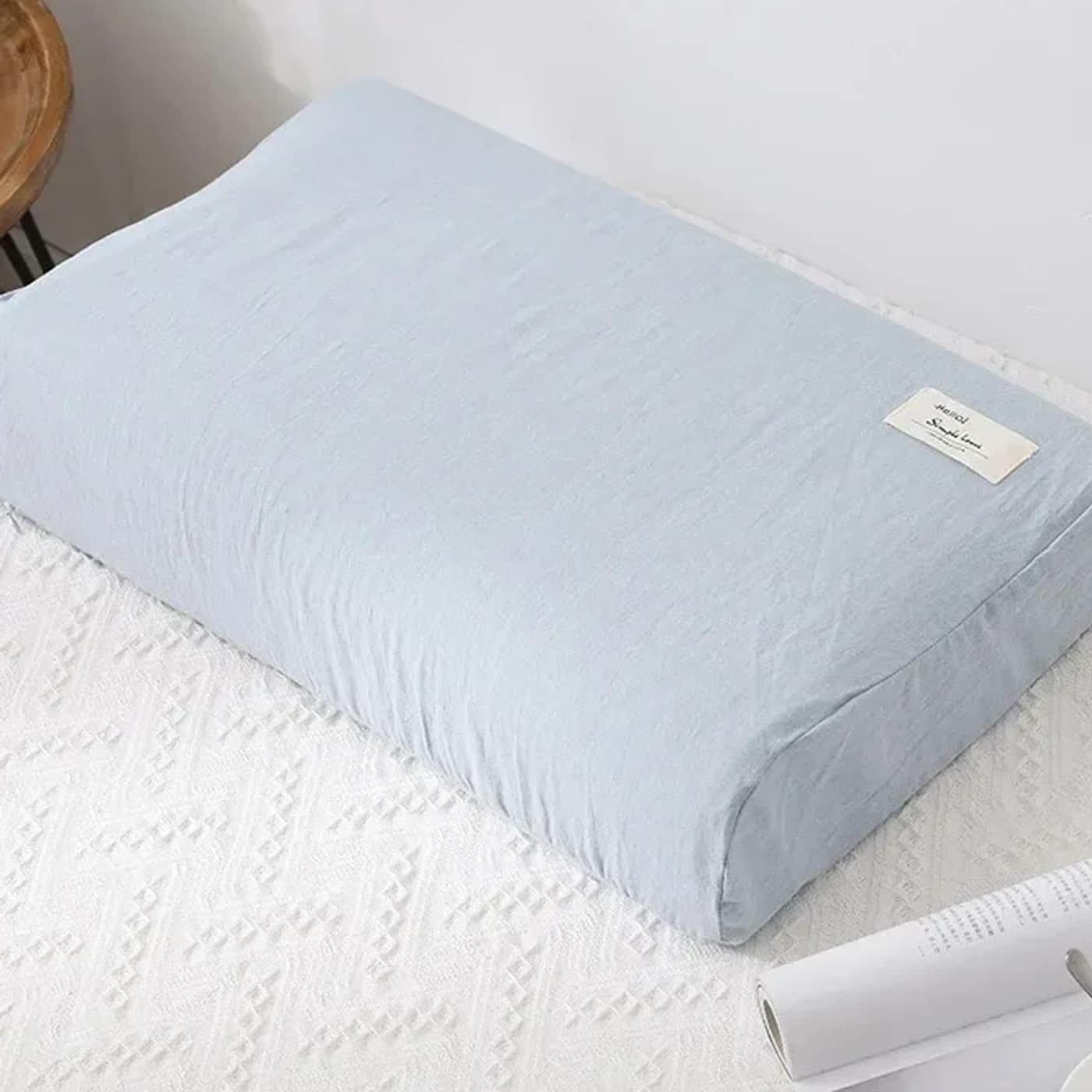
That layer is the cover. A fully synthetic surface slides and keeps moisture on top, which is what feels clammy. Woven cotton lets air through and absorbs sweat before releasing it as it dries. The Nuage 50 is a memory foam pillow in a 50 × 30 cm format, with two wave heights on the same pillow, 10 cm and 7 cm, switched by turning it over. The Housse Nuage, in woven jacquard cotton, goes over it and washes.
- ·Traps heat: a fully synthetic surface, a pillow too thick for your position, a tight pillowcase that flattens the fabric.
- ·Releases heat: woven cotton, a removable cover changed often, a pillow at the right height so the neck can breathe.
- ·Makes it worse: a bedroom above 24 °C, shutters left open on summer days, a winter duvet kept until June.
- ·Helps without buying anything: turning the pillow at bedtime rather than in the middle of the night, airing the room for ten minutes before going to bed.
A cool bedroom is still the real lever
No pillow makes up for a room at 27 °C. Sleep benchmarks generally converge on a bedroom between 16 and 19 °C, with tolerance up to about 22 °C. Above 24 °C, falling asleep takes longer and the night fragments. So the first useful action is not in the bed, it is in the room: close the shutters during hot hours, open wide in the early morning, and keep air moving during the night.
This is where a ceiling fan changes things. It does not cool the air, it lowers felt temperature by 2 to 4 °C by speeding up evaporation on the skin. The Boréal 107 runs between 30 and 34 dB, with retractable blades, a remote and a timer, so it can be switched off mid-night without getting up. Its reverse winter mode serves the other half of the year. A wide breath over the whole bed beats a cold jet aimed at the face.
The evening routine, in the right order
A cool night is prepared from the afternoon. Shutters and curtains closed while the sun hits, a real airing once the outside temperature drops below the room's, usually late evening or early morning. A lukewarm shower rather than a cold one at bedtime: very cold water closes the skin's vessels and delays heat release. A lighter duvet and a cotton sheet do the rest. These moves cost nothing, and they often count for more than equipment.
For bedding, the rule is the same as for clothing: whatever touches the skin gets changed often. Owning several covers keeps one clean while the other dries, and a freshly washed cover feels far less clammy than one used for ten days. Finally, this advice is about comfort, not health: heavy night sweating that persists in a cool room or wakes you every night deserves the opinion of a health professional.
Night heat plays out on three layers: the room, the bedding, the surface touching your skin. Cooling the bedroom and moving the air gives the widest gain, a cotton cover washed often gives the most immediate one. The Nuage 50 and its cover sit on that last layer, the one you feel all night.
Frequently asked questions
Why is my head so hot at night?+
Because the head is one of the areas the body uses to shed heat in order to fall asleep, and because the part resting on the pillow no longer touches air. Heat and moisture stay trapped between skin and material, and the clammy feeling shows up after an hour or two.
Do memory foam pillows sleep hot?+
They increase the contact surface with the head, so they increase the area that cannot breathe. That is the flip side of the support they give. A removable woven cotton cover, washed regularly, offsets most of that feeling.
What can I do when the bedroom stays at 26 °C at night?+
Act on the air before acting on the bedding. Shutters closed during the day, airing once outside gets cooler, and continuous air movement over the bed. A ceiling fan does not lower air temperature but takes 2 to 4 °C off the felt temperature, which brings a 26 °C room back into the acceptable window.
The SEY Maison Circle
Every month, an exceptional piece. Never reissued.
The Drops principle: one high-end furniture piece per month, in a numbered edition. Once it's gone, it never comes back. Circle members are notified 48 h early, access each drop 24 h before everyone else, and receive our guides before publication.
Discover the Drops →