Silence & sleep
A cool bedroom and the right pillow: the recipe for a calm night
Published on ·5 min read
People usually look for the cause of a bad night in one place: the mattress, street noise, stress. In practice a night is built on two independent levels. The first is the room: its temperature, its sound level, the way the air moves. The second is the bed itself: what the body rests on.
Fixing one without the other always leaves a problem in place. A perfectly cool bedroom with a pillow that is too high gives a mediocre night, and so does an excellent pillow in a room at 27 °C. This article takes both levels in order, with concrete reference points and no medical claims: this is about comfort, not treatment.
The room: temperature, noise, air
Temperature is the best documented factor. The body has to lower its core temperature by about 1 °C to fall asleep, which happens more easily in a cool room. Recommendations converge between 16 and 19 °C, with tolerance up to about 22 °C. Above 24 °C, falling asleep takes longer and deep sleep decreases. It is the first setting to correct, because it conditions all the others.
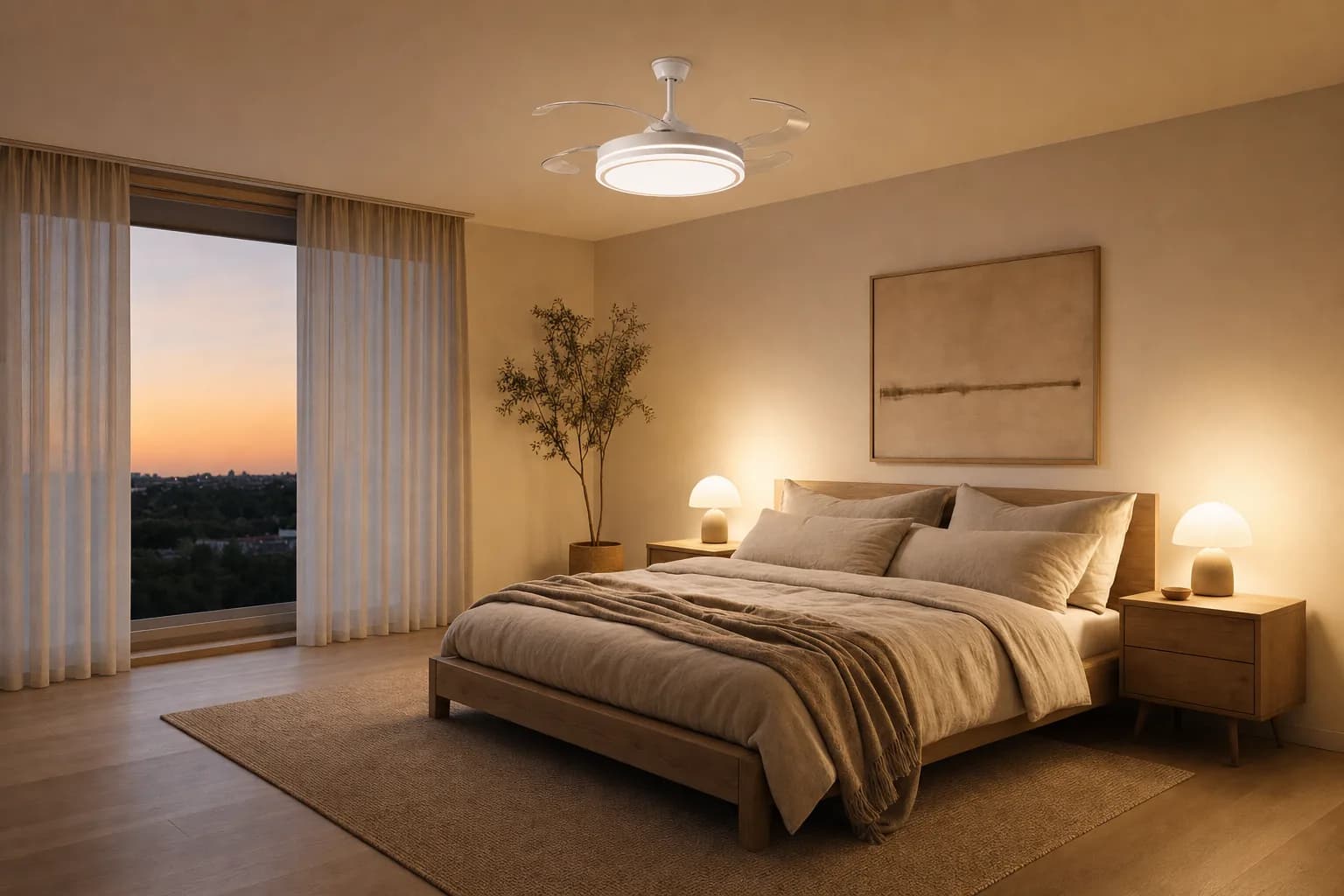
Noise comes next. Work on night-time noise puts the disturbance threshold around 35 dB in the bedroom. A ceiling fan does not cool the air, it lowers the felt temperature by 2 to 4 °C by speeding up heat exchange on the skin. The Boréal 107 runs at 30 to 34 dB, under that threshold, with a remote and a timer to switch off mid-night, and a reverse winter mode that brings ceiling heat back down to the bed without a draught.
The bed: mattress first, pillow next
The mattress decides the general position of the body. Too soft and the hips sink while the spine dips. Too firm and the shoulders and hips never settle, so you shift position all night. It is the heaviest purchase in the bedroom and the one kept longest, so it deserves a long trial before being replaced. Most mattresses stay in service ten years or more, which is why the decision is rarely urgent.
The pillow decides how the head aligns on that base. It is the cheapest setting and the most often neglected. It is changed every 2 to 3 years, against ten years or more for a mattress, and it costs a few tens of euros. Many people replace a mattress when their pillow had simply stopped being the right height.
- ·Bedroom temperature: between 16 and 19 °C, tolerance up to 22 °C
- ·Background noise: under 35 dB, a steady breath beats intermittent sound
- ·Air: gentle movement over the whole bed, never a jet aimed at the face
- ·Mattress: neither sagging in the middle nor too firm for the shoulders
- ·Pillow: about 10 cm on the side, about 7 cm on the back
Setting the pillow to your position
On your side there is a gap between shoulder and ear, and the pillow has to fill it so the head stays in line with the spine: you need height, around 10 cm. On your back that gap almost disappears and a pillow that is too high pushes the chin towards the chest: you need less, around 7 cm. Those two needs are not met by the same block of foam.
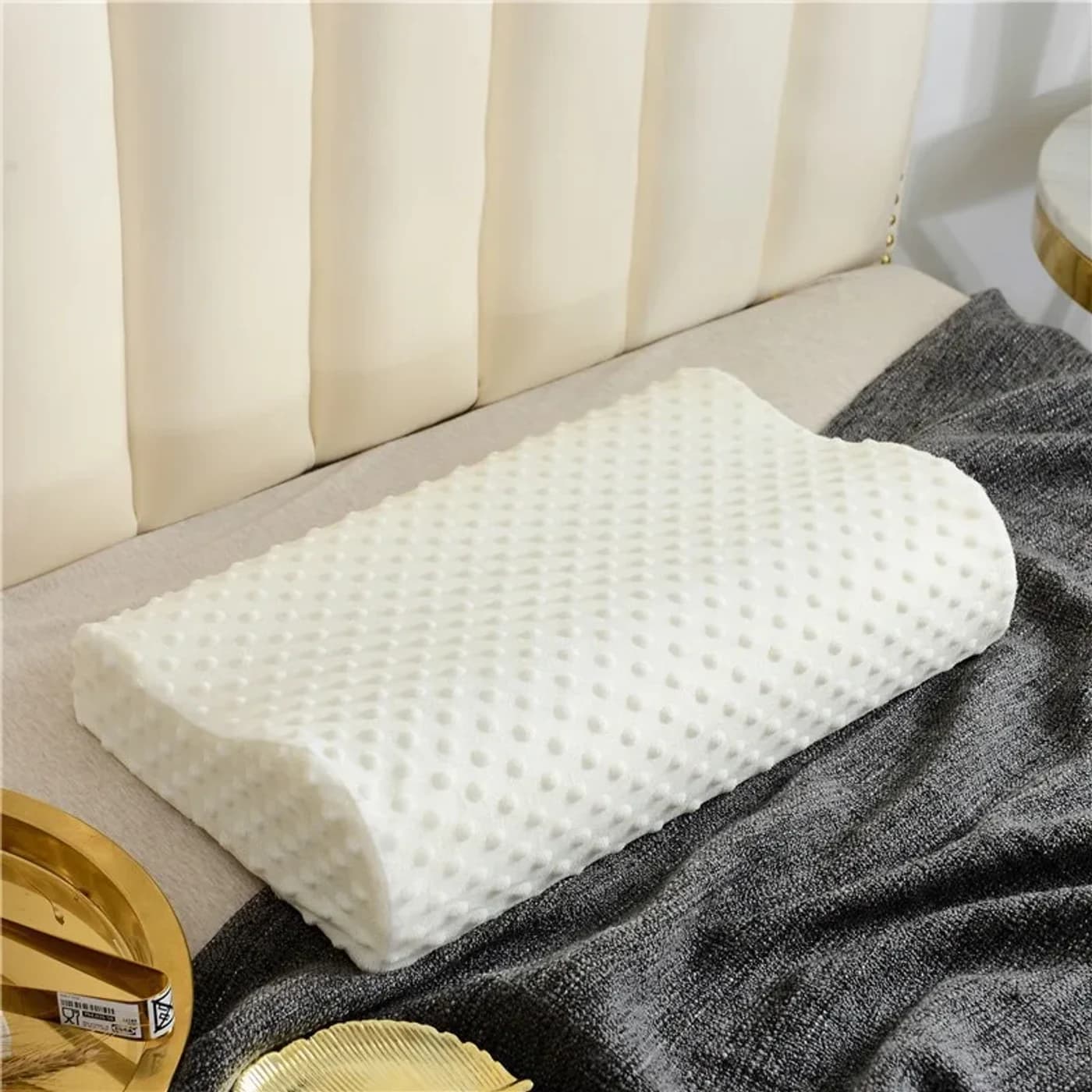
The Nuage 50 settles the point by carrying both heights on the same pillow, a 10 cm wave and a 7 cm wave, switched by flipping it over. It uses slow rebound memory foam, measures 50 × 30 cm, and comes on its own at 55 € or with its textured cover at 65 €. These pointers are about comfort and posture: neck or back pain that lasts, or that wakes you, calls for a health professional.
A routine that works all year
In summer you lower the felt temperature: fan on speed 1 or 2, timer at 2 to 4 hours so it stops once the room has cooled, shutters closed during the day. In winter the same bedroom is managed differently: reverse mode on speed 1 to even out the heat, heating a notch lower, and you stay in the 16 to 19 °C window with no cold ceiling.
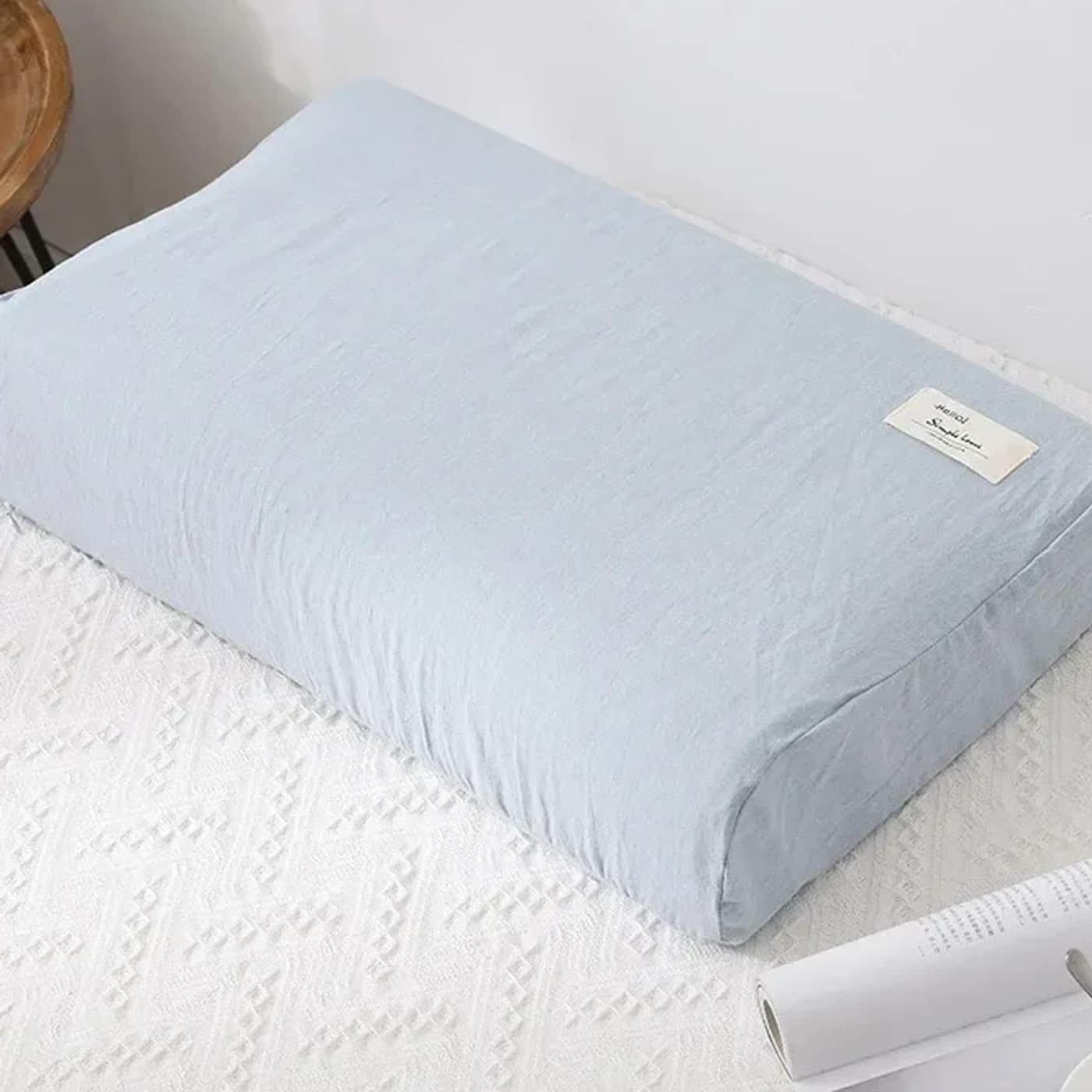
The bed mostly asks for upkeep. The foam core is not washed, it is aired: take the cover off, wash it, leave the pillow in open air. Owning two covers means never sleeping on a bare pillow during the wash. The Housse Nuage in jacquard cotton comes in six colours at 22 € each, with the buy three get two free offer, and the second pillow is 20 % off to fit out both sides of the bed.
A good night comes down to five settings: temperature, noise, air movement, mattress and pillow. The first three are managed at room level, and a quiet ceiling fan covers all three at once. The last two are managed at bed level, and the pillow is by far the cheapest to correct.
Frequently asked questions
What temperature and noise level do you need to sleep well?+
A bedroom between 16 and 19 °C, with tolerance up to about 22 °C, and background noise under 35 dB. Above 24 °C, falling asleep takes longer and deep sleep decreases. Above 35 dB, micro-awakenings increase even when you do not remember them.
Should you replace the mattress or the pillow first?+
The pillow, almost always. It costs a few tens of euros against several hundred for a mattress, it is replaced every 2 to 3 years, and the wrong height is enough to spoil a night on an excellent mattress. Test the pillow before concluding that the mattress is at fault.
Is a ceiling fan enough to cool a bedroom at night?+
It does not lower the air temperature, but it lowers the felt temperature by 2 to 4 °C, which brings a 26 °C bedroom back into the acceptable window. Provided it stays quiet: the Boréal 107 runs at 30 to 34 dB, under the sleep disturbance threshold.
The SEY Maison Circle
Every month, an exceptional piece. Never reissued.
The Drops principle: one high-end furniture piece per month, in a numbered edition. Once it's gone, it never comes back. Circle members are notified 48 h early, access each drop 24 h before everyone else, and receive our guides before publication.
Discover the Drops →