Interior design
Lighting a dining table: the one room where a ceiling light is not the answer
Published on ·3 min read
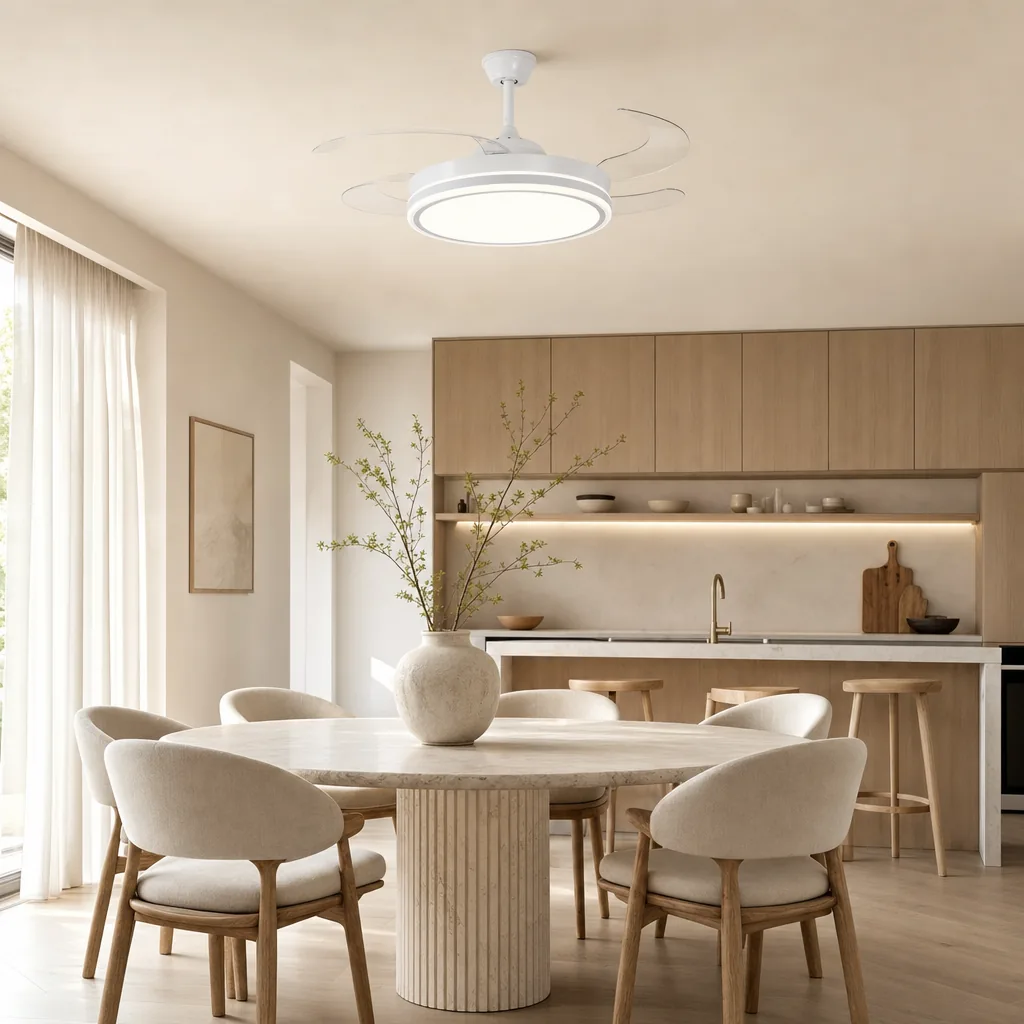
A ceiling light suits almost every room, and this article exists to say where it does not. Above a dining table there is better, and the difference is larger than you might think.
Here is why, and the three dimensions to respect.
Why a table needs light brought down
A table is not a room, it is a place. Lighting it means marking out a circle where people gather, lighting plates and faces, and leaving the rest of the room darker. That is exactly what a pendant does and what a ceiling light cannot do.
A central ceiling light, by contrast, lights uniformly. The table does not stand out, faces get vertical light with shadows under the eyes, and the meal takes place in the same light as the hallway. The room is lit, the place is not.
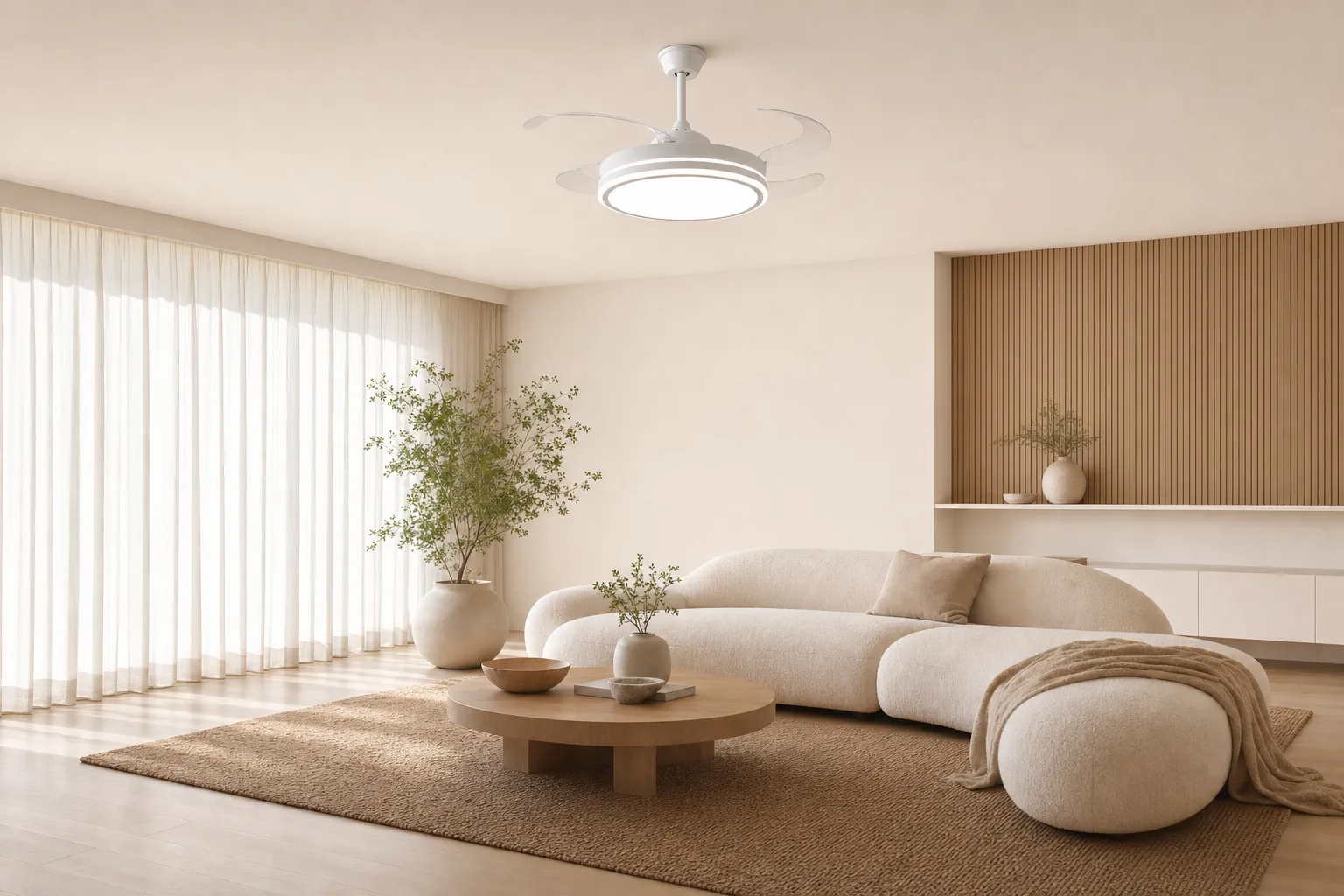
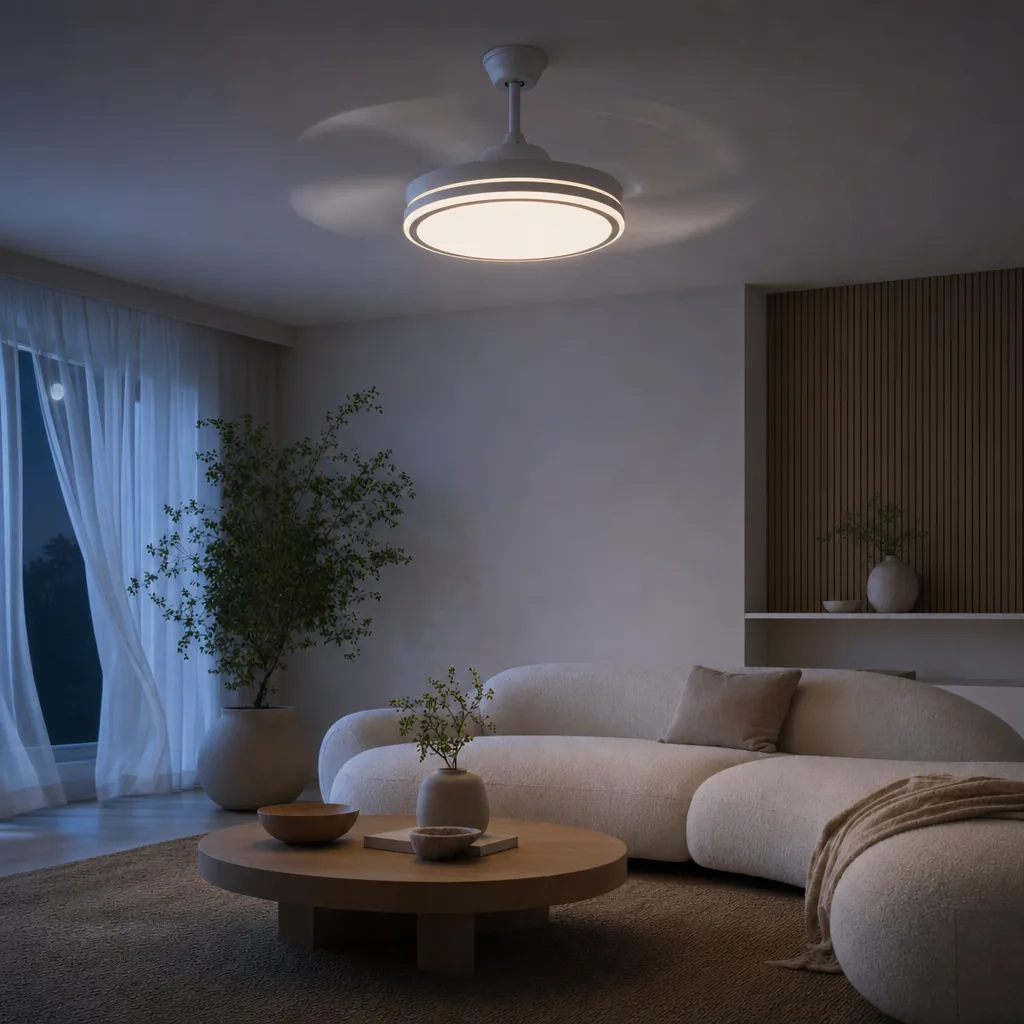
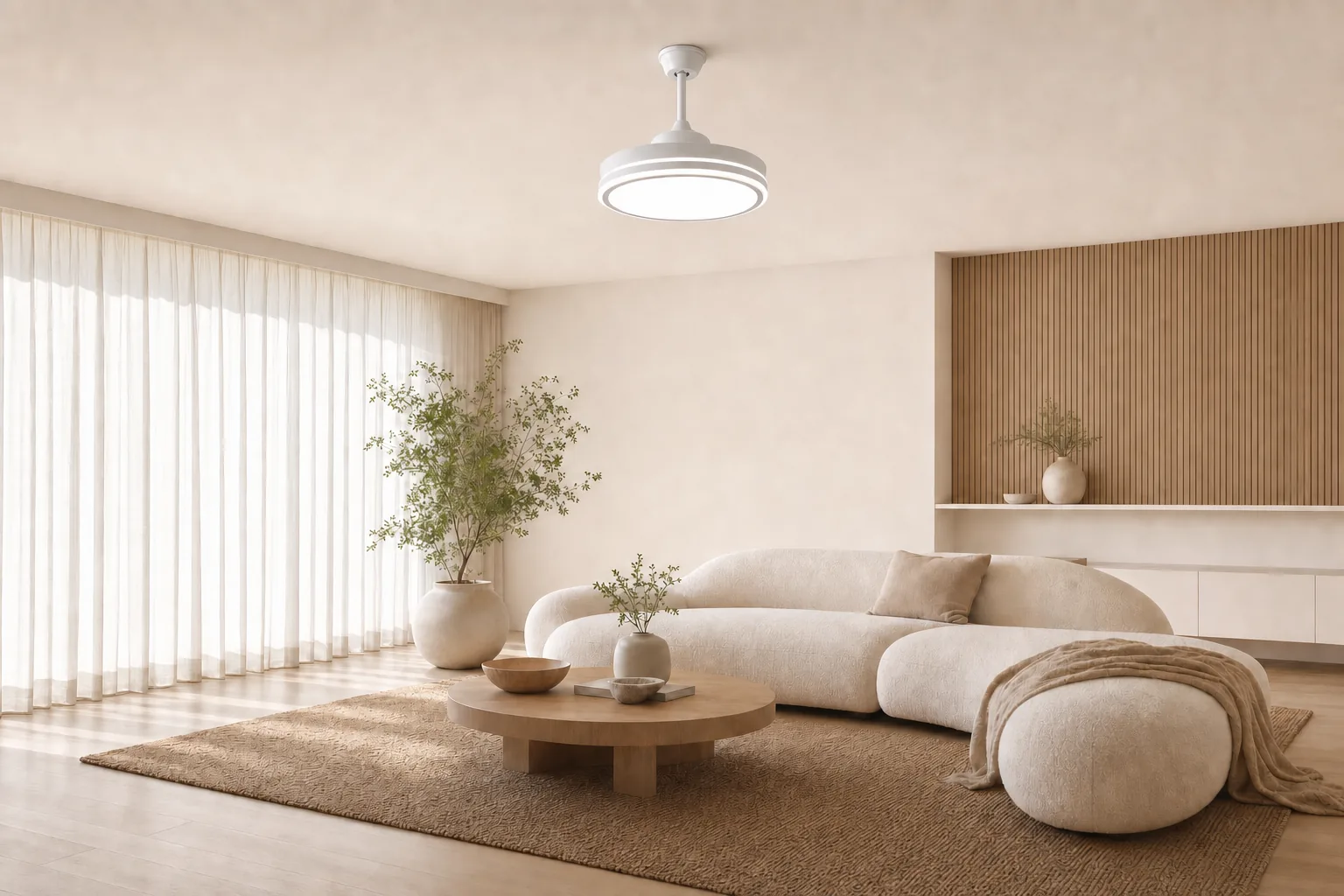
The Boréal 107
Retractable blades · Ø 107 cm · LED ceiling light & silent fan
- ✓Retractable blades: invisible when off, nobody guesses it's a fan
- ✓Sleep with windows closed, 30 dB, quieter than a whisper
- ✓Integrated LED 2700K → 6000K, dimmable: replaces your ceiling light
The three dimensions
Height first: 75 to 90 cm between the bottom of the shade and the tabletop. Higher, the circle of light widens and the effect disappears. Lower, the pendant blocks the view between guests seated opposite each other.
Diameter next: around a third to a half of the table width. For a 90 cm wide table, that gives 30 to 45 cm. A wider pendant overflows and lights the chairs rather than the top.
Alignment last, made on the centre of the table and not the centre of the room. That is often where everything is decided, because the two rarely coincide.
- ·Height: 75 to 90 cm between the bottom of the shade and the top
- ·Diameter: a third to a half of the table width
- ·Alignment: on the table, never on the centre of the room
- ·Long table: two or three small pendants in a line
When the table is not under the light point
That is the most frequent case, and it makes many people give up. Two solutions exist without touching the wiring. The first is a cable offset: the pendant fixes to the existing point, and its cable is caught by a hook placed directly above the table.
The second is to accept the ceiling light for the room and place a lamp on a nearby sideboard, or use a floor-standing arc lamp. The table then gets its light from the side, which is less spectacular but clearly better than a single vertical source.
Above a table the pendant wins, at 75 or 90 cm from the top and aligned with the table rather than the room. If the light point is in the wrong place, a simple offset hook settles it for a few euros. Keep the ceiling light for the rest of the room, where it remains the simplest and most discreet answer.
Frequently asked questions
How high should a light hang above a table?+
Between 75 and 90 cm from the bottom of the shade to the tabletop. It looks low from a distance, but it is the only height that creates a circle of light without blocking the view between guests.
What diameter for a dining pendant?+
A third to a half of the table width, so 30 to 45 cm for a 90 cm table. Wider, the light overflows onto the chairs instead of lighting the top.
What if the table is not under the light point?+
An offset hook fixed directly above the table lets you catch the pendant cable without touching the wiring. It is the simplest solution and it costs a few euros.
The SEY Maison Circle
Every month, an exceptional piece. Never reissued.
The Drops principle: one high-end furniture piece per month, in a numbered edition. Once it's gone, it never comes back. Circle members are notified 48 h early, access each drop 24 h before everyone else, and receive our guides before publication.
Discover the Drops →