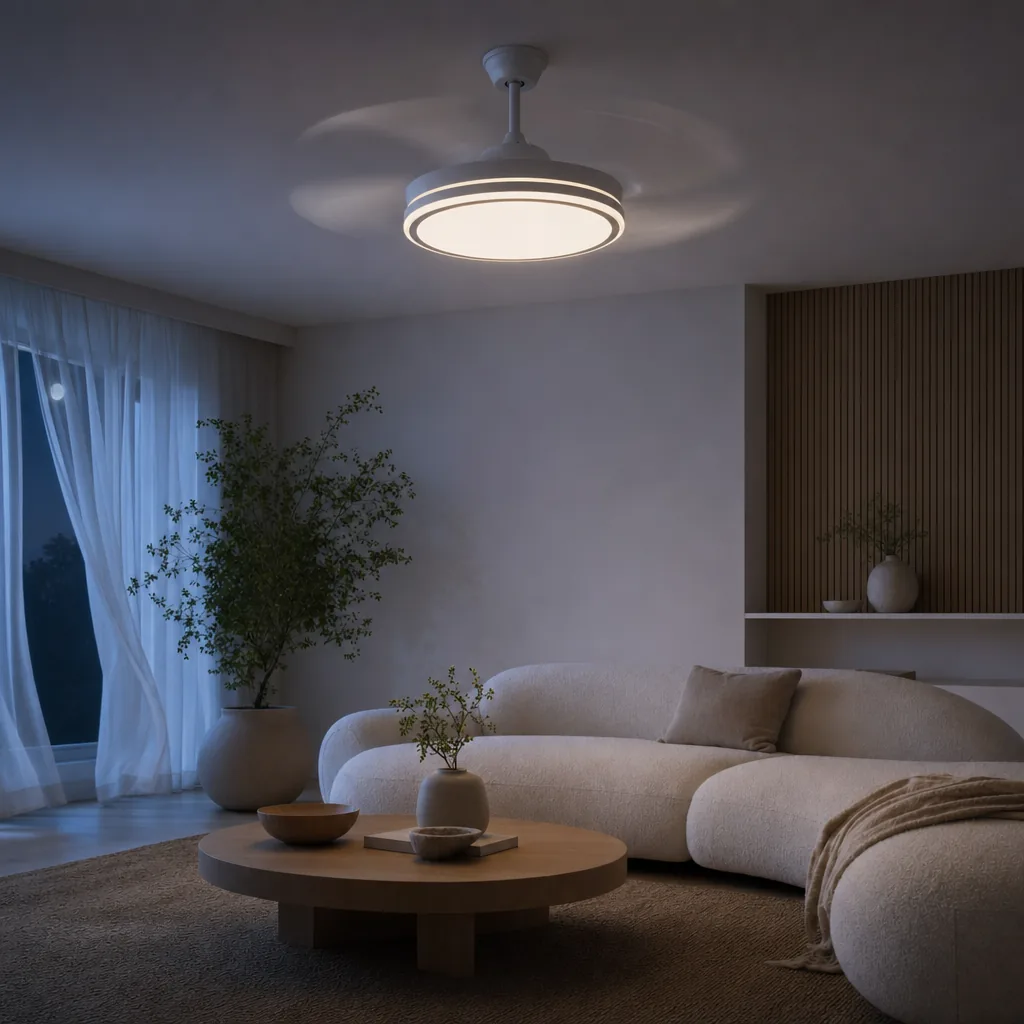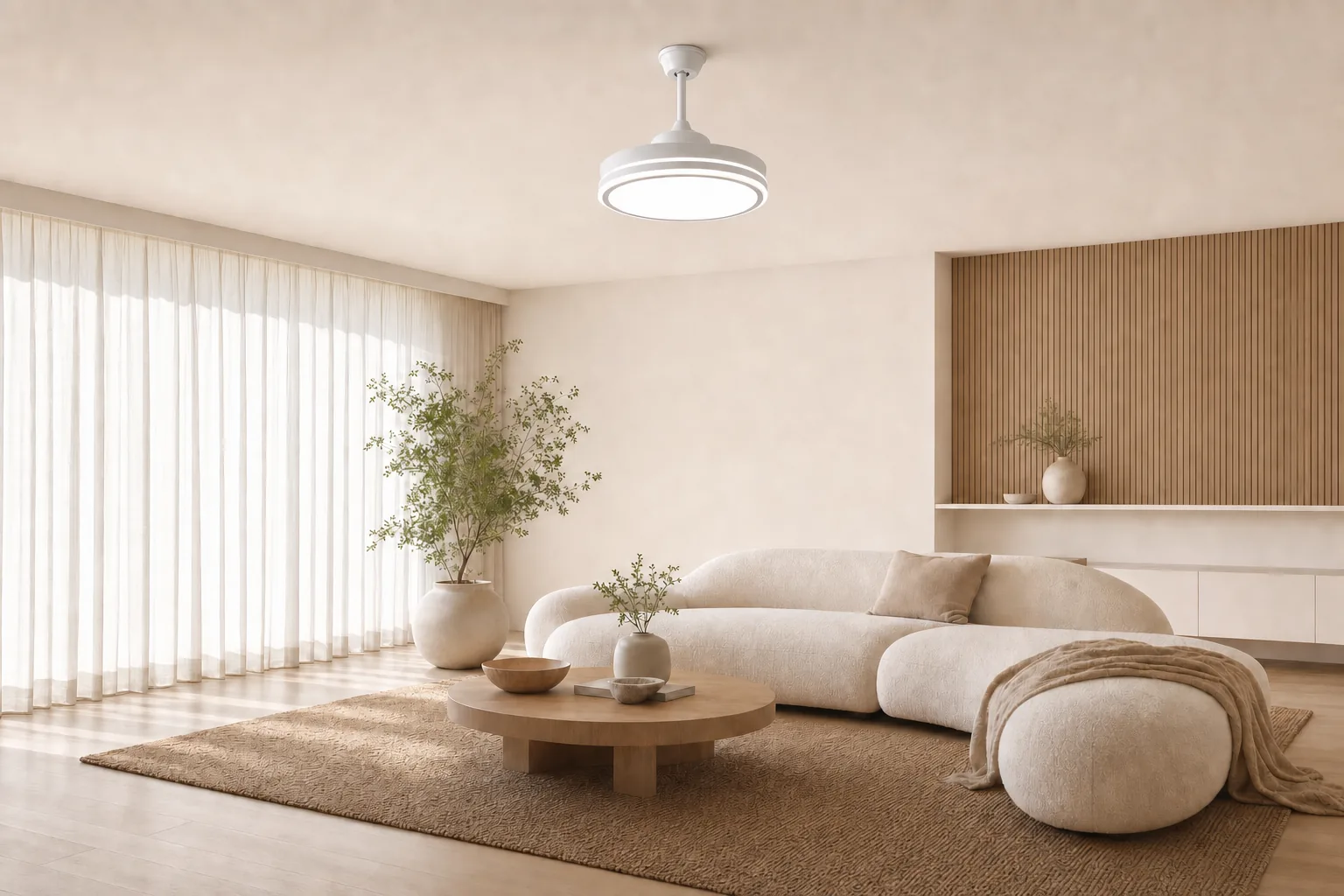
Interior design
How many lumens do you really need per room?
Published on ·3 min read
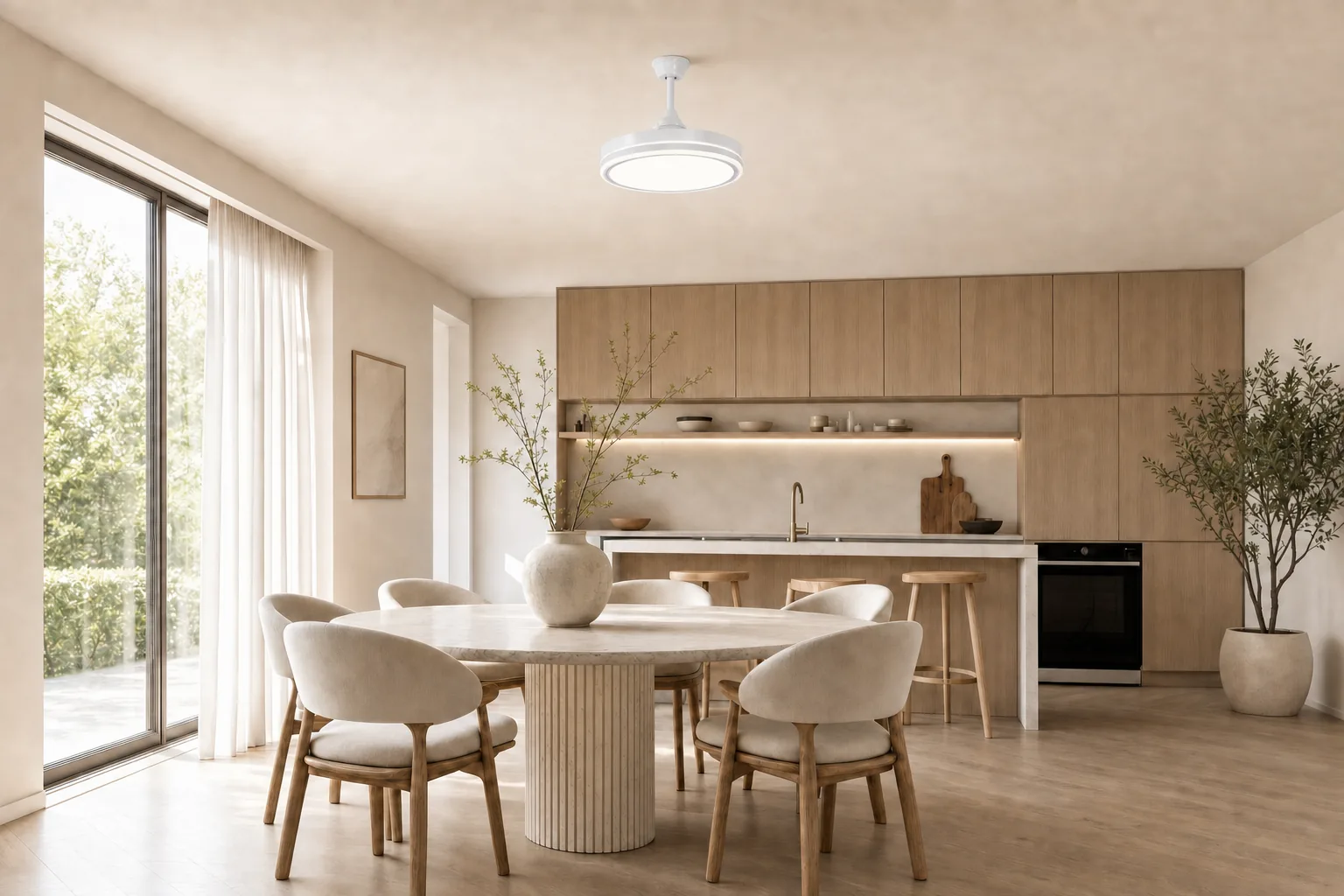
For fifty years we bought light in watts: a 75 W lit more than a 40 W, and everyone knew where they stood. LEDs broke that benchmark, because they produce as much light for five to ten times less electricity. The watt no longer says anything about how bright a room will be.
The figure that counts now is the lumen. Here is how many you need, room by room, and why the total is almost always underestimated.
The benchmark per square metre
What a room is used for decides what it needs. A living room lives on soft light and takes 100 to 150 lumens per square metre. A kitchen, where you handle knives and judge food, asks for double. A bedroom makes do with less, because you look for calm there rather than brightness.
Simply multiply by the floor area. A 25 m² living room calls for 2,500 to 3,750 lumens, a 12 m² kitchen roughly 2,400 to 3,600. These totals often surprise, because a single ceiling light rarely exceeds 2,000 lumens.
- ·Living room, dining room: 100 to 150 lm/m²
- ·Bedroom: 70 to 120 lm/m²
- ·Kitchen, study: 200 to 300 lm/m²
- ·Bathroom: 150 to 250 lm/m², more near the mirror
- ·Hallway, entrance: 80 to 120 lm/m²
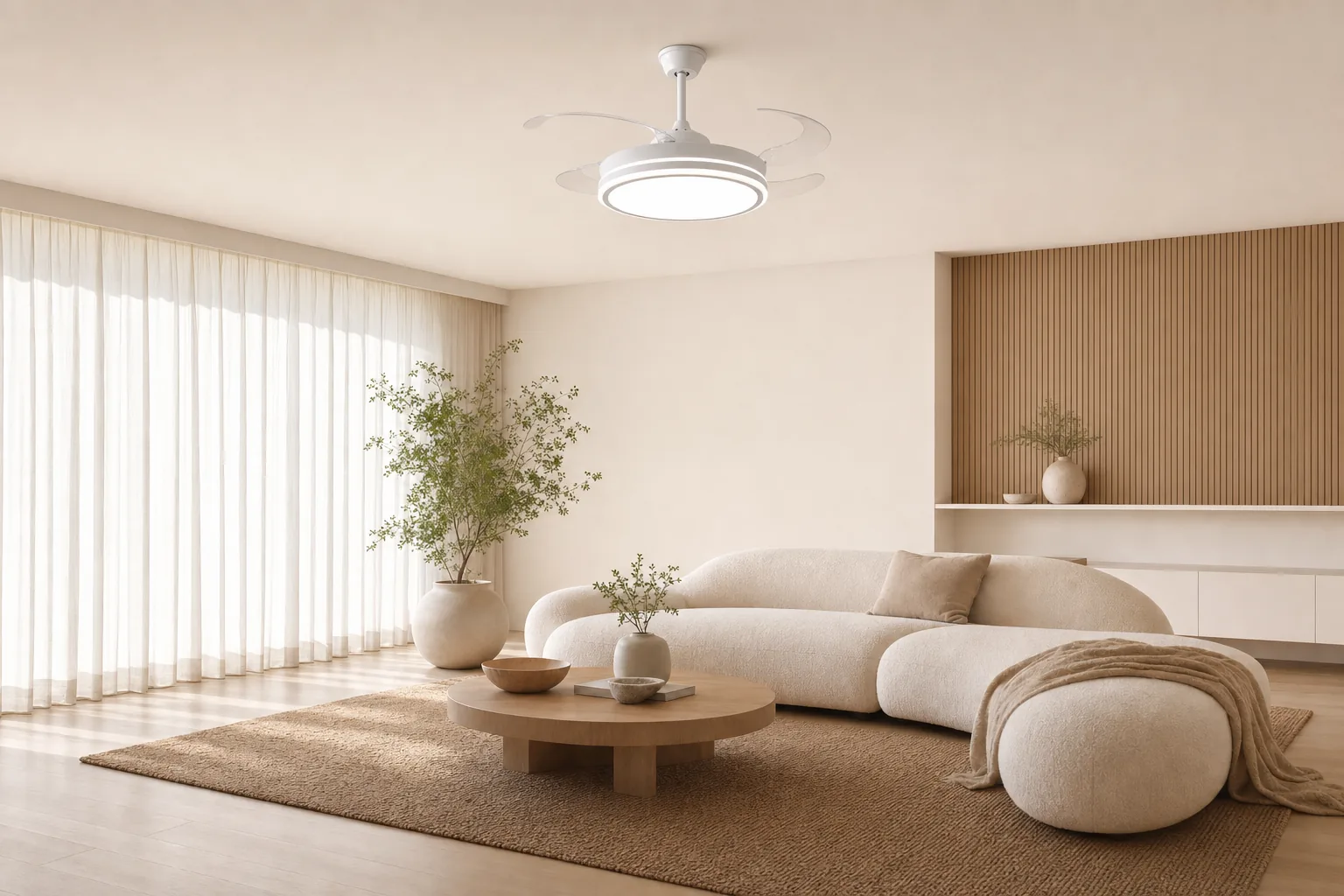
The Boréal 107
Retractable blades · Ø 107 cm · LED ceiling light & silent fan
- ✓Retractable blades: invisible when off, nobody guesses it's a fan
- ✓Sleep with windows closed, 30 dB, quieter than a whisper
- ✓Integrated LED 2700K → 6000K, dimmable: replaces your ceiling light
Why one light point is rarely enough
The calculated total does not say where the light should come from. A room lit by a single very powerful ceiling light is lit from above, harshly, with shadows under the eyes and dark corners. The same quantity spread between a ceiling light and two low lamps gives a pleasant room.
The practical rule is to let the ceiling light carry half to two thirds of the need, and to fill in with low sources. The ceiling light provides general brightness, the lamps create the zones where you settle.
A dimmer beats a perfect calculation
The need in one room varies threefold depending on the hour and the activity. Tidying on a Saturday morning calls for brightness; watching a film in the evening calls for the opposite. A dimmable ceiling light solves that better than any calculation.
It is also what makes a generous lumen output acceptable: you install the capacity, you do not always use it fully. The Boréal 107 pairs that dimming with three colour temperatures, from 2700K to 6000K.
Count in lumens, not watts: 100 to 150 per square metre to live, 200 to 300 to work. Spread that total between the ceiling and low sources rather than asking everything of one luminaire. And choose dimmable, because no fixed value suits both Saturday morning and Sunday night.
Frequently asked questions
How many lumens for a 25 m² living room?+
Between 2,500 and 3,750 lumens in total, that is 100 to 150 lumens per square metre. Let the ceiling light carry half to two thirds and fill in with low lamps.
How many watts for 1,000 lumens in LED?+
Around 8 to 12 W depending on the efficiency of the LED. That is exactly why the watt is no longer a useful benchmark: two models of the same power can light twice as differently.
Is too many lumens a problem?+
Only without a dimmer. Generous capacity you can turn down is comfortable; the same without adjustment becomes glaring and makes the room unwelcoming in the evening.
Do you need more lumens with a high ceiling?+
Yes, light dilutes with distance. Above 3 m of ceiling height, add roughly 20 % to the calculated total, or bring the source closer by choosing a pendant.
The SEY Maison Circle
Every month, an exceptional piece. Never reissued.
The Drops principle: one high-end furniture piece per month, in a numbered edition. Once it's gone, it never comes back. Circle members are notified 48 h early, access each drop 24 h before everyone else, and receive our guides before publication.
Discover the Drops →