The art of the home
Changing a ceiling light yourself: the six steps, and the two mistakes to avoid
Published on ·3 min read
Replacing a ceiling light is one of the few electrical jobs a non-professional can safely do alone, provided two points are respected. The rest is common sense and a screwdriver.
Here is how it goes, and the two places where things go wrong.
The six steps
The order matters, particularly for the first step, which is the only one that involves your safety. Allow half an hour without rushing, and a stable stepladder rather than a chair.
If your home has a DCL socket, steps three and four come down to a quarter turn: that is the whole point of this French standard, in force for construction and renovation since 1991.
- ·Cut the circuit at the breaker, then confirm there is no voltage with a tester
- ·Take down the old luminaire, supporting its weight before unscrewing
- ·Identify the three conductors: blue neutral, green and yellow earth, red or brown live
- ·Connect the new luminaire, earth first, in a connector block or push terminal
- ·Fix the mount to the ceiling, into a structural element and not into the board alone
- ·Switch the breaker back on and check operation before closing the cover

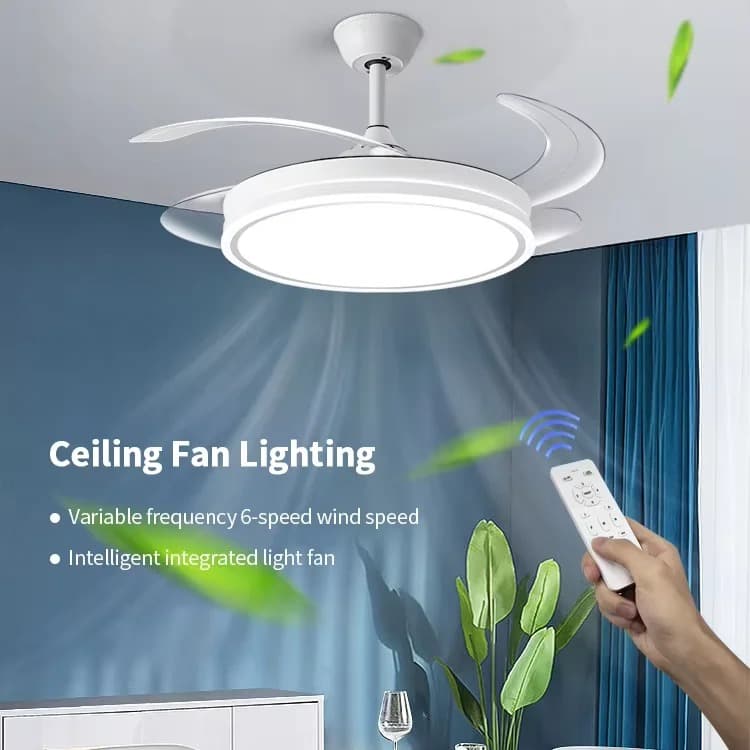
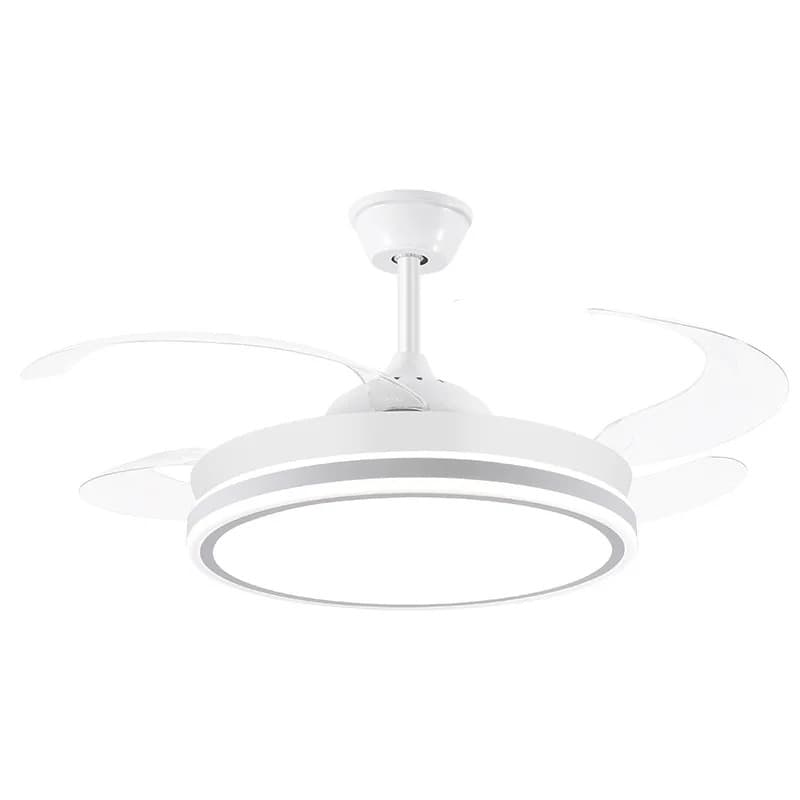
The Boréal 107
Retractable blades · Ø 107 cm · LED ceiling light & silent fan
- ✓Retractable blades: invisible when off, nobody guesses it's a fan
- ✓Sleep with windows closed, 30 dB, quieter than a whisper
- ✓Integrated LED 2700K → 6000K, dimmable: replaces your ceiling light
Mistake number one: cutting at the switch
A switch cuts one conductor. Depending on how the installation was wired, particularly in older homes, it is sometimes the neutral that is cut while the live stays present at the ceiling. You believe you are working dead and you are not.
The only safe cut is the corresponding breaker at the consumer unit, followed by a check with a voltage tester on every conductor. That is one extra minute, and it is the only one that counts.
Mistake number two: ignoring the mounting
A light luminaire forgives an approximate fixing. A heavy one, a loaded pendant or a rotating appliance do not: they work on their anchor, day after day, until the plasterboard gives way.
The rule is simple: the anchor must reach a structural element, a joist, a rafter or a concrete slab. If the ceiling is board on a frame, you aim at the frame or fit a spanning support. That is a check to make before ordering, not while fitting.
Changing a ceiling light takes half an hour and needs only a screwdriver, a tester and a stepladder. Cut at the breaker and verify, connect earth first, and above all look at what is behind the board before choosing a heavy model. Those two precautions rule out nearly every domestic accident linked to lighting.
Frequently asked questions
Do you need an electrician to change a ceiling light?+
No, it is within reach of a non-professional if the circuit is cut at the breaker and checked with a tester. Call a professional if the conductors are damaged, if there is no earth, or if the mounting looks doubtful.
How do you identify the wires at the ceiling?+
Blue is neutral, green and yellow is earth, and live is red, brown or black. In older installations those colours are not always respected, which is one more reason to check with a tester rather than trust the code.
What is a DCL socket?+
A standardised connector, mandatory in France on light points in homes built or renovated since 1991. It lets you plug and unplug a luminaire with a quarter turn, without touching the conductors.
The SEY Maison Circle
Every month, an exceptional piece. Never reissued.
The Drops principle: one high-end furniture piece per month, in a numbered edition. Once it's gone, it never comes back. Circle members are notified 48 h early, access each drop 24 h before everyone else, and receive our guides before publication.
Discover the Drops →