Interior design
Wooden ceiling light: what separates real wood from a printed finish
Published on ·3 min read
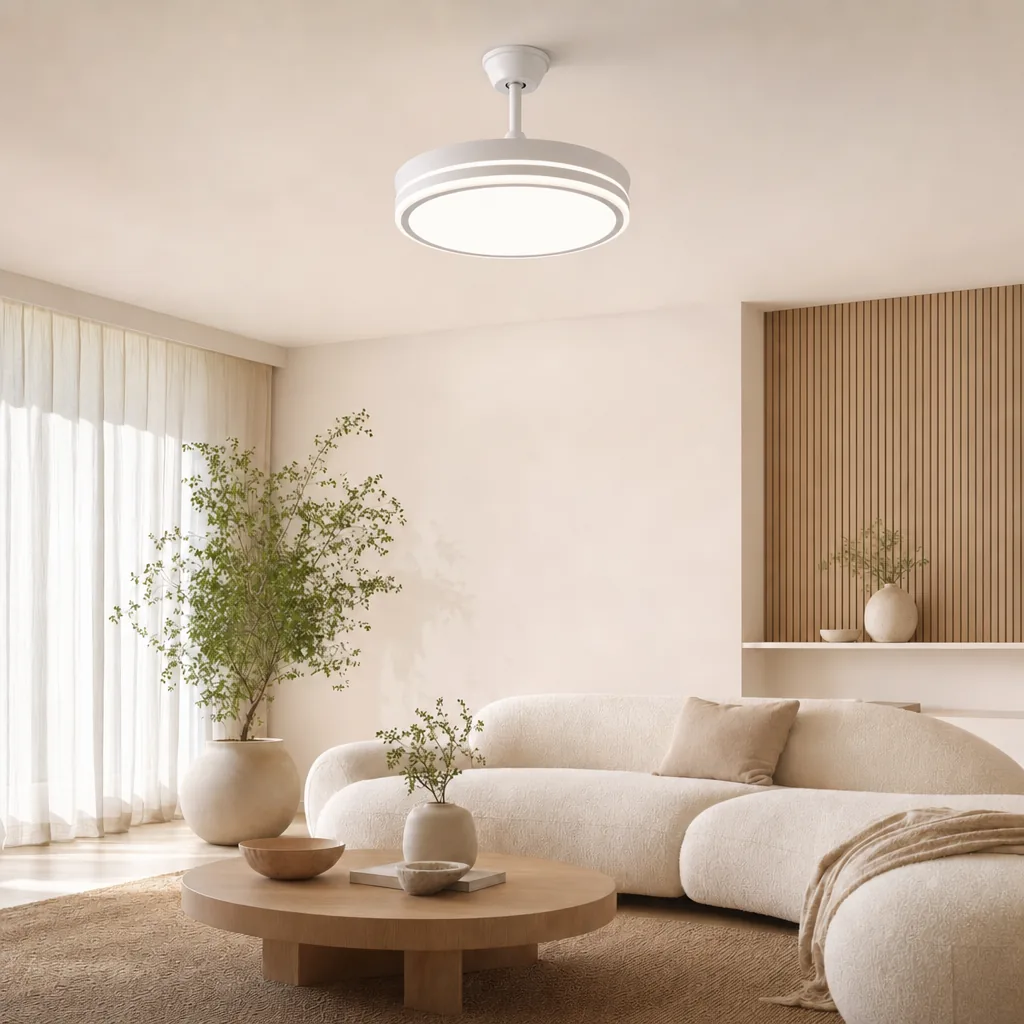
Wood is the material that changes a room the most, and the only one whose effect does not depend on the light being on: it works in daylight too. Overhead, it breaks the hardness of white and brings a warmth neither metal nor glass produces.
You still need to know what you are buying, because three very different materials are sold under the same word.
Solid, veneered, printed: how to tell them apart
Solid is cut from the mass. Its grain is unique, never repeats, and the edges show the same material as the face. It is the heaviest and the most expensive, and it ages by developing a patina.
Veneered is a stable substrate, plywood or MDF, covered with a sheet of real wood a few tenths of a millimetre thick. The grain stays unique, the edges sometimes betray the substrate. It is an honest compromise, lighter and more stable than solid.
Printed is a plastic film reproducing a wood pattern. It is recognised by repetition: the same knot, the same grain return every twenty to thirty centimetres. From a distance the illusion holds; at a metre, it falls.
- ·Solid: unique grain, wooden edges, high weight
- ·Veneered: unique grain, substrate visible on the edges
- ·Printed: pattern repeating every 20 to 30 cm
- ·Overhead, a luminaire is seen from afar: veneer is often enough
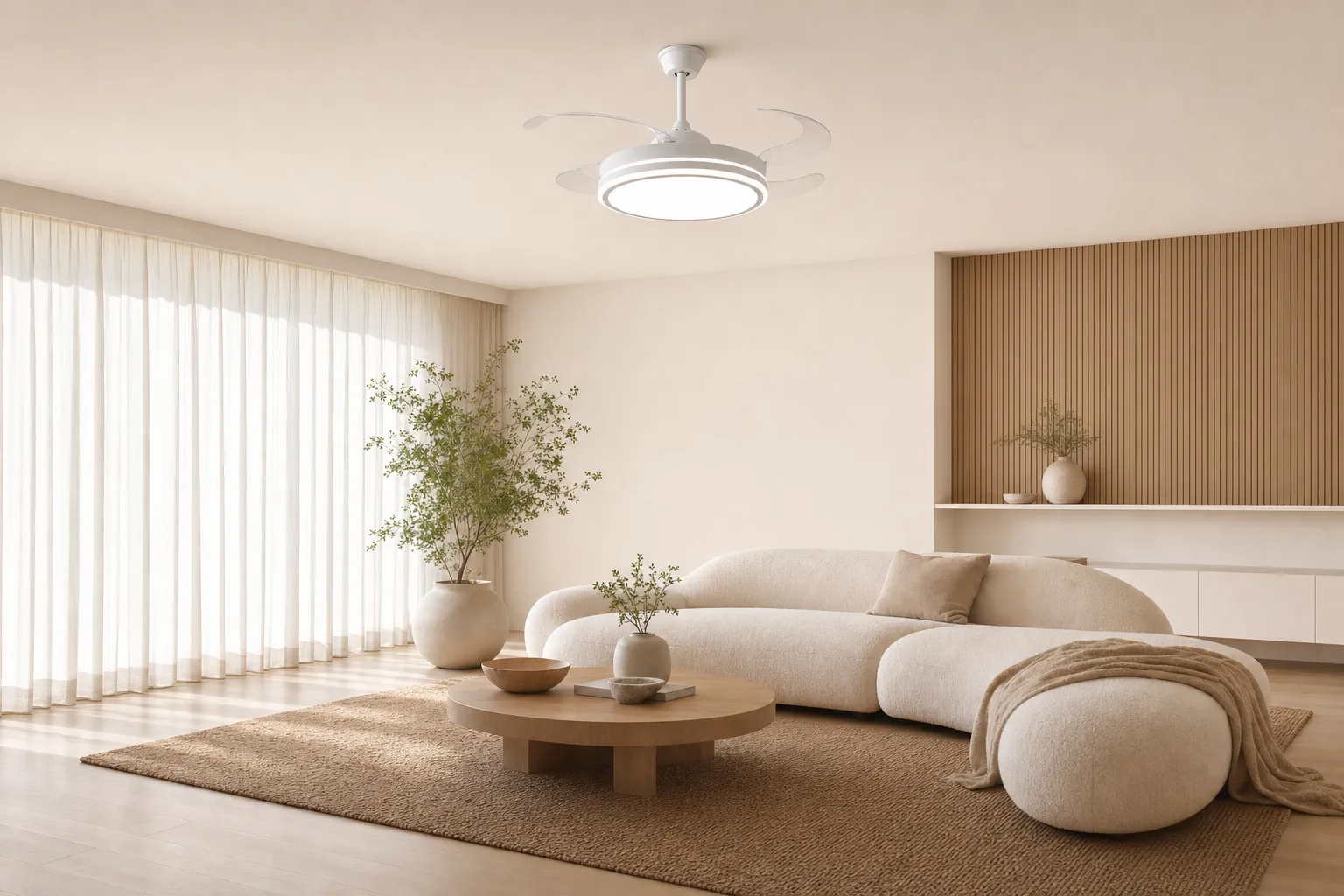
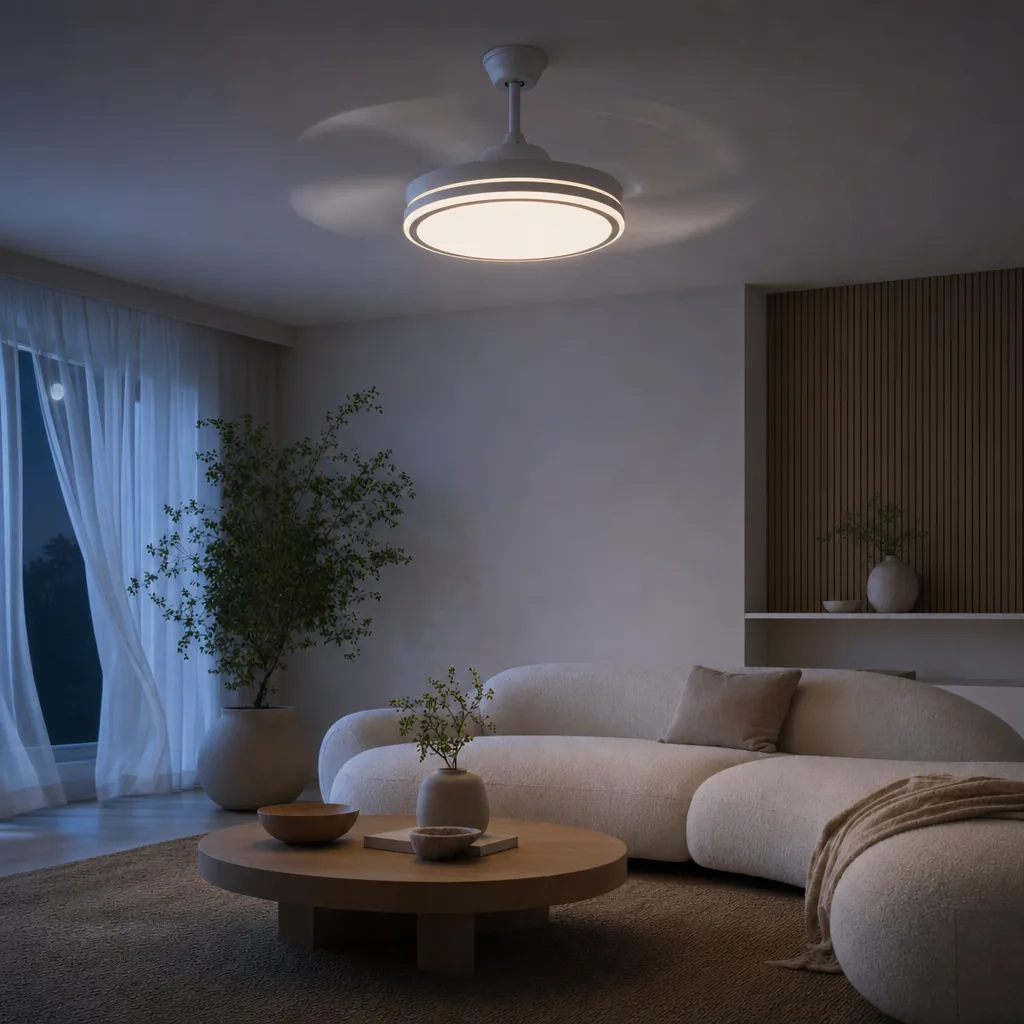
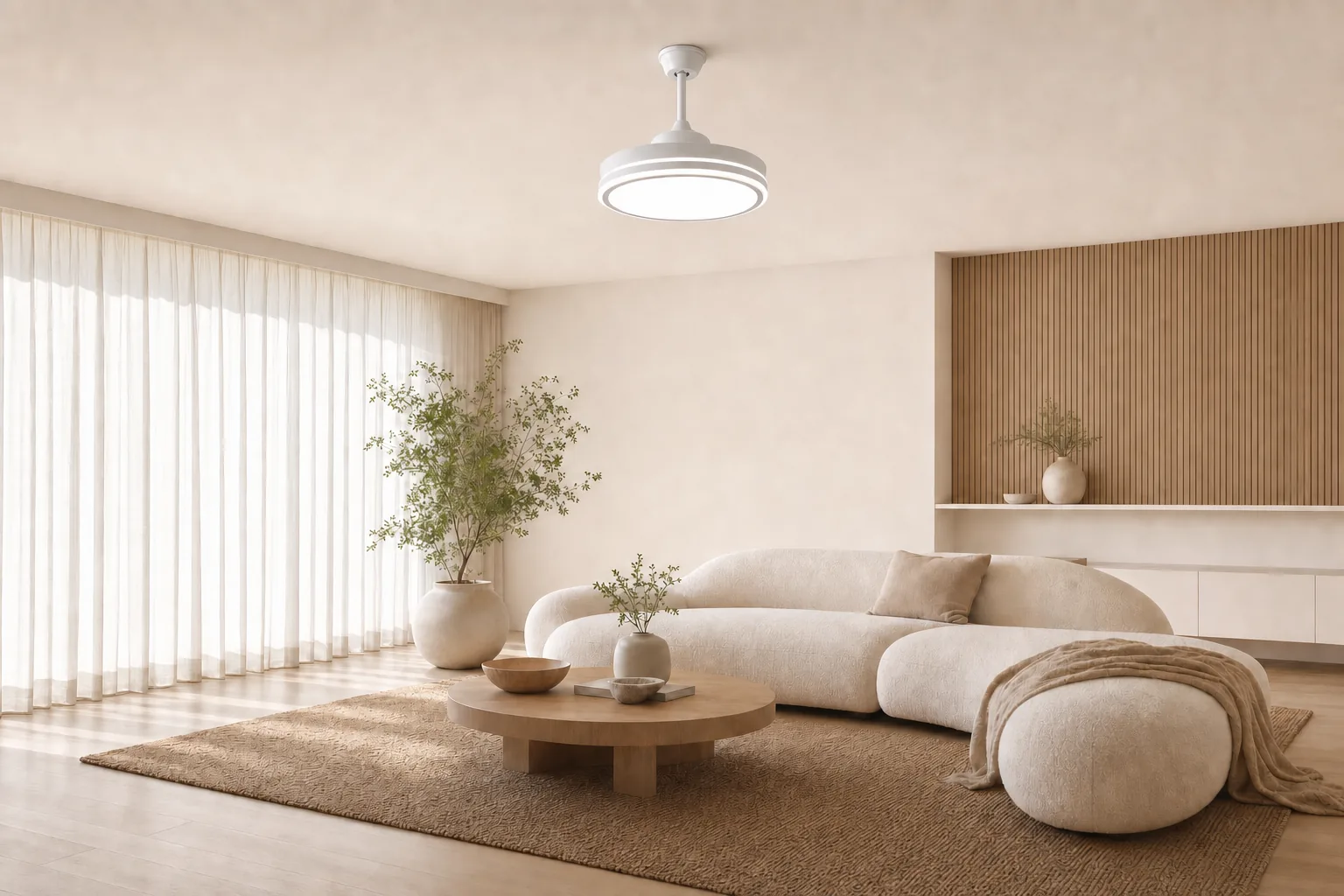
The Boréal 107
Retractable blades · Ø 107 cm · LED ceiling light & silent fan
- ✓Retractable blades: invisible when off, nobody guesses it's a fan
- ✓Sleep with windows closed, 30 dB, quieter than a whisper
- ✓Integrated LED 2700K → 6000K, dimmable: replaces your ceiling light
Light or dark, a question of height
Light wood, oak, ash or beech, warms without darkening. It works everywhere, including under a low ceiling, because it stays close in value to the white of the ceiling and creates no point of fixation.
Dark wood, walnut or stained, behaves like black: it calls for height or an echo elsewhere in the room, joinery, furniture, flooring. Isolated on a white ceiling in a 2.40 m room, it weighs.
The paradox of a wooden luminaire
A wooden luminaire lights the room, but it also lights itself. If its light has poor colour rendering, the wood it carries loses its nuance and pulls grey as soon as night falls. You pay for a noble material to see it falsified ten hours a day.
That is why CRI counts even more on a wooden luminaire than on a white one. Above 90, the grain keeps its depth in the evening; below 80, it goes flat. The Boréal 107 is at 97, which also applies to the materials it lights in the room.
Look at the grain before the price: if it repeats, it is film. Overhead, where you look from a distance, a real wood veneer is more than enough and costs less than solid. And check the CRI of the luminaire: it will decide whether your wood stays wood once the light is on.
Frequently asked questions
How do you tell real wood from a printed finish?+
By the grain. Real wood, solid or veneered, never repeats its pattern. A printed film reproduces the same knot and the same grain every twenty to thirty centimetres.
Is solid wood preferable to veneer overhead?+
Rarely necessary. A luminaire on the ceiling is seen from a distance, and a real wood veneer gives the same effect for less weight and less money, with better dimensional stability.
Does a dark wooden ceiling light darken the room?+
Like a black model, it absorbs part of the light bounced off the ceiling. Under 2.50 m or in a room with little daylight, light wood gives a more comfortable result.
The SEY Maison Circle
Every month, an exceptional piece. Never reissued.
The Drops principle: one high-end furniture piece per month, in a numbered edition. Once it's gone, it never comes back. Circle members are notified 48 h early, access each drop 24 h before everyone else, and receive our guides before publication.
Discover the Drops →