Silence & sleep
Pillow too high or too low: the five signs that tell you
Published on ·5 min read
Nobody measures their pillow. It gets judged on the feel of the first night, which mostly says whether the foam is soft, almost never whether the height is right. Height shows up instead in the gestures of the night and in the state of the bed on waking.
Five signs are enough to decide, and each points in a precise direction. This article details them, explains what each one says about height, and shows how to correct it without buying three pillows to find the right one.
The right height is an alignment, not a feeling
A pillow has one job: to fill the gap between head and mattress so the neck stays in line with the spine. That gap is not the same size in every position. On your side it matches roughly the width of the shoulder, often 9 to 12 cm in an adult. On your back it is limited to the natural curve of the neck, a few centimetres. This is why a pillow that is perfect on your back becomes too low the moment you turn.
The visual check is simple, with a mirror or someone watching. On your side, the nose should stay in line with the sternum and the eye line roughly parallel to the mattress. On your back, the chin should neither point at the ceiling nor drop towards the chest. A two centimetre gap is visible to the naked eye on that line, and it means hours of tension for the neck muscles.
Too high: the chin drops towards the chest
First sign, the most visible: the chin moves closer to the chest. The neck works in flexion all night, the throat closes slightly, and you wake with a stiff back of the neck. On your back the effect is obvious, since the head has nowhere else to go. It is the typical fault of overstuffed pillows, of pillows doubled with a thick case, or of a side pillow used on the back.
Second sign, less obvious: waking on your stomach, with the pillow pushed aside or a cheek on the mattress. The body does not choose the stomach out of preference, it often ends there because no position worked on that pillow. When the height is excessive, the torso eventually leaves the pillow to find alignment again. An unmade bed with the pillow askew tells the same story.
Too low: the neck goes back and the body compensates
Third sign: the neck in extension. The head tips backwards and towards the mattress, the throat opens too far, the mouth falls slightly open. On your side, the ear drops towards the shoulder and the side of the neck stays stretched for hours. Fourth sign, the most reliable of all: an arm slid under the pillow or under the head. That gesture mechanically adds the missing centimetres, at the cost of a shoulder in extreme rotation and pins and needles on waking.
Fifth sign: the pillow folded in two. Nobody folds a pillow that is at the right height. That reflex, often unconscious and repeated every night, says exactly what the arm underneath says: height is missing, and the filling no longer holds it. This advice concerns comfort and posture, it does not replace medical advice: neck pain that lasts or that wakes you at night calls for a health professional.
- ·Chin against the chest on waking: pillow too high.
- ·Waking on your stomach with the pillow pushed aside: pillow often too high.
- ·Neck in extension, mouth slightly open: pillow too low.
- ·Arm slid under the pillow or under the head: pillow too low.
- ·Pillow folded in two before sleeping: pillow too low, or filling collapsed.
Correcting the height without buying three pillows
There are makeshift adjustments. A folded towel under the pillow adds one to two centimetres, removing a case takes a little away. They make good tests over two or three nights, but poor lasting solutions: the added thickness shifts around, and a pillow already collapsed will not hold the corrected height. Real adjustment happens inside the filling, not above or below it.
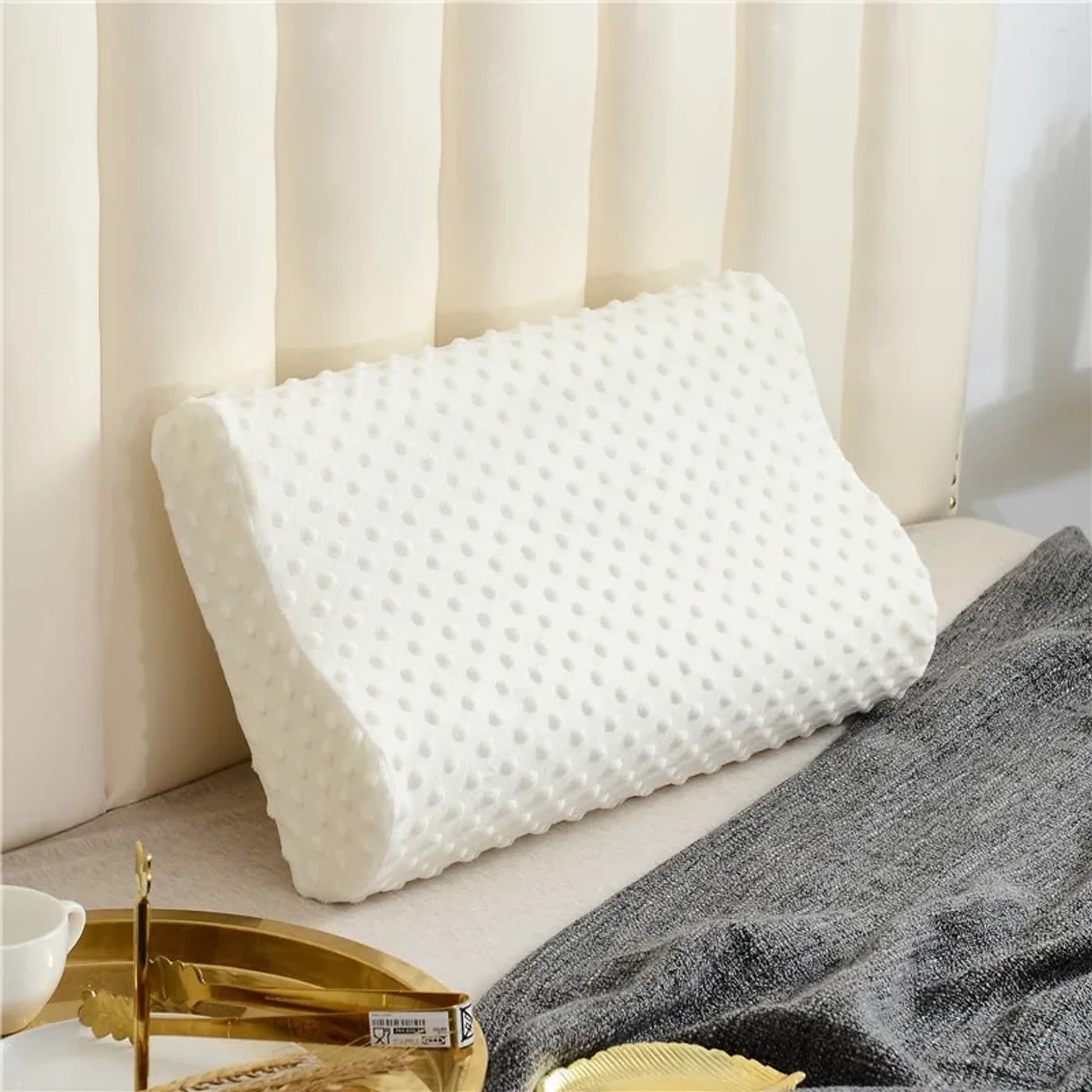
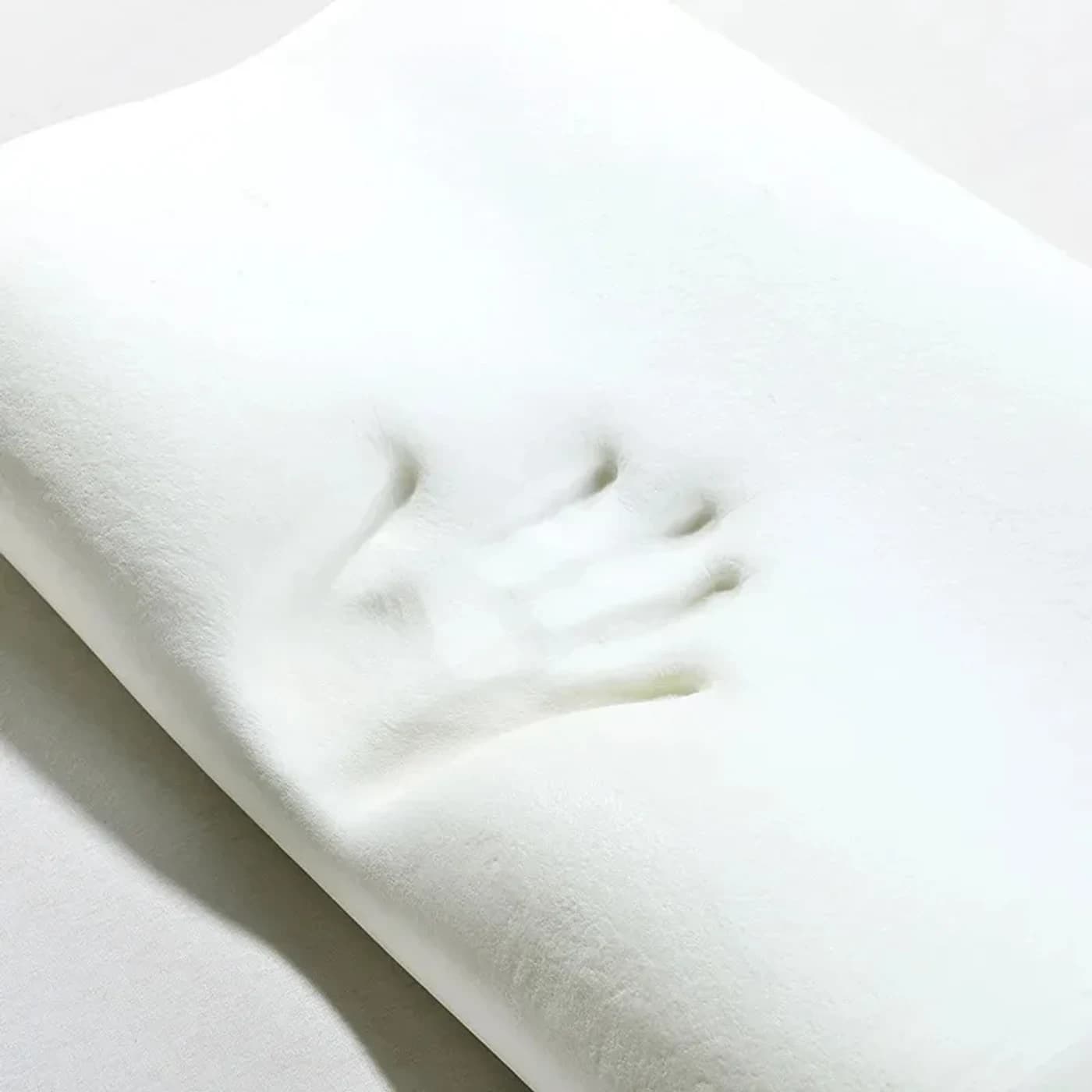
That is the principle behind Le Nuage 50: two wave heights on the same pillow, 10 cm and 7 cm, switched by turning it over. The high wave suits side sleeping, the low wave suits back sleeping. The slow rebound foam holds that height instead of flattening under the weight of the head. It comes alone at 55 € or with its textured cover at 65 €, and the cotton Nuage covers are cut to that wave shape so they do not crush the curve.
Five signs are enough: chin to chest and waking on your stomach for too high, neck in extension, arm under the pillow and folding in two for too low. The body always corrects a wrong height, and those corrections are what to read. A pillow with two heights removes the guesswork.
Frequently asked questions
How do you know if a pillow is too high?+
The chin moves closer to the chest and the back of the neck is stiff on waking. Another frequent clue: you wake on your stomach with the pillow pushed aside, because the body left a height that allowed no alignment at all.
What pillow height should you choose for each position?+
On your side, fill the gap between ear and shoulder, often 9 to 12 cm in an adult. On your back, a few centimetres are enough to match the curve of the neck. Le Nuage 50 offers 10 cm and 7 cm on the same pillow, switched by turning it over.
Why do I fold my pillow in two at night?+
Because it lacks height. Folding doubles the filling and adds the missing centimetres, which points either to a pillow too flat from the start or to a filling that has collapsed over time. It is one of the most reliable signs to change height.
The SEY Maison Circle
Every month, an exceptional piece. Never reissued.
The Drops principle: one high-end furniture piece per month, in a numbered edition. Once it's gone, it never comes back. Circle members are notified 48 h early, access each drop 24 h before everyone else, and receive our guides before publication.
Discover the Drops →