
Silence & sleep
Neck pain on waking: where it comes from and what to change
Published on ·5 min read
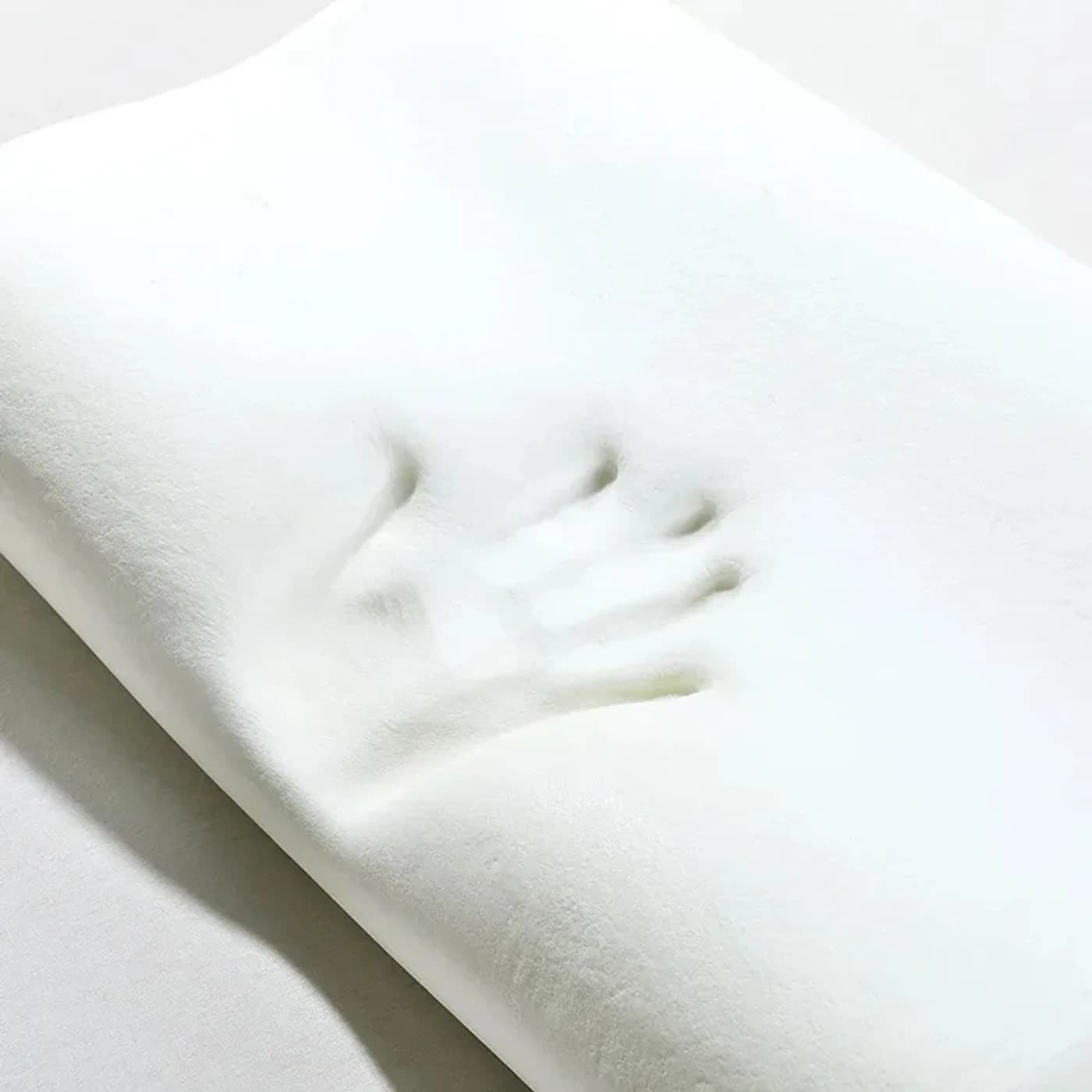
Getting up with the neck locked on one side, turning the head slowly for an hour, then forgetting the whole thing until the next morning: the scene is ordinary. It rarely has a single cause, but it very often has a common factor, and that factor spends seven to eight hours under your head every night.
This article explains what happens during the night, why the height of the pillow matters more than its material, what a pillow that is too high or too flat does depending on position, and what you can test tonight. It is about comfort and posture, not about treatment.
Why the neck is stiff in the morning
During the day the head moves constantly. Neck muscles work, release and change angle hundreds of times an hour. At night it is the opposite: the head stays in the same position for long stretches. If that position takes a small effort, the effort lasts. Seven hours at a slightly forced angle is not violent at the time, but it shows up on waking as stiffness on one side only.
Other factors add up, a day spent leaning over a screen, accumulated tension, a mattress too soft that lets the shoulder sink. The pillow does not replace them all. It remains the simplest parameter to correct, because it can be changed in one evening and it acts on the eight most motionless hours of the day. That is the logical place to start.
Head, neck and spine alignment
The idea fits in one image. Standing, your head sits at the top of the spine, neither pushed forward nor broken backwards. Lying down, that same line is what you want back. Seen from the side, nose, breastbone and navel should stay roughly in the same plane. Seen from above when you sleep on your side, the head should neither drop towards the mattress nor be pushed up towards the ceiling.
The role of the pillow is therefore mechanical, not decorative. It fills a gap. That gap is not the same depending on position: wide between ear and shoulder on the side, far smaller between neck and mattress on the back. A single pillow cannot fill two very different gaps correctly, unless it offers two heights. That is exactly the principle of the Nuage 50, with its 10 cm wave and its 7 cm wave on the same pillow.
Too high, too flat: what each case does
A pillow that is too high pushes the chin towards the chest. On the back that is the classic case: the head tips forward, the neck stays stretched all night, breathing is less free. People often wake with discomfort at the base of the skull. On the side, a pillow that is too high does the opposite by pushing the head towards the ceiling, and the pressure concentrates on the ear and the temple.
A pillow that is too flat creates the symmetrical problem. On the side, the head falls towards the mattress and the neck bends towards the lower shoulder: that is the configuration that most often leaves stiffness on one side on waking. On the back, a flat pillow is less penalising, but it leaves the hollow of the neck unsupported and the muscles work to compensate.
- ·On the back with a thick pillow: chin towards the chest, discomfort at the base of the skull.
- ·On the side with a flat pillow: head dropping, stiffness on one side.
- ·On the side with a pillow too high: hard pressure on the ear and the temple.
- ·On the stomach with any thick pillow: increased twist of the neck.
What you can change tonight
Start by noticing the position you are in as you fall asleep, then the one you wake up in. If you are mostly on your side, you need height, about 10 cm. If you are mostly on your back, you need clearly less, about 7 cm. Then remove whatever has piled up over the years: two stacked pillows almost always give an excessive height and an unstable surface.
Check too that the pillow keeps its shape until morning. A filling that shifts fills the gap at bedtime and no longer at three in the morning. Slow rebound foam holds its position, which is its main benefit here. The Nuage 50 is turned over depending on position, its textured cover comes off and is washed, and the foam core airs. Finally, if the discomfort lasts or wakes you, talk to a health professional: this advice is about comfort, never about treatment.
A stiff neck in the morning usually comes from an angle held too long, not from a sudden movement. Pillow height is the simplest setting to correct, about 10 cm on the side and 7 cm on the back. If the discomfort persists beyond a few weeks or wakes you at night, the opinion of a health professional is needed.
Frequently asked questions
Why do I wake up with a stiff neck?+
Most often because the head stayed bent at the same angle all night. A pillow that is too high breaks the neck forward, a pillow that is too flat lets it fall towards the mattress. A position held for hours tires the muscles, even with no sudden movement.
Which pillow when your neck is stiff on waking?+
A pillow at the height of your position: about 10 cm if you sleep on your side, about 7 cm on your back. Slow rebound foam keeps that height until morning, unlike a filling that packs down. This advice is about comfort and does not replace medical opinion.
Should you sleep without a pillow when your neck hurts?+
Rarely, except if you sleep on your stomach. Without a pillow the head goes backwards on the back and drops towards the mattress on the side. The aim is not to remove the pillow, it is to find the height that keeps the head in line with the spine.
The SEY Maison Circle
Every month, an exceptional piece. Never reissued.
The Drops principle: one high-end furniture piece per month, in a numbered edition. Once it's gone, it never comes back. Circle members are notified 48 h early, access each drop 24 h before everyone else, and receive our guides before publication.
Discover the Drops →