Silence & sleep
Shoulder pain at night: what to change in bed to sleep better
Published on ·5 min read

Side sleeping is the most widespread position. It is also the one that concentrates the most load on a single joint: the bottom shoulder ends up trapped between the weight of the torso and the mattress surface, sometimes for six or seven hours without a change.
Many people blame the mattress, when the discomfort often comes from the geometry of the position: pillow height and where the arm goes. This article explains the mechanism, what can be adjusted tonight, and when the question leaves the bedding department altogether.
Why it is almost always the bottom shoulder
Lying on your side, the body rests on three points: the hip, the ribcage and the shoulder. The shoulder is the smallest of the three and the least built for carrying. It takes part of the torso weight on a small surface, against a mattress pushing back. Circulation slows in compressed tissue, and since you move little during deep phases, the compression lasts. That is why the discomfort is there on waking and gone during the day.
A mattress that is too firm makes the mechanics worse: the shoulder does not sink in, it stays flattened across its whole width. A mattress that is too soft does the opposite, the torso sinks and the shoulder rolls forward. Between the two there is a margin where the shoulder sinks a little and the spine stays straight. The mattress is, however, the most expensive and slowest thing to change, which makes starting with the pillow the logical move.
Pillow height decides the load on the shoulder
On your side, between the ear and the top of the shoulder, there is a gap roughly the width of the shoulder. If the pillow does not fill it, the head tips towards the mattress, the neck bends, and the weight of the skull travels down into the trapezius then into the already compressed shoulder. If the pillow overshoots, the head goes the other way and the same trapezius works in reverse. The right height is the one that keeps the nose in line with the sternum.
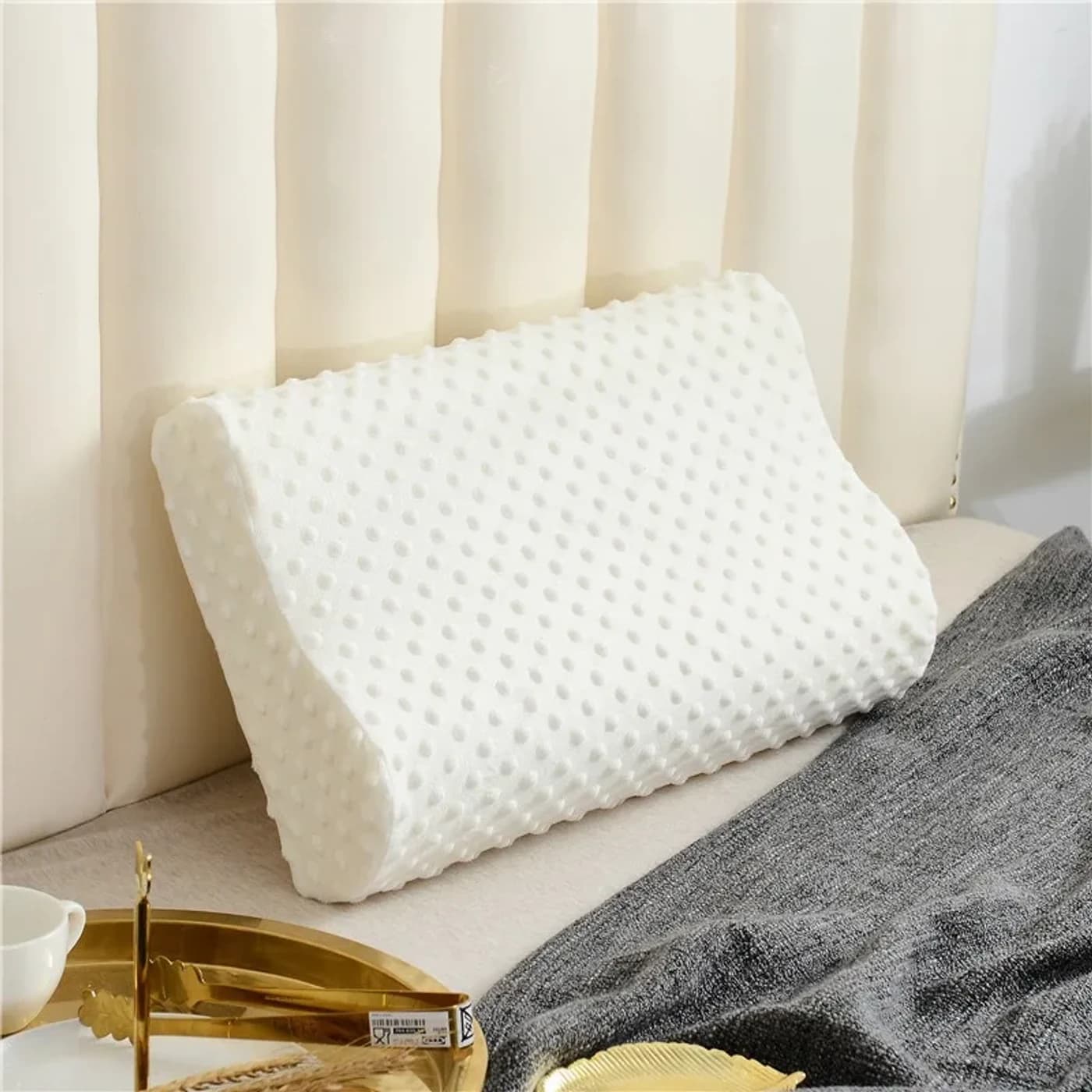
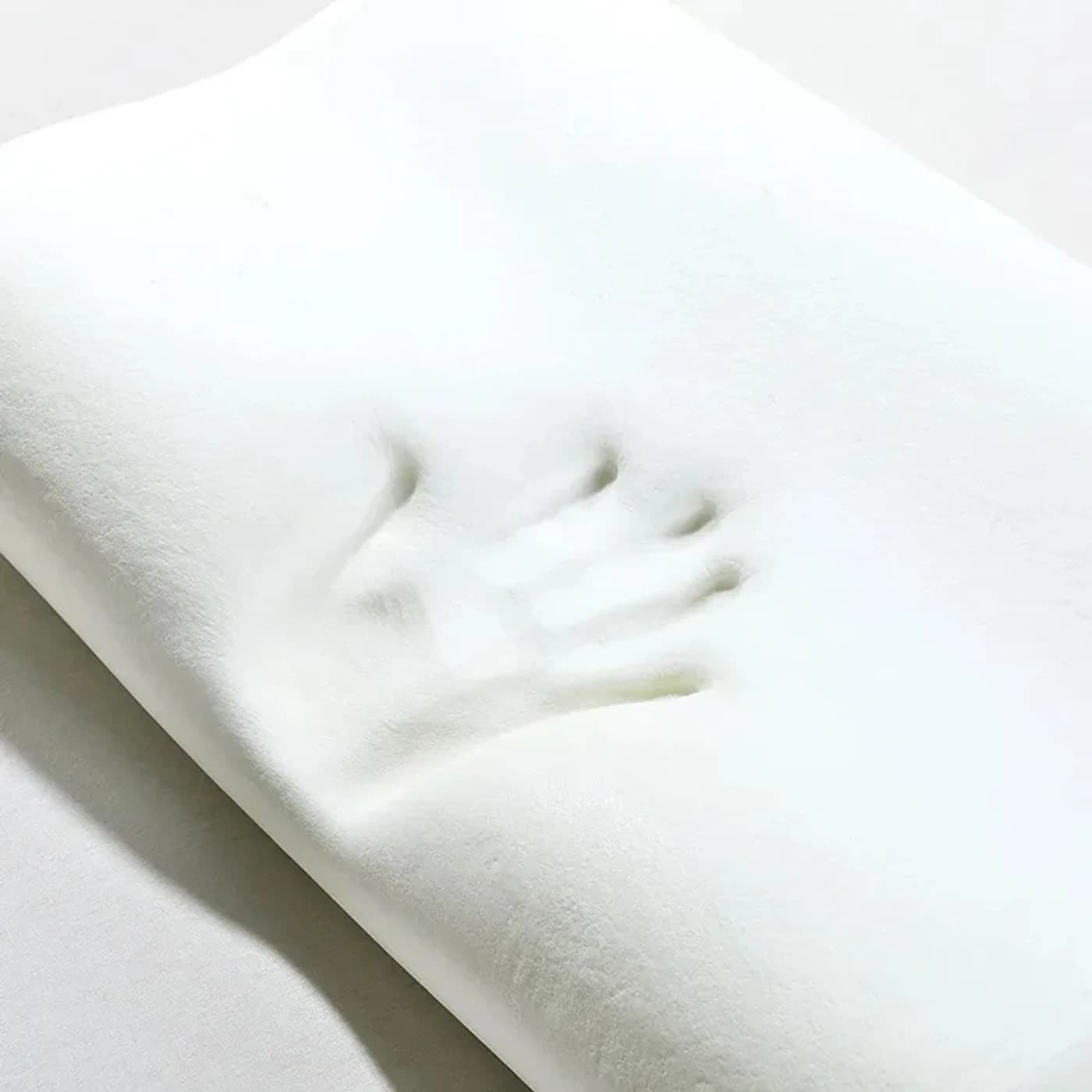
This is why a single pillow rarely suits both back and side: the two positions do not have the same gap to fill. Le Nuage 50 answers that with two wave heights on the same pillow, 10 cm and 7 cm, switched by turning it over. The high wave suits side sleeping, where the gap is largest, the low wave suits back sleeping. The slow rebound foam holds that height instead of flattening within the first hour.
The arm, the part everyone forgets
The most widespread reflex is sliding the arm under the pillow or under the head. It lifts the head a few centimetres, which feels better for a second, but it places the whole weight of the skull on the forearm and holds the shoulder in extreme rotation for hours. Pins and needles and the arm falling asleep almost always come from there. The sign is easy to recognise: your hand wakes you, you shake it out, and everything settles within minutes.
The correction is easy to try. Pull the bottom arm out and leave it in front of you, slightly bent, hand resting on the mattress or on a second pillow. The top arm falls forward naturally and pulls the shoulder inward; a pillow hugged against the chest stops it rolling. Many people find those two adjustments change the night more than the choice of mattress does.
What to change tonight, and what needs medical advice
A handful of adjustments cost nothing and can be tested in one night. They treat nothing, they change the geometry of the position and the way the load is spread. The best method is to change one thing at a time, over two or three nights, otherwise you never learn what did the work. Le Nuage 50 lends itself to that test, since one reference gives two heights and the second pillow is 20 % off in the cart, enough to support both head and arm.
One point must stay clear: this article is about comfort and posture, never about treatment. It does not replace medical advice. Shoulder pain lasting several weeks, waking you at night, travelling down the arm, coming with a loss of strength or limiting everyday arm movement calls for a health professional. Bedding can remove a mechanical constraint, it cannot replace an examination.
- ·Fill the gap between ear and shoulder with a pillow at the right height, nose in line with the sternum.
- ·Pull the arm out from under the pillow and leave it in front of you, slightly bent.
- ·Hug a second pillow against your chest so the top shoulder cannot roll forward.
- ·Slide a pillow between the knees to keep the pelvis straight and avoid twisting the torso.
- ·Alternate sides from night to night rather than always sleeping on the same shoulder.
The bottom shoulder hurts because it carries a load on a small surface for too long. Pillow height and arm position are the two quickest levers to test, and the cheapest. If the discomfort lasts, wakes you or travels down the arm, a health professional comes before any purchase.
Frequently asked questions
Why does my shoulder hurt when I sleep on my side?+
Because the bottom shoulder carries part of the torso weight on a small surface, for hours without moving. A pillow that is too low makes it worse by tipping the head towards the mattress. Pain that lasts calls for a health professional.
What pillow height is right for side sleeping?+
A height that fills the gap between the ear and the top of the shoulder, roughly the width of the shoulder. The visual check is simple: the nose should stay in line with the sternum. Le Nuage 50 offers 10 cm for the side and 7 cm for the back on one pillow.
Should you sleep with an arm under the pillow?+
Better not. An arm under the pillow carries the weight of the skull and holds the shoulder in extreme rotation for hours, which explains most pins and needles on waking. Leave the arm in front of you, slightly bent, hand resting on the mattress.
The SEY Maison Circle
Every month, an exceptional piece. Never reissued.
The Drops principle: one high-end furniture piece per month, in a numbered edition. Once it's gone, it never comes back. Circle members are notified 48 h early, access each drop 24 h before everyone else, and receive our guides before publication.
Discover the Drops →