Silence & sleep
Sleeping well: the sleep hygiene rules that actually work
Published on ·5 min read
There are about a hundred sleep tips in circulation, and fewer than ten that genuinely change anything. The rest are either details or recipes that work for one person and not for anyone else. The rules that hold up share one thing: they act on the body clock or on the physical conditions of sleep.
This article takes the six most solid rules, one idea at a time, each with the concrete action that goes with it. No miracle method, no health promise: organisation and environment. If a sleep problem lasts anyway, if you wake exhausted every morning or snore with breathing pauses, that is a matter for a health professional.
Fix the wake time before the bedtime
This is rule number one, and also the least applied. The body clock sets itself on wake time, not on the moment you fall asleep. Getting up at 7 a.m. on weekdays and at 11 a.m. on Saturday amounts to changing time zone twice per weekend: by Sunday evening the body has no reason to feel sleepy at 11 p.m. It is the most common cause of Sunday nights that refuse to start.
The concrete action: pick a single wake time, seven days a week, with an hour of tolerance at most on weekends. If you slept badly, get up on time anyway and go to bed earlier the next evening. Compensating by sleeping in shifts the clock and prolongs the problem. Allow two to three weeks for the body to settle into it and offer sleep on its own.
Morning light, evening screens
Light is the main signal telling the body what time it is. In the morning, natural exposure starts the biological day and schedules melatonin release around fourteen to sixteen hours later. Outdoor light, even under cloud, is tens of times more intense than a kitchen ceiling light. That is why a coffee taken outside or a ten minute walk does more than a therapy lamp placed behind a screen.
In the evening the issue is not only blue light: it is the quantity of light and the content that keeps you alert. A screen held thirty centimetres from the face sends more signal than a living room lamp, and a series or a news feed keeps the brain on watch. Dimming the whole home an hour before bed does more than a software filter, because it is the room as a whole that sets the context.
- ·Fifteen to thirty minutes of natural light within the hour after waking.
- ·Breakfast near a window rather than at the back of the room.
- ·Home lighting dimmed an hour before bed, low lamps rather than ceiling lights.
- ·Screens out of the bedroom, or at least left outside the bed.
A cool, dark, quiet bedroom
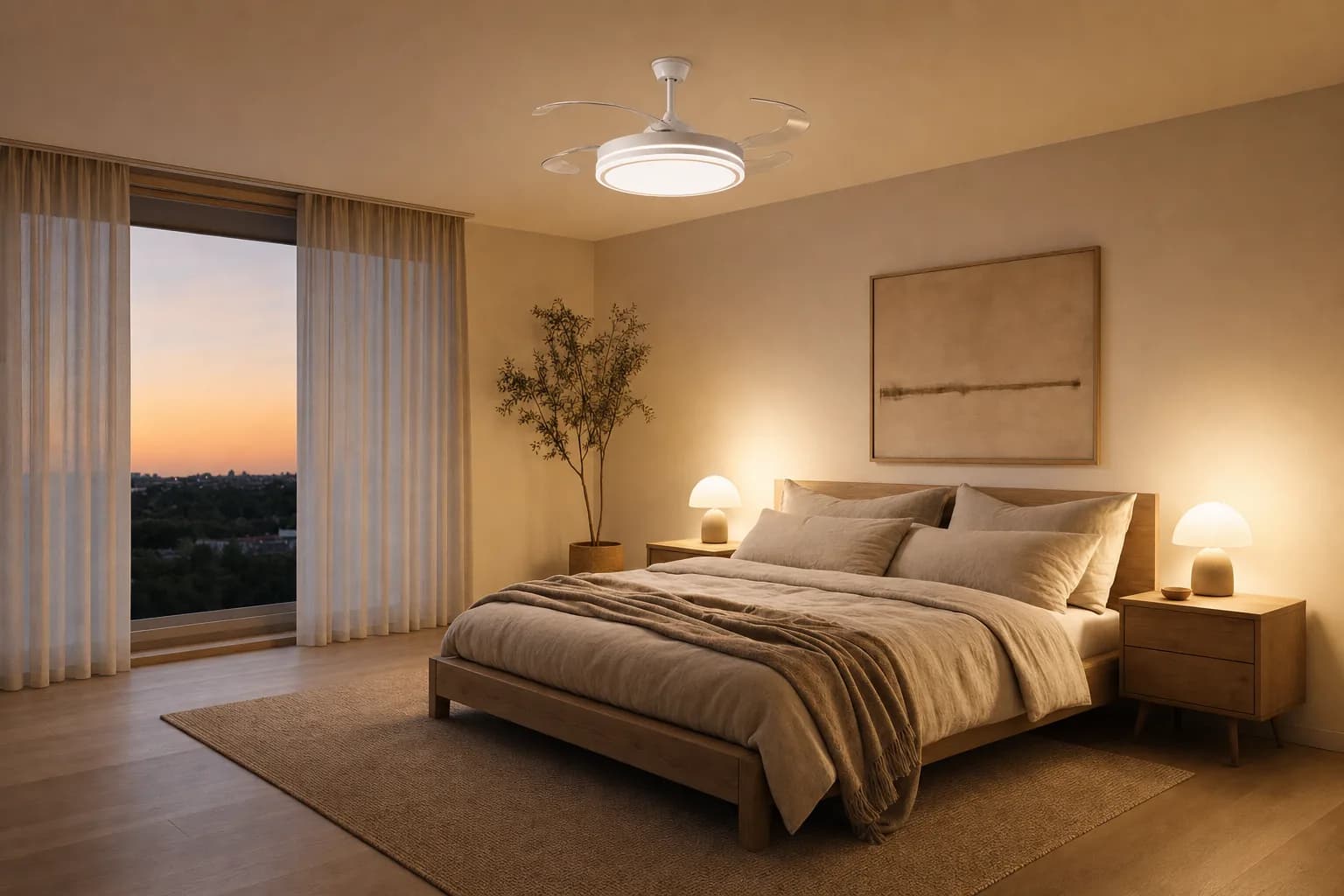
The body has to lower its core temperature by about one degree to fall asleep, and it does that faster in a cool room. Recommendations converge between 16 and 19 °C, with tolerance up to about 22 °C. Above 24 °C, falling asleep takes longer and deep sleep decreases. Darkness matters just as much: a truly dark bedroom removes the small light signals that pull you back into light sleep, and quiet under 35 dB limits the micro-awakenings you never remember.
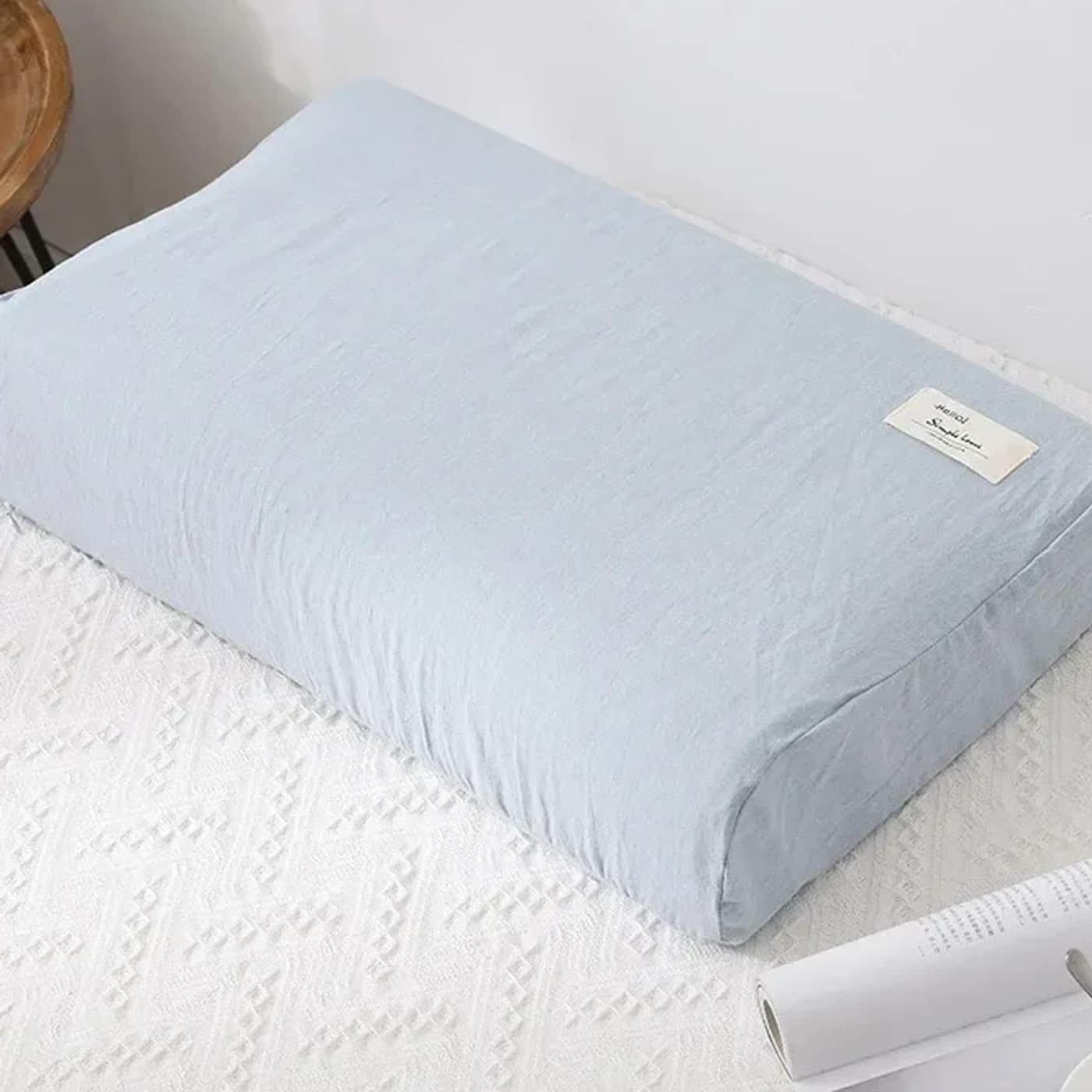
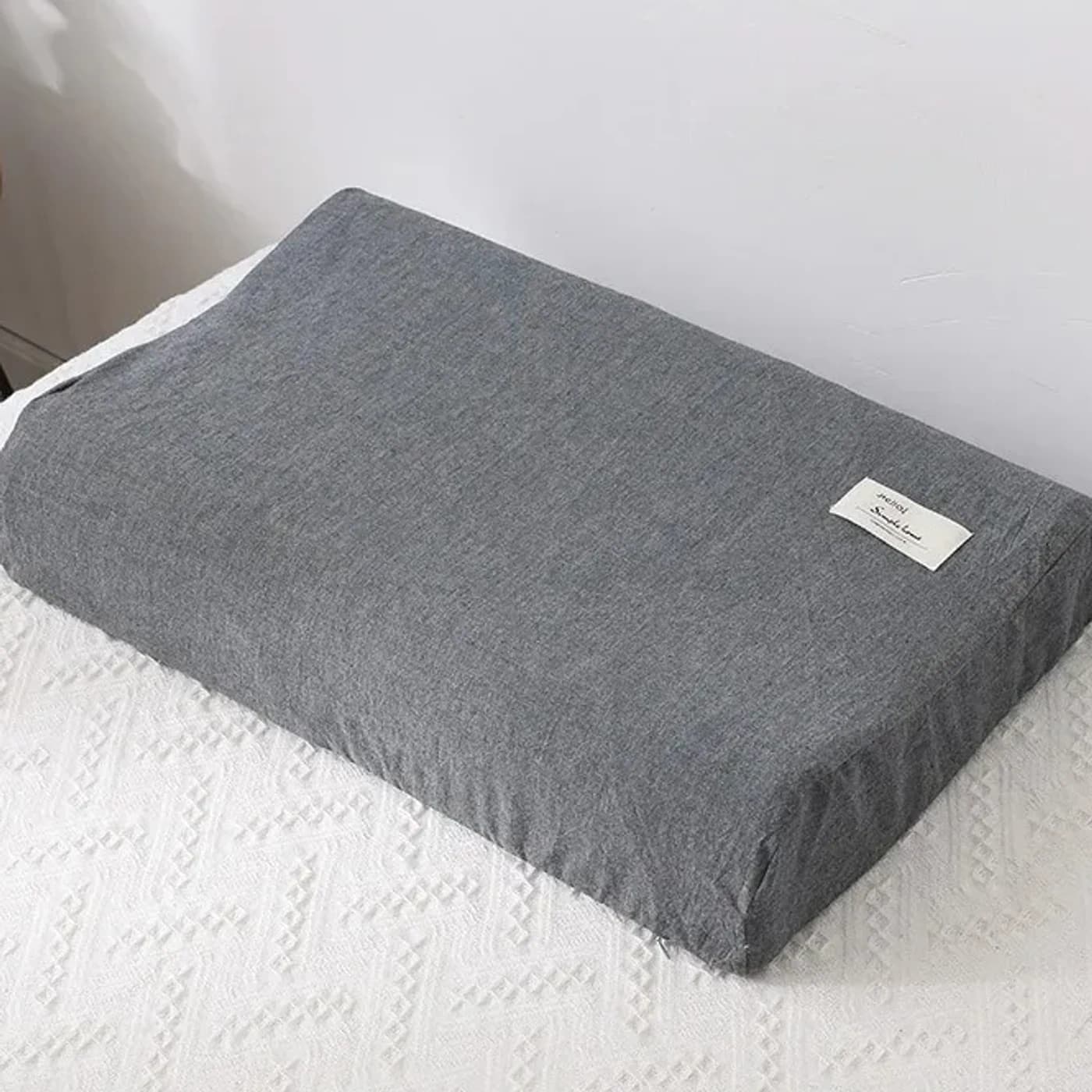
The concrete action: air the room then close the shutters in late afternoon in summer, aim for a blackout curtain rather than a mask if you tolerate masks poorly, and remove night lights and device LEDs. On bedding, the most neglected item is still the pillow, because it governs head and back alignment all night. The Nuage 50, in a 50 × 30 cm format, carries two wave heights on the same product, 10 cm and 7 cm: the high wave for side sleeping, the low wave for back sleeping.
Caffeine, alcohol and bedding
Caffeine has a half-life of roughly five to six hours in most adults: half the dose is still active six hours later. A coffee at 4 p.m. is still working at bedtime, often without the person noticing since they fall asleep anyway, just more slowly and less deeply. The simple rule is to cut caffeine eight hours before your target bedtime, tea and colas included. Alcohol does the opposite: it speeds up falling asleep, then fragments the second half of the night.
Finally, bedding: it does not make you sleep, but bad bedding wakes you. A sagging mattress shifts the whole body axis and no pillow catches that up. A pillow generally flattens within two to three years and then stops holding the head. The Nuage 50 comes on its own at 55 € or with its textured polyester and cotton cover at 65 €, with a second pillow at 20 % off in the cart, and the range includes jacquard cotton covers at 22 € in six colours.
A fixed wake time, light in the morning, a cool dark bedroom, fewer screens and less caffeine in the evening, bedding that holds: those five rules do most of the work. They act slowly, over two to three weeks. If the problem persists anyway, talk to a health professional.
Frequently asked questions
What is the most effective sleep hygiene rule?+
Getting up at the same time every day, weekends included. The body clock sets itself on wake time rather than bedtime, so that is the lever that actually moves the moment you fall asleep. Allow two to three weeks of consistency before sleep starts arriving on its own in the evening.
When should you stop drinking coffee to sleep well?+
About eight hours before your target bedtime, so 2 or 3 p.m. for an 11 p.m. bedtime. Caffeine has a half-life of five to six hours in most adults: half of the 4 p.m. dose is still active at 10 p.m. Tea, cola drinks and some energy drinks count too.
Do you really need to sleep in complete darkness?+
Yes, as far as possible. A genuinely dark bedroom removes the light signals that pull you back into light sleep without fully waking you. A blackout curtain, switched off device LEDs and no night light are enough in most bedrooms, and cost less than a mask many people end up pulling off during the night.
The SEY Maison Circle
Every month, an exceptional piece. Never reissued.
The Drops principle: one high-end furniture piece per month, in a numbered edition. Once it's gone, it never comes back. Circle members are notified 48 h early, access each drop 24 h before everyone else, and receive our guides before publication.
Discover the Drops →