Cooling without AC
Does sleeping under a fan give you a stiff neck? What physiology says, and what really matters
Published on ·4 min read
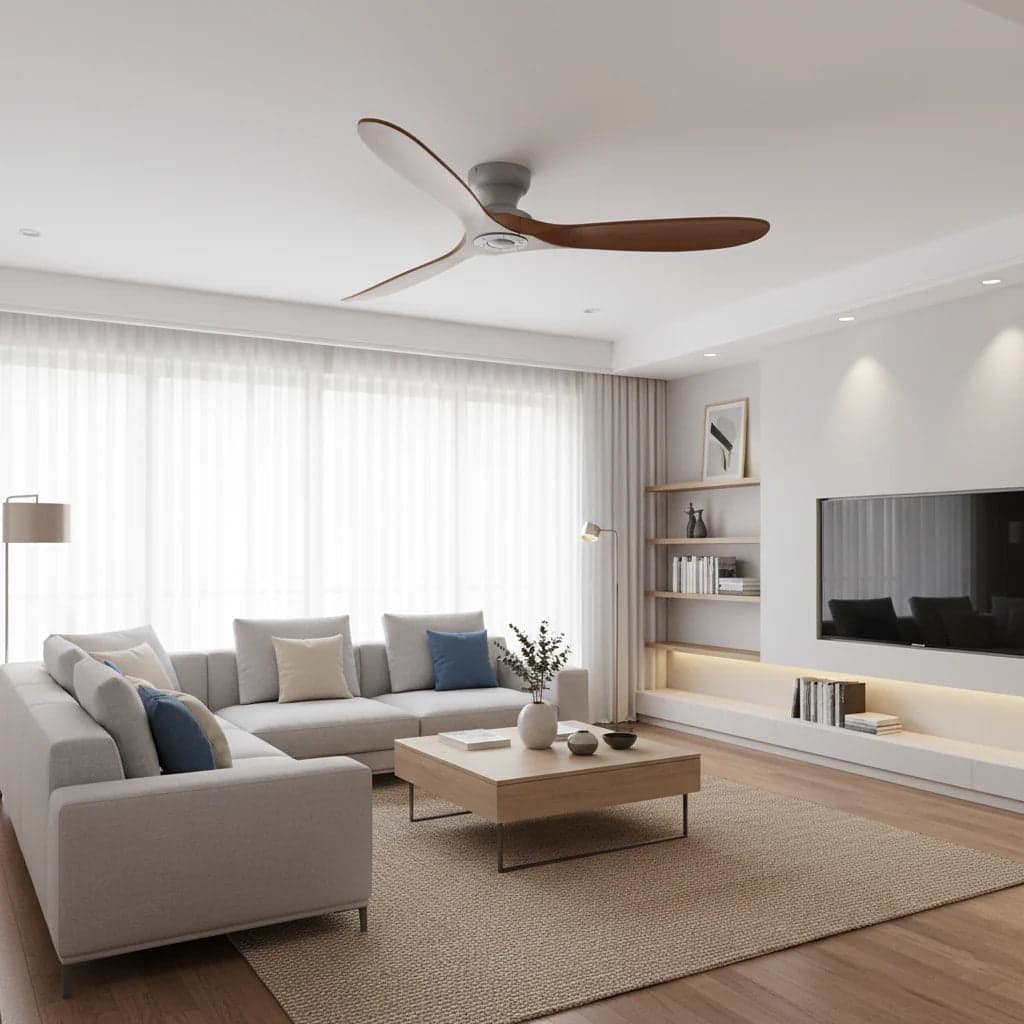
You will catch cold. You will wake up with a locked neck. Everyone has an aunt who says it, and everyone remembers a night under a fan that ended badly. The doubt is legitimate and deserves better than a shrug.
This article looks at what physiology knows about the three classic fears, stiff neck, cold, dry throat, what really causes them, and why a correctly set ceiling fan is not in the same category as a pedestal fan aimed at the pillow.
The stiff neck: a cold jet on a still muscle
A morning stiff neck is a contracture of the neck muscles. It happens when a muscle stays in the same position for hours, locally cooled: cooling contracts, stillness locks. That is exactly what a pedestal or desk fan aimed at the bed produces, with a 2 to 3 m/s jet sweeping the nape all night.
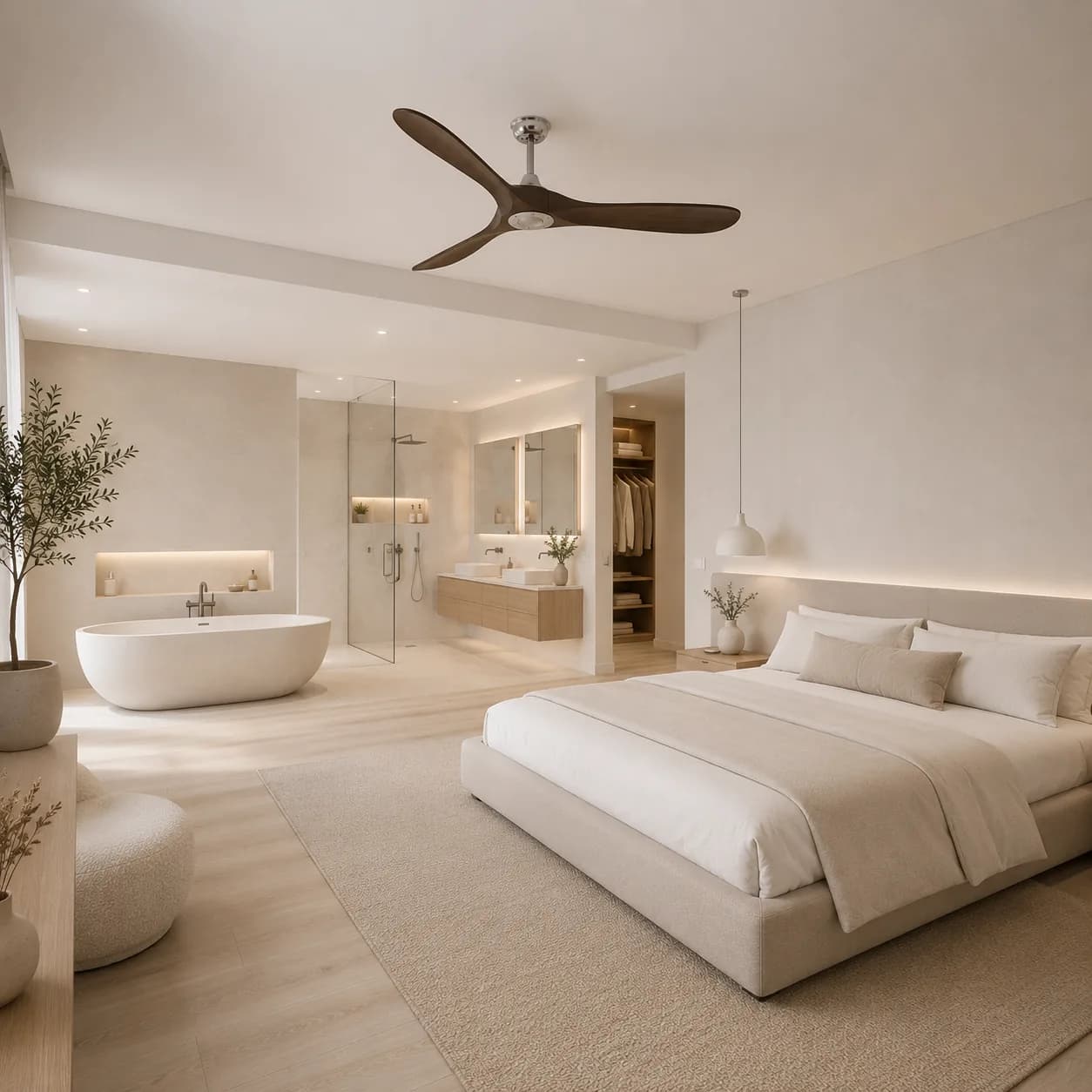
A ceiling fan does not work that way. Placed in the centre of the room, it pushes a wide column of air that spreads over the whole area. At speed 1 or 2, air speed at bed level is 0.3 to 0.8 m/s, diffuse, with no fixed direction on one part of the body. No muscle is locally cooled: the skin feels an overall freshness, like an open window on a mild night.
The cold: viruses do not come from wind
A cold is a viral infection. You need a virus, passed on by a person, to catch it; no draught contains one. What cold can do is slightly weaken the nasal lining when it is chilled and dried for a long time, which helps an infection if the virus is already there. Again, it is the localised jet on the face that is the problem, not the gentle circulation of a room.
In practice, sleeping under a ceiling fan at low speed in a 24 °C bedroom exposes you to nothing more than a night with the window open. What makes you ill is the sleepless night at 28 °C with no ventilation, which exhausts and weakens far more.
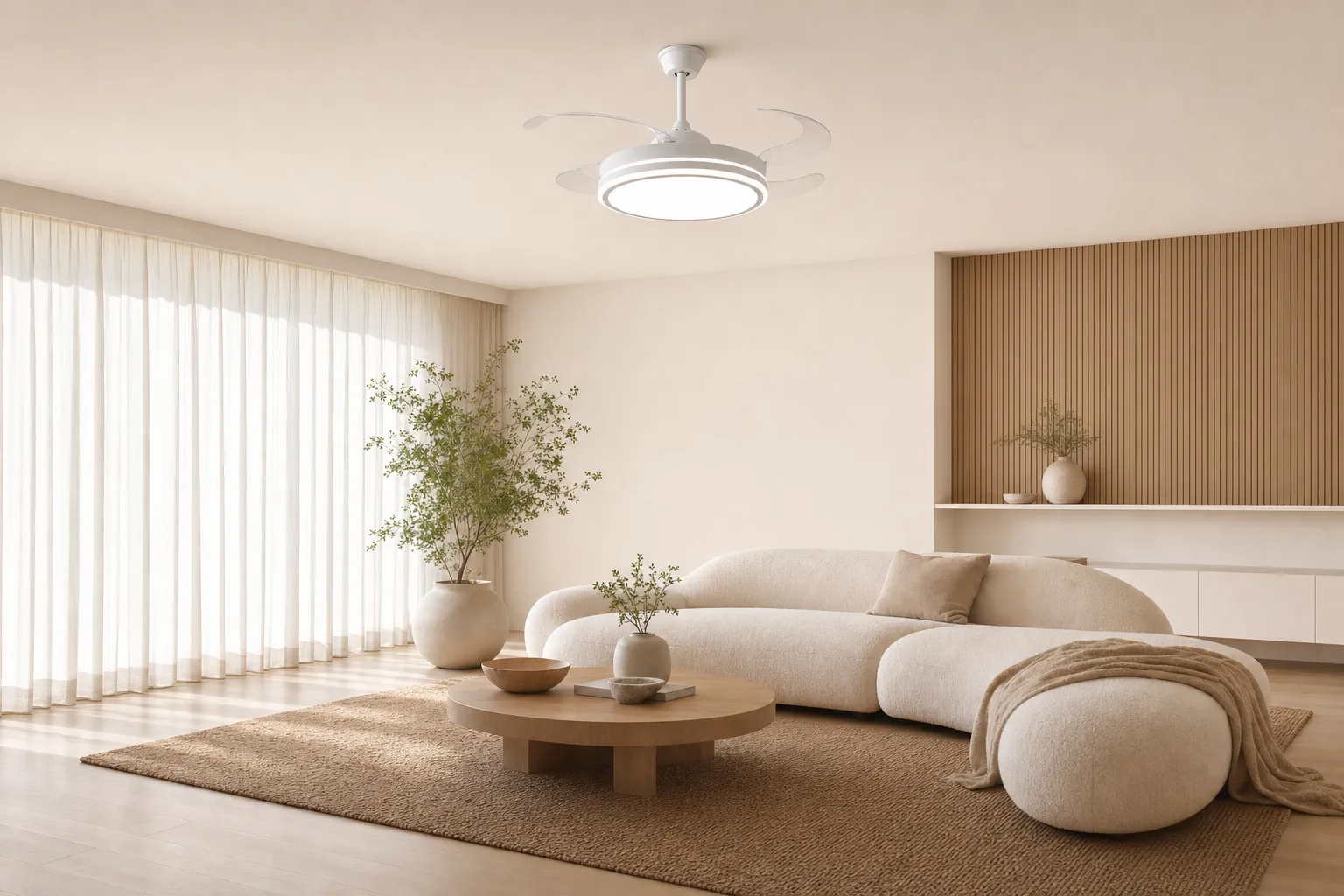
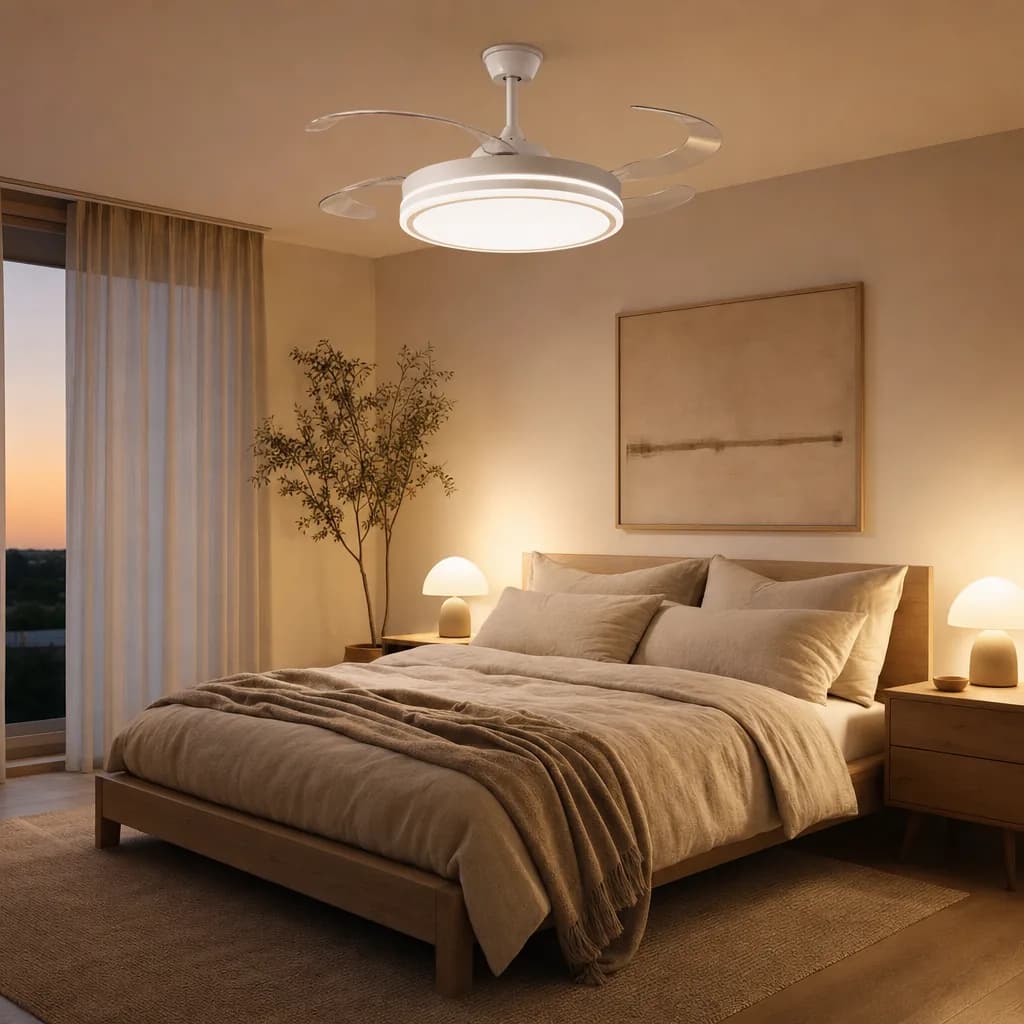
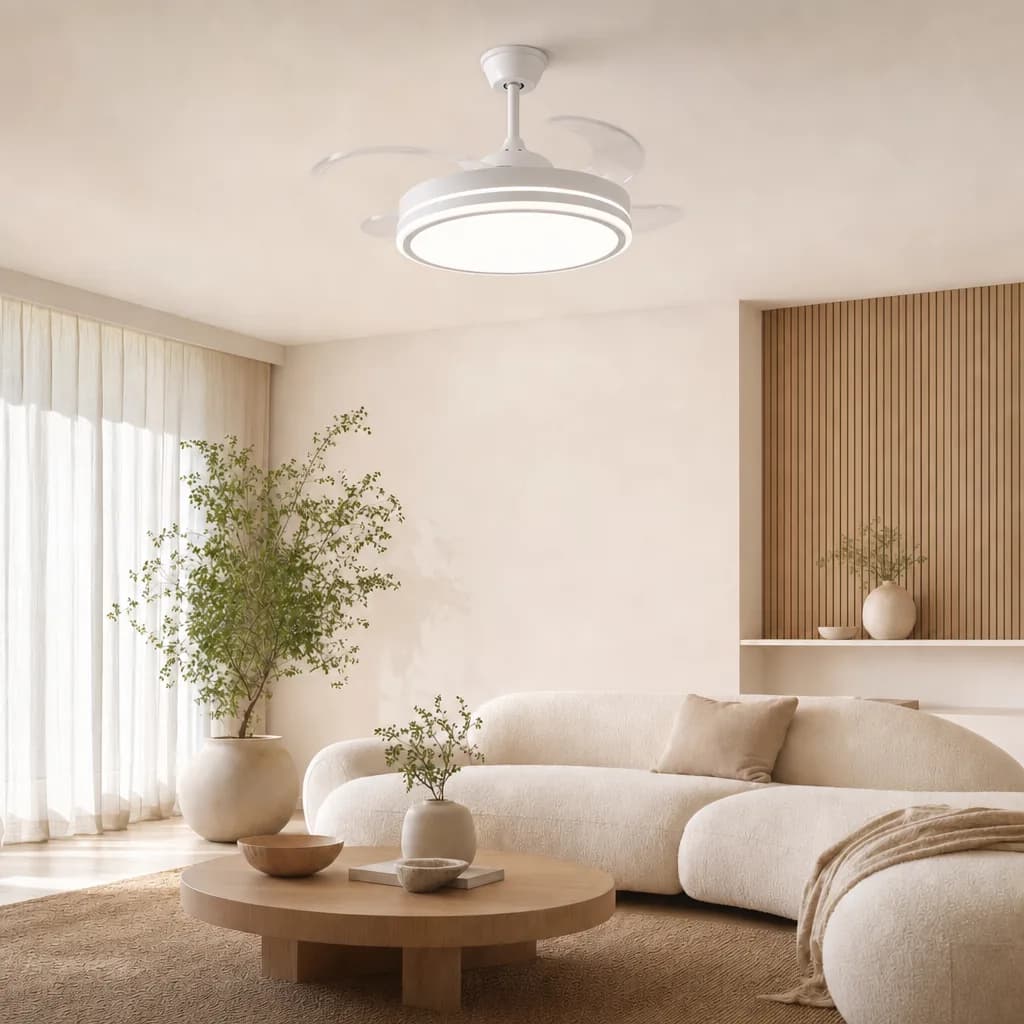
The Boréal 107
Retractable blades · Ø 107 cm · LED ceiling light & silent fan
- ✓Retractable blades: invisible when off, nobody guesses it's a fan
- ✓Sleep with windows closed, 30 dB, quieter than a whisper
- ✓Integrated LED 2700K → 6000K, dimmable: replaces your ceiling light
The dry throat: the one real small complaint, and its cure
The only founded complaint is a dry throat or mouth on waking. It comes from evaporation sped up by air movement, especially in people who sleep with their mouth open, and it is stronger when the bedroom air is already dry, heated in winter or in dry wind conditions.
The cure is three gestures: a lower speed, a glass of water on the bedside table, and, if the room is dry, a bowl of water or a damp cloth on a radiator. In summer the air is rarely dry enough to bother. Winter mode on a reversible fan, at speed 1, evens the temperature with no air movement at bed level and does not cause this.
- ·Speed 1 at night: under 0.5 m/s at bed level
- ·Unit in the centre of the room, headboard away from the blades
- ·Glass of water within reach, especially for mouth breathers
- ·Dry winter bedroom: reverse mode, no direct air movement
The setting that lets you sleep without thinking about it
It all comes down to two choices: speed and position. Speed 1 or 2, never more for sleeping. Unit in the centre of the bedroom, headboard offset from the blades. With these two settings the body feels an overall freshness that lowers the felt temperature by 2 to 3 °C, with nothing blowing on it.
The Boréal 107 is built for that setting: 30 dB at speed 1, diffuse airflow over 10 to 21 m², and a remote on the bedside table to drop a notch at two in the morning without getting up. The stiff neck is the hotel-room pedestal fan; the ceiling fan is the open window without the mosquitoes or the street noise.
A stiff neck comes from a localised cold jet, a cold from a virus, a dry throat from already dry air: none of the three is caused by a ceiling fan set at low speed in the centre of the room. Two settings, speed 1 or 2 and the headboard away from the blades, and you sleep at a felt 24 °C in a 27 °C bedroom. The Boréal 107, quiet and diffuse, is made for those nights.
Frequently asked questions
Does sleeping under a ceiling fan give you a stiff neck?+
No, at low speed. A stiff neck comes from a cold jet aimed at the neck muscles for hours, like a pedestal fan pointed at the bed. A ceiling fan at speed 1 or 2 spreads a gentle air movement over the whole room, with no localised jet.
Can you catch a cold from a fan?+
No. A cold is a viral infection, and moving air contains no virus. Only a prolonged cold jet on the face can weaken the nasal lining. Gentle circulation from the ceiling has no such effect.
Why is my throat dry in the morning with a fan?+
Air movement speeds up evaporation, especially if you sleep with your mouth open and the bedroom air is already dry. Lower the speed, keep a glass of water within reach and humidify the room in winter. In summer the issue is rare at speed 1.
The SEY Maison Circle
Every month, an exceptional piece. Never reissued.
The Drops principle: one high-end furniture piece per month, in a numbered edition. Once it's gone, it never comes back. Circle members are notified 48 h early, access each drop 24 h before everyone else, and receive our guides before publication.
Discover the Drops →