Silence & sleep
Falling asleep faster: the four step evening routine that works
Published on ·5 min read
Falling asleep is not a switch, it is a slope. The body slides down it in about twenty minutes when everything is in place, and can get stuck on it for an hour when nothing is. What happens in the last hour before bed therefore matters as much as bedtime itself.
Here is a four step evening routine, built on what the body actually does to fall asleep: lower its temperature, reduce light signals, slow the breath, and find a bedroom that is ready. Nothing esoteric, nothing that takes two hours. If insomnia has lasted for weeks despite everything, that is a matter for a health professional, not for a routine.
What the body does in the last hour
Towards the end of the day, core temperature starts to fall, and it is that movement that triggers sleep. The drop is about one degree between evening and the middle of the night. It happens through the skin: the vessels in hands and feet dilate, heat from the core moves outward, and the feeling of warm hands and feet announces sleep. A room that is too warm blocks that transfer, and falling asleep takes longer.
In parallel, melatonin rises, provided the light has come down. Both mechanisms are physical, they do not depend on willpower. That is why an effective evening routine does not try to force sleep: it sets the conditions and lets the slope do the rest. The whole logic of the four steps below sits in that sentence.
The routine in four steps
Order matters, because each step prepares the next. The warm shower comes early, sixty to ninety minutes before bed, so the temperature drop has time to happen. Light comes down next, across the whole home and not only in the bedroom. Then a calm screen-free activity, twenty minutes is enough. Finally, five minutes of slow breathing once you are lying down, on a pillow that holds your head.
The routine fits into an hour and is deliberately unremarkable. Its strength is repetition: after about ten evenings, the early steps become a signal in themselves and sleep arrives before the end. That conditioning is what does the work, not the exact content of each step. You can swap reading for music or slow tidying, as long as the order and the timing stay put.
- ·Sixty to ninety minutes before: a warm shower or bath, not a hot one.
- ·One hour before: overhead lights off, low lamps only.
- ·Thirty minutes before: calm screen-free activity, reading, music, slow tidying.
- ·Once in bed: five minutes of slow breathing, exhale longer than inhale.
Breathing, and why it works
The principle is simple: lengthening the exhale slows the heart rate. A common pattern is breathing in for four counts and out for six, without straining, for five minutes. Counting occupies attention, which interrupts the loop of thoughts that spins up at bedtime, and the long exhale settles the body into a calmer state. Many people find this the most surprising part of the routine, because it is free and immediate.
It is also the only tool in the routine you can use in the middle of the night. At three in the morning you are not going to take a shower or switch a lamp back on: breathing stays available without getting up and without checking the time. A useful rule for those awakenings: if sleep has not returned after about twenty minutes, get up, go to another room in low light, and come back when tiredness arrives. Lying there ruminating teaches the brain that the bed is a place for being awake.
Preparing the bedroom before you get into it
The last step happens before you even enter the bedroom. It should be cool, between 16 and 19 °C, dark and tidy. Airing it for ten minutes late in the evening, closing the shutters, switching off device LEDs, taking the phone out of the bed: those actions take three minutes and remove the small signals that pull you back into light sleep. A prepared bedroom also avoids the routine's worst enemy, the moment you get back up because something is missing.
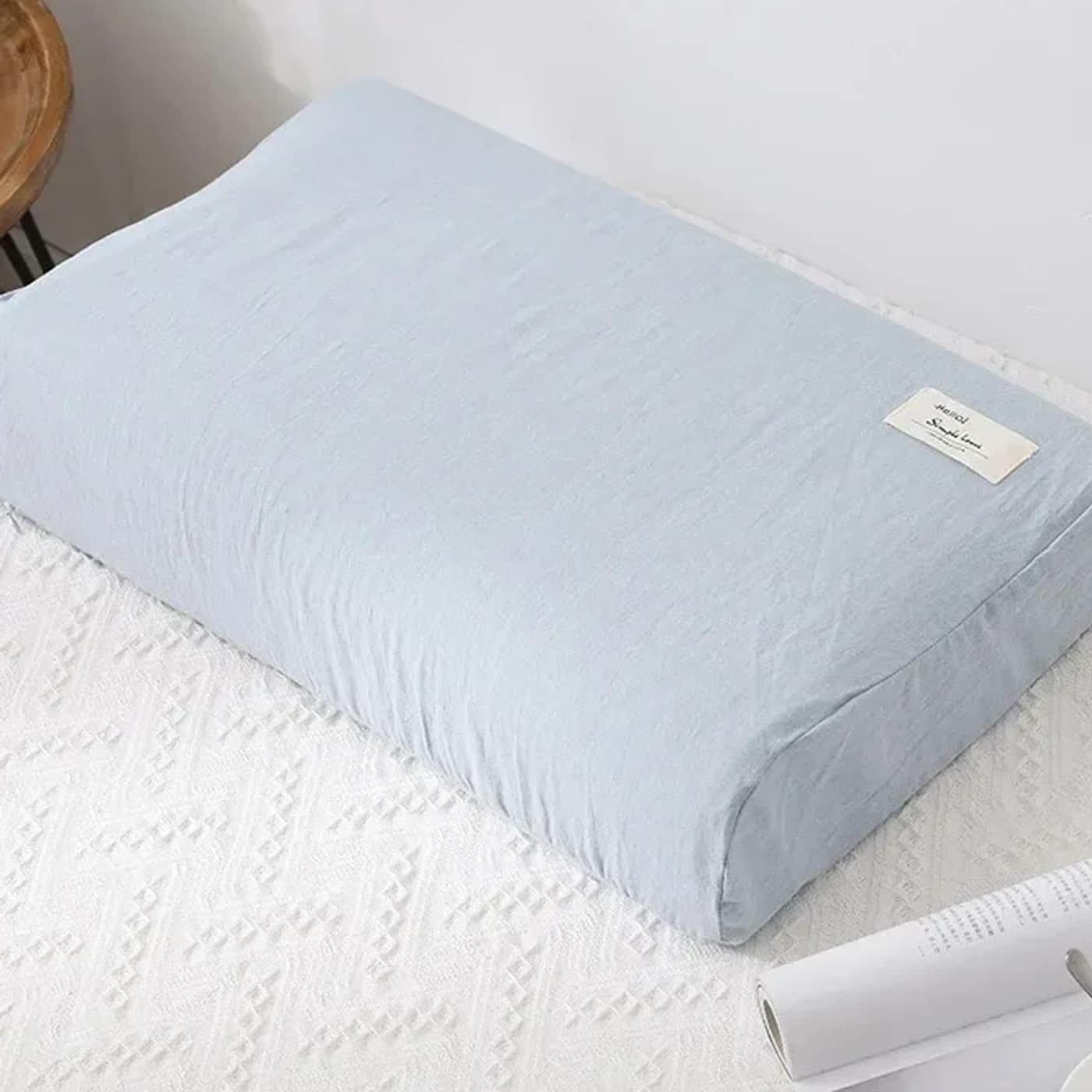
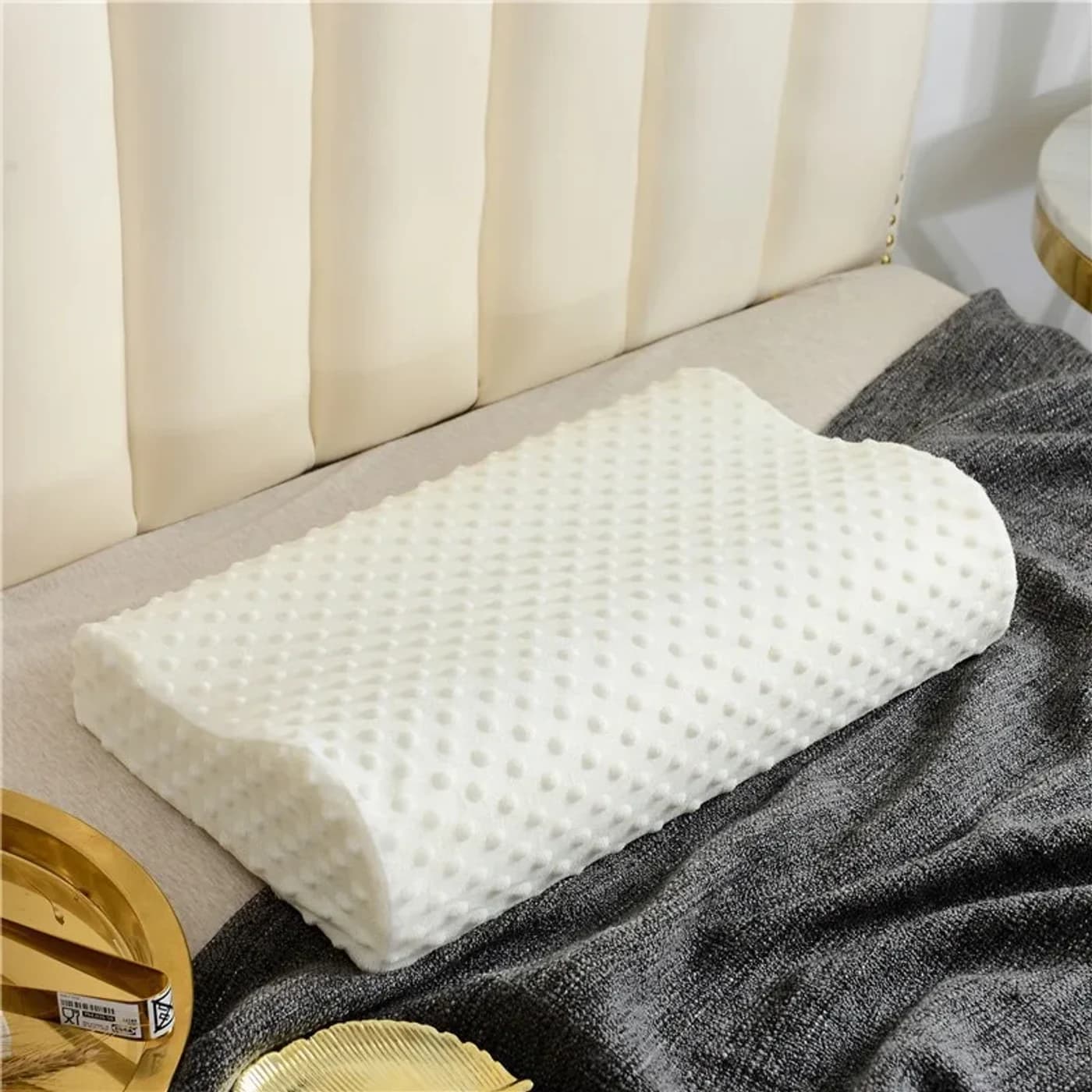
That leaves head support, often the weak point. A pillow that collapses at the first movement forces you to resettle three times before finding your position. The Nuage 50 is a memory foam pillow in a 50 × 30 cm format, with two wave heights on the same product: 10 cm for side sleeping, 7 cm for back sleeping, switched by flipping it over. It comes on its own at 55 € or with its textured polyester and cotton cover at 65 €, and that cover comes off for washing while the foam core airs out.
Falling asleep quickly depends less on a trick than on a well built hour: temperature coming down, light coming down, breathing slowing, a bedroom that is ready. Repeated for ten evenings, the routine becomes a signal in itself. If insomnia persists anyway, talk to a health professional.
Frequently asked questions
How can you fall asleep faster in the evening?+
By helping your core temperature fall and lowering light signals in the last hour. In practice: a warm shower sixty to ninety minutes before bed, overhead lights off an hour before, a calm screen-free activity, then five minutes of slow breathing once you are lying down. Repeated every evening, the whole sequence becomes a sleep signal.
Why does a warm shower help you sleep?+
Because it dilates the blood vessels in the skin. Heat from the core then moves outward and core temperature falls faster after the shower, which is exactly the signal for falling asleep. Take it warm rather than hot, and sixty to ninety minutes before bed so the drop has time to happen.
What should you do when you wake at three in the morning?+
Start with five minutes of slow breathing without checking the time. If sleep has not returned after about twenty minutes, get up, go to another room in low light, and come back to bed when tiredness arrives. Lying there ruminating gradually links the bed with being awake, which makes the following nights harder.
The SEY Maison Circle
Every month, an exceptional piece. Never reissued.
The Drops principle: one high-end furniture piece per month, in a numbered edition. Once it's gone, it never comes back. Circle members are notified 48 h early, access each drop 24 h before everyone else, and receive our guides before publication.
Discover the Drops →