Silence & sleep
Back pain at night: what position and bedding actually change
Published on ·5 min read
The mattress usually gets the blame. It is rarely the only culprit. At night the back is part of a chain: the mattress decides the height of the pelvis and shoulders, the pillow decides the height of the head, and the position decides how those two settings agree. Changing one link without looking at the other two rarely produces a result.
This article explains what each link does, what happens when the pillow is badly set, which positions deepen the lower back curve, and what can be adjusted tonight. These are comfort and posture pointers. They do not replace medical advice, and established pain should be seen by a health professional.
The back at night is a chain, not a single part
The mattress is the first link. Too soft, it lets the pelvis drop lower than the shoulders and the spine takes a curve it never takes standing up. Too firm, it does not let the shoulder sink in when you sleep on your side, and all the weight concentrates on one point. In both cases the rest of the chain has to compensate, and the pillow inherits the problem.
The pillow is the second link, and the easiest to change. Its job is not to carry the head, it is to fill the space between the mattress and the neck so the neck stays in line with the back. The third link is the position, which changes everything: on the side, the space to fill is the width of a shoulder. On the back, it is barely a few centimetres.
What a badly set pillow does to the upper back and shoulders
A pillow that is too high pushes the chin towards the chest. The neck stays bent for hours, and the muscles between neck and shoulder work all night to hold that position. Many people describe morning stiffness in the upper back and a knotted shoulder feeling without linking it to the pillow. A pillow that is too low does the opposite: the head tips back and the neck stays extended.
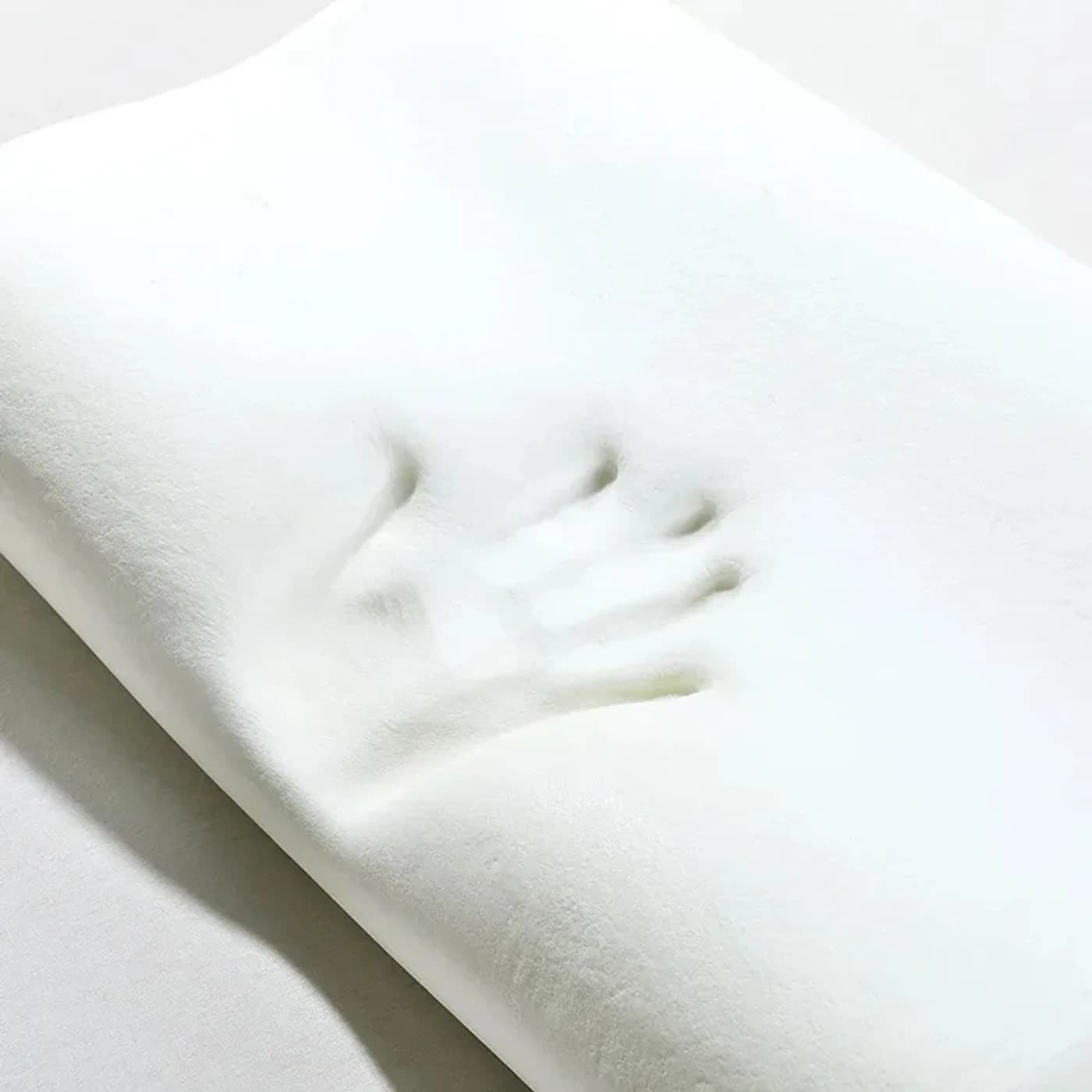
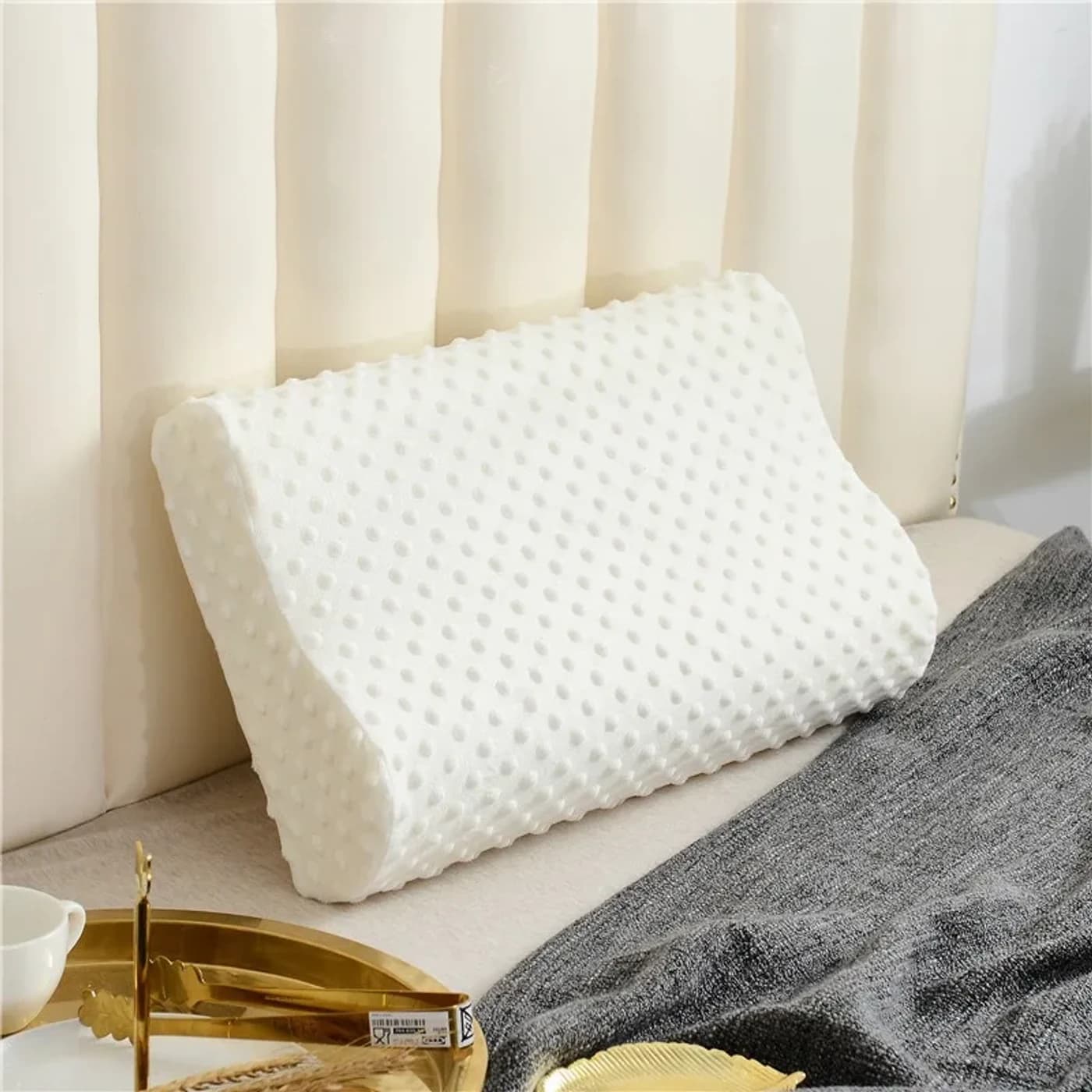
The third case is the most common: the pillow was the right height at bedtime, and no longer is an hour later. Loose filling flattens under the weight of the head, and the neck drops. That is why a memory foam pillow keeps the same setting until morning. The Nuage 50 carries two wave heights, 10 cm for side sleeping, 7 cm for back sleeping, and you switch from one to the other by turning it over.
- ·Pillow too high: chin towards the chest, bent neck, upper back stiffness on waking.
- ·Pillow too low: head tipped back, neck extended, discomfort at the base of the skull.
- ·Pillow that flattens: fine at bedtime, too low in the middle of the night, wake ups to reshape it.
- ·Two stacked pillows: unstable height that slides, head pushed forward.
- ·Shoulder resting on the pillow instead of the mattress: the axis rises too high and the neck twists.
The positions that deepen the lower back curve
Sleeping face down puts the chain under the most tension. The head has to stay turned to one side to breathe, so the neck spends the night rotated. At the same time the pelvis sinks into the mattress while the rib cage stays higher, which accentuates the lower back curve. If you sleep face down and do not want to change, the rule is simple: as little height as possible under the head, and a thin cushion under the pelvis rather than under the head.
On the back, the lower curve deepens when the legs stay flat and straight. A cushion under the knees tilts the pelvis slightly and that curve reduces. On the side it is the opposite: two stacked legs pull the pelvis into rotation. A cushion between the knees keeps the hips aligned. Both adjustments cost nothing and can be tested tonight.
Setting the chain in one evening, and knowing when to consult
The logical order starts from the bottom. First check that the mattress does not sag: a visible dip in the middle shows up when you lay a broom handle across the bed. Then adjust the position with a cushion under or between the knees. Finally set the head height, which is the quickest link to correct. The visual marker is always the same: seen from the front, the nose should stay in line with the breastbone.
On a two height pillow like the Nuage 50, that setting is made by turning it over, with nothing else to buy, and it is judged after two or three nights, never on the first morning. One important sentence to close: everything above concerns comfort and posture, not care. Pain that lasts several weeks, wakes you at night, runs down a leg or comes with pins and needles calls for a health professional, not a change of bedding.
The back at night plays out over three links: mattress, pillow and position. The pillow is the quickest to correct, and most often badly set, especially when it flattens during the night. These are comfort pointers: established pain is a matter for a health professional.
Frequently asked questions
What position should you sleep in with a sore back?+
Many people find sleeping on the back with a cushion under the knees, or on the side with a cushion between the knees, more comfortable than sleeping face down. Face down keeps the neck rotated all night and accentuates the lower back curve. Pain that lasts calls for a health professional.
Can a pillow affect the upper back?+
Yes, indirectly. A pillow that is too high keeps the neck bent and makes the muscles between neck and shoulder work for hours, which is felt on waking. A pillow that is too low lets the head tip back. The right marker is a neck in line with the back, checked in your usual position.
Should you replace the mattress or the pillow first?+
Start with the pillow and the position: they are the cheapest links and the fastest to test. Move to the mattress if it visibly sags in the middle or if it is more than about ten years old. This advice is about comfort and does not replace medical advice.
The SEY Maison Circle
Every month, an exceptional piece. Never reissued.
The Drops principle: one high-end furniture piece per month, in a numbered edition. Once it's gone, it never comes back. Circle members are notified 48 h early, access each drop 24 h before everyone else, and receive our guides before publication.
Discover the Drops →