Silence & sleep
Sleeping on your stomach: what it really changes for neck and back
Published on ·5 min read
Roughly one sleeper in ten spends the night on their stomach, and many of them are attached to it. It is the position they fall asleep fastest in, the one that reassures them, sometimes since childhood. Telling them to stop achieves nothing, they will drift back the moment they are truly asleep.
What is useful is understanding what the position changes mechanically, why it so often ends without a pillow, and how to move gently to the side when you want to. Without judgment: some people sleep perfectly well on their stomach and wake up with nothing. These tips are about comfort, not health, and do not replace medical advice.
Why the neck stays rotated all night
On your stomach, you have to breathe. The face cannot stay buried in the mattress, so the head turns to one side. That rotation reaches 80 to 90 degrees, meaning the neck's maximum range, and it is held for hours. During the day nobody would voluntarily keep their head fully turned for three hours. At night, with the muscles relaxed, the neck does it without protest, and the joints and ligaments absorb it.
The lower back works too. On a slightly soft mattress the pelvis sinks further than the ribcage and the lumbar curve deepens. Nothing dramatic in itself, but it explains part of a stiff waking. Neither effect makes the position forbidden: they simply point to where to look if you get up with a cracking neck or a rigid lower back, and why a small change of support sometimes makes a big difference.
Why you end up with no pillow, or a folded one
This is the only sleeping position where the pillow works against the sleeper. On your side or your back, a pillow fills a gap. On your stomach there is no gap left to fill: the head is already at mattress level. Adding thickness only pushes the head backwards and adds extension to a neck already at maximum rotation. The body works that out on its own, often in the middle of the night.
Hence the improvised solutions everyone recognises: the pillow pushed onto the floor, the pillow folded in two and hugged rather than placed under the head, or the pillow slid under a shoulder and a hip. These are not bad habits, they are spontaneous and fairly logical corrections. They say something simple: a front sleeper is looking for support for the torso, not height for the head.
- ·The pillow ends up on the floor or pushed to the side of the bed.
- ·The pillow is folded in two and hugged against the stomach or chest.
- ·A thin pillow is slid under the pelvis to reduce the lumbar curve.
- ·The head rests directly on the mattress or on a forearm.
Moving gently to your side
The method that works is not forcing yourself to change, but making the other position more comfortable. The starting point is support for the torso: a bolster or a pillow hugged along the body gives the same contained feeling as the mattress under the stomach, and that is usually what is missing. From there, turn the pelvis a quarter turn with one leg bent forward, and the upper body follows on its own.
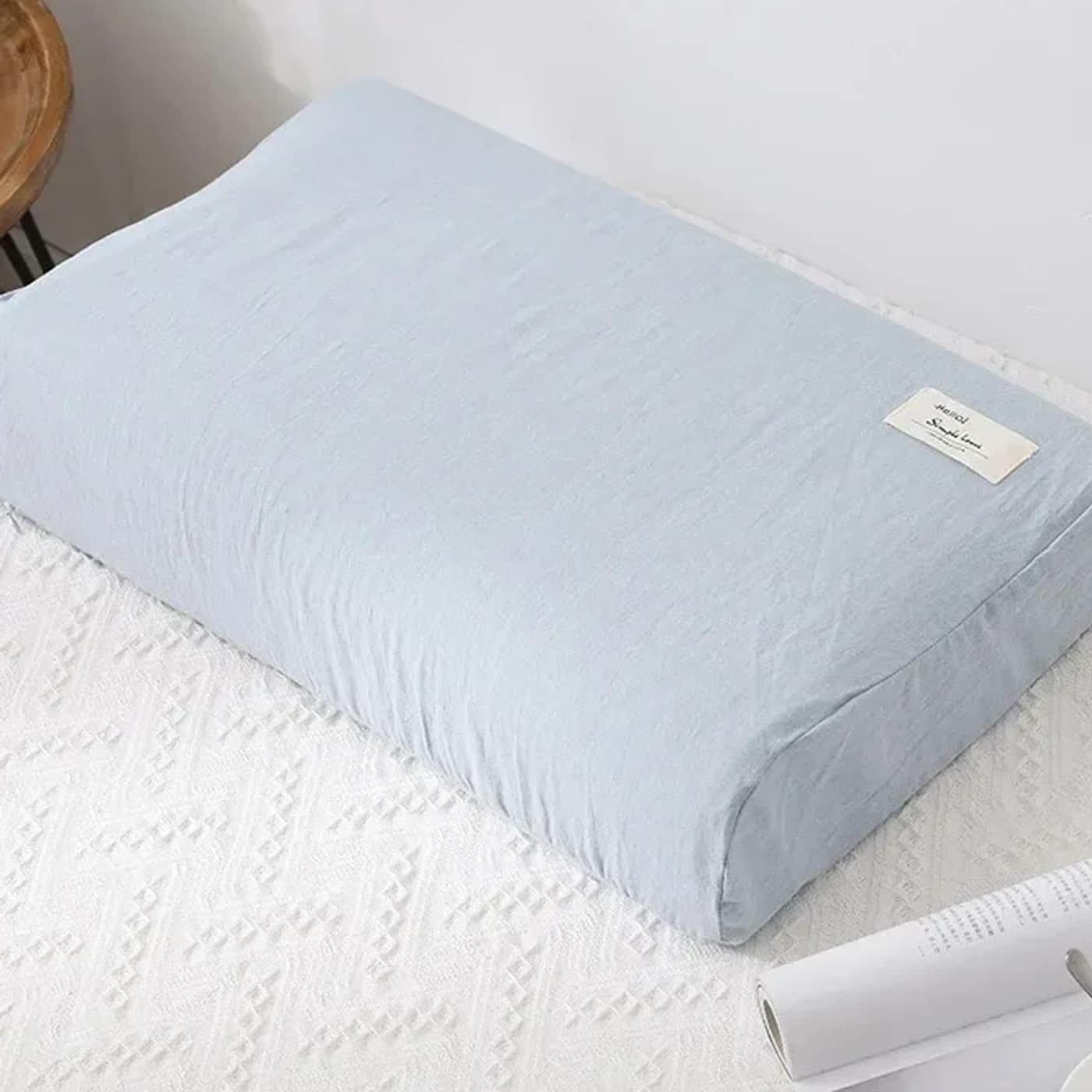
Then there is the head. On your side you need height to fill the space between shoulder and ear, often 10 to 12 cm; on your back, far less. The Nuage 50 carries both heights on the same pillow, 10 cm on one side and 7 cm on the other, and you switch by flipping it over. That helps during a transition, because you do not yet know where you will land. Its slow rebound foam keeps the shape it is given instead of collapsing at the first movement.
And if you sleep perfectly well on your stomach
Then change nothing. A position is not bad because guides rarely recommend it: it is bad if it wakes you or if you get up stiff. Plenty of people spend decades on their stomach without a single problem, and the best sleeping position remains the one you actually sleep in. If, on the other hand, neck or back pain lasts, returns every week, wakes you or travels down an arm or a leg, talk to a health professional. Nothing here is a diagnosis.
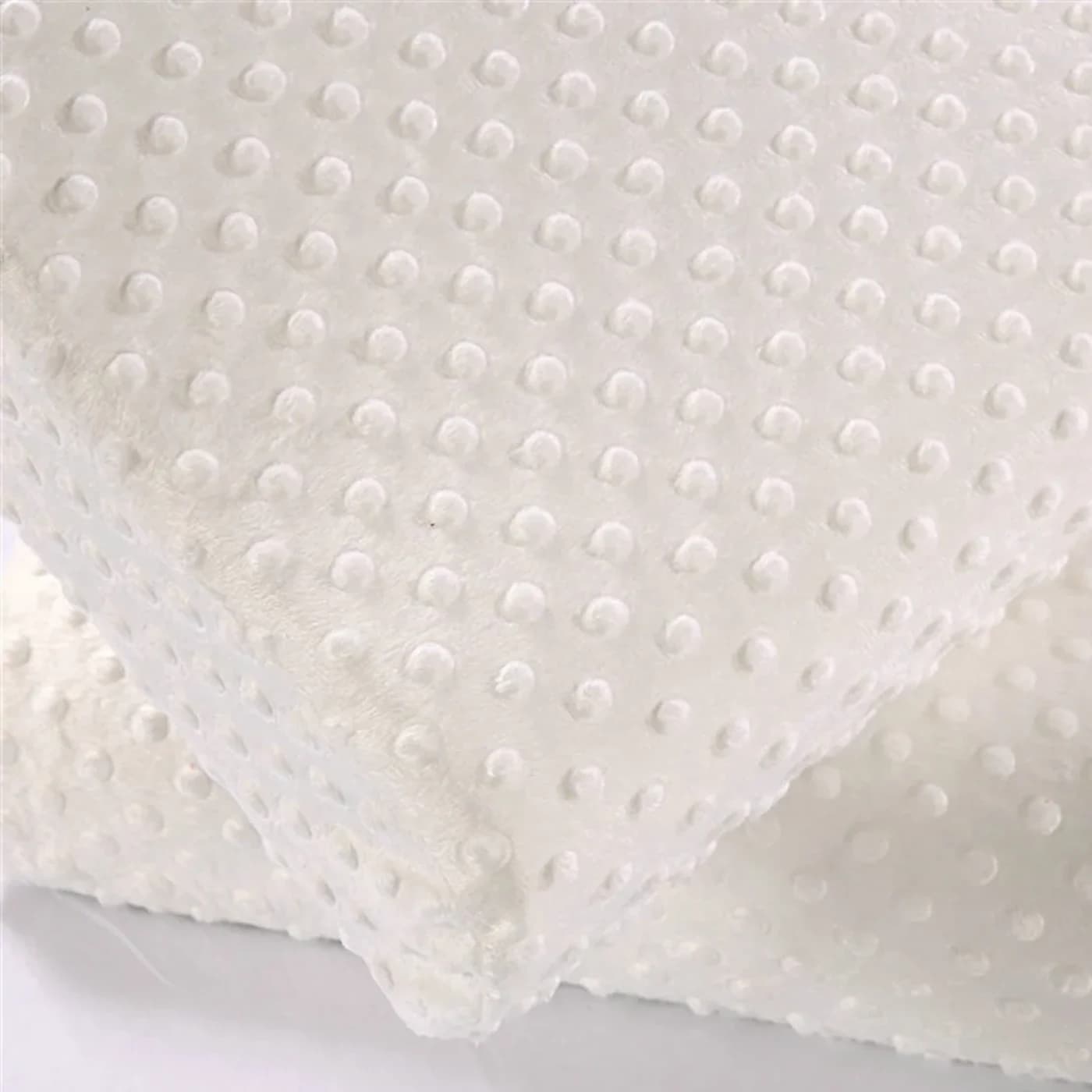
If you are staying on your stomach, two simple adjustments are worth it. A very flat pillow under the pelvis reduces the lumbar curve. And alternating the side your head turns to, by switching sides of the bed every other night, avoids always loading the same direction. The Nuage 50 comes on its own at 55 € or with its textured cover at 65 €, and that cover comes off to be washed while the foam core airs out.
Front sleeping puts the neck at maximum rotation and slightly deepens the lower back, which explains the folded or abandoned pillow. If you want to move to your side, make the side comfortable rather than banning the stomach. And if pain lasts or wakes you, see a health professional.
Frequently asked questions
Is it bad to sleep on your stomach?+
It is not dangerous, it is simply the most demanding position for the neck, which stays turned 80 to 90 degrees for hours. Many people sleep on their stomach with no discomfort at all. If you get up stiff every morning, testing the side position is worth it. If pain lasts or returns, ask a health professional.
Which pillow should you use when sleeping on your stomach?+
The flattest possible, or none at all under the head. On your stomach the head is already at mattress level, so any added thickness pushes the neck into extension. Many front sleepers prefer to keep the pillow to hug it, and slide a very thin cushion under the pelvis instead.
How do you stop sleeping on your stomach?+
By making the side position more comfortable, not by banning the front one. Hug a pillow along your body to recover that torso support, bend the upper leg forward, and use a pillow height that fills the space between shoulder and ear. Allow several weeks: a sleeping position changes slowly.
The SEY Maison Circle
Every month, an exceptional piece. Never reissued.
The Drops principle: one high-end furniture piece per month, in a numbered edition. Once it's gone, it never comes back. Circle members are notified 48 h early, access each drop 24 h before everyone else, and receive our guides before publication.
Discover the Drops →