
Cooling without AC
Heatwaves and the elderly: why ceiling fans are recommended
Published on ·5 min read
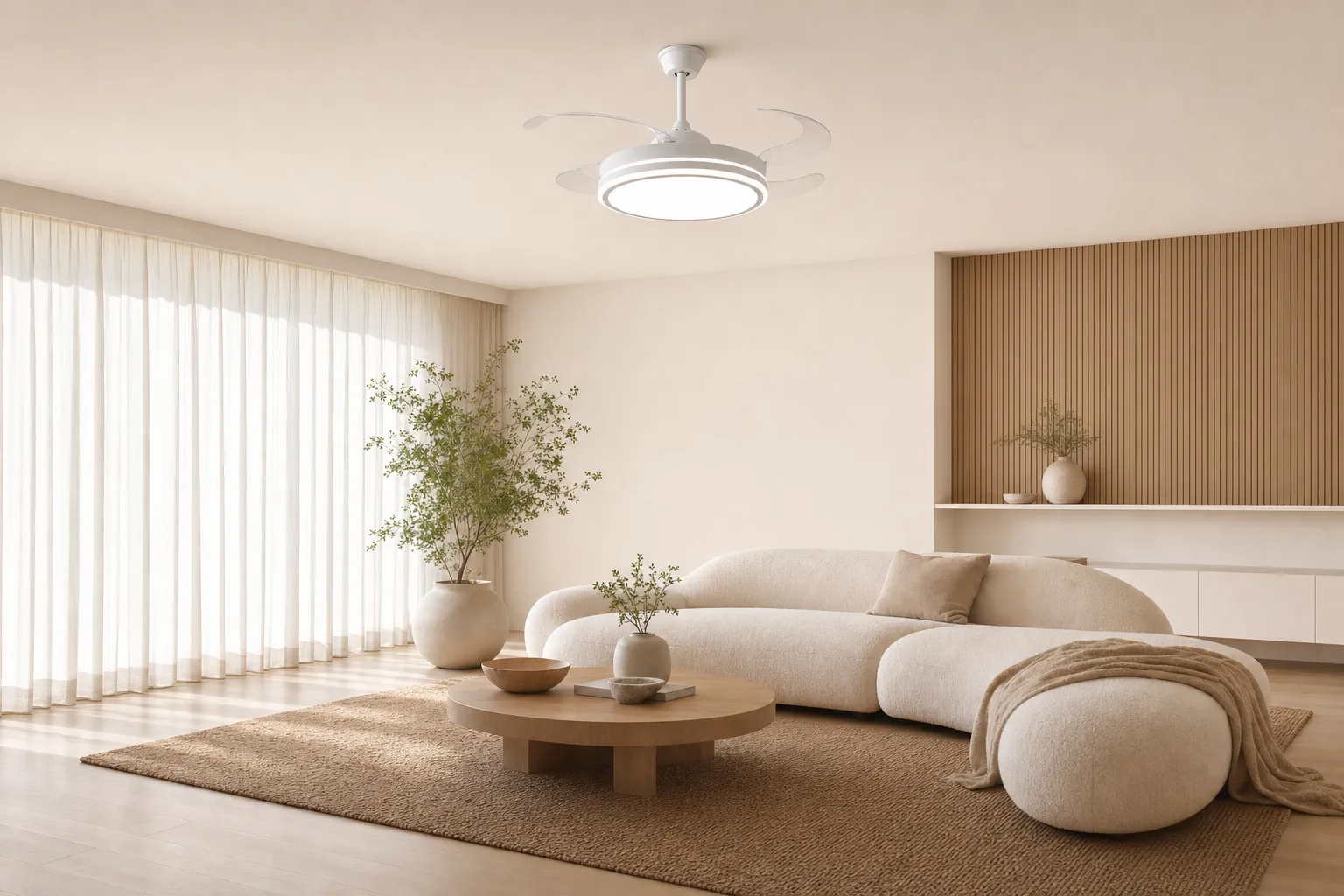
Every summer, heatwaves remind us that older people are the first affected by heat. It is physiology, not carelessness: with age, the body sweats less, feels thirst later and regulates temperature more slowly. Heat builds up without the internal alarm going off.
The good news: the protective habits are simple, and the living room's equipment plays a central role. This guide explains why moving air is recommended for seniors and how to set it up so it is actually used. It does not replace medical advice: in extreme heat, official guidance and the family doctor remain the reference.
Why are heatwaves more dangerous after 65?
The body cools mainly by evaporation: sweat drying on the skin carries heat away. This mechanism weakens with age, sweat glands respond less, skin circulation slows, and thirst signals arrive late, sometimes after dehydration has begun. Some common medications heighten this sensitivity.
Where a younger adult compensates for a 30°C room by sweating and drinking spontaneously, an older person can accumulate heat without apparent discomfort. That is why heatwave plans insist on two levers: keeping the home as cool as possible, and helping evaporation, exactly what moving air does.
Air circulation: recommended, if used correctly
Moving air does not lower the room's actual temperature: it lowers perceived temperature by 3 to 4°C by accelerating evaporation at the skin's surface. For someone whose perspiration is less effective, this mechanical assist means the body sheds heat with less cardiovascular effort.
Health authorities set a useful limit: fans help as long as indoor air stays below about 35°C. Beyond that, retreat to the coolest room, drink regularly, and seek a cooled place if needed. In a home properly shaded during the day, that threshold is rarely reached.
- ·Shutters closed on the sunny side from morning onwards
- ·Fan on low or medium speed, continuously, rather than full blast in bursts
- ·A glass of water within reach, sipped regularly without waiting for thirst
- ·At night, minimum speed: silent circulation at 28-34 dB accompanies sleep

The Alma 122
Contemporary design · Ø 122 cm · LED & remote
- ✓Clean contemporary design, three curved blades
- ✓The best value in the collection
- ✓Dimmable LED, 3 temperatures + remote
€279€349
Ceiling fan, pedestal fan or AC: which one for a senior?
A pedestal fan has two flaws for an older person: a direct, localised flow that dries and chills when aimed at the armchair or bed, and a floor footprint with a trailing cable, a genuine fall risk in a room navigated with a cane.
Air conditioning truly cools the air, useful in extreme heat, but demands careful settings: a cold flow aimed at a less mobile person, or too sharp a gap with outdoor temperature, creates the discomfort seniors often cite, and the unit ends up switched off.
The ceiling fan sits at the point of balance: a gentle downdraught spread across the whole room, never aimed at the person; nothing on the floor, no cable, no handling; continuous, silent operation. It is the solution most likely to be genuinely used all summer.
Ease of use: the criterion everyone forgets
Equipment only protects if it is used. For an elderly parent that means: no daily setup, no program to decipher, no reaching up. A remote on the bedside table with speeds numbered 1 to 6 is enough.
That is the brief the Alma 122 answers: a clean-lined ceiling fan with a silent DC motor topping out at 34 dB, six reversible speeds and a dimmable LED, all driven from the included remote. Installed once, it asks for nothing more, no autumn storage, no refilling, no maintenance. A relative can set everything up in a single visit, installation takes about half an hour.
The right habits around the equipment
The fan is one part of the simple routine heatwave plans repeat every year, and the key is to establish it before summer, not mid-alert.
A daily phone call during hot spells remains the most protective gesture: it verifies the shutters are closed, the person is drinking, and the living room stays bearable.
- ·Close shutters and windows by day, air late evening and early morning
- ·Drink regularly without waiting for thirst; avoid alcohol
- ·Spend the hottest hours in the coolest room, fan running
- ·Dampen the skin (wet cloth, mist spray): combined with moving air, the cooling effect multiplies
- ·One call per day during alerts; emergency services if warning signs appear (confusion, nausea, high temperature)
Protecting an elderly parent from a heatwave means combining simple habits with a home equipped for summer: shutters closed by day, regular hydration, and gentle, permanent, silent air circulation in the living room. The ceiling fan is the tool best suited to that role, nothing on the floor, no direct cold flow, one simple remote. With its DC motor at 34 dB maximum, six speeds, integrated LED and 2-year warranty, the Alma 122 equips a parent's living room or bedroom in half an hour of installation. In extreme heat, official health guidance and the family doctor remain the reference.
Frequently asked questions
Is a fan enough for an elderly person during a heatwave?+
It helps effectively as long as indoor air stays below about 35°C, the case in a home shaded during the day. Beyond that, favour the coolest room, hydration and a cooled place if needed. The fan complements prevention habits; it does not replace them.
Can a ceiling fan run all night in a senior's bedroom?+
Yes: a ceiling fan's downdraught is indirect and even, with no cold air aimed at the person. On night speed, a DC motor runs at 28-34 dB, quieter than a refrigerator, and can operate continuously without disturbing sleep.
Ceiling fan or air conditioner for an elderly parent?+
The ceiling fan is the easiest to live with daily: no complex settings, no direct cold flow, no maintenance. Air conditioning remains a useful complement in extreme heatwaves, provided it is well set and actually used. The two can be combined.
The SEY Maison Circle
Every month, an exceptional piece. Never reissued.
The Drops principle: one high-end furniture piece per month, in a numbered edition. Once it's gone, it never comes back. Circle members are notified 48 h early, access each drop 24 h before everyone else, and receive our guides before publication.
Discover the Drops →Also worth reading
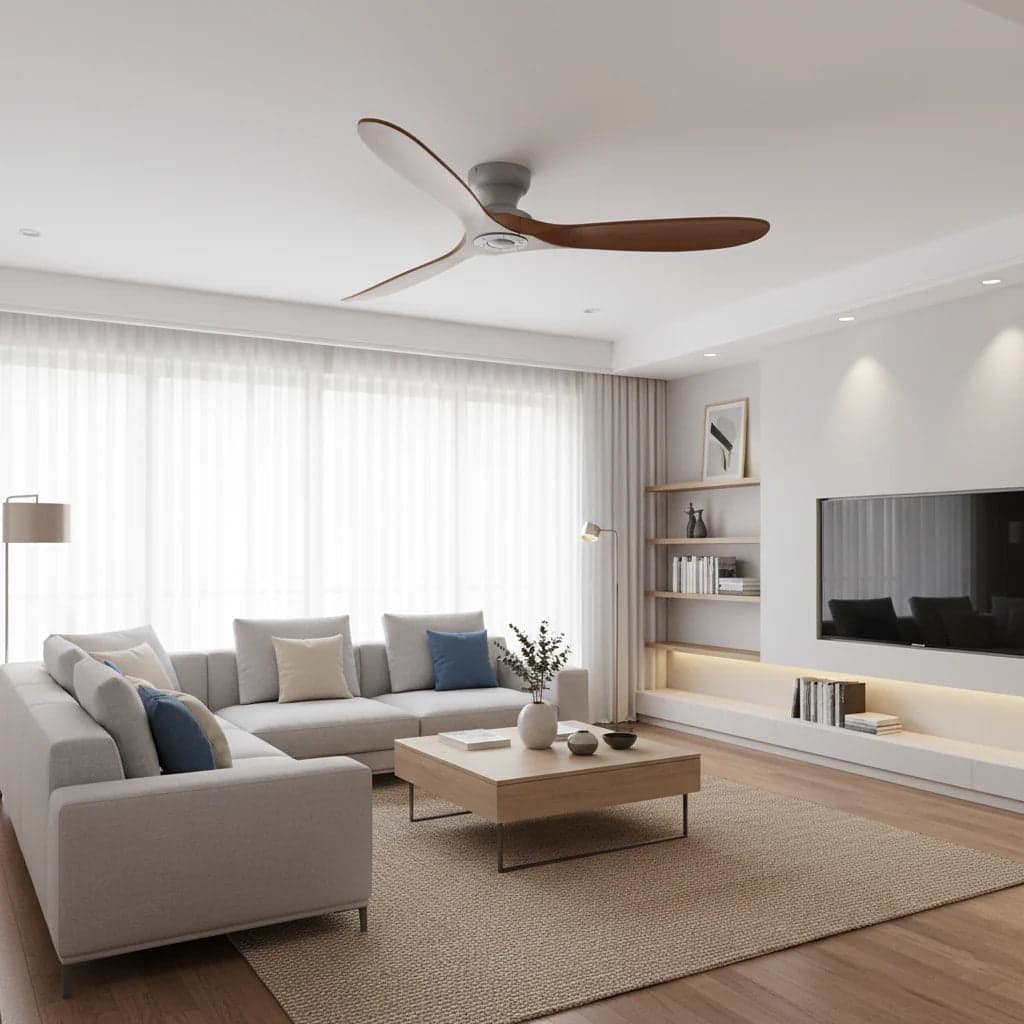
Does sleeping under a fan give you a stiff neck? What physiology says, and what really matters
Read the article →
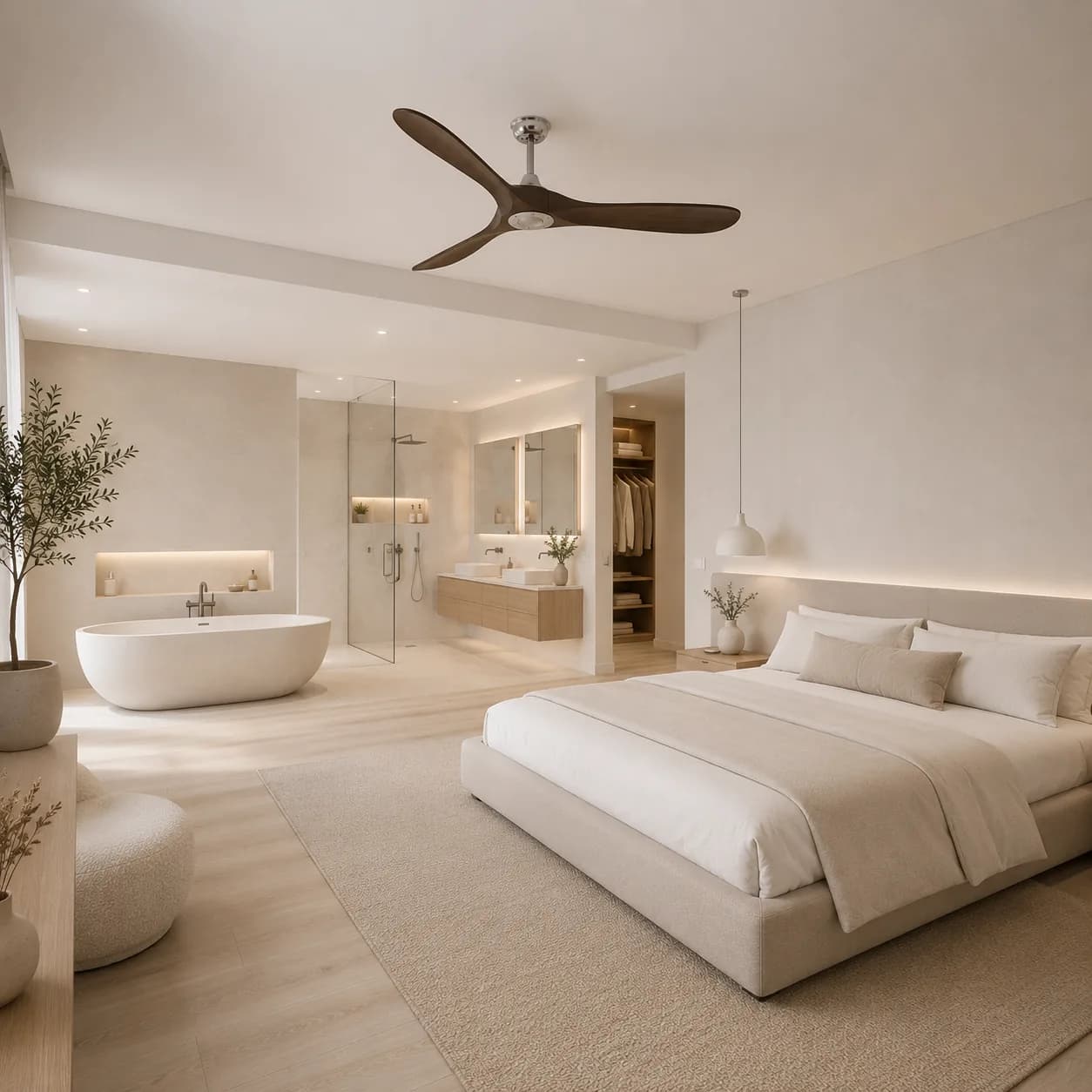
Buying a ceiling fan in autumn: four reasons not to wait until June
Read the article →
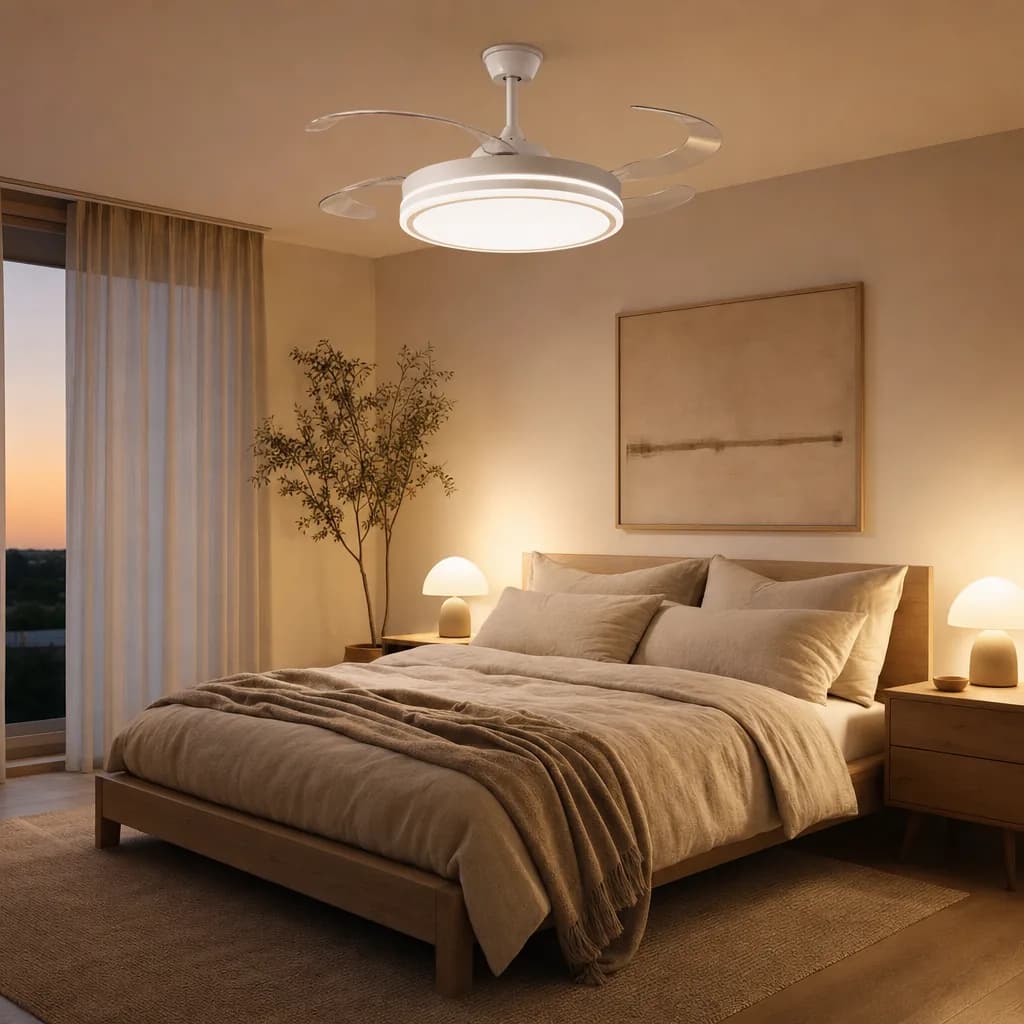
The upstairs is unbearable in summer while the ground floor stays cool: why, and what to do
Read the article →