
Cooling without AC
Tropical nights: how to sleep deeply when nights no longer cool down
Published on ·4 min read
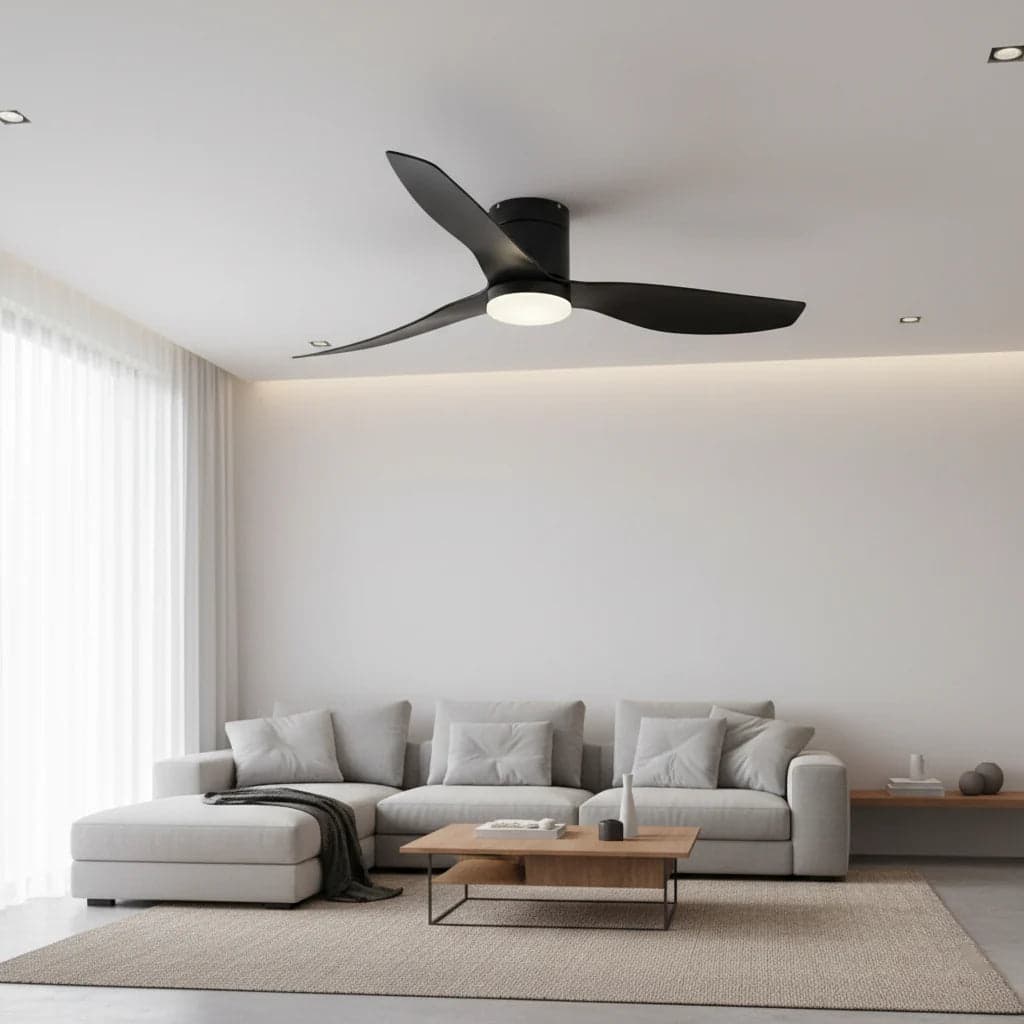
Heat does not merely delay falling asleep, it prevents staying asleep. On a tropical night, above 20°C at midnight, the body cannot shed the heat it must lose to enter deep sleep: delayed sleep onset, 3 am awakenings, groggy mornings.
This guide explains what temperature actually does to your sleep cycles, then details a practical protocol for sleeping deeply when nights no longer cool down, without air conditioning.
What is a tropical night, and why does it ruin sleep?
Meteorologists call a night tropical when the minimum never drops below 20°C. Bedrooms often fare worse: walls release the day's stored heat and the room sits at 26-28°C even after outdoor air has cooled.
The problem is physiological: to fall asleep, the body must lower its core temperature by about 1°C, and that heat leaves through the skin. When the surrounding air stagnates at 27°C, the exchange slows, sweating kicks in, and falling asleep can take an hour instead of fifteen minutes.
Temperature and sleep cycles: what heat actually destroys
Deep, restorative sleep concentrates in the first part of the night, exactly when the bedroom is hottest. Above 25-26°C, sleep studies observe reduced slow-wave and REM sleep and multiplied micro-awakenings, too brief to remember, long enough to fragment the night.
This is why you can sleep eight hours in a heatwave and wake up exhausted: the duration is there, the depth is not.
- ·16-19°C: the classic ideal range, rarely achievable in summer
- ·20-24°C: decent sleep if air moves and bedding is right
- ·25-26°C: first critical threshold, deep sleep starts shrinking
- ·Above 27°C: fragmented nights, sweating, early awakenings
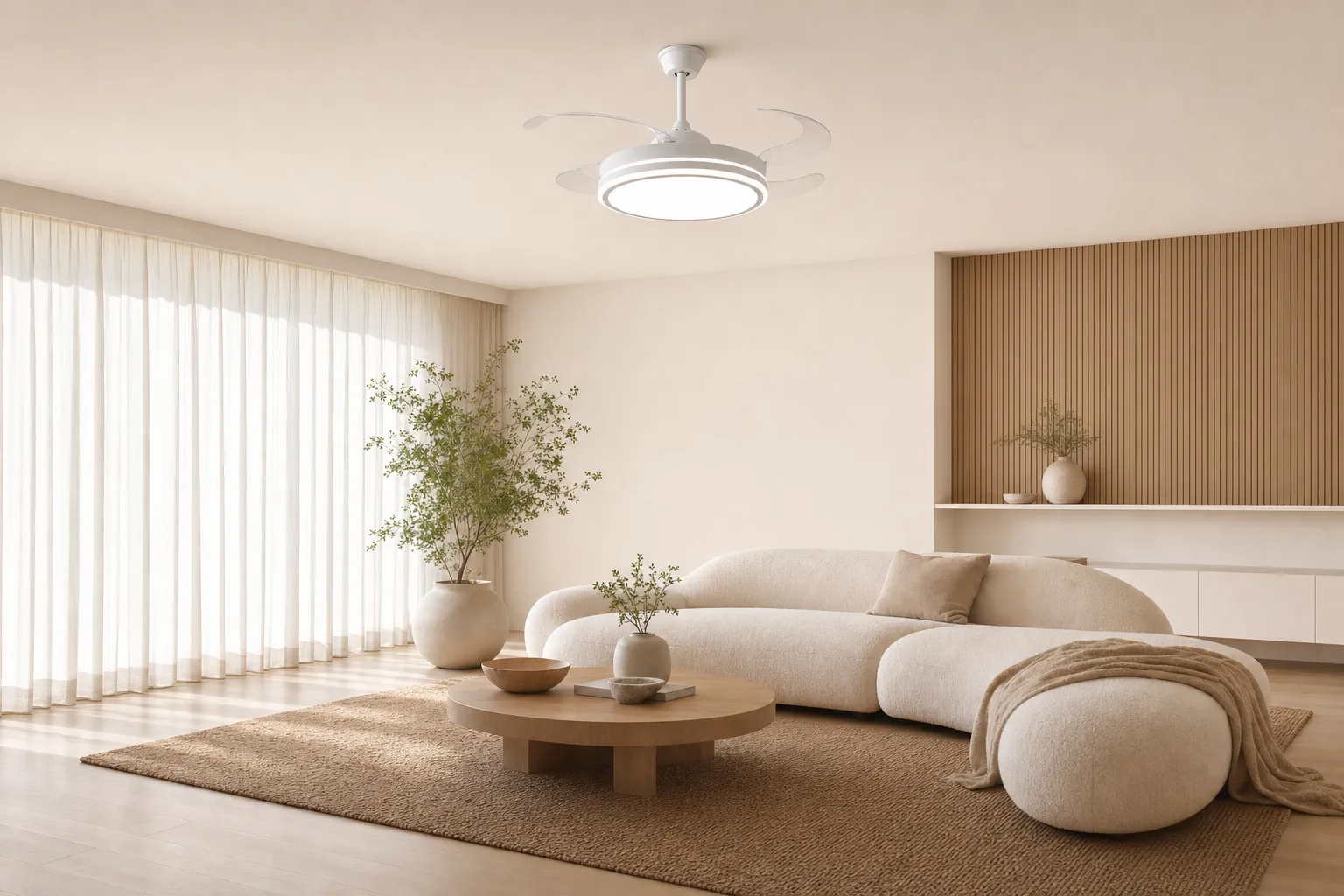
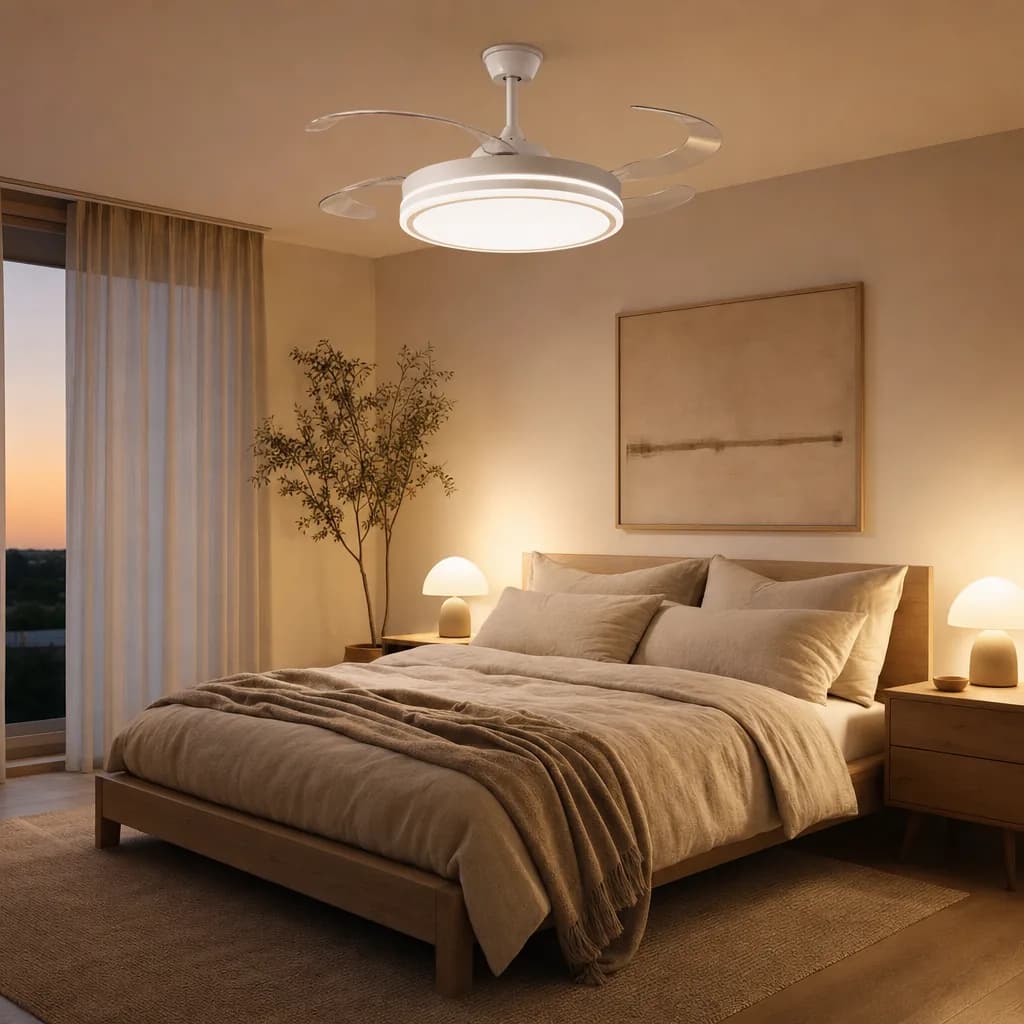
The Boréal 107
Retractable blades · Ø 107 cm · LED ceiling light & silent fan
- ✓Retractable blades: invisible when off, nobody guesses it's a fan
- ✓Sleep with windows closed, 30 dB, quieter than a whisper
- ✓Integrated LED 2700K → 6000K, dimmable: replaces your ceiling light
Air circulation: recreating a cool night without touching the thermometer
Moving air accelerates sweat evaporation and skin heat exchange: the wind-chill effect lowers perceived temperature by 3 to 4°C. A bedroom at an actual 27°C feels like 23-24°C, exactly where the body can start its internal cool-down.
A ceiling fan is the right tool for the night shift: a gentle, even downdraft over the whole bed, no direct blast on the face. On night speed, a DC motor runs at 28-32 dB. A model like the Boréal 107 runs at 30 dB, reads as a plain ceiling light by day, and works all night unheard.
The bedtime protocol for tropical nights
The battle is won in the two hours before bed. A lukewarm shower about 30 minutes before bedtime dilates skin vessels and triggers the core temperature drop; an ice-cold shower does the opposite. Percale or linen bedding evacuates moisture; natural latex pillows beat heat-trapping memory foam.
Run the ceiling fan at medium speed when entering the room, then switch to night speed from the remote once in bed. Keep windows closed if outdoor air stays above 23-24°C, or if the street brings noise and mosquitoes.
What to look for in a bedroom ceiling fan
Three criteria dominate: silence, under 35 dB at full speed and around 30 dB at night speed; fine control, six speeds and a remote so nothing requires getting up at 2 am; and integration. Retractable-blade models like the Boréal 107 read as a round LED ceiling light when closed, and deploy a 107 cm sweep when open. One electrical point, roughly 30-minute installation, 2-year warranty.
Tropical nights are no longer the exception. Air conditioning treats the symptom at great cost; air circulation treats the mechanism, giving the body back 3 to 4°C of thermal margin for a minimal consumption. A silent ceiling fan on night speed turns a 27°C night into a perceived 23-24°C one, and the Boréal 107, invisible by day and inaudible by night, is built precisely for that. Few purchases prove themselves as quickly as the next morning.
Frequently asked questions
What is the ideal bedroom temperature for sleep?+
The classic ideal range is 16-19°C, rarely achievable in summer. Above 25-26°C deep sleep degrades markedly. Air circulation compensates: at an actual 27°C with a ceiling fan, perceived temperature returns to around 23-24°C.
Is a ceiling fan enough to sleep through a tropical night?+
In most cases, yes: the 3 to 4°C wind-chill effect brings a 26-28°C bedroom back into the sleep comfort zone. Combine it with the right habits, a protected room by day, a lukewarm shower, breathable bedding, for the most extreme episodes.
Won't the fan wake me up during the night?+
Not if the motor is silent: on night speed a DC motor runs at 28-32 dB, below a refrigerator's hum. The downdraft of a ceiling fan is diffuse and never blows directly on your face, unlike a pedestal fan.
The SEY Maison Circle
Every month, an exceptional piece. Never reissued.
The Drops principle: one high-end furniture piece per month, in a numbered edition. Once it's gone, it never comes back. Circle members are notified 48 h early, access each drop 24 h before everyone else, and receive our guides before publication.
Discover the Drops →Also worth reading
Does sleeping under a fan give you a stiff neck? What physiology says, and what really matters
Read the article →
Buying a ceiling fan in autumn: four reasons not to wait until June
Read the article →
The upstairs is unbearable in summer while the ground floor stays cool: why, and what to do
Read the article →