The art of the home
Ceiling fans for hotels, guesthouses and restaurants: the summer comfort guests write about
Published on ·5 min read
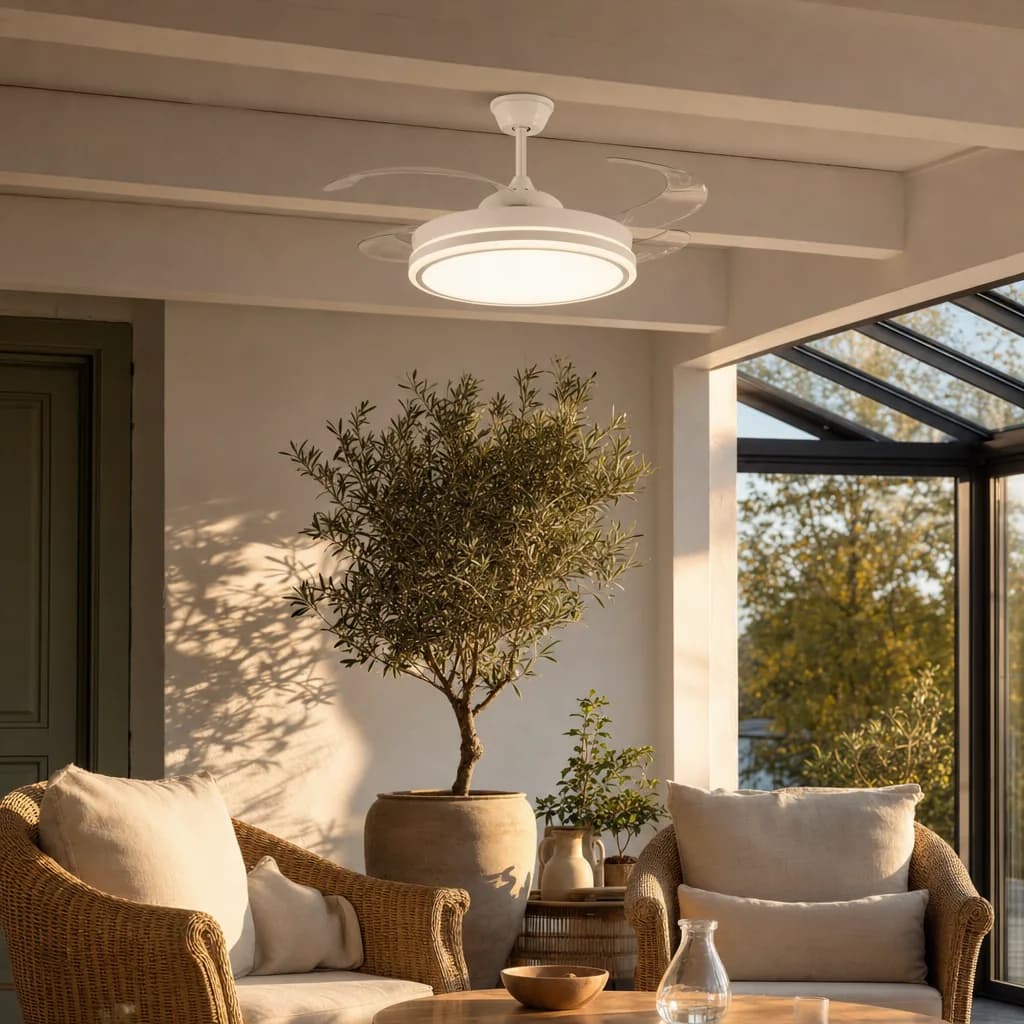
In hotel reviews, summer heat carries outsized weight: one uncomfortable night sinks a rating regardless of the breakfast or the décor. Establishments that treat thermal comfort seriously see it praised in writing, often with the word 'fan' quoted as is.
Between costly multi-split air conditioning and pedestal fans wheeled out in a July panic, there is a third way that Mediterranean and colonial hotels have practised for a century: the ceiling fan. Silent, economical and decorative, it answers exactly what an operator measures, cost per room, consumption, and the effect on guest experience.
Why does summer comfort weigh so heavily in guest reviews?
A guest who slept badly remembers the night, not your wine list. Booking platforms cluster reviews by theme, and 'room too hot' surfaces instantly to travellers comparing options. Thermal discomfort is one of the few faults guests almost never forgive, because they endured it for eight straight hours.
A rating that drops a few tenths in summer means a conversion rate that drops all year. Summer comfort is not a luxury expense, it is a visibility investment, and unlike a bathroom renovation it can be handled room by room, on a controlled budget, without closing the house.
Guest rooms: silence matters as much as coolness
Air conditioning cools, but it is heard. Many guests switch the unit off before sleeping, cancelling the investment. A DC ceiling fan runs at 28-34 dB on low speed, below a whisper, all night long.
Moving air lowers perceived temperature by 3 to 4°C: a room at an actual 27°C sleeps like 23-24°C, windows closed, so without street noise or insects. The included remote stays on the nightstand with six speeds, and the reversible winter mode pushes warm air back down from high ceilings in shoulder season.
A no-light model such as the Amiral 132, satin-silver body and dark-wood blades, fits classic and vintage rooms without touching lighting that is already considered.
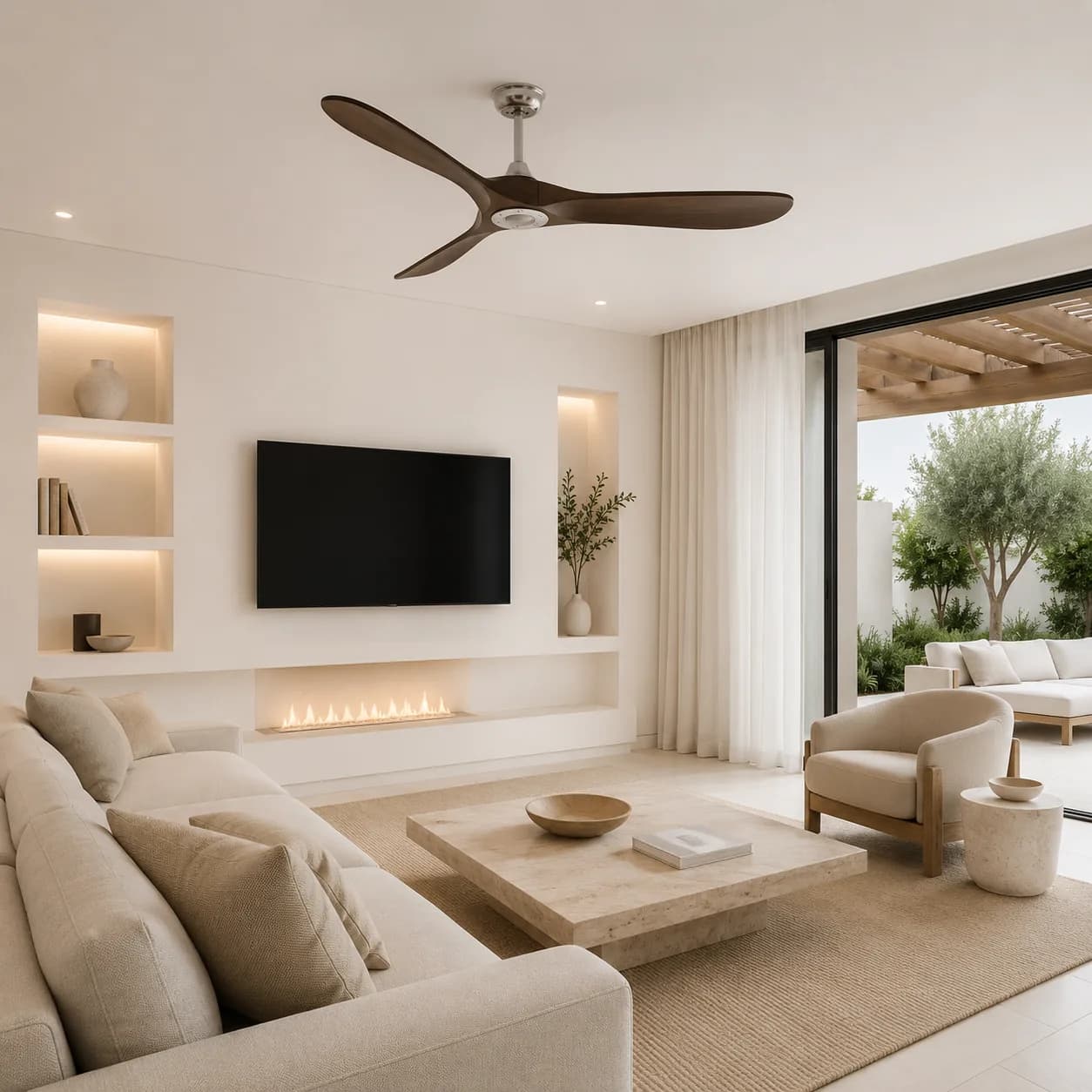
The Amiral 132
Vintage silver & dark wood · Ø 132 cm · No light
- ✓Silent DC motor, 6 reversible speeds
- ✓Remote control included
- ✓30-minute installation, illustrated manual
€339€389
Covered terraces and dining rooms: extending the season
A covered terrace is the most profitable square metre of a restaurant's summer, provided it is usable in the heat. A lunch service at 32°C under glass empties; the same service under continuous air movement fills up. The ceiling fan is the only equipment that cools a semi-open volume, exactly where air conditioning is powerless.
The downdraft also disturbs wasps and flies above the tables, and a row of vintage dark-wood fans sets a brasserie signature that décor alone cannot achieve.
- ·Covered terrace or closed pergola: one fan per 15-20 m², medium speed during service
- ·Glazed veranda: permanent circulation to break the hot-air layer trapped under the glass
- ·High-ceilinged dining room: continuous slow speed, imperceptible but effective
- ·Shoulder season: reversible winter mode pushes heating warmth back down to the tables
What budget compared with multi-split air conditioning?
A multi-split installation for ten rooms runs into tens of thousands of euros, plus mandatory annual maintenance, refrigerant leak checks and over 1,000 W of draw per unit. The same fleet of ceiling fans costs hundreds of euros per room, fitted in about thirty minutes each on an existing light point, with no regulated maintenance, no refrigerant, and a few dozen watts of consumption. The 2-year warranty with EU support covers the payback period.
The two solutions can also combine: in the hottest regions, a ceiling fan lets you set the AC 3 to 4°C higher for identical perceived comfort, cutting its consumption accordingly. For most establishments, the fan alone makes 'room too hot' reviews disappear.
How to choose the right models for your establishment
Three criteria: diameter (around 107 cm up to 15 m², 132 cm beyond and for all dining rooms), real noise level (a DC motor at 28-34 dB is the threshold below which guests stop commenting), and decorative coherence, because in a hotel the fan is seen as much as it is felt.
This is where vintage designs earn their keep. The Amiral 132, satin-silver body and dark-wood blades, brings classic rooms the composure of an aged object driven by a modern DC motor, six speeds, remote included, no light kit, with a 2-year warranty and free delivery from €150.
Summer comfort is one of the few line items where a controlled budget directly moves an establishment's rating. One ceiling fan per room and a few over the covered terrace cost a fraction of a multi-split system, require no regulated maintenance, and show up in the reviews from the first season. For houses with character, the Amiral 132 adds a vintage silver-and-dark-wood silhouette that turns technical equipment into a décor argument.
Frequently asked questions
Is a ceiling fan enough to cool a restaurant dining room?+
In most cases, yes: moving air lowers perceived temperature by 3 to 4°C, keeping service comfortable up to roughly 32°C. Plan one 132 cm fan per 15-20 m², at medium speed during service.
Which ceiling fan for a hotel room?+
A DC-motor model at 28-34 dB, the only level compatible with sleep, with the remote left on the nightstand. Choose 107 cm up to 15 m², 132 cm beyond, and a no-light model if the room's lighting is already designed.
Ceiling fan or air conditioning for a small establishment?+
Ceiling fans cost hundreds of euros per room versus thousands for a multi-split, with no regulated maintenance. They also treat covered terraces, where AC is inoperative. In very hot regions the two combine well: air movement lets you set the AC 3 to 4°C higher.
The SEY Maison Circle
Every month, an exceptional piece. Never reissued.
The Drops principle: one high-end furniture piece per month, in a numbered edition. Once it's gone, it never comes back. Circle members are notified 48 h early, access each drop 24 h before everyone else, and receive our guides before publication.
Discover the Drops →