The art of the home
Kitchen ceiling light: why your worktop stays in shadow
Published on ·3 min read
You fitted a powerful ceiling light, the kitchen is bright, and yet you chop your vegetables in the gloom. That is not a power problem, it is a geometry problem, and no stronger bulb will fix it.
Here is why, and the two levels of light a kitchen calls for.
The shadow comes from you, not the luminaire
A worktop sits against a wall, and the cook faces it. The ceiling light, meanwhile, is in the middle of the room, so behind them. Their body intercepts the light and casts a shadow exactly where they are looking: on the chopping board.
Raising the output of the ceiling light changes nothing about that geometry. The shadow simply gets harder. The only answer is to bring a source between the wall and the worktop, that is, under the wall cabinets.
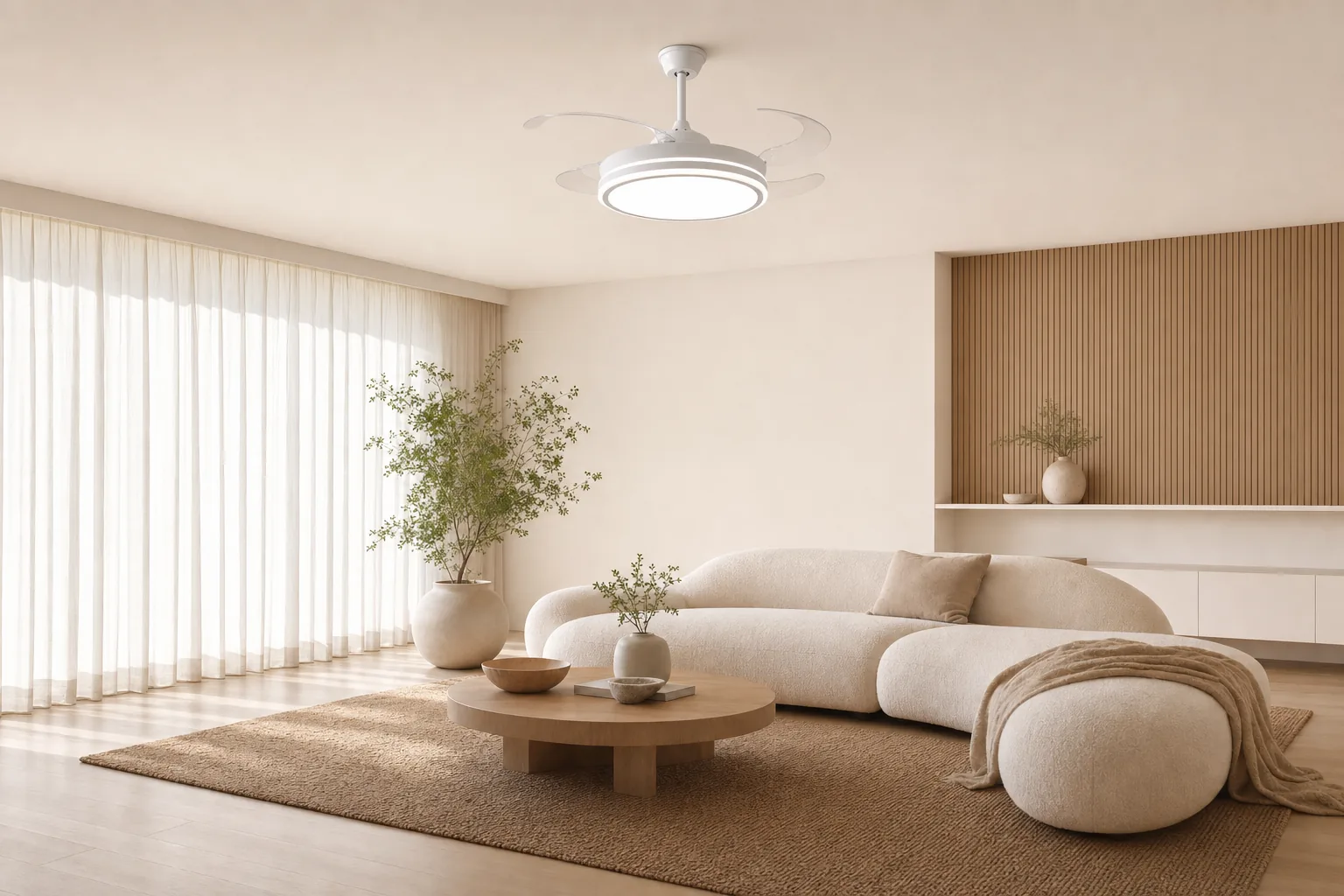
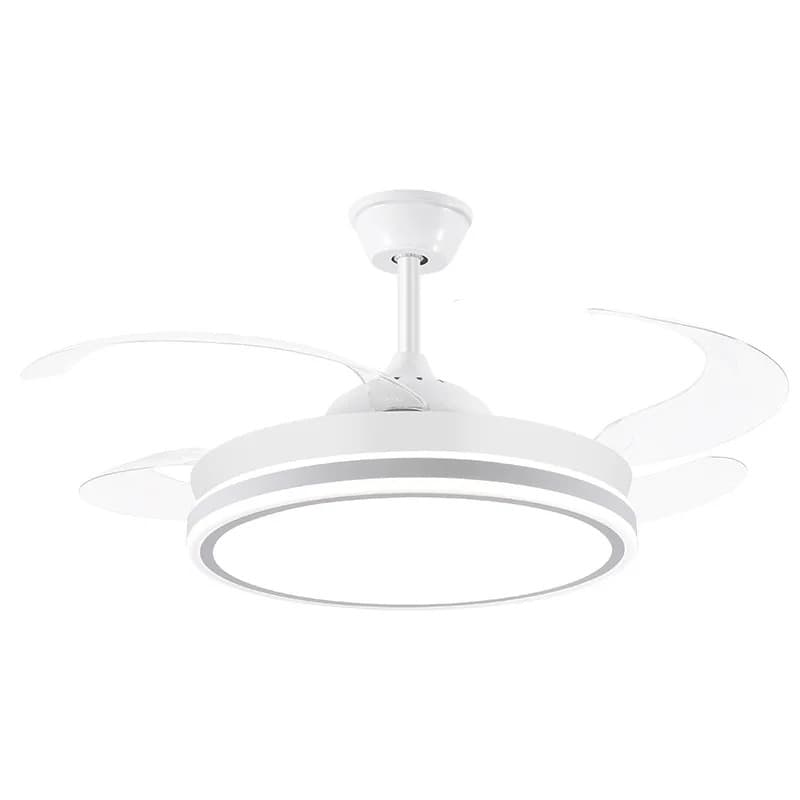
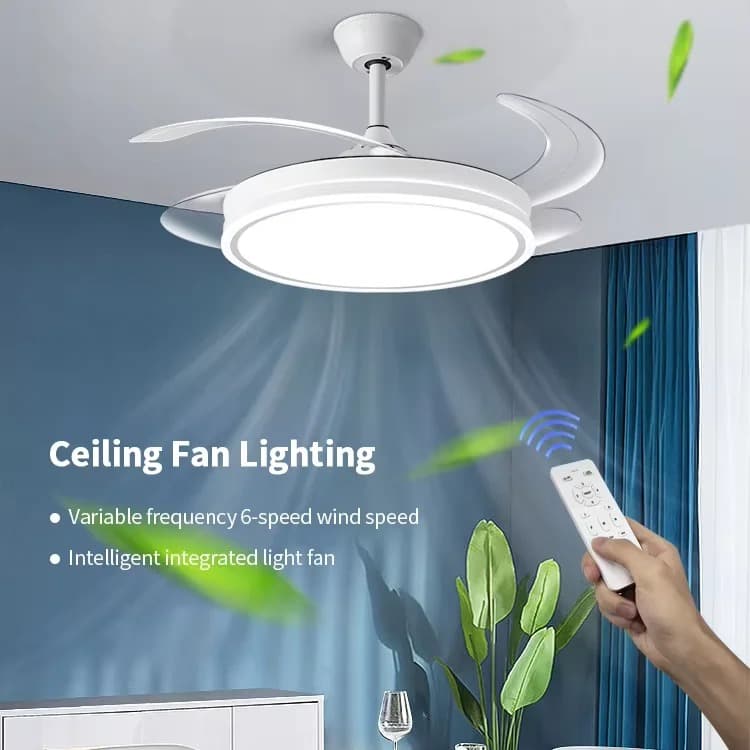
The Boréal 107
Retractable blades · Ø 107 cm · LED ceiling light & silent fan
- ✓Retractable blades: invisible when off, nobody guesses it's a fan
- ✓Sleep with windows closed, 30 dB, quieter than a whisper
- ✓Integrated LED 2700K → 6000K, dimmable: replaces your ceiling light
The two levels of a kitchen
The first level is general and comes from the ceiling: it lights the room, the floor, the circulation, and lets you find what you are looking for. Count 200 to 300 lumens per square metre, roughly 2,400 to 3,600 lumens in a 12 m² kitchen.
The second is functional and comes from under the wall cabinets: LED strips or bars fitted close to the wall, lighting the worktop without passing through the cook. That second level often plugs into an existing socket, with no building work.
- ·Ceiling light: 200 to 300 lm/m², general room light
- ·Under wall cabinets: a strip or bar, working light
- ·4000K in a kitchen, neutral light that does not distort food
- ·CRI 90 minimum to judge cooking or freshness by eye
The kitchen is also the hottest room
An oven at 200 °C, hobs, a dishwasher venting steam: a kitchen climbs several degrees in an hour of preparation, and it is the room where you stand doing precise work.
That is a use a plain ceiling light does not answer, and where the existing fixing point can serve twice. A retractable-blade model moves air while you cook and goes back to being a luminaire the moment you stop, without taking a centimetre of worktop.
A dark worktop was never a question of watts: it is your own shadow. Keep the ceiling light for general brightness, at 200 or 300 lumens per square metre and 4000K, and add a strip under the wall cabinets for the work. That is the only combination that lights where you are looking.
Frequently asked questions
How many lumens for a kitchen?+
200 to 300 lumens per square metre, that is 2,400 to 3,600 lumens for 12 m². Twice a living room, because you handle knives there and judge food.
What colour temperature in a kitchen?+
4000K, a neutral light that gives food neither a yellow nor a blue cast. 2700K warms colours too much to judge meat or salad.
How do you light a worktop without building work?+
An LED strip under the wall cabinets, stuck on or held by two screws, plugged into a worktop socket. It is the fastest answer to cast shadow, and it needs no wiring.
The SEY Maison Circle
Every month, an exceptional piece. Never reissued.
The Drops principle: one high-end furniture piece per month, in a numbered edition. Once it's gone, it never comes back. Circle members are notified 48 h early, access each drop 24 h before everyone else, and receive our guides before publication.
Discover the Drops →