Comparisons & guides
Memory foam pillow or classic pillow: an honest comparison
Published on ·5 min read
A pillow is the only piece of furniture in the house that touches your neck eight hours a night. It is also the one we buy least often, and almost always at random. Two families share the shelves: fibre filling, soft and cheap, and memory foam, firmer and more expensive.
This article compares them without taking sides in advance. What each does well, what each does badly, what it costs, how long it lasts, and which sleeper it suits. The limits of memory foam are stated plainly, because they are real and they often decide the purchase.
What a classic fibre pillow does well
A synthetic fibre pillow is loose filling inside a case. It dictates nothing. You fold it, squash it, roll it under your neck, move it around in the middle of the night without thinking. For sleepers who move a lot and alternate back, side and front, that flexibility is a genuine advantage. It is light, it often goes into the machine whole, and it costs little. It is the easiest pillow to live with.
Its flaw is the exact flip side of its quality. Since nothing holds the filling in place, it flattens under the weight of the head. After an hour the starting height is gone. You reshape it without noticing, several times a night, and the neck drops again each time. For a side sleeper, whose shoulder creates several centimetres of gap between mattress and head, that flattening leaves the neck twisted for much of the night.
What memory foam does well
Memory foam works differently. Its rebound is slow: it sinks where pressure is high, under the back of the skull, and stays tall where pressure is low, under the neck. The hollow gets filled instead of staying empty. Because the foam is one block and not loose filling, the height of the first evening is still there at dawn. That is the real argument for this material, and it counts.
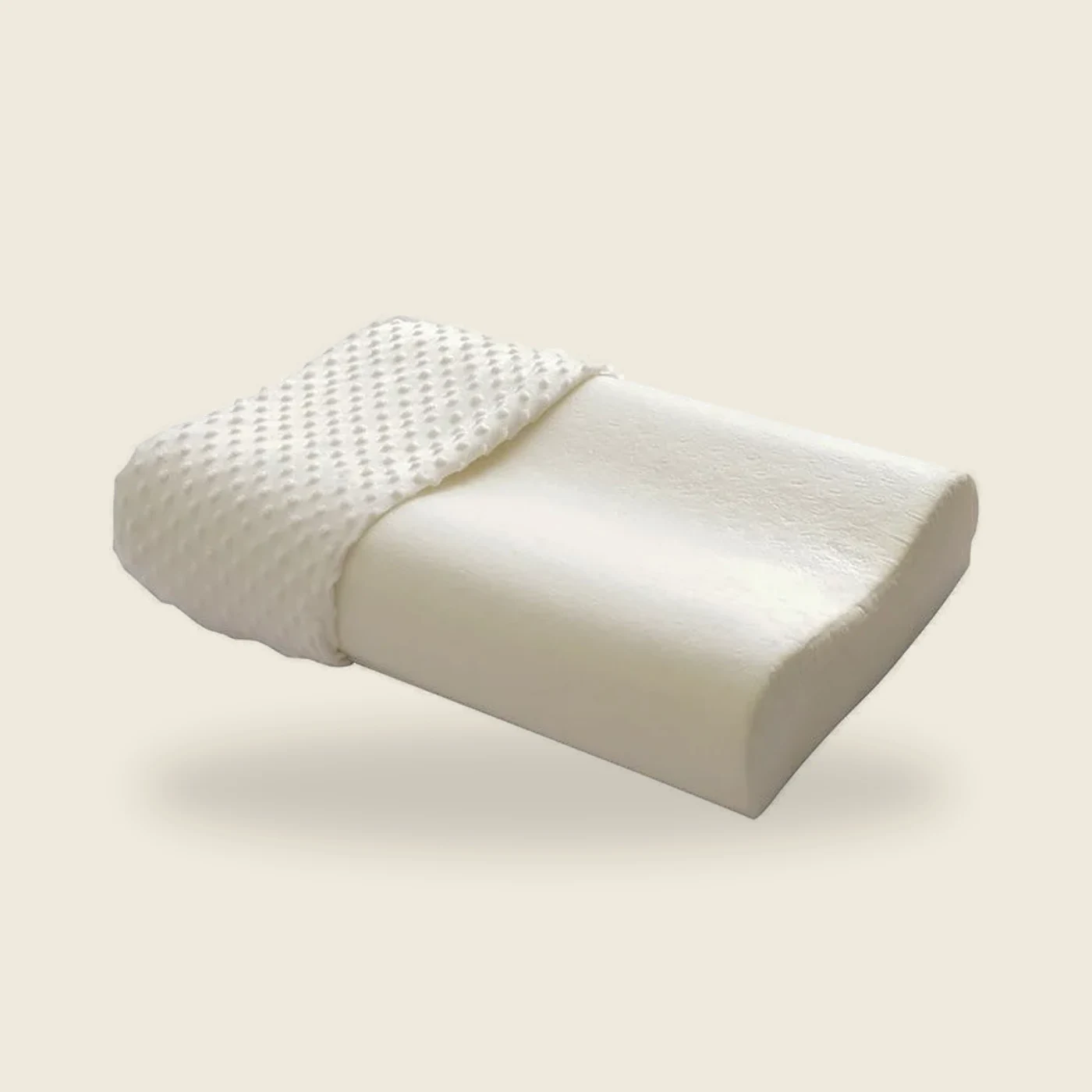
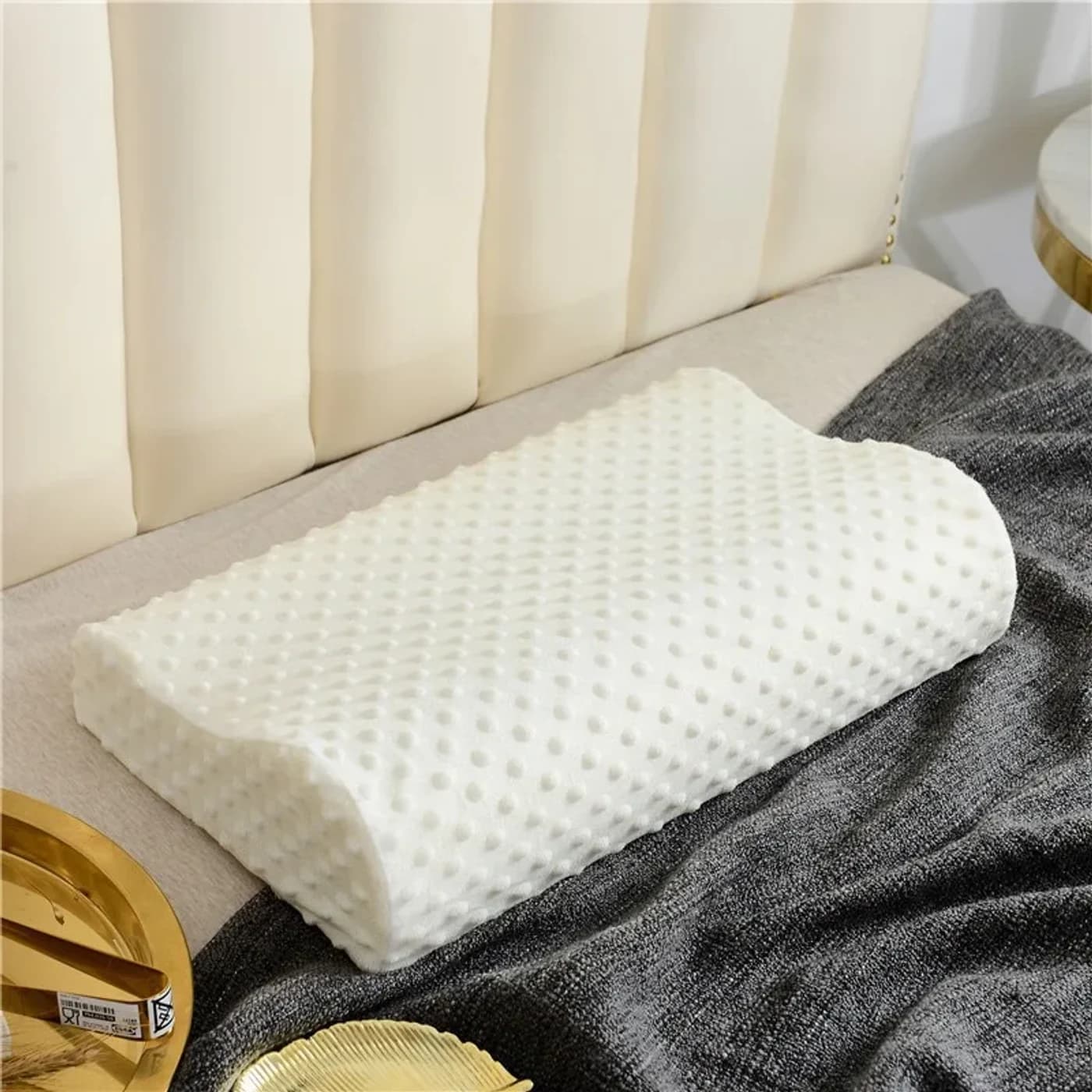
This stability explains the shape of ergonomic models. The Nuage 50 measures 50 × 30 cm and carries two wave heights on the same pillow, 10 cm and 7 cm. You switch from one to the other by turning it over: the high wave for side sleeping, which has to fill the width of the shoulder, the low wave for back sleeping, which needs far less. Fibre filling cannot hold two distinct heights, since it flattens.
The limits of memory foam, stated plainly
The first limit is the feel. You do not rest on slow rebound foam the way you rest on a soft pillow, you sink into it. The head is held, surrounded. Many people find that pleasant after a few nights. Others dislike the sense of being held from the very first evening. There is no good or bad sleeper here, it is a matter of taste, and it is settled by sleeping on it, not by pressing a hand into it in a shop.
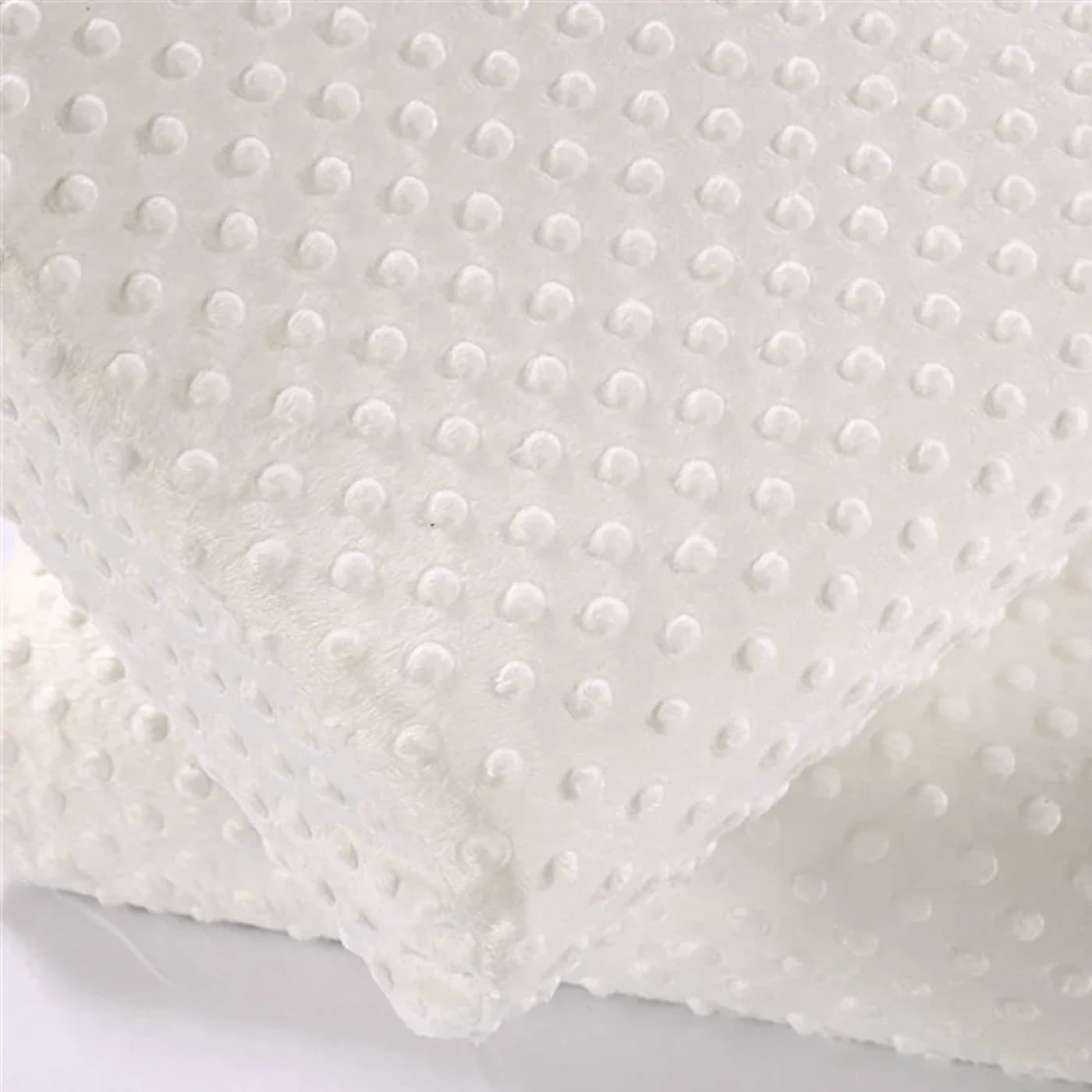
The second limit is the adjustment time. Expect two to three nights in general, sometimes a week, before the neck finds its bearings. The first mornings can leave a passing stiffness while position habits change. The third limit is care: a foam core cannot be washed. On the Nuage 50 the textured polyester and cotton cover comes off and goes into the machine, the core is aired, and that is all it asks.
- ·Sinking feel: you are held, not perched on top. You either like it or you do not.
- ·Two to three nights of adjustment in general, sometimes a week.
- ·The foam core is not washed, it is aired. Only the cover goes in the machine.
- ·Heavier and less foldable than a fibre pillow.
- ·Higher purchase price, spread over a longer life.
Price, lifespan, and who should choose what
The orders of magnitude are clear. A synthetic fibre pillow generally sits between 10 and 30 €, and gets replaced every two to three years, sometimes sooner if it flattens fast. A memory foam pillow sits closer to 40 to 90 €, and generally lasts three to five years. Spread over a night, the price gap becomes very small. The Nuage 50 is offered at 55 € on its own, or 65 € with its textured cover, and the second pillow is 20 % off in the basket.
The practical advice comes down to three cases. If you sleep on your side and wake with a stiff neck, the stability of foam and a high wave often change something. If you shift position constantly and like folding your pillow, stay with fibre. If you mostly sleep on your back, both work, provided you stay low. Discomfort that lasts or wakes you at night calls for a health professional, not a new pillow.
Memory foam buys stability and a height that holds until morning, at the cost of a sinking feel and a few nights of adjustment. Fibre buys flexibility and a low price, at the cost of permanent flattening. Choose by your dominant sleeping position and by the feel you like, not by the label.
Frequently asked questions
Should I switch to a memory foam pillow?+
It depends on your sleeping position. On the side, memory foam keeps a constant height where a fibre pillow flattens, which limits neck twist. If you shift position constantly and like folding your pillow, fibre filling stays more comfortable.
How long does it take to get used to a memory foam pillow?+
Generally two to three nights, sometimes a week. The sinking feel is surprising on the first evenings, and the neck takes a few nights to find its bearings. If nothing improves after two weeks, the chosen height is probably wrong.
How long does a pillow last?+
Expect two to three years for a synthetic fibre pillow and three to five years for memory foam. The end of life sign is simple: the pillow no longer regains its height by morning, or you have to reshape it several times a night.
The SEY Maison Circle
Every month, an exceptional piece. Never reissued.
The Drops principle: one high-end furniture piece per month, in a numbered edition. Once it's gone, it never comes back. Circle members are notified 48 h early, access each drop 24 h before everyone else, and receive our guides before publication.
Discover the Drops →