Comparisons & guides
Ergonomic two height pillow: what the wave shape is for
Published on ·5 min read
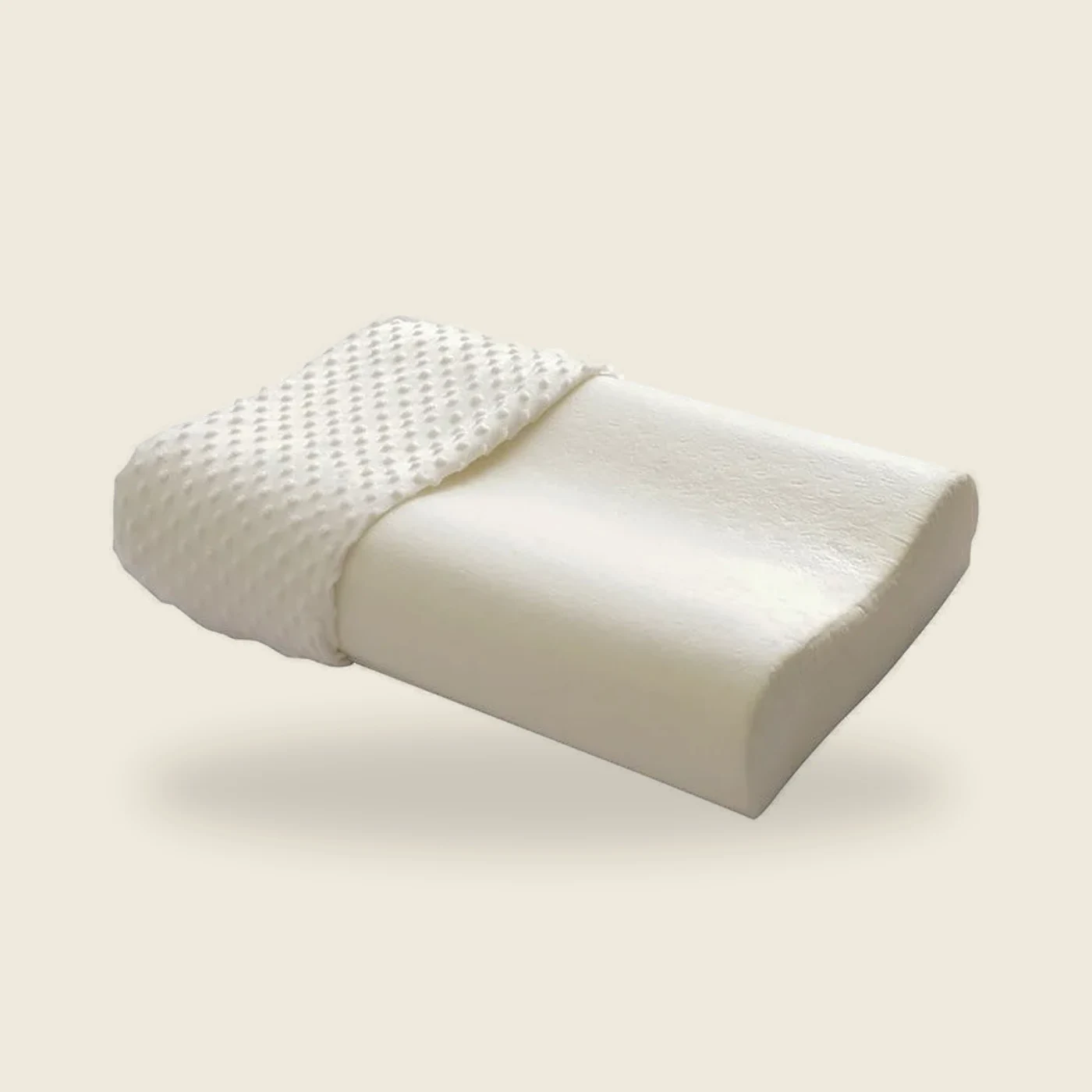
An ergonomic pillow does not look like a pillow. It is smaller, denser, and it carries a wave shape instead of being flat. That shape looks odd in photos and is hard to grasp until you have tried it: it is not styling, it is the answer to a very concrete geometric problem.
This article explains what the wave really does, why some models carry two heights on the same pillow, how you pick the right face by turning it over, and above all who this format suits. Because it does not suit everyone, and saying so is part of the advice.
What the wave shape is for
Lying on your side, your head is not resting on the mattress: it is suspended above it, at the height of your shoulder. Between the mattress and your neck there is a gap of several centimetres. A pillow's job is not to raise the head, it is to fill that gap so the neck stays in line with the back. A flat pillow does both at once, and often badly.
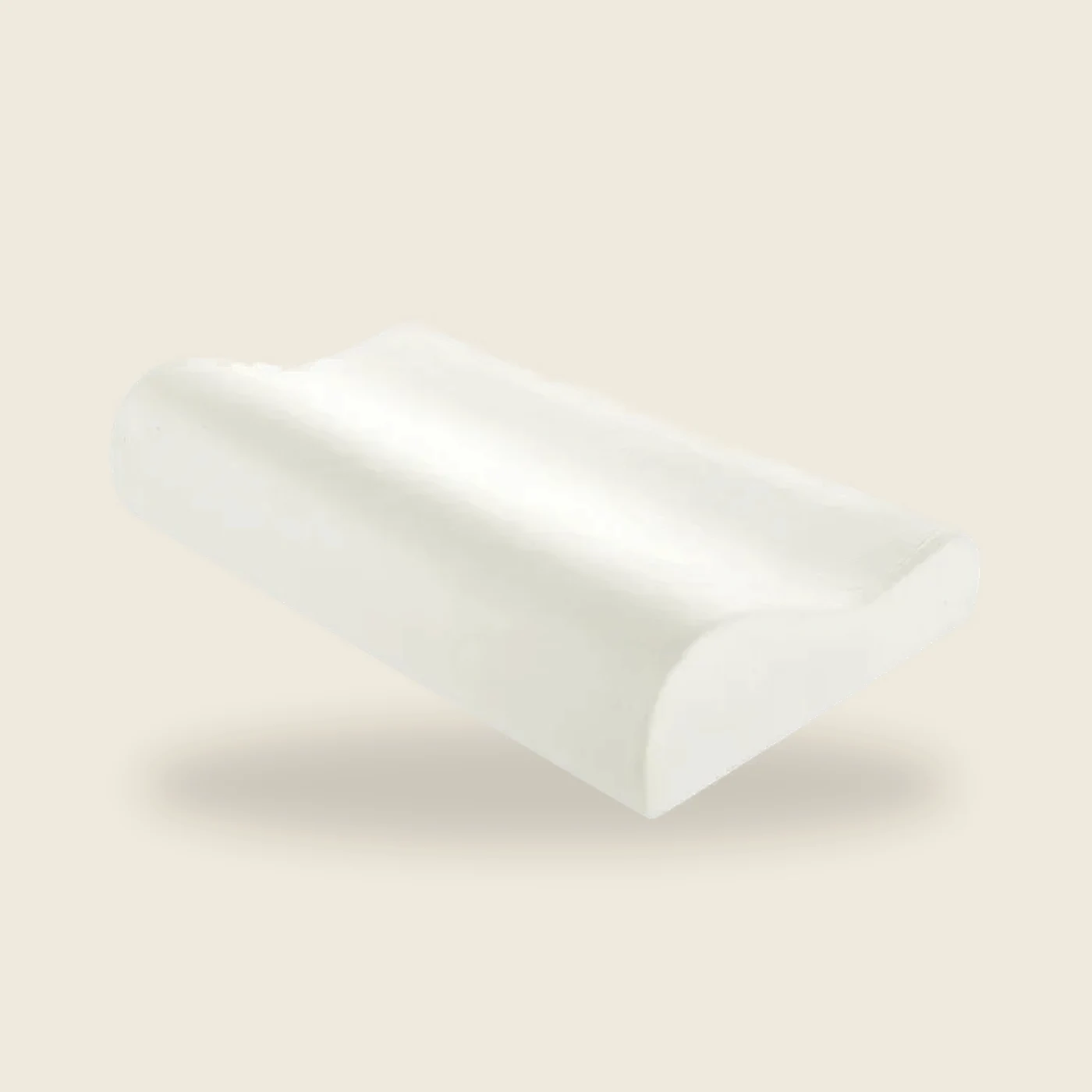
The wave separates the two functions. The raised ridge sits under the neck, where the gap is widest. The central hollow receives the back of the skull, which needs no support and which, on a flat pillow, ends up pushed forward. The result is a lower head and a better supported neck than with a classic pillow of the same thickness. That is the whole logic of the shape.
Why two heights on the same pillow
The gap to fill is not the same size in every position. On the side it is roughly the width of a shoulder, often 9 to 12 cm. On the back the head almost touches the mattress and only the curve of the neck needs support, a few centimetres. A single height cannot serve both: high enough for the side, it pushes the chin towards the chest on the back; low enough for the back, it leaves the neck twisted on the side.
Hence the idea of two heights on one pillow. The Nuage 50 measures 50 × 30 cm and carries a 10 cm wave on one face and a 7 cm wave on the other. You switch from one to the other by turning it over: the high wave for side sleeping, the low wave for back sleeping. It saves buying two pillows, and above all it lets you test the right height at home instead of guessing it in a shop.
How to pick the right face by turning it over
The method fits in one image. Lie down in your usual position and have someone look at you from the front, or take a photo. The nose should stay in line with the breastbone, and the line of the neck should continue the line of the back, with no break up or down. If the chin heads towards the chest, the face is too high. If the head tips back, it is too low. Turn it over and run the test again.
Two precautions matter. First, the shoulder rests on the mattress, never on the pillow: that is the most common mistake and it throws off the whole setting. Second, judge after two or three nights, not on the first morning, because slow rebound foam needs a few nights of adjustment. If you alternate positions during the night, pick the face matching the one you spend most time in.
- ·Lie down in your usual position, not sitting on the edge of the bed.
- ·Check from the front: nose in line with the breastbone, neck continuing the back.
- ·Chin pushed towards the chest: the face is too high, turn the pillow over.
- ·Head tipped back: the face is too low, turn the pillow over.
- ·Rest the shoulder on the mattress, never on the pillow.
Who it suits, and who it does not
This format serves side sleepers first, who have the widest gap to fill and lose the most when a pillow flattens. It also serves people who alternate side and back during the night, since one pillow covers both cases. And it serves anyone who wakes up having reshaped their pillow three times: slow rebound foam holds its height until morning, which no loose filling does.
It does not serve front sleepers, who need the least possible height and sometimes nothing at all under the head. Nor does it serve people who like to fold, roll or hug their pillow, because a foam block does not fold and the shape loses its point as soon as you deform it. Finally, neck discomfort that lasts or wakes you at night is a matter for a health professional: a pillow format is a comfort choice, not care.
The wave is not a decorative motif: it separates neck support from skull housing, and the two heights answer the two most common positions. You pick the right face by looking at yourself from the front, you judge it after three nights, and you keep in mind that this format suits neither front sleepers nor pillow folders.
Frequently asked questions
What is the wave shape of an ergonomic pillow for?+
It fills the space between the mattress and the neck without lifting the whole head. The raised ridge supports the neck, the central hollow receives the back of the skull, which needs no support. The neck then stays in line with the back instead of being pushed forward.
Why does a pillow have two heights?+
Because the space to fill changes with position. On the side it is roughly the width of a shoulder, on the back only a few centimetres. Two heights on one pillow cover both cases: you turn the pillow over instead of buying a second one.
Which side of an ergonomic pillow should you use?+
The high face for side sleeping, the low face for back sleeping. The test is done lying down, seen from the front: the nose should stay in line with the breastbone. On the Nuage 50 the two waves measure 10 cm and 7 cm and you switch simply by turning it over.
The SEY Maison Circle
Every month, an exceptional piece. Never reissued.
The Drops principle: one high-end furniture piece per month, in a numbered edition. Once it's gone, it never comes back. Circle members are notified 48 h early, access each drop 24 h before everyone else, and receive our guides before publication.
Discover the Drops →