
Interior design
Gallery wall or a single canvas: which to choose for your living room, and why empty space matters
Published on ·4 min read
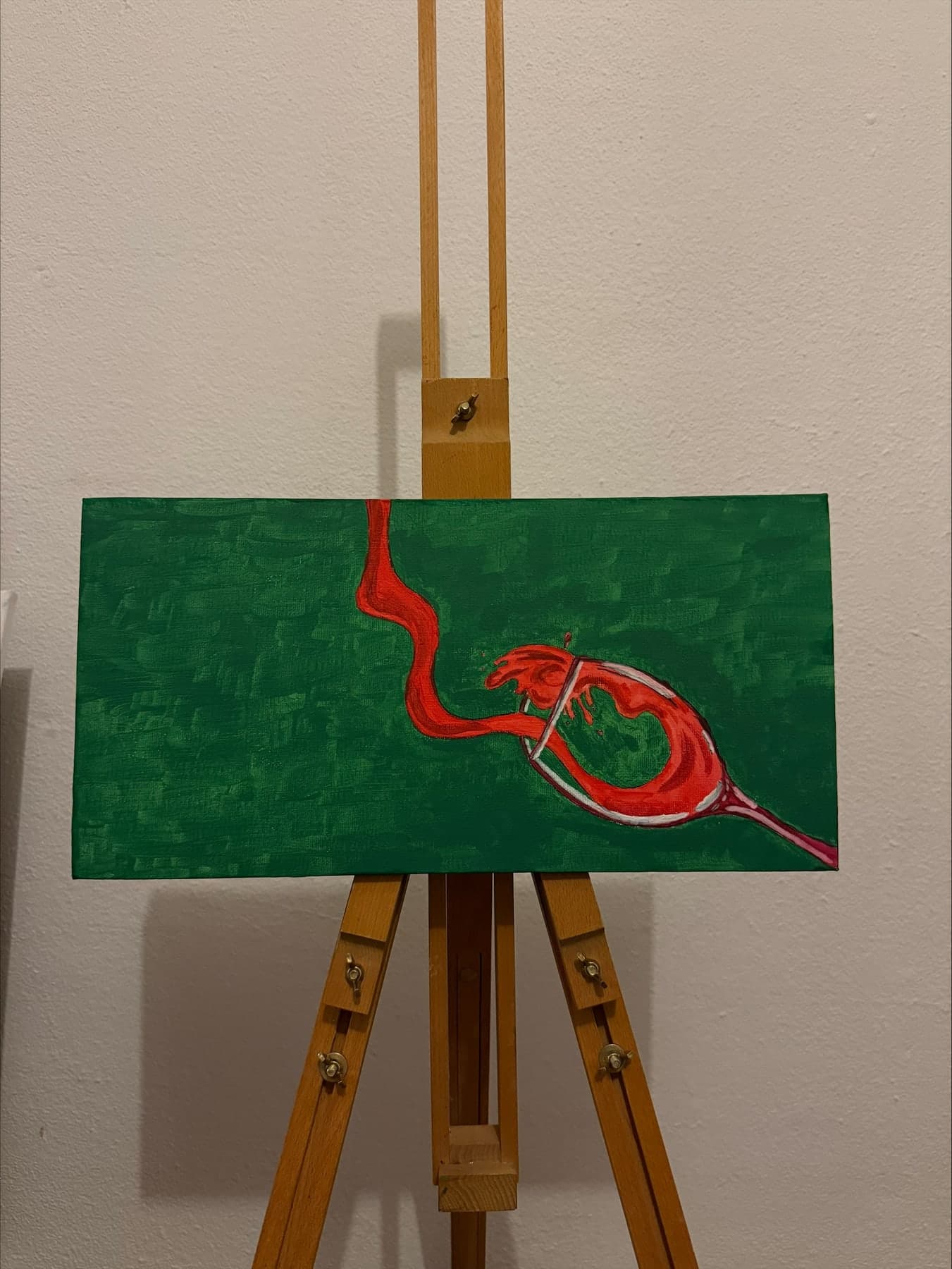
The gallery wall, fifteen posters and photos packed together, has been the decade's trend. It has a charm, that of accumulation, and a flaw, that of saying everything at once. Facing it, a single canvas on a bare wall, with emptiness around it, says one thing, and says it loudly.
This article compares both approaches on what matters in use: how the wall reads, how it evolves, what it costs, what it is worth. And it gives the empty-space rule, the one that lets a 40 cm canvas hold a three-metre wall.
What each option tells, and where it belongs
A gallery wall is a narrative: travels, portraits, film posters, memories. It is viewed up close, piece by piece, and works in places you walk through or climb, hallway, staircase, landing, where you have time to discover one element at each passage. In a living room, facing the sofa, it ends up no longer looked at: too many images become a texture.
A single canvas is a statement. It is viewed from afar, on entering the room, and it holds the main wall, facing the entrance or the sofa. It asks to be truly chosen, because it will carry the wall alone. It is more demanding, and that is what makes it stronger.
The empty-space rule: why a small canvas holds a large wall
The reflex is to believe a large wall needs a large canvas. It is emptiness that gives scale. A 40 × 20 cm canvas like Glass of wine, centred on a three-metre wall with nothing else around, takes on a presence the same canvas would not have among ten frames. Emptiness is the book's margin: without it, the text cannot be read.
The practical rule: at least half the canvas width of empty space on each side, and nothing above. Furniture below, a console or sofa, acts as a plinth and does not count as clutter. A plant, a lamp or a second frame within 50 cm break the effect. A bare wall and a canvas: that is a complete composition.
- ·Side emptiness: at least half the canvas width on each side
- ·Nothing above the canvas, nothing within 50 cm on the sides
- ·Furniture below acts as a plinth, it is not clutter
- ·A 40 cm canvas holds a 3 m wall if the wall is bare
One-of-a-kind canvases, painted for the house.
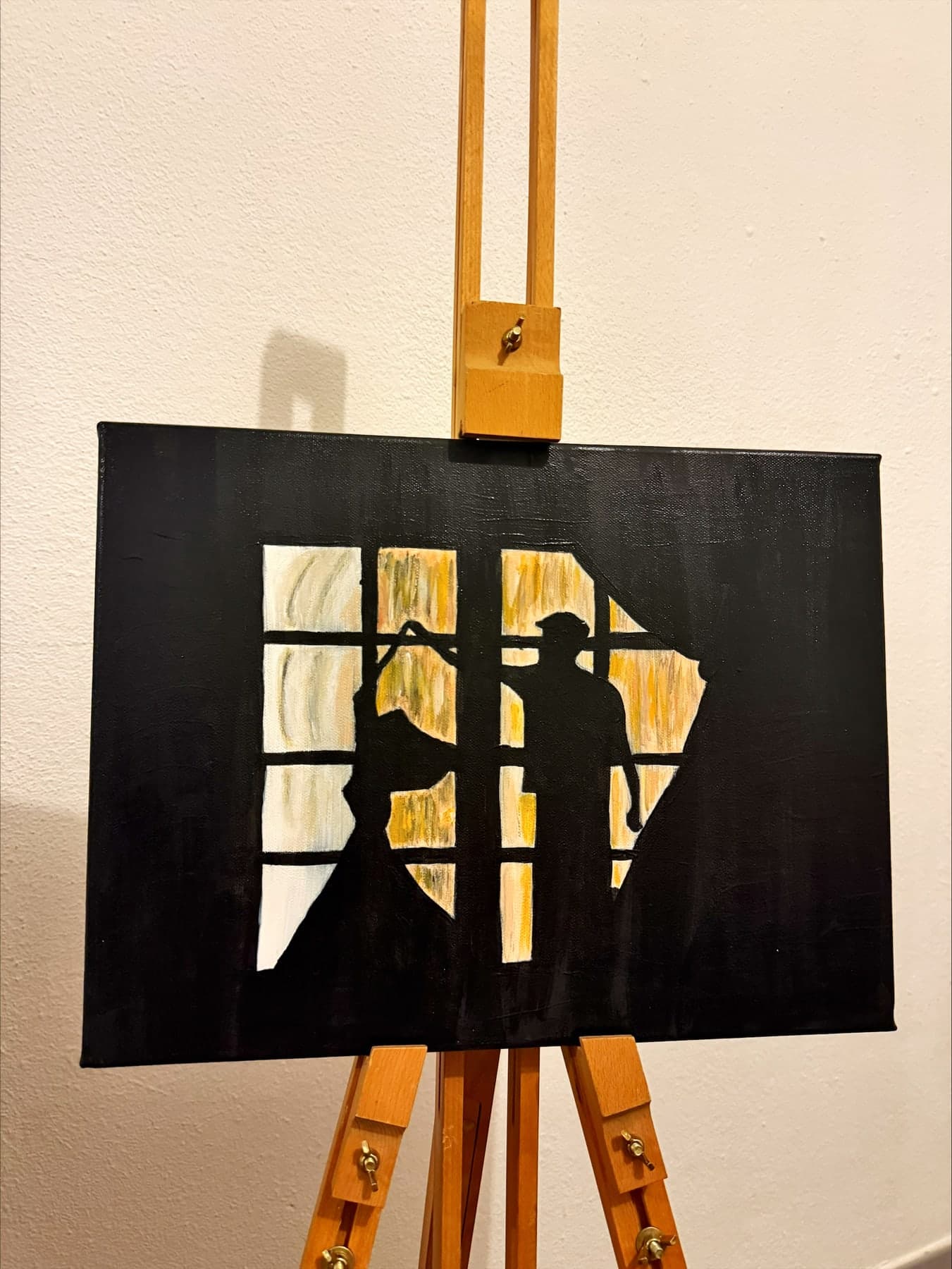

Evolution over time: what ages well
A gallery wall is composed in one go, with a paper template on the floor and an afternoon of measuring. It is fixed: removing a frame leaves a hole, adding one unbalances the whole, and posters yellow at different rates. After five years it looks like what it is, an assembly of moments that are no longer quite yours.
A single canvas moves in a minute: from living room to bedroom, from one wall to another, from one flat to the next. A second, by the same hand, can be added once the first has found its place. The IS × SEY Maison series is conceived that way: six canvases in compatible formats, hung alone today and paired in a year, without redoing the wall.
Budget and value in ten years
Twelve frames of reproductions at 40 euros each, frames included, cost around 500 euros, the price of a small original canvas with certificate. On purchase day the gallery wall seems to give more for the same money. Ten years later the reproductions are worth nothing and the frames have yellowed; the original canvas has kept its value, or grown it, and has not bored you.
For the main wall of a living space, the choice is therefore between an object that depreciates and one that is passed on. Glass of wine, 40 × 20 cm, 590 euros, certificate SEY-ART-0002, is a canvas made for a bare wall: a tipping glass on deep green, alone, with emptiness around, under a warm ceiling light in the evening. It holds an entire living room.
Gallery wall for places you pass through, where you discover an image each time; a single canvas for the main wall of a living space, with half its width of emptiness on each side. The canvas moves, pairs, keeps its value; the gallery wall freezes and ages. The six IS × SEY Maison canvases are made for bare walls, alone first, paired later.
Frequently asked questions
Gallery wall or single painting in a living room?+
A single painting on the main wall, facing the entrance or the sofa, with emptiness around it: it reads from afar and holds the wall. The gallery wall suits places you pass through, hallway, staircase, landing, where you discover an image at each passage.
How much empty space around a painting?+
At least half the canvas width on each side, nothing above, nothing within 50 cm on the sides. Furniture below acts as a plinth. That emptiness is what gives a 40 cm canvas its presence on a three-metre wall.
Can a small canvas be enough on a large wall?+
Yes, if the wall is bare. A 40 × 20 cm canvas centred on a three-metre wall, with low furniture below and nothing else, holds the wall through the emptiness around it. A second canvas from the same series can be added later, aligned at the bottom.
The SEY Maison Circle
Every month, an exceptional piece. Never reissued.
The Drops principle: one high-end furniture piece per month, in a numbered edition. Once it's gone, it never comes back. Circle members are notified 48 h early, access each drop 24 h before everyone else, and receive our guides before publication.
Discover the Drops →Also worth reading
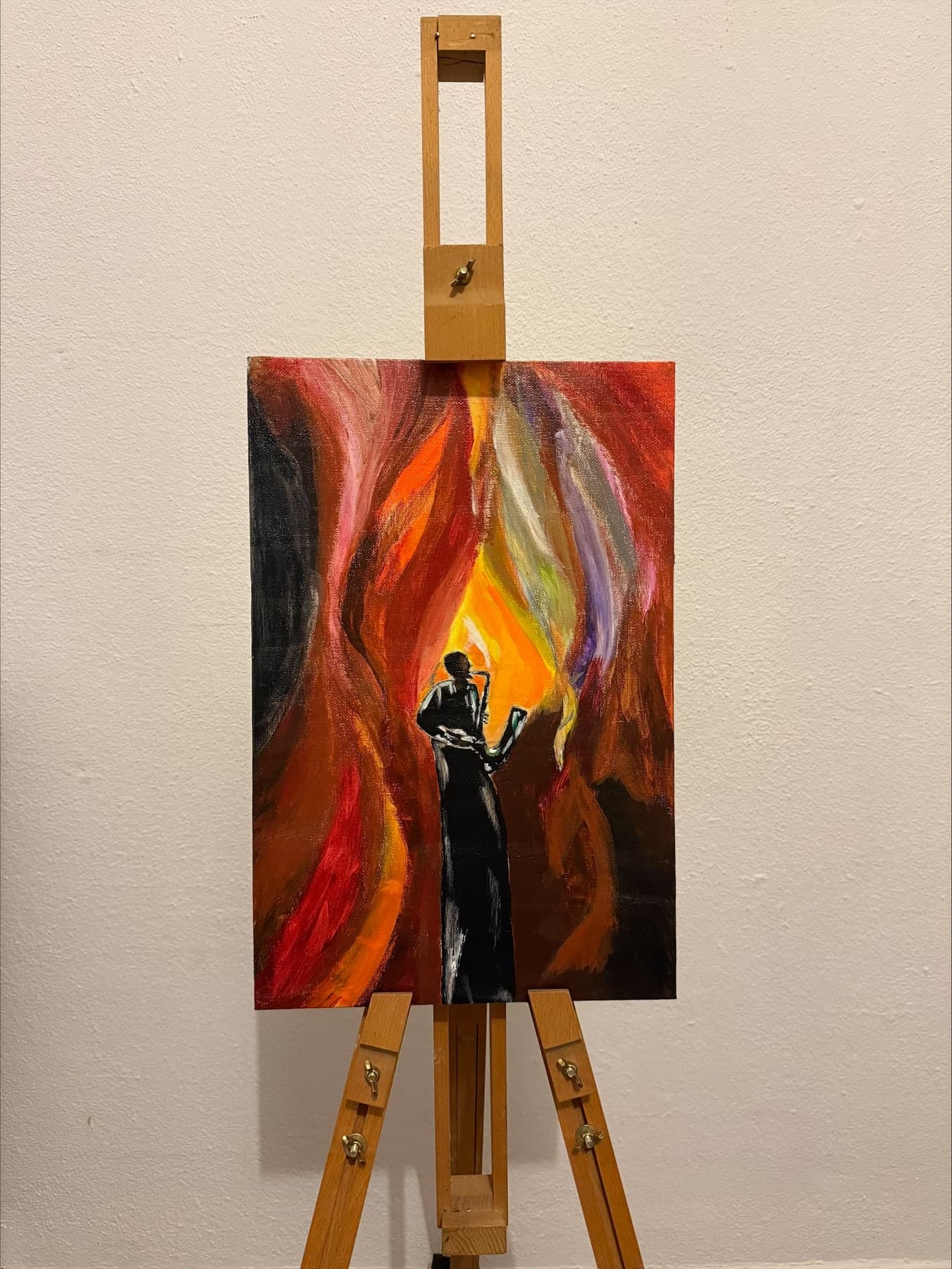
Lighting a painting at home: colour temperature, angle and intensity that respect the canvas
Read the article →
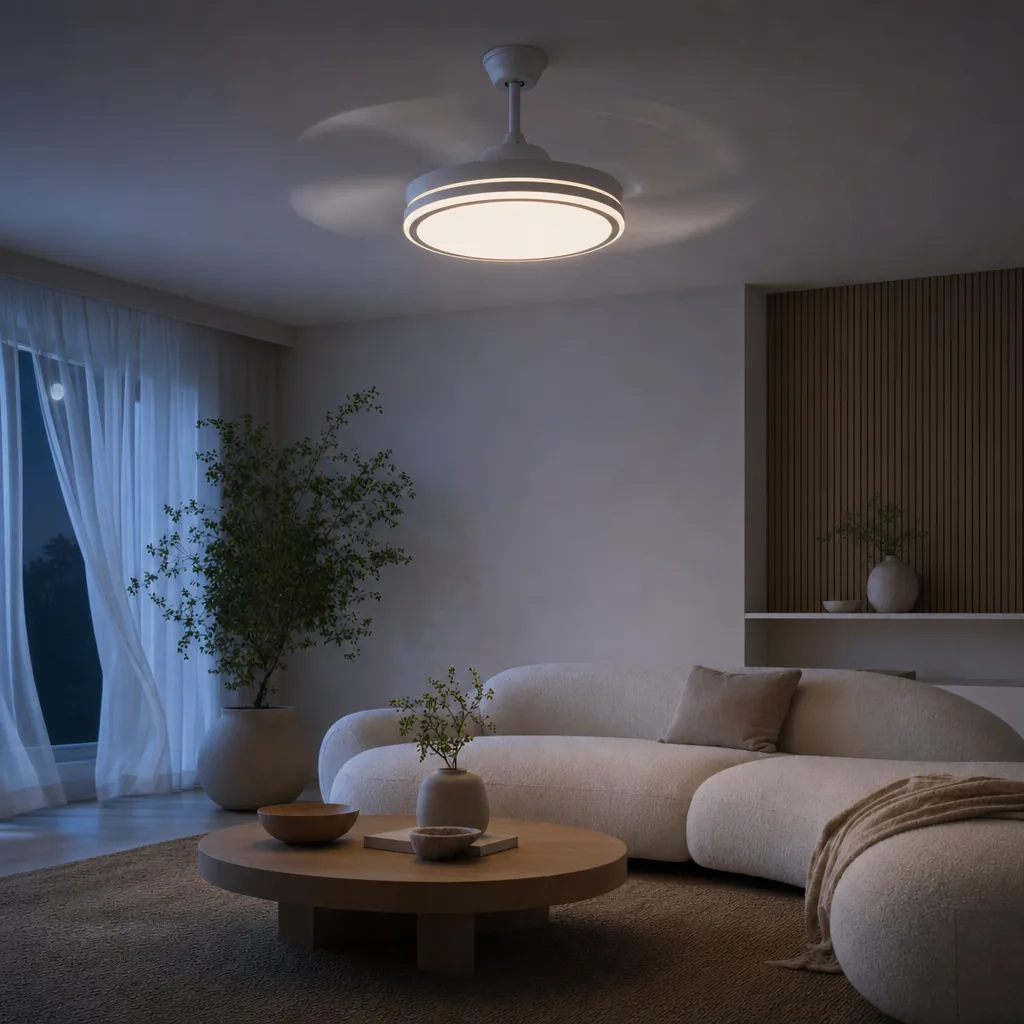
Ceiling fan and television: avoiding LED glare on the screen and blade flicker
Read the article →
Which painting for a bedroom: calming colours, subjects that help you sleep, placement facing the bed
Read the article →