
Interior design
Lighting a painting at home: colour temperature, angle and intensity that respect the canvas
Published on ·4 min read
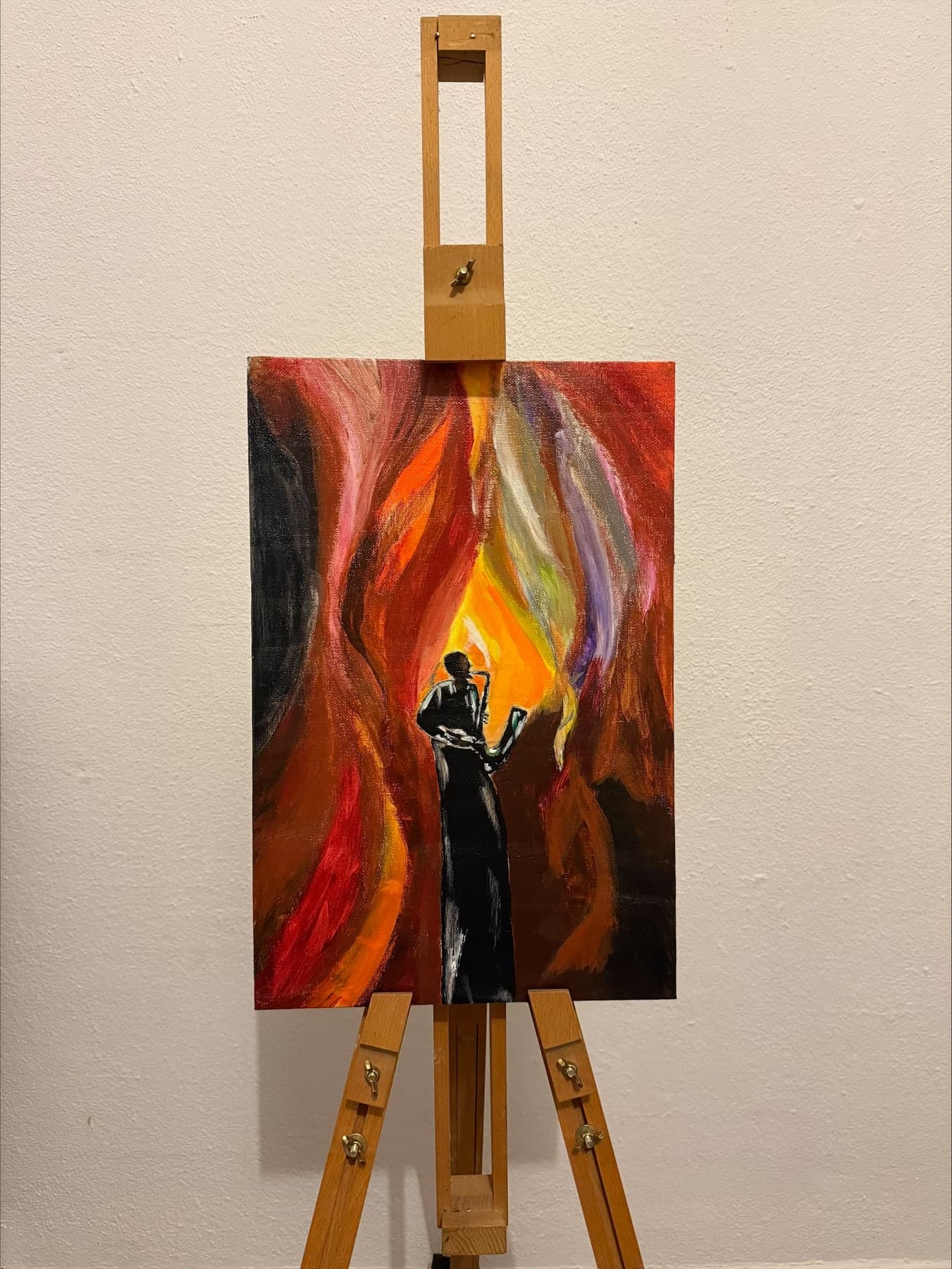
The same painting, hung in two rooms, can look warm and vibrant in one, flat and greyish in the other. The difference is not in the canvas: it is in the light. Colour temperature, angle and intensity of the lighting decide what the eye sees.
Galleries know it and adjust every spot. At home there is no spot rail, but there is a ceiling light, sometimes dimmable, sometimes with several whites. This article gives the three rules, then shows how to apply them with what is already on the ceiling, with the example of the IS × SEY Maison collaboration canvases.
Colour temperature: the setting that changes everything
White light is never neutral. At 2700 K it leans amber, like a filament bulb; at 4000 K it is a soft daylight white; at 6000 K a bluish office white. A canvas with a warm dominant, ochres, browns, deep reds, gains depth under 2700 to 3000 K: colours saturate and the paint's grain appears.
A cooler or more contrasted canvas, with whites, greys, blues, stays truer under 4000 K, where whites do not yellow. 6000 K is for cleaning: it flattens everything, brings out reflections on the paint layer and tires the eye. On a warm-toned acrylic like Saxophone, switching from 4000 to 2700 K shows immediately: the mood changes, not only the lighting.
The angle: about 30° to avoid reflection and shadow
Light hitting the canvas head on, horizontally, creates a reflection on the painted surface and erases relief. Light coming too much from above, almost parallel to the wall, casts the frame's shadow on the canvas and grazes the surface. The right compromise sits around 30° from the wall's vertical: light reveals the material without shimmering.
With a central ceiling light, that angle depends on the distance between the light and the wall. For a canvas hung at 1.45 m centre height in a 2.50 m room, a ceiling light 1.50 to 2 m from the wall gives an angle close to ideal. Closer to the wall the frame's shadow lengthens; further away the light becomes frontal but stays soft if dimmed.
- ·Ceiling light less than 1 m from the wall: frame shadow visible, compensate by lowering intensity
- ·Ceiling light 1.50 to 2 m from the wall: angle close to 30°, ideal setting
- ·Ceiling light more than 2.50 m away: frontal light, no reflection if the canvas is matte
One-of-a-kind canvases, painted for the house.
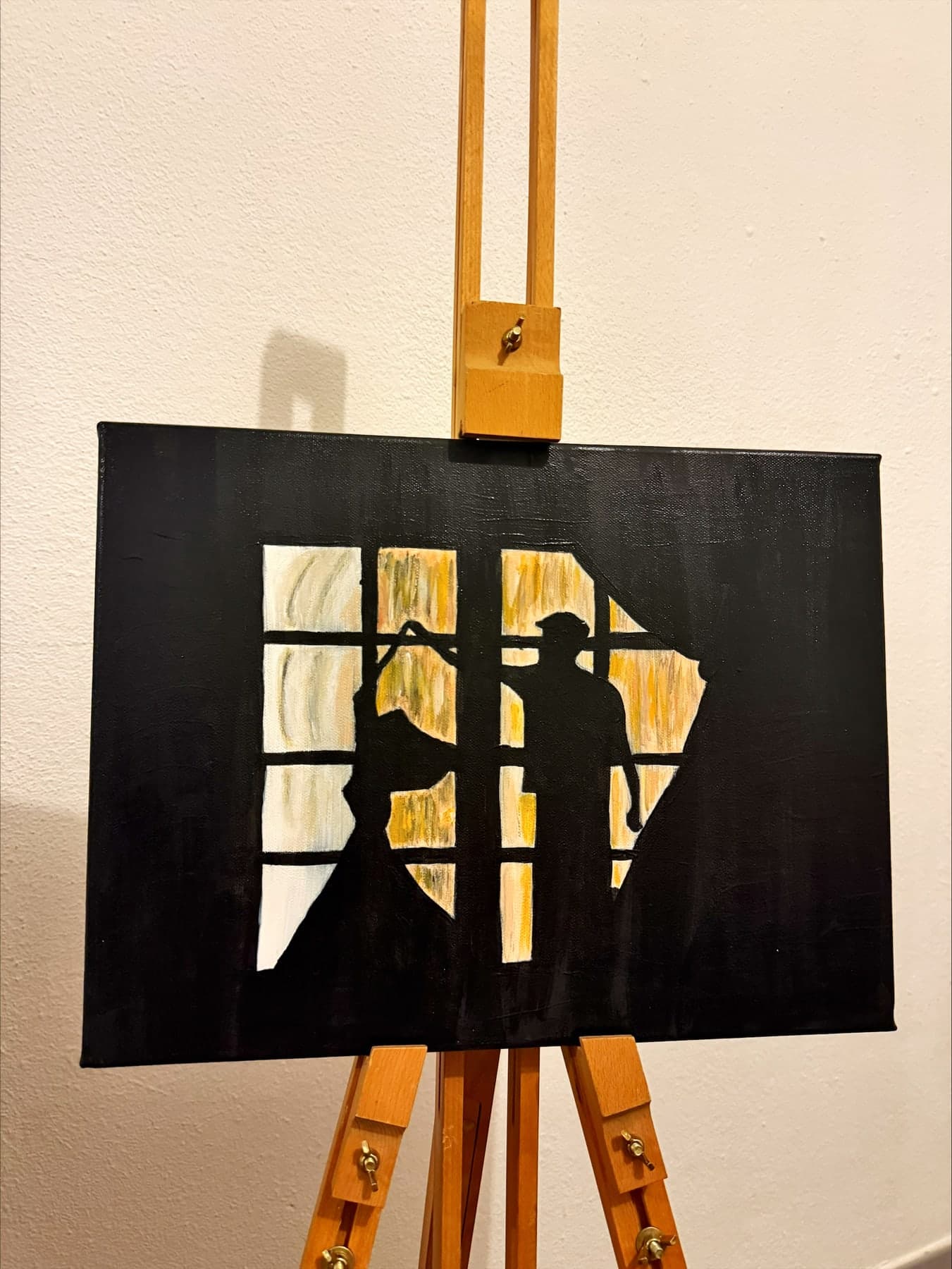
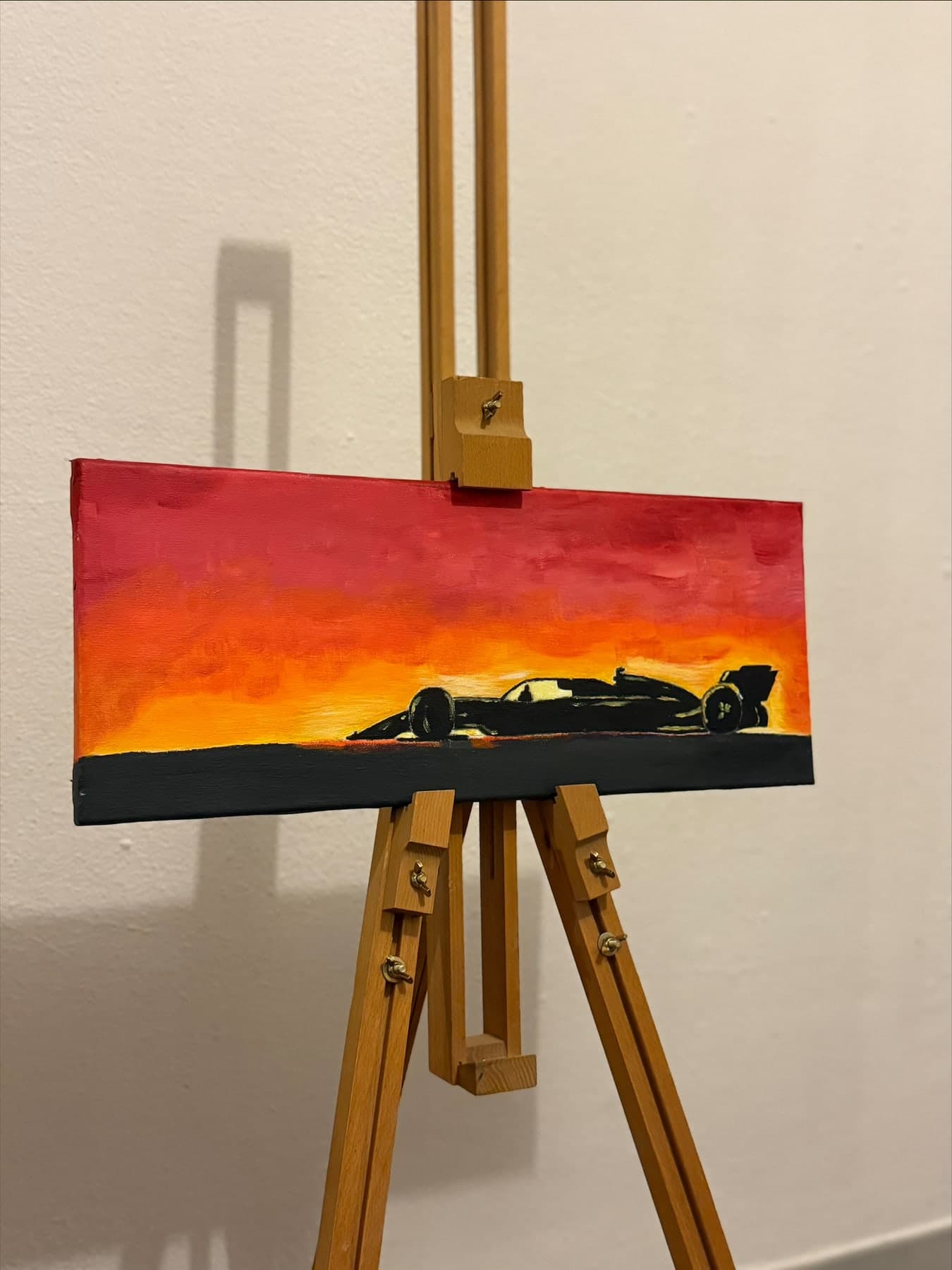
Intensity: a little more than the wall, no more
An overexposed painting loses its nuances: light tones wash out and blacks turn grey. The gallery principle is simple: the canvas should be perceptibly brighter than the wall around it, without becoming the brightest source in the room. At home with a dimmable ceiling light that means 40 to 60% of power in the evening, 100% in the day when natural light dominates.
What matters more than the exact value is being able to adjust. A canvas lives differently at 6 p.m. and at 10 p.m. The Boréal 107 LED dims and changes white from the remote: 4000 K at 100% to show the canvas to guests in late afternoon, 2700 K at 40% for the evening. The same wall, two paintings.
What damages a canvas: direct sun and heat
Acrylic pigments are stable, but no pigment likes continuous UV. A canvas in full sun a few hours a day loses saturation within a few years, starting with the reds. The rule: no wall exposed to direct sun, or a light curtain at the harshest hours. Halogens close to the canvas pose another problem, heat, which dries the paint layer.
LED settles both: almost no UV, almost no heat. An LED ceiling light is, from that point of view, gentler on a canvas than a gallery halogen spot. A unique canvas keeps for decades in those conditions, with a dry-brush dusting twice a year.
Warm white for a warm canvas, an angle of about 30°, moderate and adjustable intensity, never direct sun. A dimmable three-white LED ceiling light is enough to treat a canvas as in a gallery, without a spot rail. The IS × SEY Maison canvases are meant to be seen in that light, the light of a living room at the end of the day.
Frequently asked questions
What colour temperature to light a painting?+
2700 to 3000 K for a canvas with a warm dominant, where ochres and reds gain depth. 4000 K for a contrasted canvas with whites and blues, which stay true. 6000 K flattens nuances and is for cleaning.
Does LED damage a canvas?+
No. LED emits very little UV and very little heat, the two factors that tire pigments. It is gentler on a canvas than halogen or direct sun, to be avoided on the hanging wall.
Is a dedicated spot needed for a painting?+
Not necessarily. A dimmable ceiling light, 1.50 to 2 m from the wall, lights a canvas at an angle close to 30° with adjustable intensity. A dedicated spot becomes useful if the ceiling light is very far from the wall or if the room has several canvases on different walls.
The SEY Maison Circle
Every month, an exceptional piece. Never reissued.
The Drops principle: one high-end furniture piece per month, in a numbered edition. Once it's gone, it never comes back. Circle members are notified 48 h early, access each drop 24 h before everyone else, and receive our guides before publication.
Discover the Drops →Also worth reading
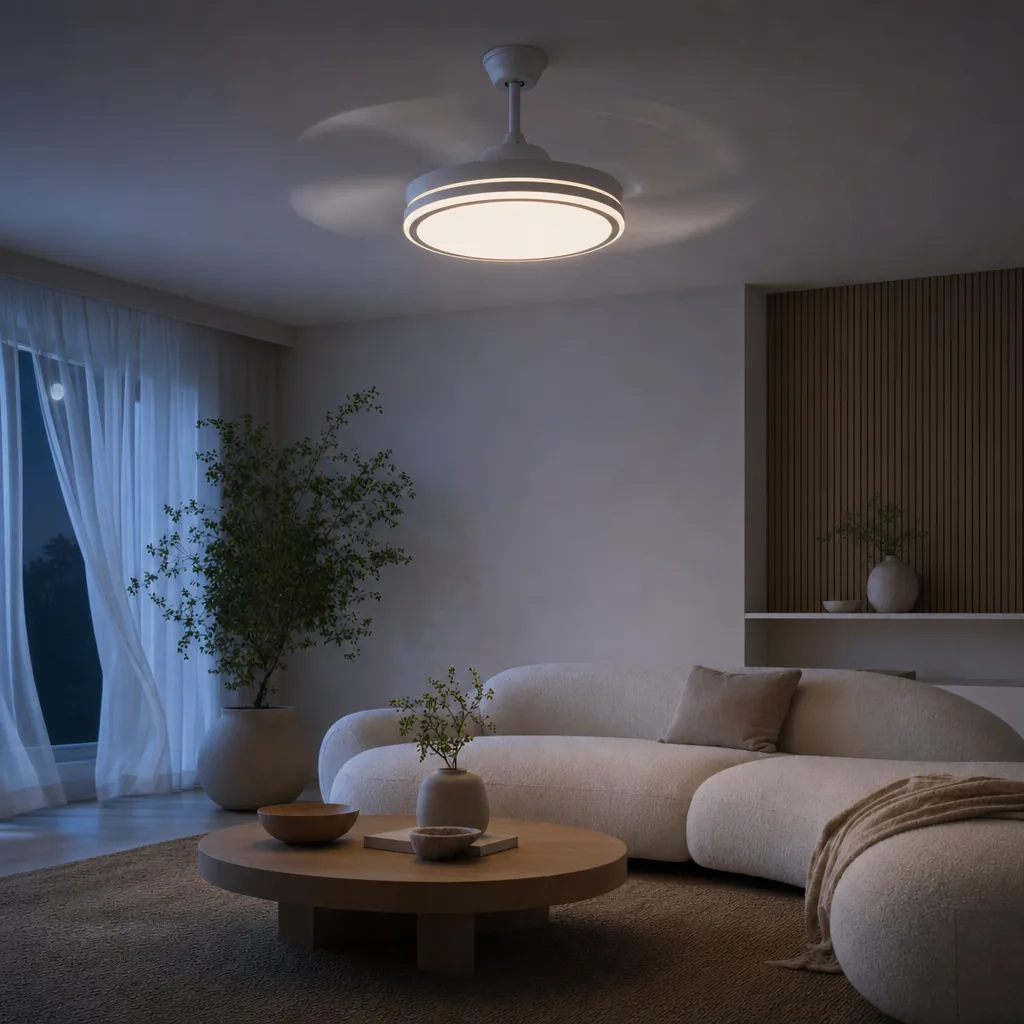
Ceiling fan and television: avoiding LED glare on the screen and blade flicker
Read the article →
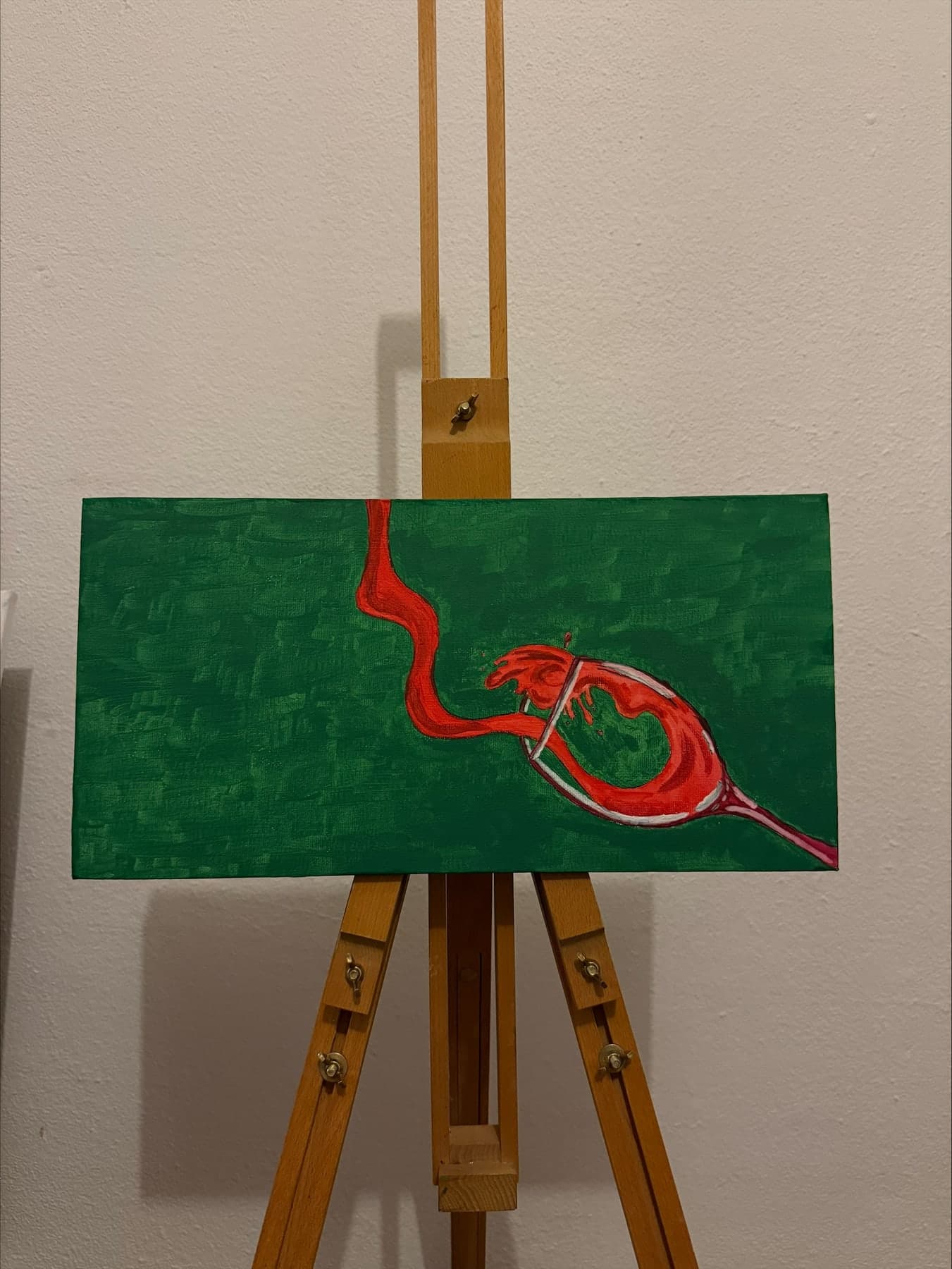
Gallery wall or a single canvas: which to choose for your living room, and why empty space matters
Read the article →
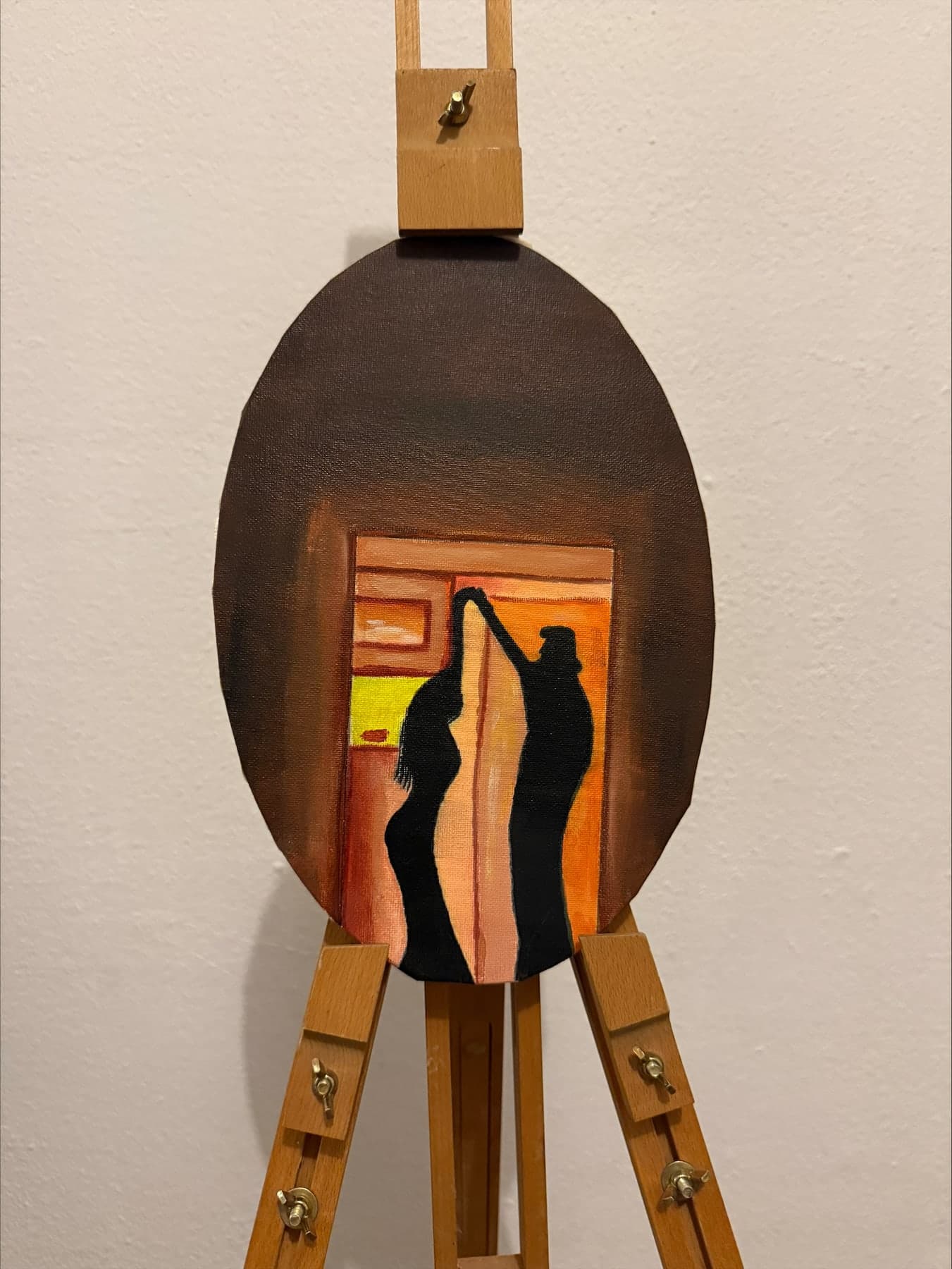
Which painting for a bedroom: calming colours, subjects that help you sleep, placement facing the bed
Read the article →