
Interior design
Choosing your pillow cover colour: a guide to the six shades
Published on ·5 min read
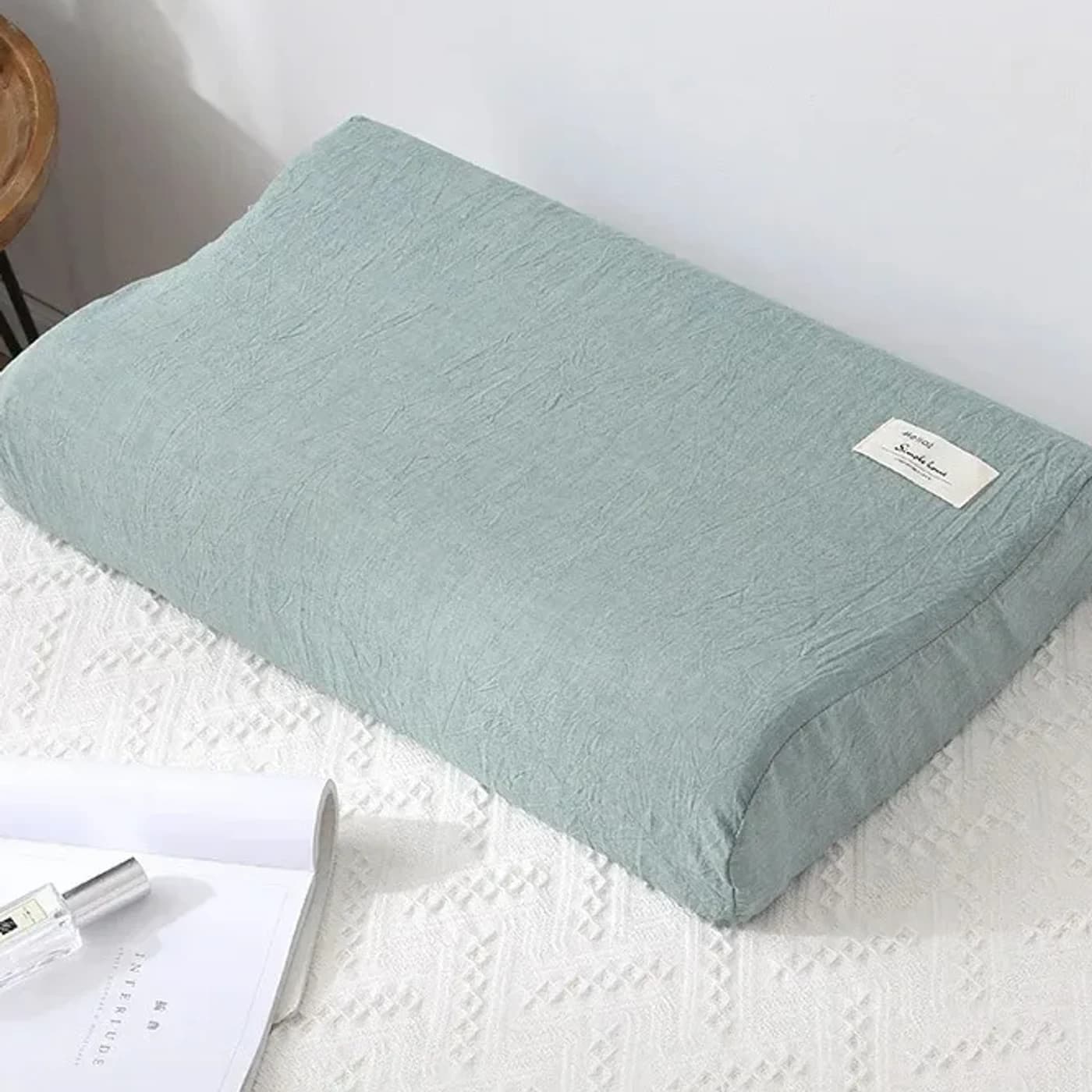
In a bedroom, the eye lands on the head of the bed first. It is the highest part of the sleeping area, the one still visible when the bed is made in a hurry. The pillow cover plays a role there out of all proportion to its size: it is small, but it sits in the centre of the field of view.
The Housse Nuage comes in six shades: denim blue, sage green, charcoal, sky blue, red gingham, blue gingham. This article explains what each brings, how to match it to bed linen already in place, and why owning several is practical before it is decorative.
Six shades, three families
The six shades fall into three simple families. The blues, denim and sky, bring a cool colour that calms a room. The neutrals, charcoal and sage green, behave almost like non-colours: they sit on anything without imposing a direction. The ginghams, red and blue, bring a pattern, and therefore rhythm, into a bedroom where everything else is plain.
That classification helps when choosing. A room that lacks calm gains from a blue or a sage. A room that is already very soft, plenty of white and beige, can look flat: that is where charcoal or a gingham does the work, giving the eye something to hold. In every case the jacquard weave of the cotton adds a discreet relief that shows in low morning light.
Which shade for which bedroom
The most reliable criterion is not taste, it is the light in the room. A north facing bedroom gets cool, bluish light all day: blues fade slightly there, while sage green and red gingham hold up better. A south facing bedroom gets warm light that warms every tone: blues read more accurately and charcoal looks less heavy. Check a shade at the hour you actually see the room, usually early morning and late evening.
The second criterion is the wood in the room. Light wood, oak or beech, sits naturally with sage green and denim blue. Dark wood, walnut or a dark finish, carries charcoal and benefits from being lightened by sky blue. A bedroom with no wood, white walls and metal, accepts anything, including the ginghams, which can then be used without hesitation.
- ·Denim blue: the all rounder, sits with natural linen and light wood
- ·Sage green: calming, works particularly well in northern light
- ·Charcoal: structures a bright room, underlines a white duvet
- ·Sky blue: lightens a dark bedroom or a dark wall
- ·Red and blue gingham: pattern for an entirely plain bedroom
Matching your bed linen
The rule that avoids mistakes fits in one sentence: one pattern at a time. If the duvet already carries a print, choose a plain shade, denim blue, sage green, charcoal or sky blue. If the duvet is plain, gingham becomes the piece that adds character without changing the whole set. Two different patterns on the same bed almost always fight each other.
For colour matching, two routes work. Tone on tone: stay in the same family as the duvet, one step darker or lighter, which gives a very calm bed. Contrast: take a clearly stronger shade than the duvet, which pulls the eye towards the head of the bed and makes the room more graphic. In both cases, decide by physically laying the cover on the bed, never on a screen.
Why own several
The most concrete reason is washing. The Housse Nuage is cotton and goes in the machine, but while it dries the pillow is bare. With two covers you rotate without thinking. With three you can wash at the same rhythm as the rest of the bed linen and never run short. Its side zip makes changing quick, and it disappears once the pillow is in place.
The second reason is mood. Changing a cover costs 22 € and takes a minute, where changing a duvet set costs ten times more. A set of two or three shades takes you from a bright summer bedroom to a more muted winter one. With the buy three get two free offer, five covers in the basket cost the price of three. One note: it is cut for an ergonomic 50 × 30 cm two-height pillow like the Nuage 50; on a classic rectangular pillow it does not sit properly.
Choosing a cover shade comes down to the light in the room, the wood present and the bed linen already there, not to a photo. Plain if the duvet has a pattern, gingham if everything is plain: the rule fits on one line. And since a cover gets washed, owning several is a matter of comfort first and decoration second.
Frequently asked questions
What colour of pillow cover should I choose for a bedroom?+
Start from the light in the room. In cool northern light, sage green and red gingham hold up better than blues. In warm southern light, blues read more accurately and charcoal looks less heavy. Then match the wood: sage and denim blue with light wood, charcoal or sky blue with dark wood.
Can gingham be mixed with printed bed linen?+
No, better to avoid it. One pattern at a time on a bed. If the duvet is printed, take a plain shade: denim blue, sage green, charcoal or sky blue. Gingham gives its full effect on a plain duvet.
How many pillow covers should you own?+
Two at least, so the pillow is never bare during washing, three if you want to change the mood of the room. The Housse Nuage is 22 € each, with a buy three get two free offer that puts five covers at the price of three.
The SEY Maison Circle
Every month, an exceptional piece. Never reissued.
The Drops principle: one high-end furniture piece per month, in a numbered edition. Once it's gone, it never comes back. Circle members are notified 48 h early, access each drop 24 h before everyone else, and receive our guides before publication.
Discover the Drops →Also worth reading

Lighting a painting at home: colour temperature, angle and intensity that respect the canvas
Read the article →
Ceiling fan and television: avoiding LED glare on the screen and blade flicker
Read the article →

Gallery wall or a single canvas: which to choose for your living room, and why empty space matters
Read the article →