
The art of the home
A ceiling fan above the dining table: summer meals made comfortable
Published on ·4 min read
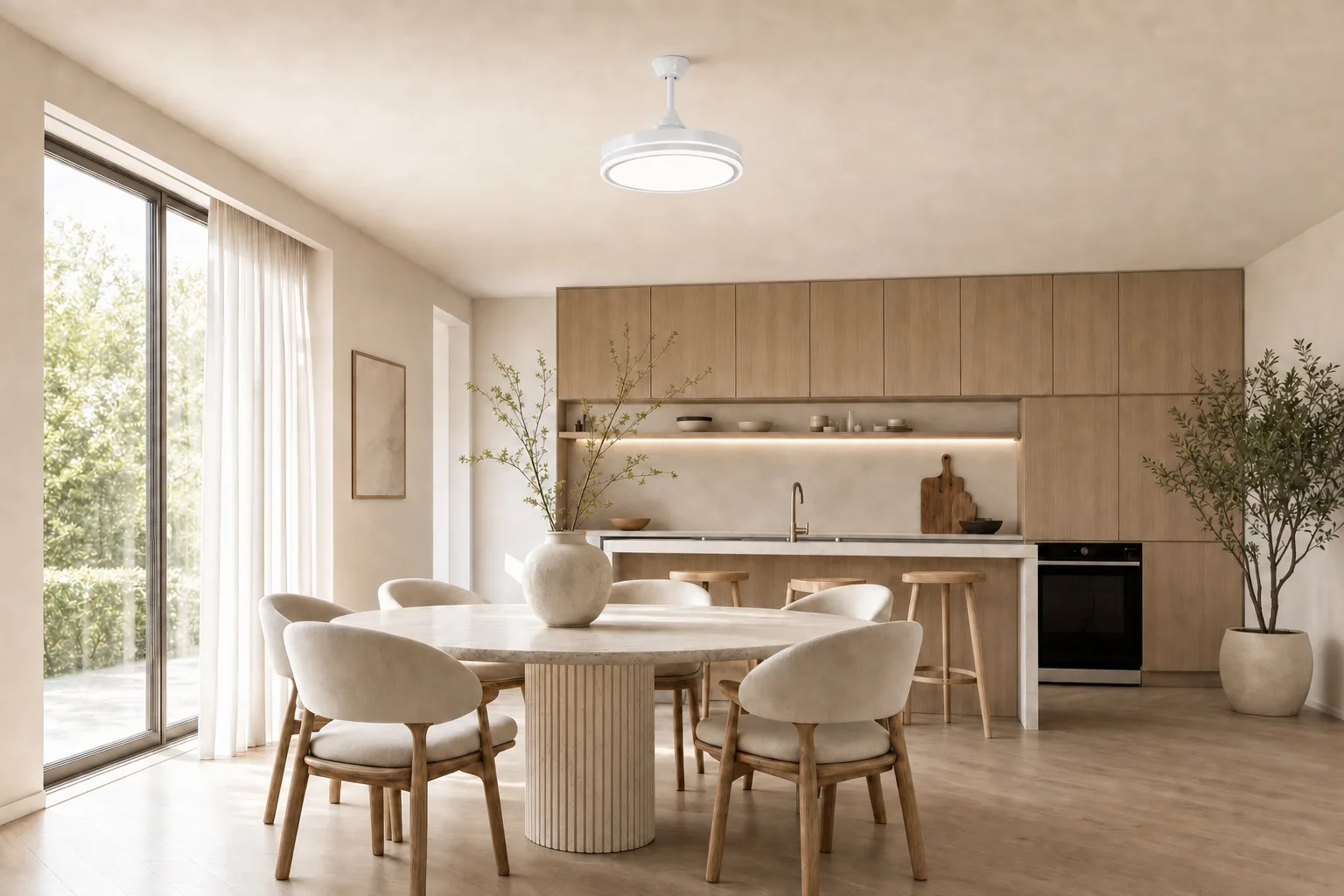
A paradox of summer: we wait all year for long dinners, and when they arrive, the dining room is where everyone sweats. Kitchen heat, bodies around a table, hot dishes: perceived temperature at dinner quickly exceeds the rest of the house.
Grand brasseries understood the answer over a century ago: a fan on the ceiling, above the tables. This guide revives that forgotten evidence and answers the practical questions: mounting height above a table, the right speed so food stays hot, and which model serves the décor too.
Why put a ceiling fan above the dining table?
A table of six radiates the equivalent of a small heater: each guest dissipates around 100 W, plus hot dishes and often a nearby kitchen. Without circulation that heat stagnates exactly where everyone sits.
Gentle, continuous airflow above the table lowers perceived temperature by 3 to 4°C and dries the clamminess. A welcome side effect: flies and mosquitoes, poor fliers in moving air, desert the table zone, no citronella required. And above a table, a beautiful fan is not an appliance but part of the décor.
How high above the table should it hang?
The safety rule stands: blades at least 2.10 m from the floor, which puts them about 1.30 m above a standard 75 cm tabletop, close enough to feel the breeze, far enough for it to arrive diffuse.
Under a 2.50 m ceiling, choose a compact or flush-mount model. From 2.80 m upward, a downrod brings the fan into its optimal zone, 2.30 to 2.60 m from the floor. Always centre the fan on the table, not on the room.
- ·Blade bottom: 2.10 m from the floor minimum
- ·Ideal blade-to-tabletop distance: 1.20 to 1.50 m
- ·Centre on the table, not the room
- ·132 cm diameter for a table of 6 to 8
- ·Keep 30 cm between blade tips and walls or tall furniture
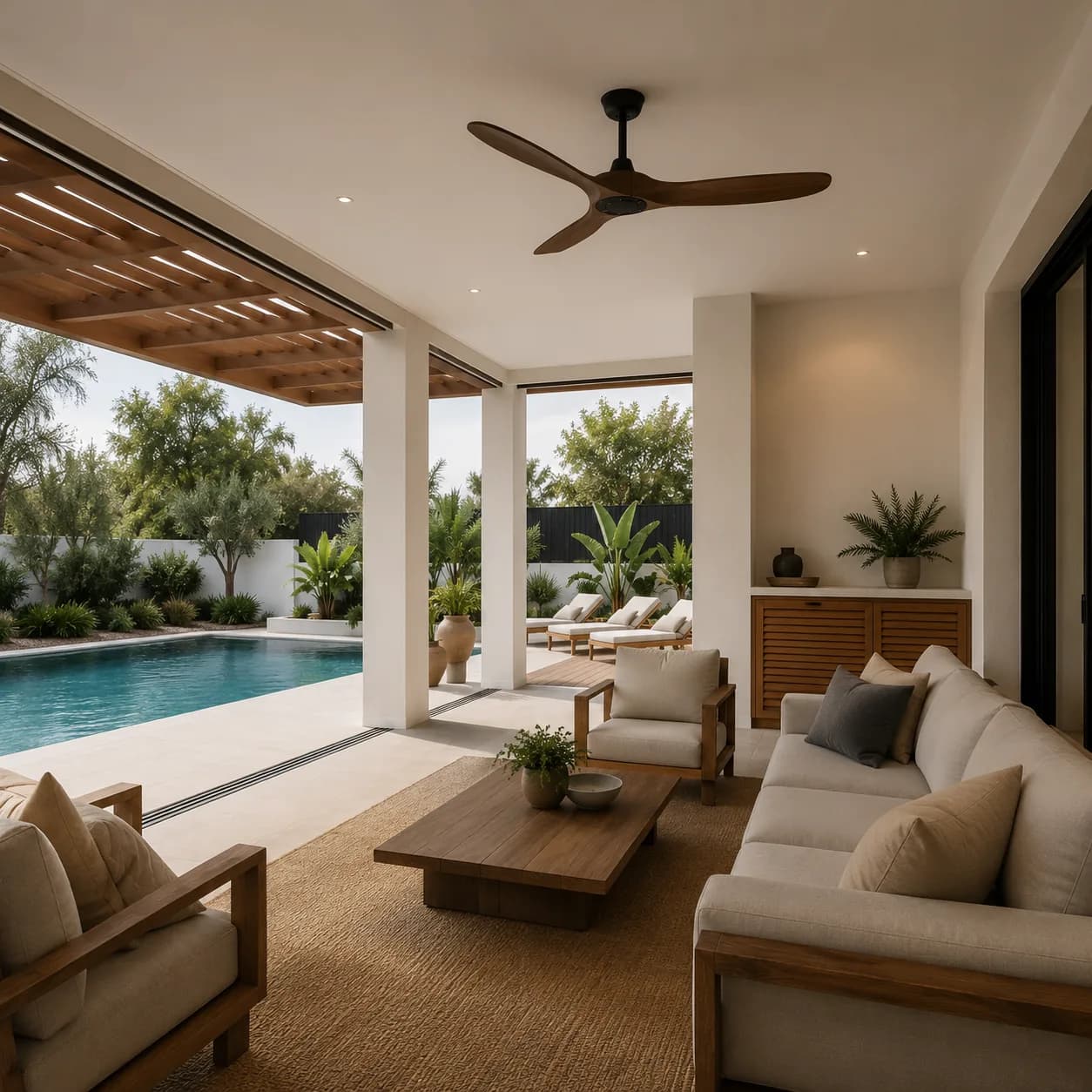
The Comptoir 132
Vintage black & dark wood · Ø 132 cm · No light
- ✓Silent DC motor, 6 reversible speeds
- ✓Remote control included
- ✓30-minute installation, illustrated manual
€339€389
A light breeze that won't cool the food: it's all about speed
The classic objection is solved by the speed setting. At full power, a 132 cm fan will flutter the napkins; nobody dines under that. At speed 1 or 2 of six, airflow at table level drops under 1 m/s, a barely perceptible breeze: a hot dish loses heat through its own radiation long before that trickle of air changes anything.
This is exactly why six speeds and a remote matter: one notch up during aperitifs while the room is still warm, back down to low as everyone sits, without leaving your chair. A large diameter turning slowly gives a wide, soft breeze; a small fast fan gives a narrow, aggressive draft.
Which style for a dining room?
The dining room is where the fan is looked at most: it presides over the focal point of the house. Brasserie and family-house codes work best: dark body, wooden blades, a silhouette from another era. That is precisely the Comptoir 132: black body, curved dark-wood blades in the tradition of old brasserie fans, driven by a silent, efficient DC motor that did not exist back then.
Lighting deserves a conscious choice: a no-light model like the Comptoir keeps a pure silhouette and leaves table lighting to wall sconces or an offset pendant, the configuration decorators prefer. If the point above the table is your only light source, choose a model with integrated dimmable LED instead.
Silence at the table: the criterion buyers forget
A meal is first a conversation. An entry-level AC motor produces 45-55 dB, a permanent background hum that forces everyone to speak up. A DC motor stays between 28 and 34 dB: at low speed above the table, it is simply inaudible under the sound of cutlery. And the reverse winter mode pushes ceiling-trapped warmth back down to the table when winter dinners come.
A comfortable summer dining room comes down to three decisions: a fan centred on the table, blades at least 2.10 m from the floor, and low speed during the meal. The rest is taste, and that is where the Comptoir 132 stands out: a vintage black and dark-wood silhouette that dresses the tabletop like a piece of furniture, a silent DC motor lost beneath the conversation, and a 2-year warranty. Long August dinners deserve better than a pedestal fan wedged between two chairs.
Frequently asked questions
How high should a ceiling fan hang above a dining table?+
Blades must stay at least 2.10 m from the floor, about 1.30 m above a standard tabletop. Under high ceilings, a downrod brings the fan to 2.30-2.60 m from the floor, the optimal zone, always centred on the table.
Won't the fan cool the food during the meal?+
No, provided you set it to low speed while eating: airflow at table level stays under 1 m/s, a light breeze with no measurable effect on plate temperature. Six speeds and a remote let you adjust without standing up.
Should a dining room fan have a light?+
Go without a light if the room already has sconces or another pendant: the silhouette stays purer and table lighting warmer. Choose an integrated dimmable LED model if the point above the table is your only light source.
The SEY Maison Circle
Every month, an exceptional piece. Never reissued.
The Drops principle: one high-end furniture piece per month, in a numbered edition. Once it's gone, it never comes back. Circle members are notified 48 h early, access each drop 24 h before everyone else, and receive our guides before publication.
Discover the Drops →Also worth reading
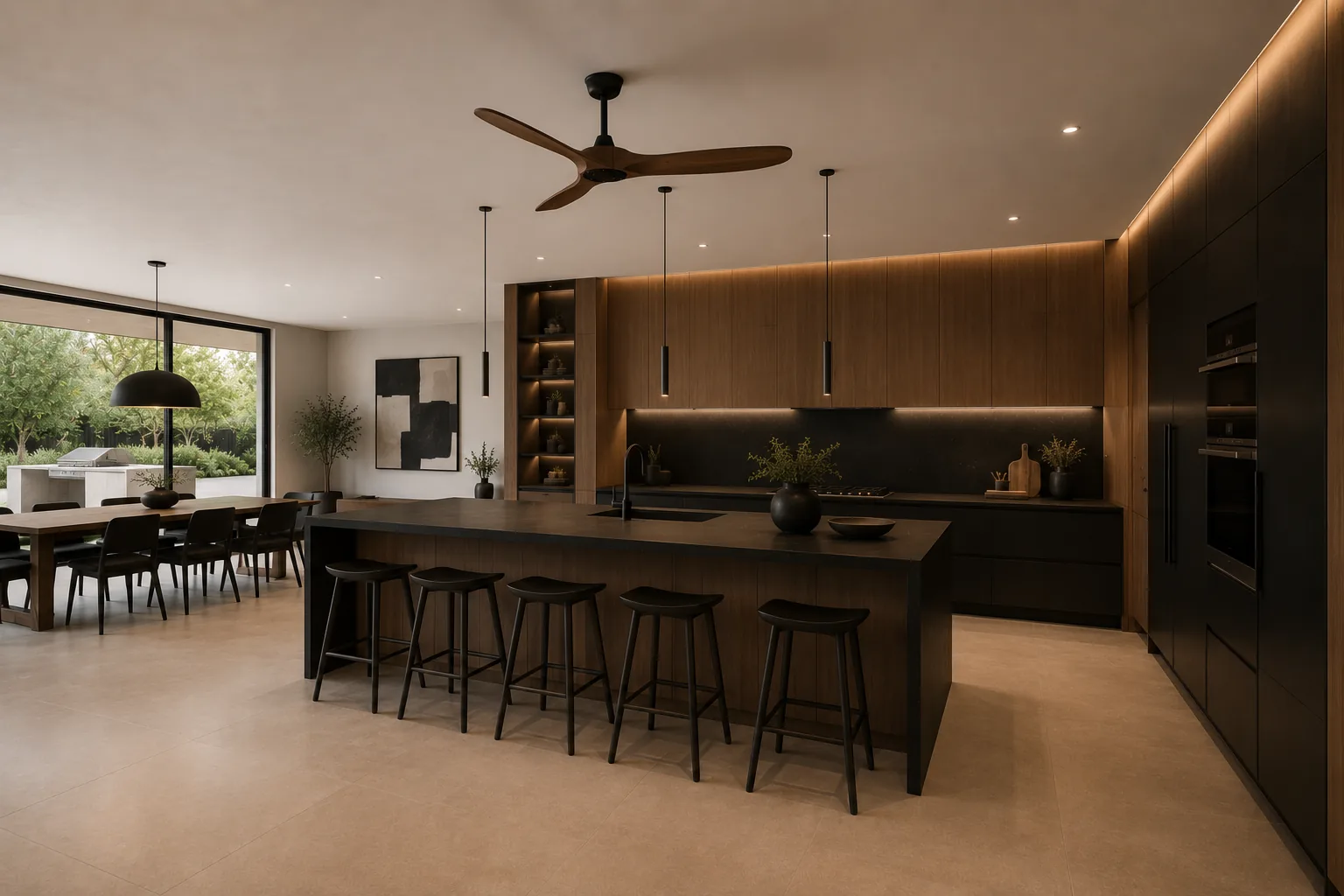
Ceiling fan in a child's bedroom: safety, height, noise and loft beds
Read the article →
Paying for a ceiling fan in three interest-free instalments: how it works, what it costs, what to know
Read the article →
Inside a ceiling fan box: what is supplied, what is missing, what to prepare
Read the article →