
The art of the home
A ceiling fan in the kitchen: a good idea, on three conditions
Published on ·4 min read
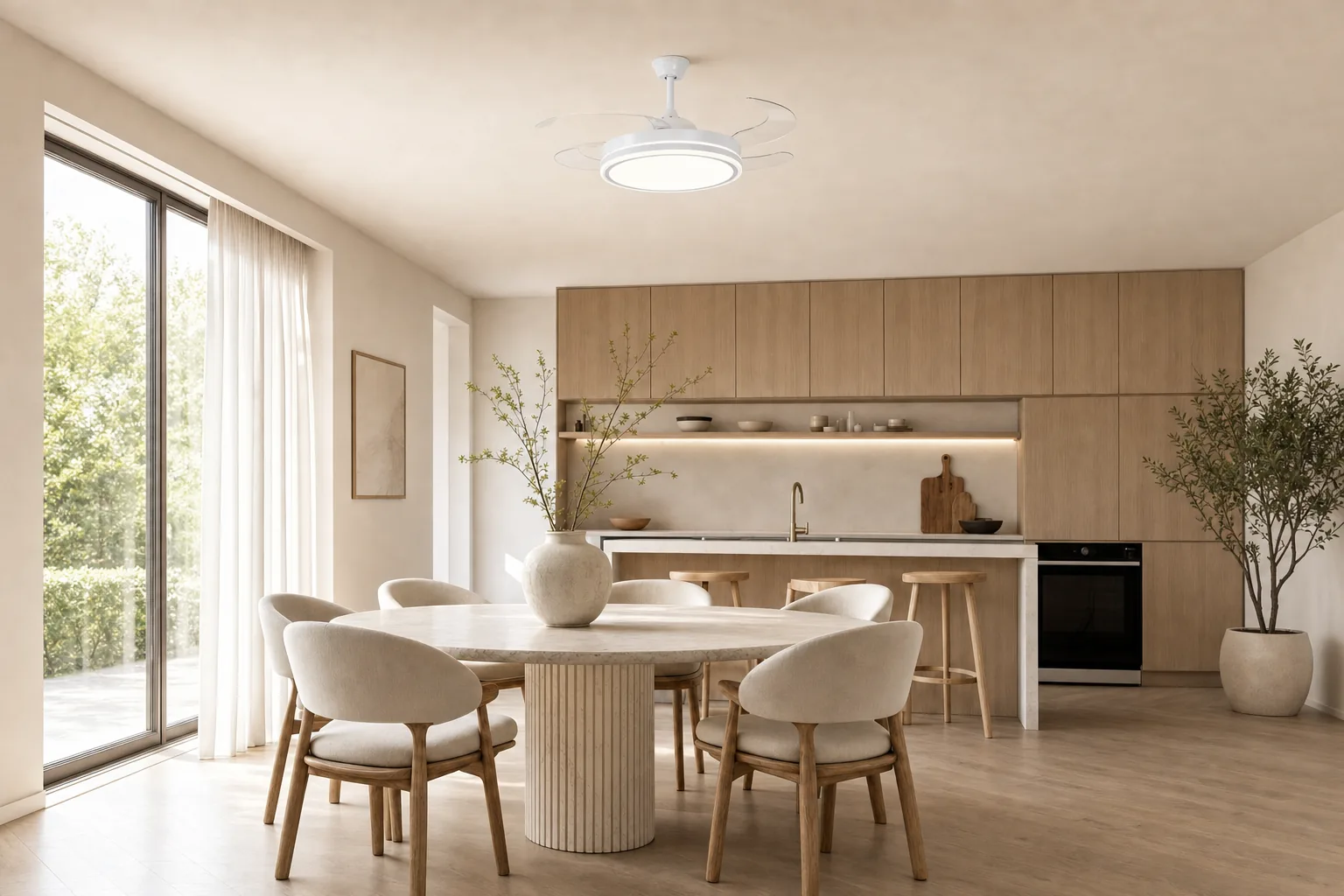
The kitchen is the hottest room in the house, and the only one where we deliberately produce heat during a heatwave. Oven, hob, dishwasher: by serving time, the room easily runs 3 to 5°C above the living room.
Ceiling fans long seemed out of place there, reserved for brasseries and colonial kitchens. That is precisely their pedigree: places that cook a lot adopted them a century ago. Here is what one really does in a domestic kitchen, what it does not do, and how to choose a model that ages well in this demanding environment.
What does a ceiling fan actually do in a kitchen?
First, it dissipates cooking heat. An oven sheds 2 to 3 kW, which pools under the ceiling at face height for whoever stands at the hob. Air circulation breaks that stratification and adds 3 to 4°C of wind-chill on perceived temperature.
Second, it clears lingering odours after the hood stops: a fan on low speed with a window ajar refreshes the feel of the room in tens of minutes, precious in open-plan kitchens. Third, it works year-round: in winter, reverse mode pushes ceiling-trapped warmth back down for breakfast-time comfort.
The hood's complement, never its replacement
Be clear on this: the fan does not replace the hood. The hood captures grease and steam at the source; no amount of air circulation does that job, and a fan at full speed during frying would spread grease particles across the kitchen.
The right choreography: hood alone during active cooking, fan afterwards to dissipate residual heat and cool the room during and after the meal. The two work in relay, not in competition.
- ·While cooking: hood on, fan off or on speed 1
- ·During the meal: hood off, fan at moderate speed
- ·After the meal: fan plus a window ajar to clear odours and residual heat
- ·In summer, outside cooking hours: fan running, the kitchen stays livable
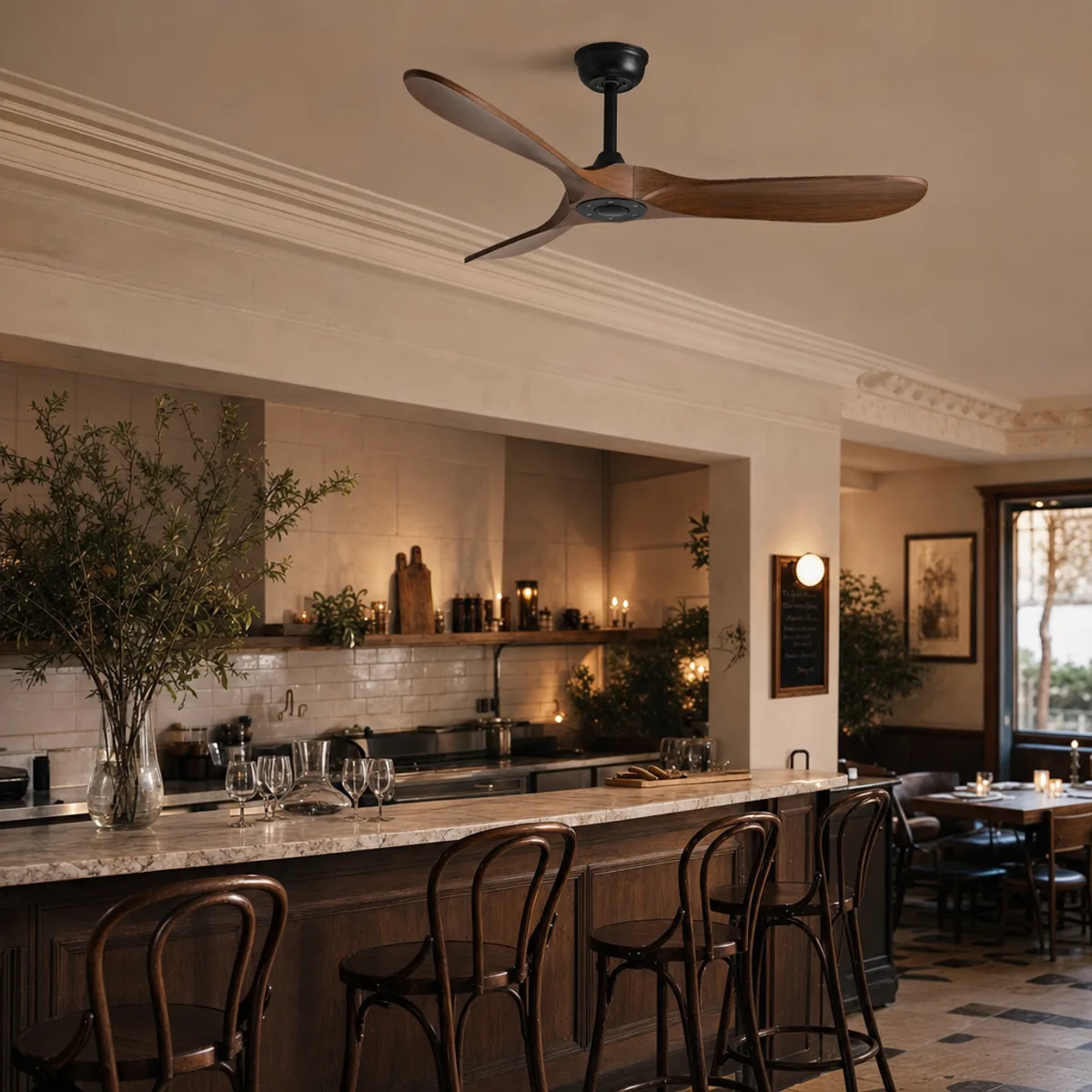
The Bistrot 132
Vintage black & walnut · Exposed downrod · No light
- ✓Silent DC motor, 6 reversible speeds
- ✓Integrated dimmable LED + remote control
- ✓30-minute installation, illustrated manual
€289€369
Grease and steam: what maintenance in a kitchen?
Kitchen air carries an invisible grease aerosol that settles on every high surface, blades included. Left alone, it builds a sticky film that traps dust and can eventually unbalance the rotation.
The fix takes five minutes: every 4 to 6 weeks, wipe both faces of each blade and the body with a barely damp microfibre cloth and a drop of mild degreaser, fan stopped. Smooth-finished blades wipe clean in one pass, and a downrod mount leaves room for your hand between ceiling and blades.
Which model for a kitchen?
First criterion: no light kit. A fitted kitchen already has spots and under-cabinet lighting; a fan without a light integrates without duplication and with a slimmer silhouette. Second: silence, a DC motor at 28 to 34 dB disappears under dinner conversation. Third: a design that owns the culinary context.
This is where the Bistrot 132 belongs: black body on an exposed downrod, three old-style walnut blades, no light, descended directly from Parisian brasserie fans, born for rooms where people cook and eat. Its modern DC motor turns that period silhouette in silence, the 132 cm diameter covers a family or open-plan kitchen, and 107 and 152 cm versions adjust the format to the room.
A ceiling fan in the kitchen comes with three conditions: think of it as the hood's relay, wipe it every 4 to 6 weeks, and choose it without a light if your lighting is already in place. Meet those and the benefit is daily: 3 to 4°C less perceived heat while cooking, odours cleared after meals, warmth redistributed in winter. The Bistrot 132 pairs the brasserie design that invented this use with a silent DC motor, remote included and a 2-year warranty: the kitchen becomes a room you want to linger in, even in August.
Frequently asked questions
Can a ceiling fan replace the cooker hood?+
No, never. The hood captures grease and steam at the source above the hob; the fan circulates the whole room's air. Use the hood while cooking, then the fan to clear residual heat and odours: they complement each other.
Won't the blades get coated in cooking grease?+
A grease film settles on all high surfaces in a kitchen, blades included. A barely damp microfibre wipe every 4 to 6 weeks, five minutes with the fan stopped, keeps it from setting in and preserves the rotation balance.
With or without a light in the kitchen?+
Without, in most cases: a fitted kitchen already has spots and under-cabinet lights. A no-light model such as the Bistrot 132 offers a slimmer silhouette and avoids duplicate lighting.
The SEY Maison Circle
Every month, an exceptional piece. Never reissued.
The Drops principle: one high-end furniture piece per month, in a numbered edition. Once it's gone, it never comes back. Circle members are notified 48 h early, access each drop 24 h before everyone else, and receive our guides before publication.
Discover the Drops →Also worth reading
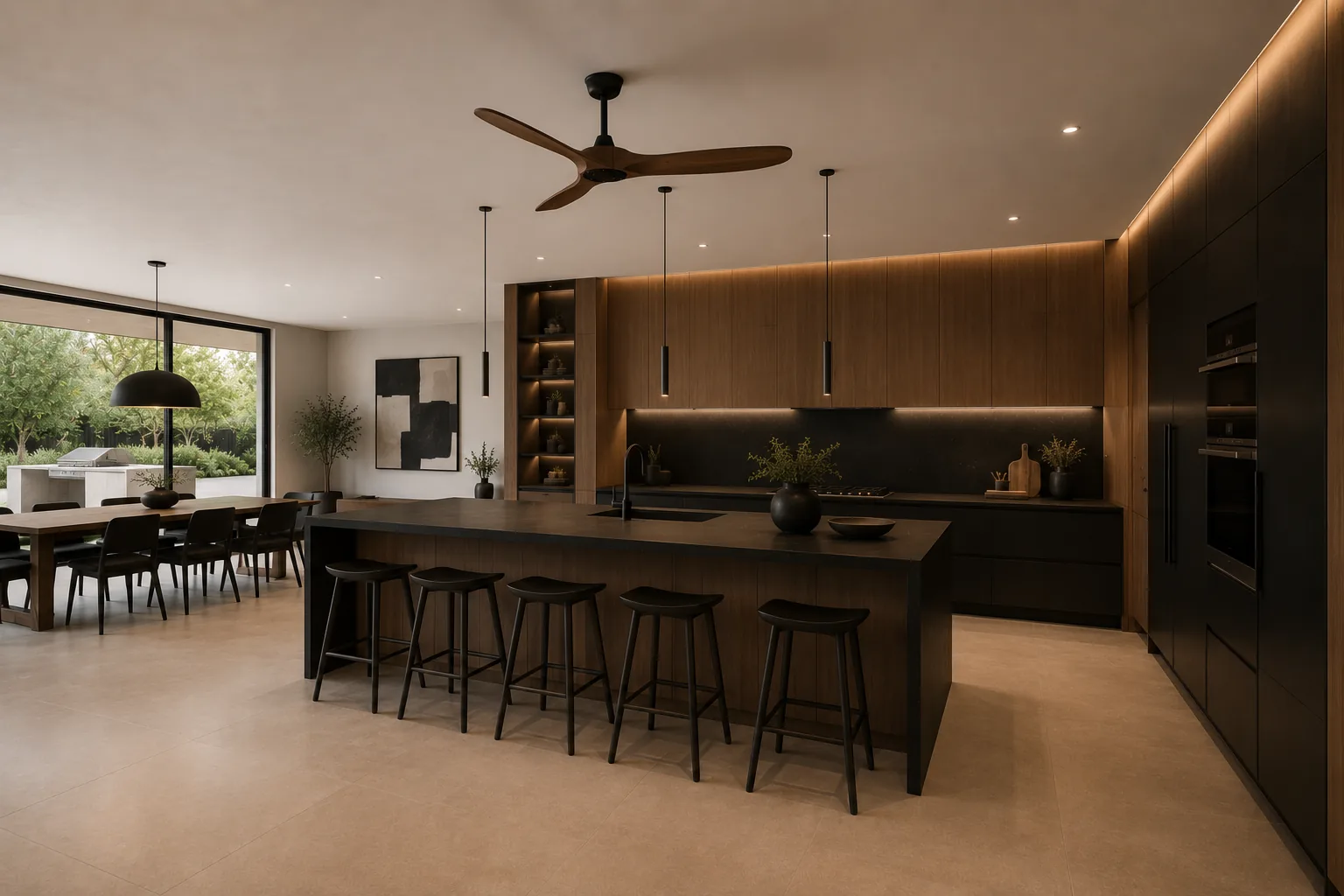
Ceiling fan in a child's bedroom: safety, height, noise and loft beds
Read the article →
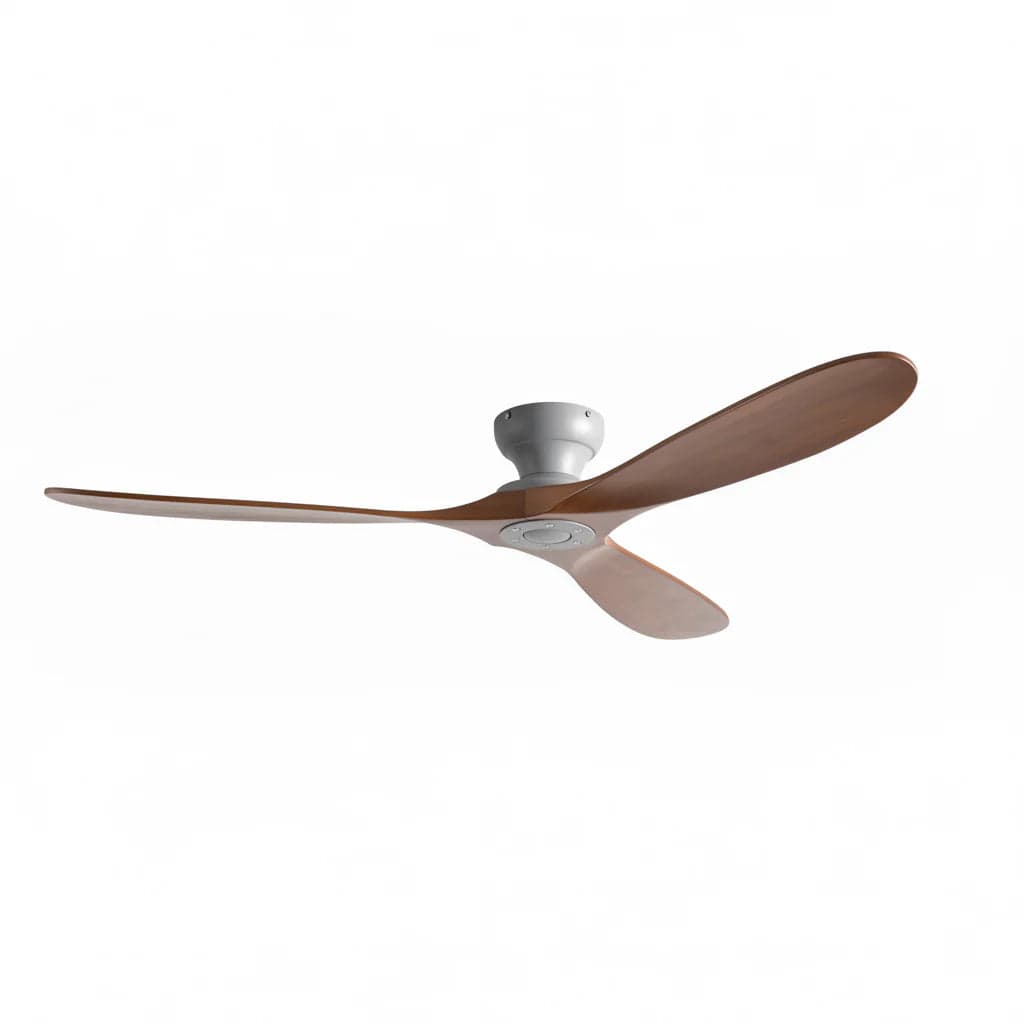
Paying for a ceiling fan in three interest-free instalments: how it works, what it costs, what to know
Read the article →
Inside a ceiling fan box: what is supplied, what is missing, what to prepare
Read the article →