
The art of the home
Ceiling fans, allergies and indoor air: ending stagnant air
Published on ·4 min read
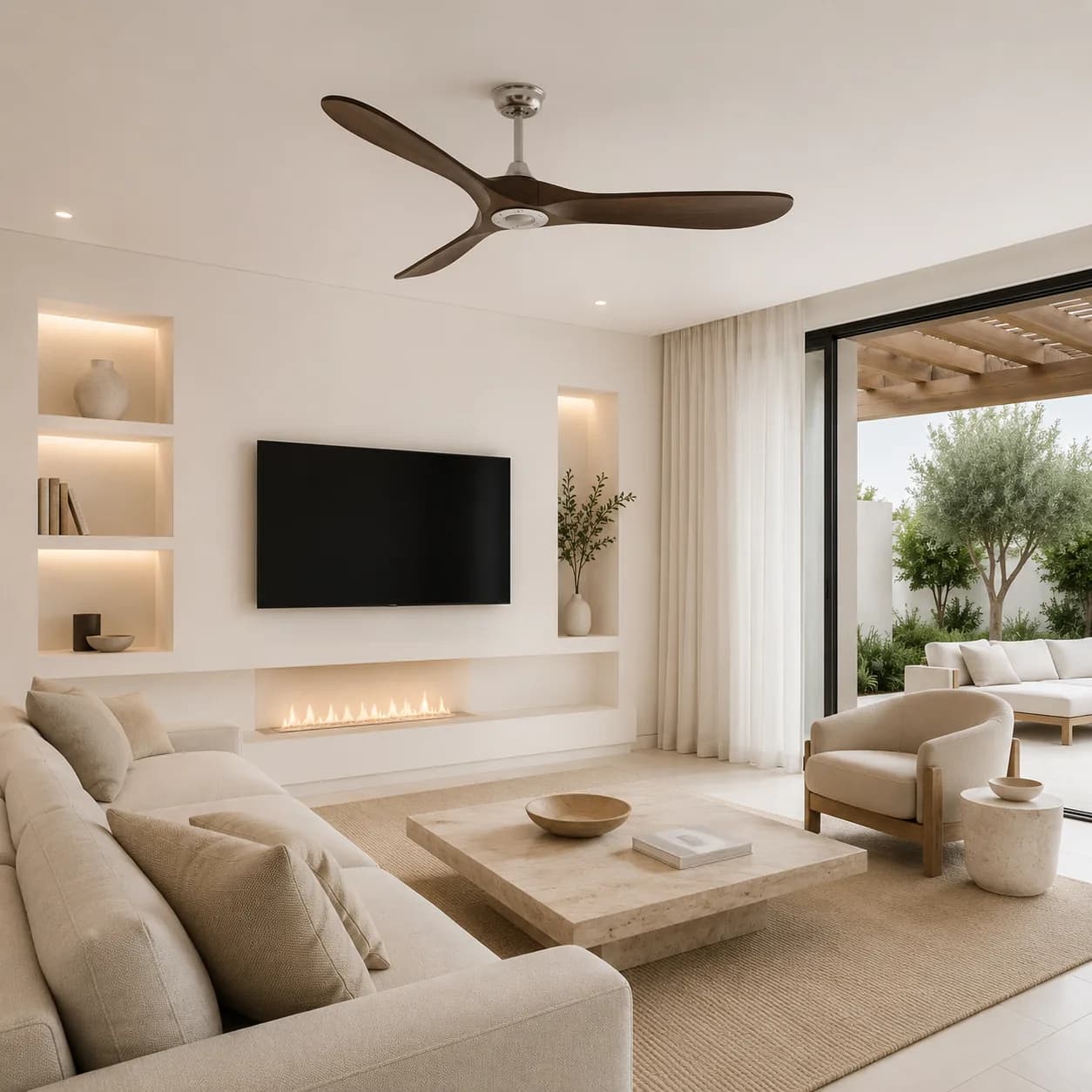
A ceiling fan does not purify air, it captures neither pollen nor particles. What it does is still valuable: it prevents air from stagnating, and stagnant air is where moisture, condensation and settling dust thrive.
This article separates what a fan genuinely brings to a sensitive home from what belongs to other tools, daily airing, and a doctor's advice for anything medical.
Why is stagnant air a problem at home?
A closed room stratifies: warm humid air rises, cold air sits at the floor, and dead zones form behind furniture and in corners. There, water vapour condenses on cold surfaces, and repeated condensation invites mould. Stagnant air also concentrates what the home produces: shower and cooking humidity, occupants' CO2, compounds from furniture. Health agencies estimate indoor air 2 to 5 times more polluted than outdoors, not because homes are dirty, but because their air is confined.
Circulation does not remove these elements, but it changes the picture: moving air removes dead zones, limits localised condensation and makes window airing more effective, because the whole volume joins the exchange.
What a ceiling fan does, and does not do
Let us be precise, since health is involved. A ceiling fan does not filter air and replaces neither a filter purifier, nor mechanical ventilation, nor medical treatment. If you suffer from allergies, diagnosis and strategy belong to your doctor; what follows is general home hygiene.
What it does: keep the whole volume in gentle, continuous motion. Fewer pockets of humid air, less condensation on cold spots, an even temperature floor to ceiling. In summer, its downdraft adds 3 to 4°C of perceived cooling, allowing sleep with windows closed during pollen peaks, a trade-off many allergy sufferers know well.
One honest caveat: dusty blades redisperse dust on restart. That is a maintenance matter, solved in two minutes a month.
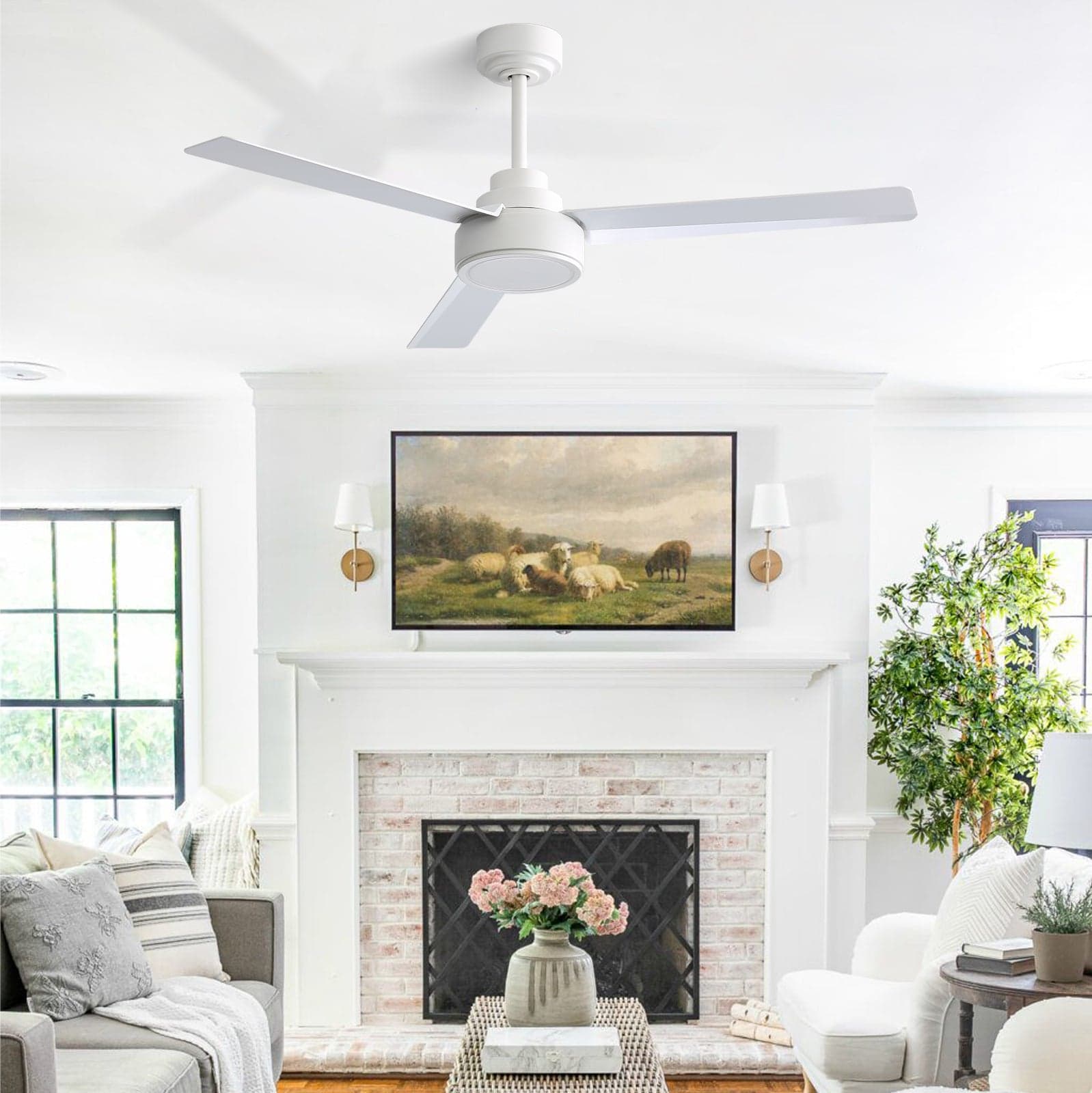
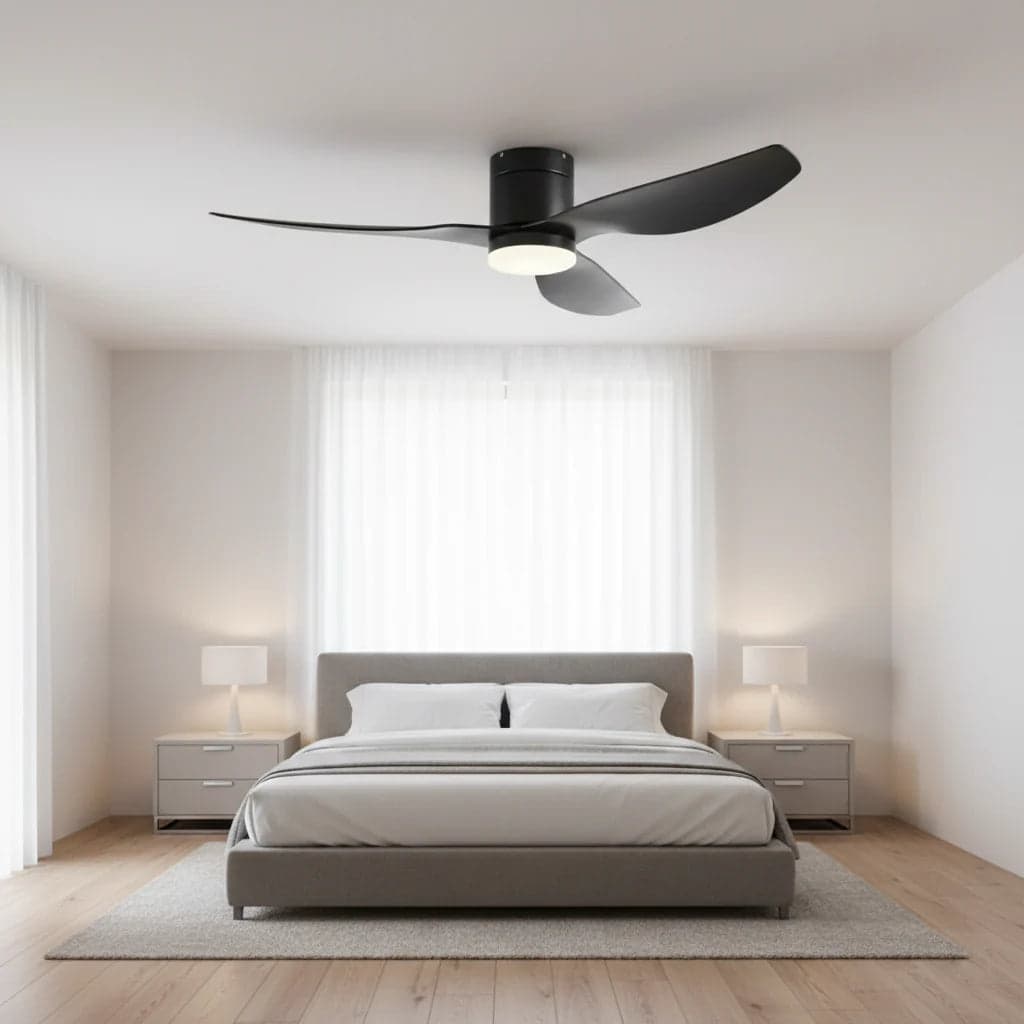
The Plume 132
Sculptural minimalism · Ø 132 cm · Pure white
- ✓Minimal sculptural silhouette, disappears into a white ceiling
- ✓Silent DC motor, 6 reversible speeds
- ✓No light kit: for already-lit rooms, zero glare
€389€349
Circulation plus sensible airing: the routine that works
Renew the air briefly, then keep it moving. Ten minutes of cross-ventilation morning and evening renews a room; the fan then spreads the fresh air through the volume. In pollen season, air early morning or after rain, keep windows closed the rest of the time, and let circulation maintain comfort behind closed windows.
- ·Morning and evening: 10 minutes of cross-ventilation through two opposite openings
- ·The rest of the time: continuous slow circulation, windows closed
- ·Pollen season: air early morning or after rain, never in strong wind
- ·Keep relative humidity between 40 and 60%
- ·Dust surfaces with a damp cloth rather than a feather duster
Blade care, and which fan for a sensitive bedroom
The upper face of a blade collects dust like a shelf. A slightly damp microfibre cloth every 2 to 4 weeks, wiping from hub to tip with the fan stopped, is all it takes. Model choice matters: smooth matte blades wipe in one pass, and a fan without a light kit, like the Plume 132, also removes the glass bowl that collects dust and insects over the seasons. Fewer surfaces, less deposit, less upkeep.
For a sensitive bedroom, three criteria dominate: silence, 32 dB maximum on the Plume, quieter than a refrigerator, so it can run all night; easy cleaning, three smooth matte-white blades and nothing else; and reversibility, the winter mode keeping air gently moving in heating season, when homes live windows-closed and stagnant air peaks. Remote included, durable DC motor, 2-year warranty with EU support.
A ceiling fan is neither a purifier nor a treatment: it is the tool that eliminates stagnant air, the ground where moisture, condensation and dust thrive. Combined with sensible daily airing and regular blade dusting, it makes a home's air noticeably better to live in, summer and winter. For a demanding bedroom, the Plume 132 is a coherent choice: 32 dB maximum, smooth matte-white blades wiped in one pass, no light bowl to collect dust, reversible DC motor with a 2-year warranty.
Frequently asked questions
Does a ceiling fan make allergies worse?+
No, provided the blades are kept clean: loaded with dust, they can redisperse it on restart. A microfibre wipe every 2 to 4 weeks is enough. At slow speed, indirect circulation does not lift settled dust. For confirmed allergies, a doctor's advice remains the reference.
Does a ceiling fan purify the air?+
No. It filters neither pollen nor particles and replaces neither a purifier nor mechanical ventilation. Its role is to homogenise air and remove stagnant zones, alongside 10 minutes of airing morning and evening.
Can you sleep with the fan on during pollen season?+
Yes, it is its best use case: it allows sleeping with windows closed, hence fewer incoming pollens, while keeping 3 to 4°C of perceived cooling. Air the room early morning or after rain, when concentrations are generally lower.
The SEY Maison Circle
Every month, an exceptional piece. Never reissued.
The Drops principle: one high-end furniture piece per month, in a numbered edition. Once it's gone, it never comes back. Circle members are notified 48 h early, access each drop 24 h before everyone else, and receive our guides before publication.
Discover the Drops →Also worth reading
Ceiling fan in a child's bedroom: safety, height, noise and loft beds
Read the article →
Paying for a ceiling fan in three interest-free instalments: how it works, what it costs, what to know
Read the article →
Inside a ceiling fan box: what is supplied, what is missing, what to prepare
Read the article →