Interior design
2700K, 4000K or 6000K: which light temperature for which room?
Published on ·3 min read
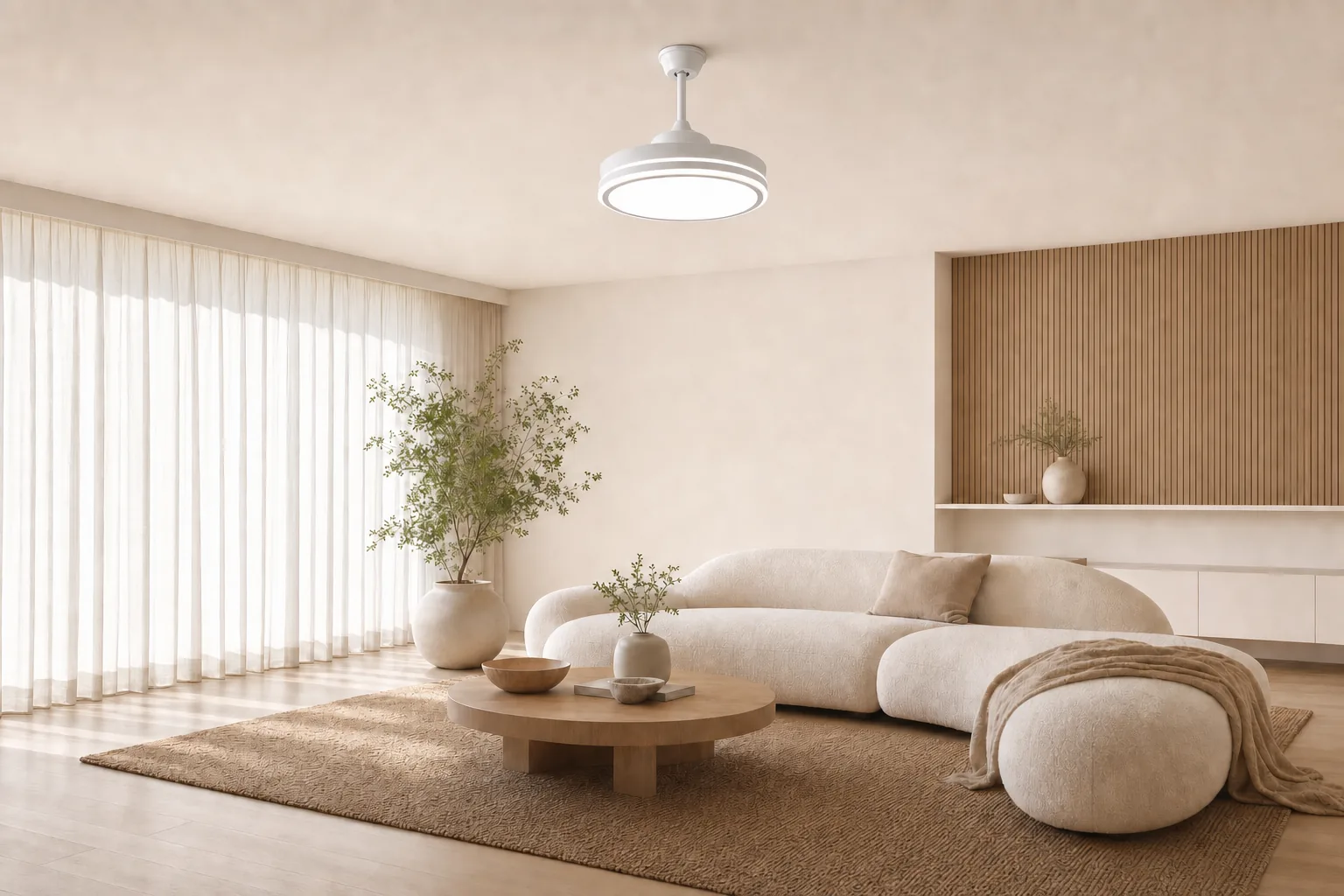
You choose a ceiling light on its shape, then discover its light once it is up. That is where the real decision was: the same room, under 2700K or under 6000K, is not the same room. Wood pulls towards yellow or towards grey, white walls warm up or cool down, and the sense of comfort follows.
Colour temperature is measured in kelvins, and the figure is counter-intuitive: the lower it is, the warmer the light. Here are the three benchmarks that matter and the room each one belongs to.
The three benchmarks, and what they do to a room
2700K reproduces the light of an incandescent bulb: an amber tone that warms wood, flatters earthy shades and invites you to slow down. It is the value for living spaces in the evening and for bedrooms, without argument.
4000K is a neutral white with no cast. Colours are seen as they are, which makes it the light of a worktop, a desk or a bathroom while getting ready. There is nothing cold about it, it is simply straight.
6000K pulls towards blue and recalls daylight under an overcast sky. It raises alertness, which helps in a garage or a utility room, and is unwelcome anywhere you unwind. Under 6000K, a living room becomes a waiting room.
- ·Living room, dining room, bedroom, in the evening: 2700K
- ·Kitchen, study, bathroom, during the day: 4000K
- ·Garage, utility room, workshop: 5000 to 6000K
- ·A single room that serves every purpose: an adjustable model, not a middle value
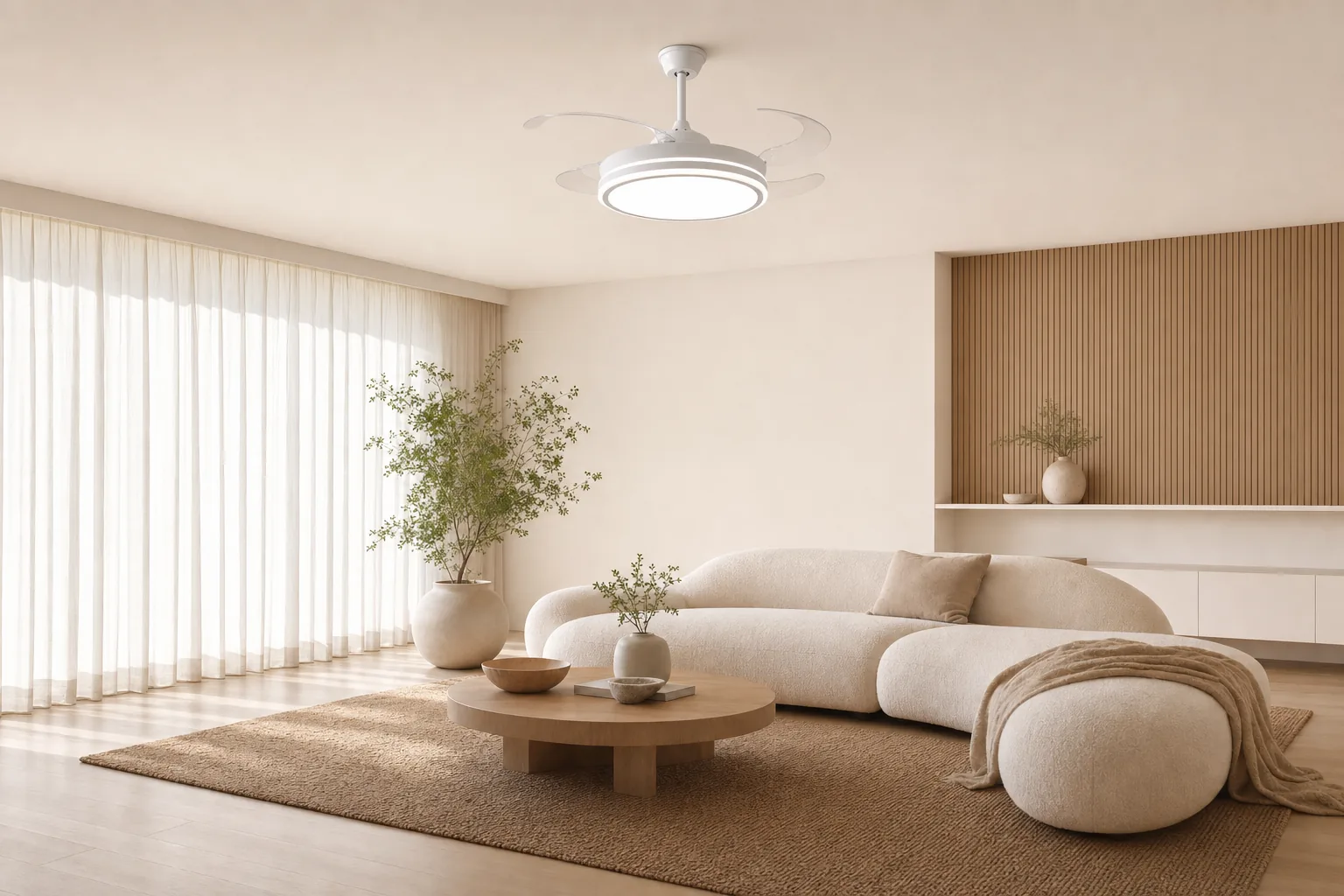
The Boréal 107
Retractable blades · Ø 107 cm · LED ceiling light & silent fan
- ✓Retractable blades: invisible when off, nobody guesses it's a fan
- ✓Sleep with windows closed, 30 dB, quieter than a whisper
- ✓Integrated LED 2700K → 6000K, dimmable: replaces your ceiling light
Why one value is not enough
A living room is not used the same way at 10 am and at 9 pm. In the morning, neutral light helps you get going; in the evening, the same light delays sleep, because its blue component slows melatonin production. A fixed value forces you to choose which of the two moments you sacrifice.
That is what adjustable models are for. The Boréal 107 offers 2700K, 4100K and 6000K from its remote, with an independent dimmer: the same room moves from working light to end-of-day light without changing luminaire.
Temperature is not everything: CRI counts just as much
Two ceiling lights both rated 2700K can render colours very differently. What separates them is the colour rendering index, the CRI, which says how faithfully real shades are restored. Below 80, textiles and woodwork lose their nuance.
It is the least-declared figure on the market. When it is missing from a product sheet, it is safer to assume it is low. The Boréal 107 states 97 out of 100, which means the colour of a sofa or a floor stays in the evening what it was in the shop.
Colour temperature is the setting that changes a room the most, and the one least looked at before buying. Remember 2700K to live, 4000K to do, 6000K for utility spaces. And if one room has to cover several uses, look for a model that changes temperature rather than a compromise that will suit no moment of the day.
Frequently asked questions
What light temperature for a living room?+
2700K in the evening, which reproduces incandescent light and warms wood and textiles. If the living room doubles as a study during the day, an adjustable model saves you from choosing.
Is 4000K cold?+
No, it is neutral. 4000K renders colours with no cast, which suits a kitchen or a study. Cold starts around 5000K and is obvious at 6000K.
Does cold light stop you sleeping?+
Its blue component slows melatonin production, so it delays sleep when you are exposed to it in the evening. In a bedroom, stay at 2700K and dim the intensity an hour before bed.
Can you change the temperature of an existing ceiling light?+
Only if it takes replaceable bulbs: you then change the bulb. On a non-adjustable integrated LED, the temperature is fixed at manufacture, so it is a criterion to check before buying, not after.
The SEY Maison Circle
Every month, an exceptional piece. Never reissued.
The Drops principle: one high-end furniture piece per month, in a numbered edition. Once it's gone, it never comes back. Circle members are notified 48 h early, access each drop 24 h before everyone else, and receive our guides before publication.
Discover the Drops →