
Interior design
The 10 interior design rules professionals apply everywhere
Published on ·3 min read
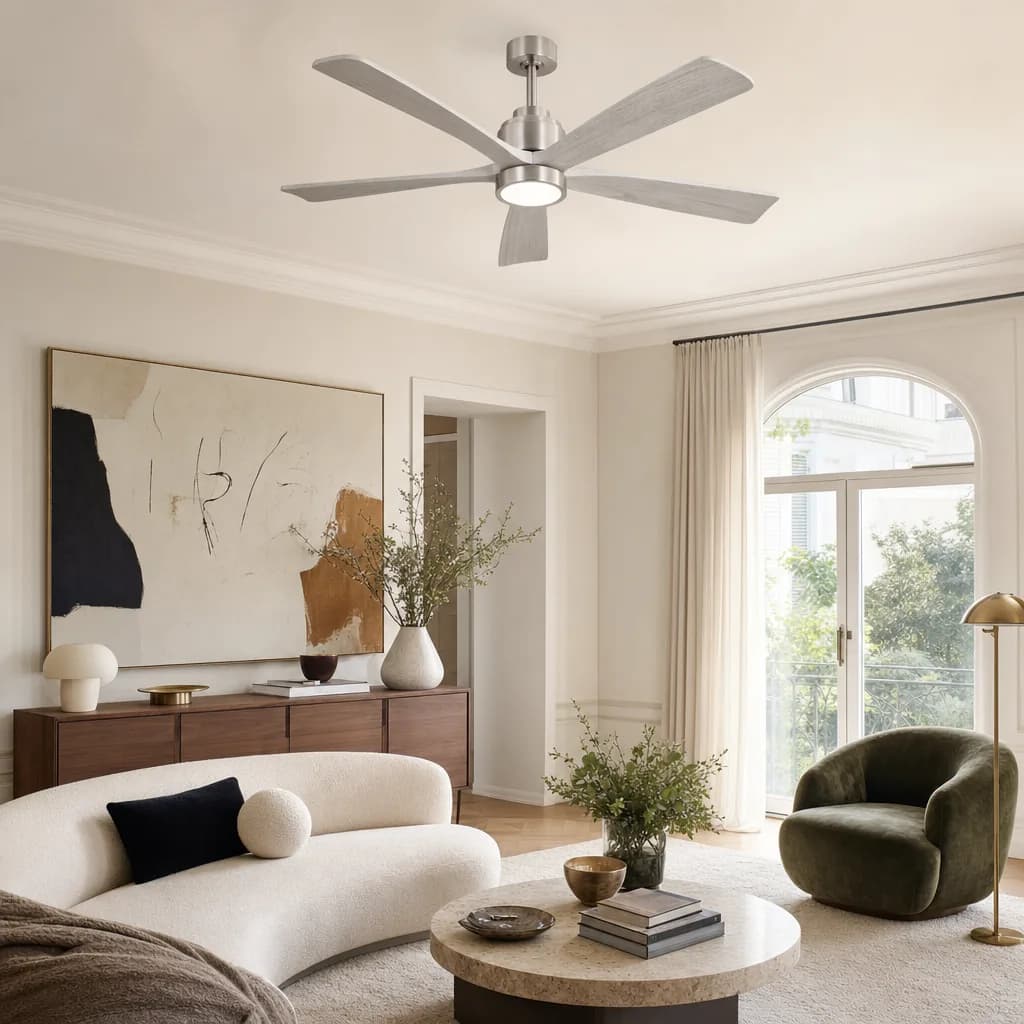
Some interiors hold you without knowing why. The light is right, the proportions rest the eye, and every object seems to have been there forever. That is not chance or budget, it is the rigorous application of rules that interior designers have made instinctive.
These rules are not dogmas. They result from long observation of what works across very different spaces. Master them and you gain an inner compass for every decision, from sofa selection to light placement.
Scale and proportion: the rule nothing replaces
A piece of furniture that is too small floats in a large room; one that is too large crushes it. Scale is the first filter designers apply before thinking about colour or material. The practical rule: a rug should be large enough for at least the two front legs of the sofa to rest on it.
For pendant lights above a dining table, add the room's length and width in metres, the result in centimetres gives the target diameter. A ceiling fan-light like the Équinoxe 132, with its retractable blades, honours this logic: commanding in motion, discreet at rest.
The 60-30-10 rule: composing a palette effortlessly
60% dominant colour (walls, large furniture), 30% secondary (textiles, chairs, rug), 10% accent (objects, light fixture, handles). The 10% accent is most often neglected and most transformative: brushed brass on a fan body, nickel handles on painted cabinets, a forest-green cushion in a cream living room.
- ·60%: dominant colour on large surfaces (walls, floor, main sofa)
- ·30%: secondary colour on textiles, chairs, curtains
- ·10%: accent colour on light fixtures, objects, handles
The Équinoxe 132
Five wood-grain blades · Brushed nickel · 3-temperature LED
- ✓Five aerodynamic wood-grain blades: wide, even airflow up to 30 m²
- ✓Reversible winter mode: better-spread heating, lower consumption
- ✓Dimmable LED, 3 temperatures (3000K / 4000K / 6000K), a light for every hour
€349€439
Visual rhythm: repeat to unify
Rhythm in design is the intentional repetition of an element, shape, material, colour. An interior without rhythm is like a sentence without punctuation. Repeating a material (brass on tap, mirror frame and lamp base) or a shape (the round shade echoing the round table top) creates a coherence the eye reads without analysing.
Rhythm also applies vertically: a row of prints hung at the same height, shelves aligned with window tops, a pendant that speaks to the worktop below.
Negative space: knowing what not to fill
Designers call it negative space, what is not there but gives room to what is. In a cluttered interior, nothing stands out; in a controlled one, every piece matters. The informal rule: if you hesitate to remove something, remove it. Live a week without it. The space will tell you whether you need it back.
This is the philosophy at the heart of Japanese and Nordic aesthetics. A pared-back room with one sculptural ceiling fan, walnut, brass, matt steel, needs nothing else to feel complete.
Scale, colour ratio, rhythm, negative space, focal point, these rules do not apply mechanically; they combine and nuance each other. A well-chosen ceiling fan illustrates several at once: it is at scale, it punctuates the ceiling, it introduces a noble material and frees the floor. That is what designers call a piece that earns its place.
Frequently asked questions
Which rule should you start with when decorating a room?+
Scale. Before any colour or material, verify that every piece of furniture is proportioned to the space. A correctly sized piece in an empty room already works; decoration comes after.
Does the 60-30-10 rule apply to small spaces?+
Yes, and even more so. In a small space, an uncontrolled palette creates visual agitation that makes it feel even smaller. A light, neutral dominant colour expands it optically.
How many objects is too many on a shelf?+
There is no absolute number, but the third rule applies: one third of the shelf surface should remain empty. The empty space enhances what stays and gives the composition room to breathe.
The SEY Maison Circle
Every month, an exceptional piece. Never reissued.
The Drops principle: one high-end furniture piece per month, in a numbered edition. Once it's gone, it never comes back. Circle members are notified 48 h early, access each drop 24 h before everyone else, and receive our guides before publication.
Discover the Drops →Also worth reading
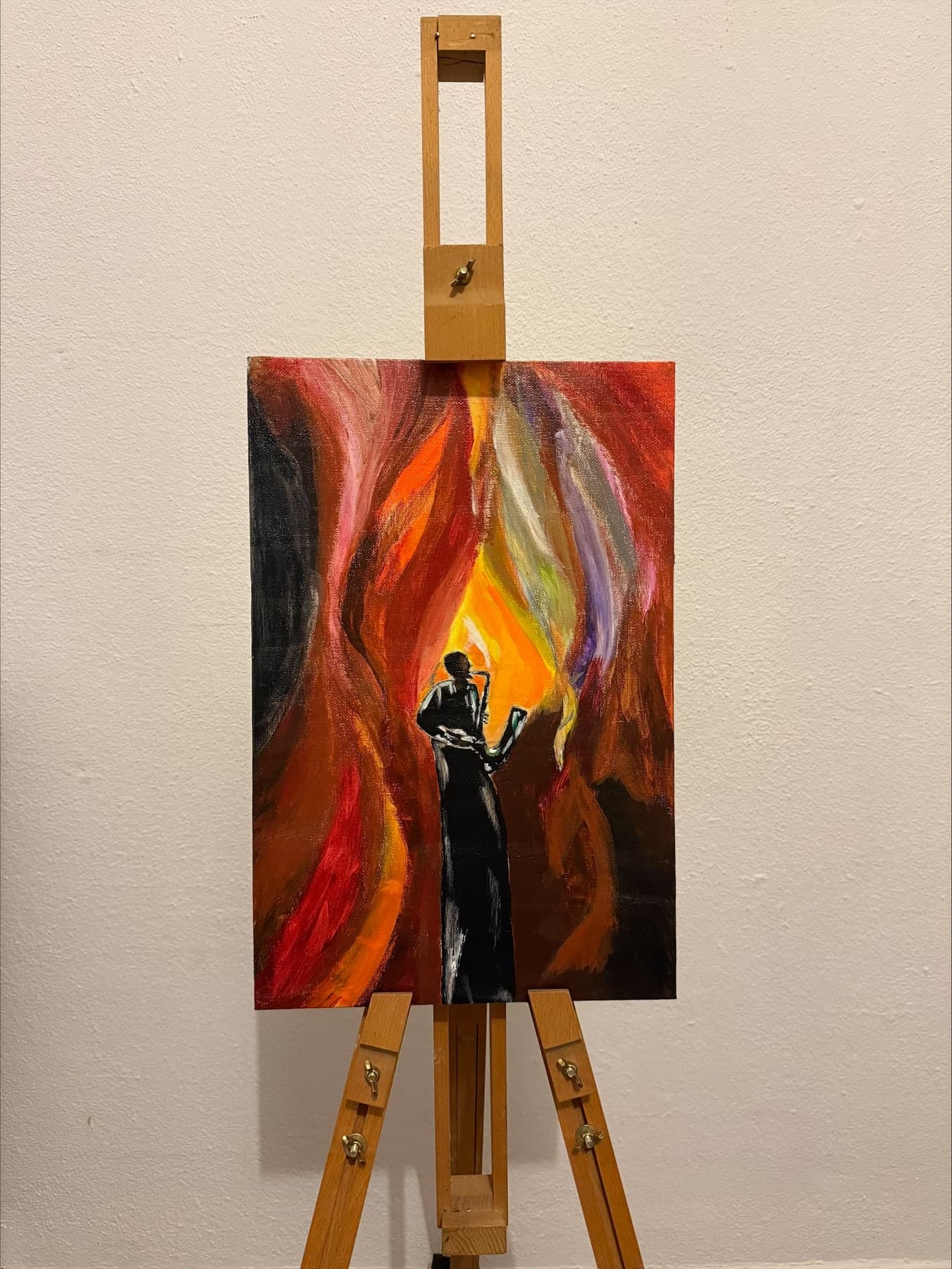
Lighting a painting at home: colour temperature, angle and intensity that respect the canvas
Read the article →
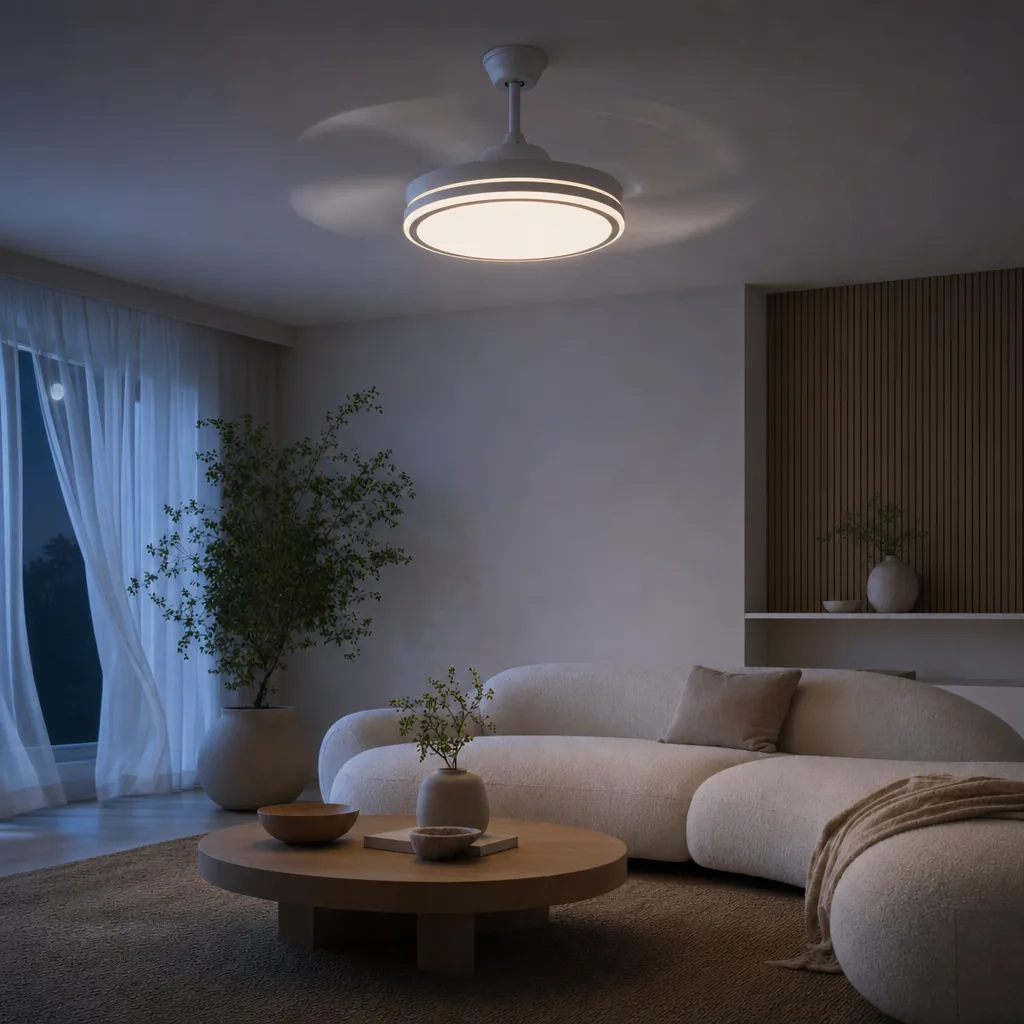
Ceiling fan and television: avoiding LED glare on the screen and blade flicker
Read the article →
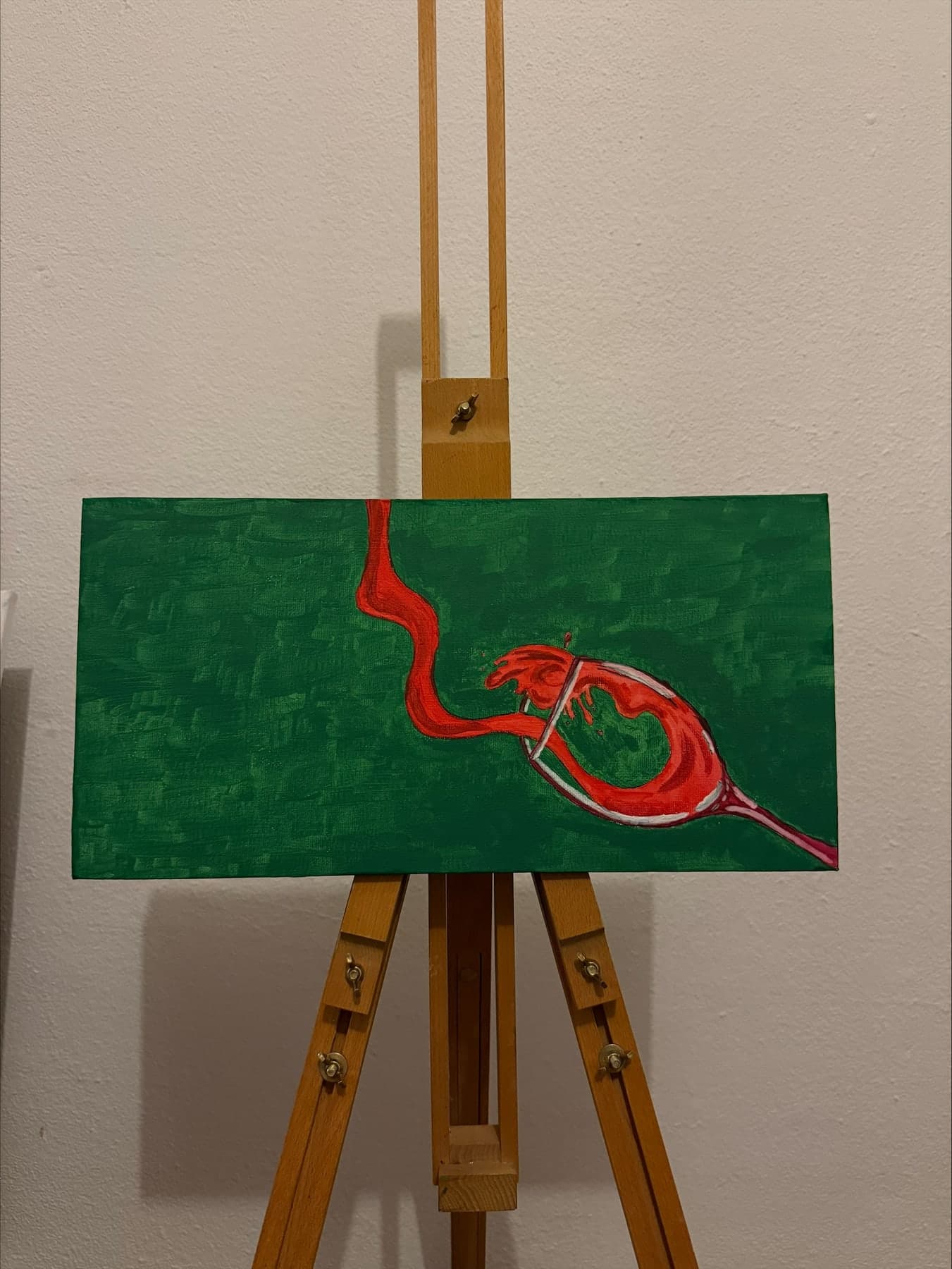
Gallery wall or a single canvas: which to choose for your living room, and why empty space matters
Read the article →