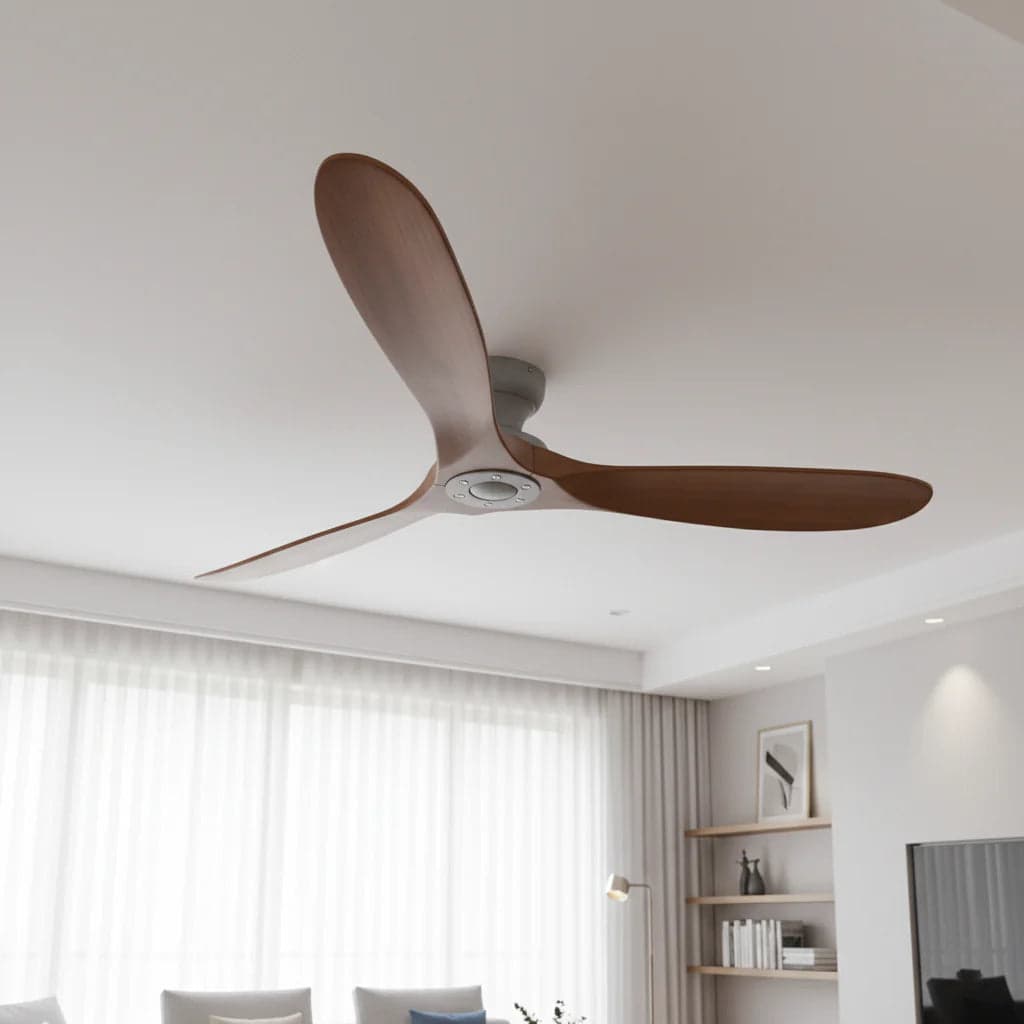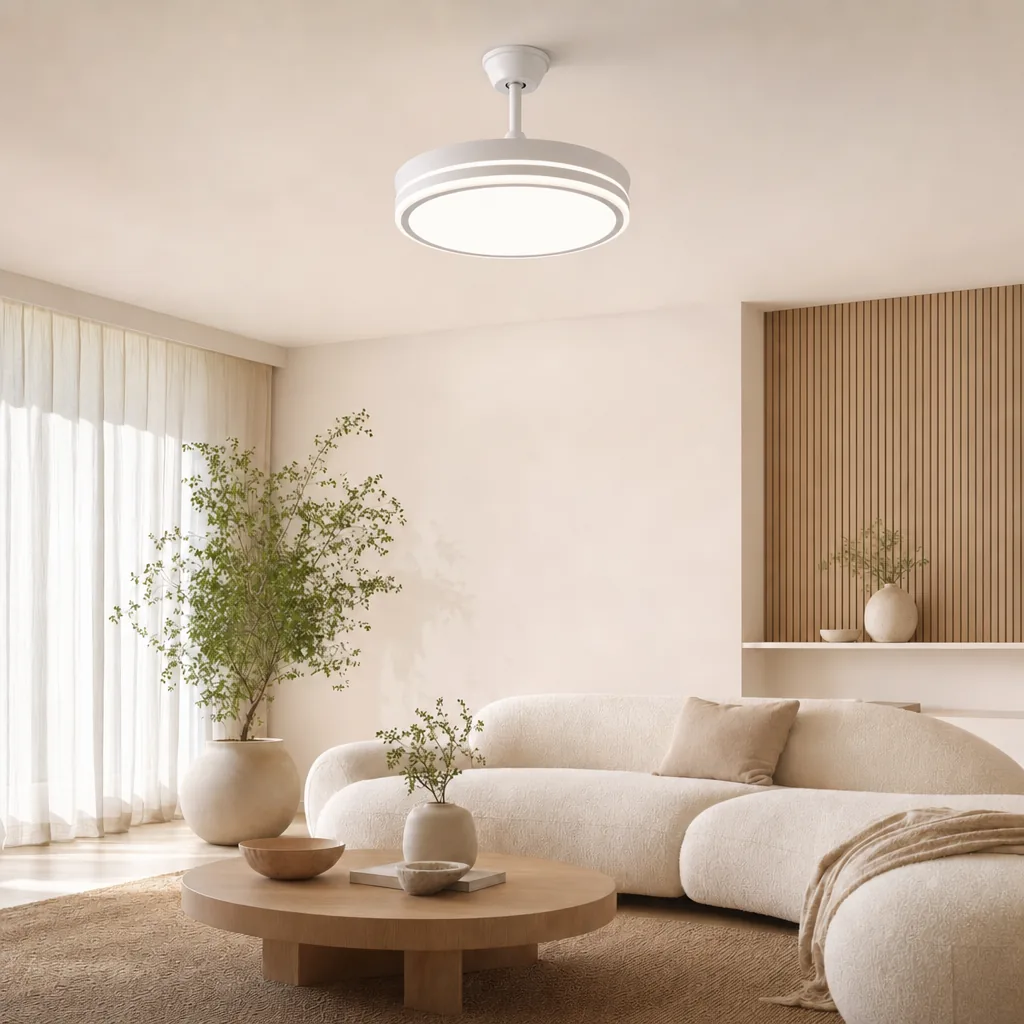
Energy & ecology
Cutting your summer electricity bill: the watts compared
Published on ·4 min read
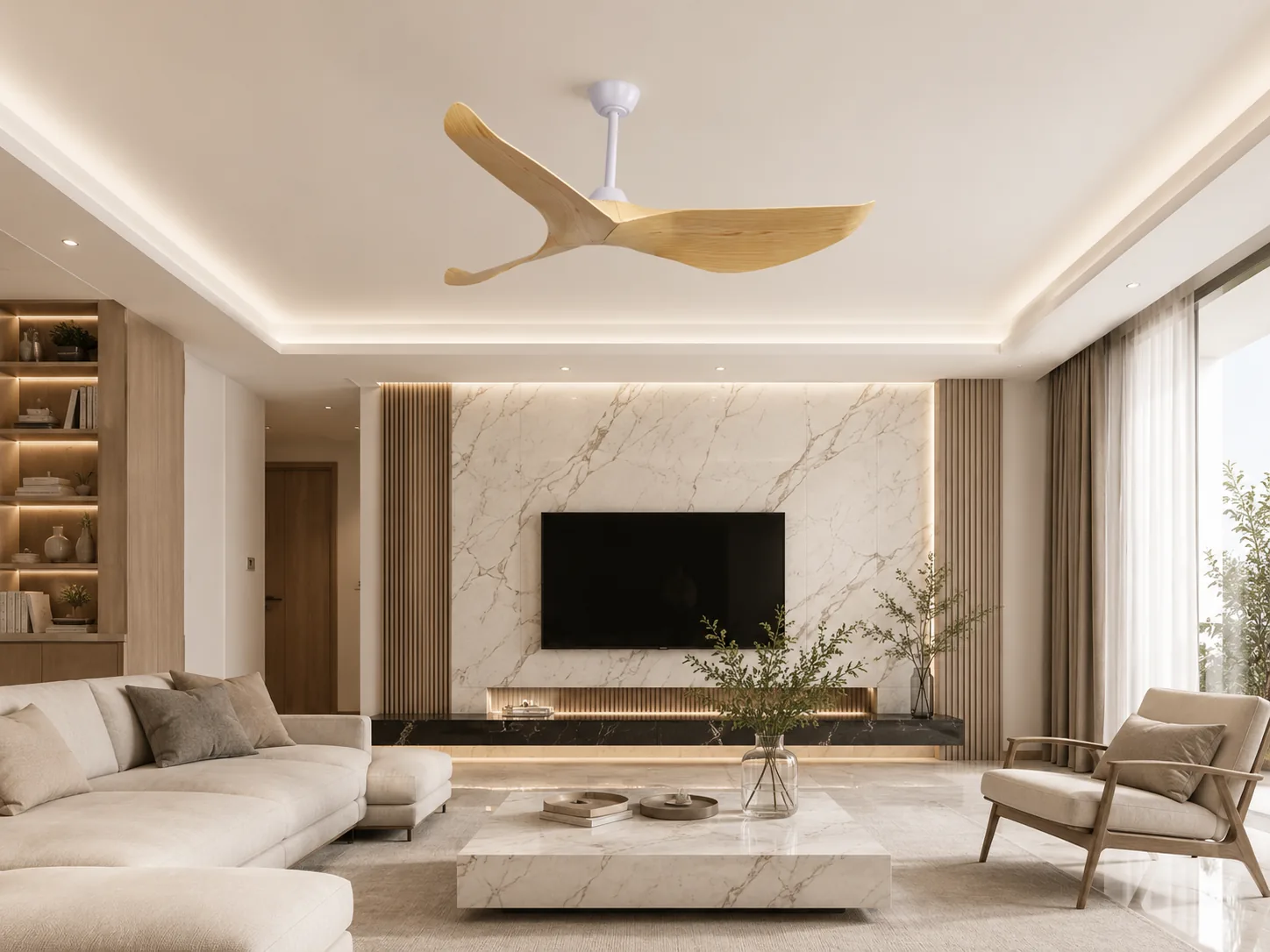
Every summer the electricity bill tells the same story: cooling costs explode. The cause is a unit few people check before buying: the watt. Between air conditioning and a ceiling fan, the gap is not incremental, it is a ratio of one to fifty.
Here are the numbers laid flat: real power draw of each option, annual calculations at current rates, and what that means for your comfort.
Who draws what? The watts compared
Measured in real operation: fixed air conditioning draws 1,000 to 2,500 W; a portable unit around 800 to 1,300 W with mediocre results in any room that is not perfectly sealed; a pedestal fan 40 to 60 W with a one-person reach.
A DC ceiling fan draws a few dozen watts at full speed and under 10 W at night speed, while covering up to 30 m². Per square metre served, it is by far the most frugal option, the consumption of an LED bulb.
- ·Fixed air conditioning: 1,000-2,500 W
- ·Portable air conditioner: about 800-1,300 W, lower efficiency
- ·Pedestal fan: 40-60 W, limited reach
- ·DC ceiling fan: a few dozen watts, under 10 W at night speed
The annual calculation: what do you actually save?
Take a realistic summer: 8 hours a day for 60 days at €0.25/kWh. A 2,000 W air conditioner burns 960 kWh over the season, about €240. The same hours on a 30 W DC ceiling fan represent 14.4 kWh, about €4.
Even in mixed use, keeping air conditioning for genuine heatwave peaks only, the cooling line of the bill commonly drops by 70 to 90%. That is the calculation the Horizon 132 makes: a 132 cm diameter covering up to 30 m², a silent DC motor at 33 dB max, a whole season for the price of a few coffees.
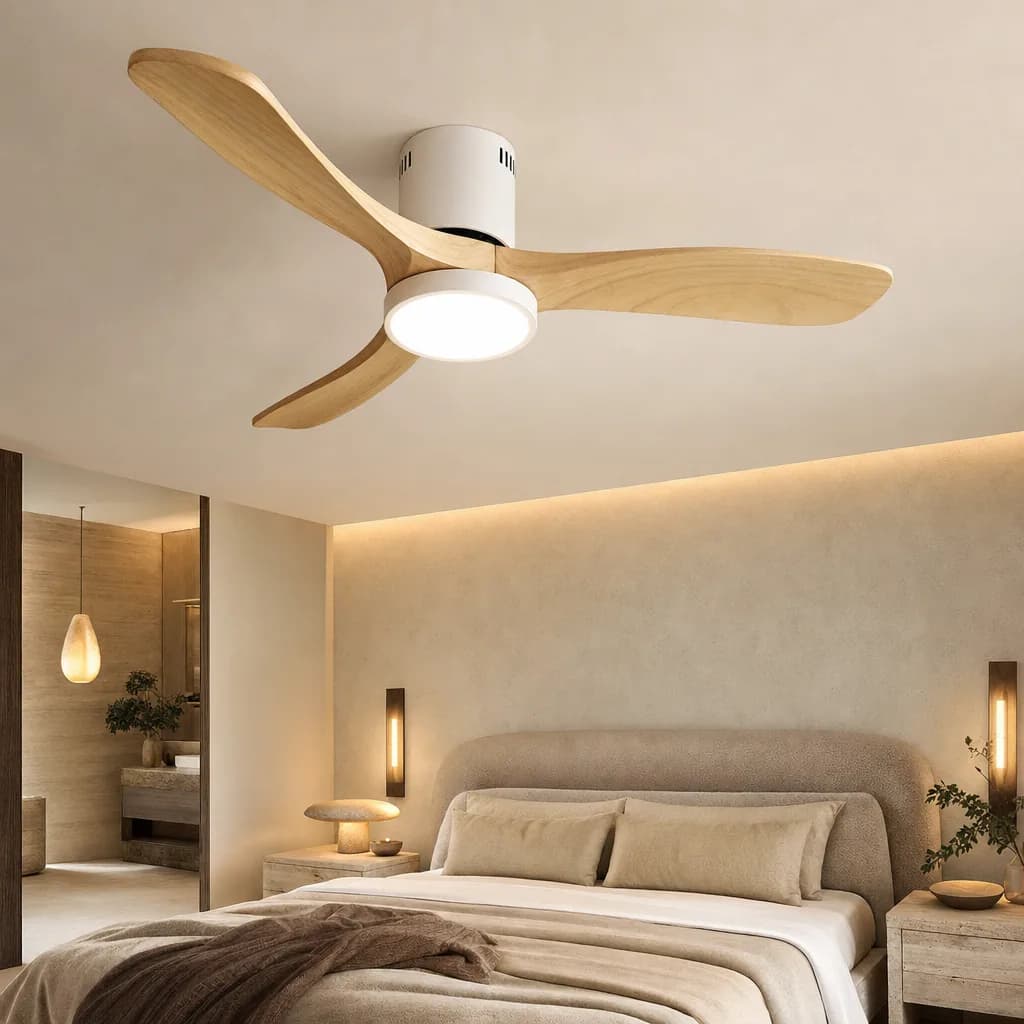
The Horizon 132
Ultra-flat · Ø 132 cm · Made for low ceilings
- ✓Flush-mount profile: ideal under 2.40 m ceilings
- ✓Large 132 cm diameter, covers up to 30 m²
- ✓Reversible blades, light or dark wood finish
€309€389
Is the comfort really comparable?
A fan does not cool the air, it cools people: moving air speeds up evaporation on the skin and lowers perceived temperature by 3 to 4°C. At an actual 27°C you feel 23-24°C, which is exactly the comfort sought on the vast majority of summer days.
Air conditioning keeps the edge during extreme prolonged heatwaves above 30-32°C indoors. But those are a few days a year; sizing your whole annual bill on them is buying a 4x4 for two days of snow. The frugal strategy: ceiling fan as the baseline, air conditioning set at 27°C and assisted by airflow on critical days.
Which criteria maximise the savings?
First, the DC motor: far lower consumption than AC at equal service, with fine speed control including a few-watt night speed. Second, the diameter: a living room calls for 132 cm, an undersized fan has to spin faster, costing watts and decibels.
Third, reversibility: a reversible DC motor also works in winter, pushing stratified warm air back down and extending the savings to the heating bill. The Horizon 132 combines all three, with a 25 cm flush profile designed for low ceilings, 6 speeds, remote included and a 2-year warranty.
Cutting the summer electricity bill does not mean giving up comfort, it means matching watts to actual need. For most hot days, a few dozen watts of air movement deliver 3 to 4°C of perceived cooling; air conditioning goes back to being the exception. A DC ceiling fan like the Horizon 132 is the tool for that recalibration: an entire season of coolness for the price of a single day of AC.
Frequently asked questions
How much does a ceiling fan consume per night?+
At night speed a DC motor draws under 10 W. Over 8 hours that is less than 0.1 kWh, about 2 cents at €0.25/kWh. A whole season of cooled nights costs barely more than one euro.
Can a ceiling fan replace air conditioning?+
For most summer days, yes: moving air lowers perceived temperature by 3 to 4°C, enough up to an actual 28-30°C. During extreme heatwaves it complements AC by allowing a higher setpoint, hence lower consumption.
DC or AC motor: what difference on the bill?+
A DC motor consumes far less than an equivalent AC motor, especially at low speeds where it drops to a few watts. On a device running hundreds of hours per summer, it is the first savings criterion, before diameter.
The SEY Maison Circle
Every month, an exceptional piece. Never reissued.
The Drops principle: one high-end furniture piece per month, in a numbered edition. Once it's gone, it never comes back. Circle members are notified 48 h early, access each drop 24 h before everyone else, and receive our guides before publication.
Discover the Drops →