Interior design
A ceiling light that dazzles: where the discomfort comes from and how to end it
Published on ·3 min read
A ceiling light that stings the eyes is a purchase regretted every evening. Yet it is rarely too powerful: the same number of lumens, spread differently, would go unnoticed.
What bothers you is called luminance, and three causes are enough to explain it.
Contrast, the first cause
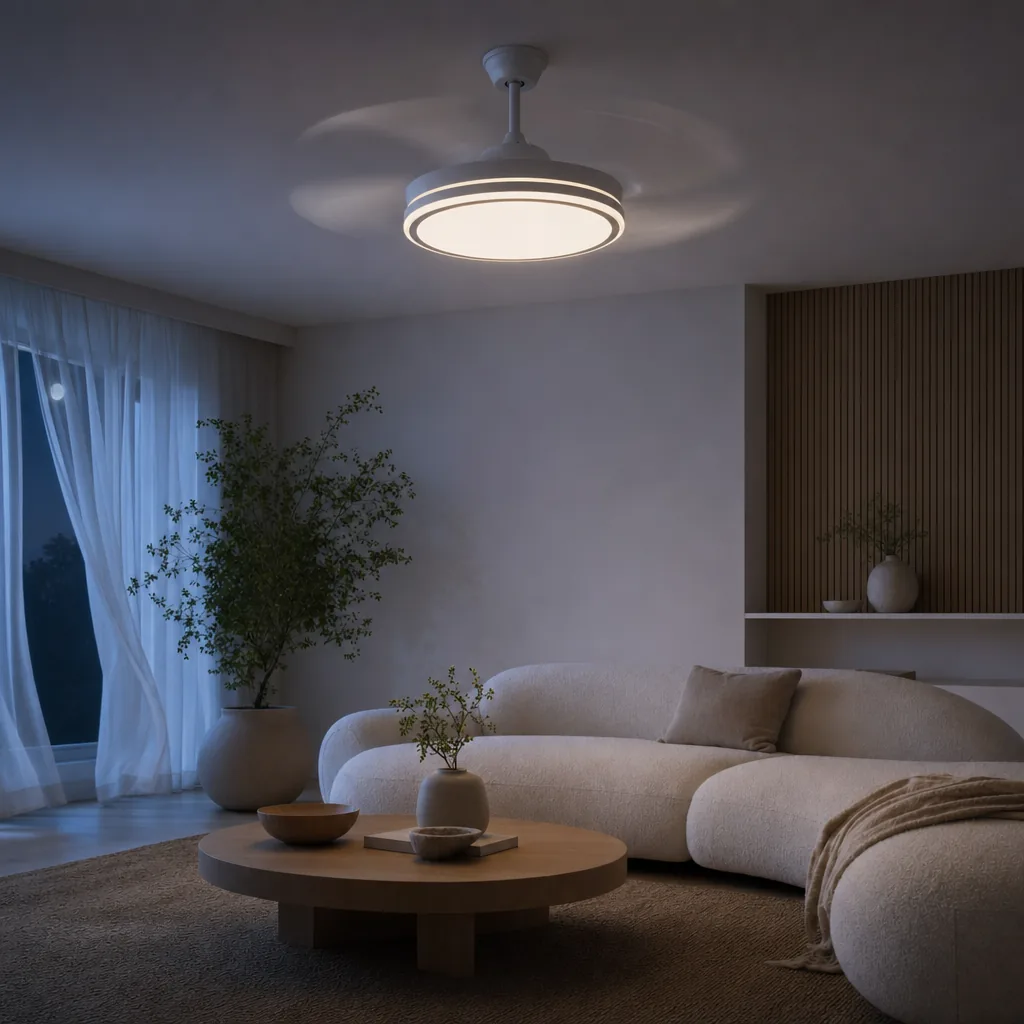
The eye adapts to the average brightness of a scene. In a dark room it opens the pupil wide, and a bright source then becomes unbearable. In the same room lit by two low lamps, that same source no longer bothers anyone.
That is why a ceiling light seems aggressive at night and invisible in daylight. The quickest remedy costs nothing: switch on a side lamp before the ceiling light, which raises the background brightness and closes the pupil.
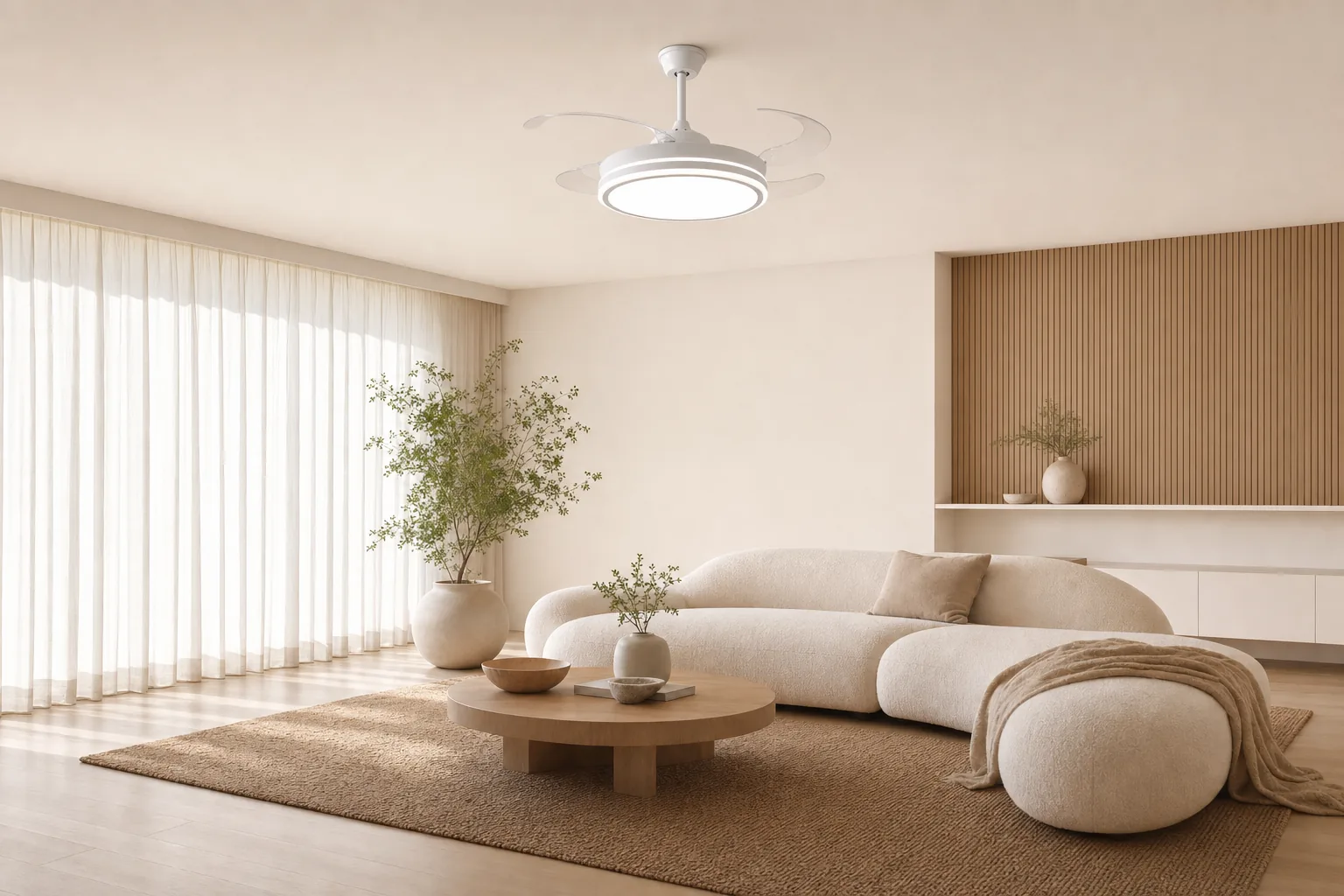
The Boréal 107
Retractable blades · Ø 107 cm · LED ceiling light & silent fan
- ✓Retractable blades: invisible when off, nobody guesses it's a fan
- ✓Sleep with windows closed, 30 dB, quieter than a whisper
- ✓Integrated LED 2700K → 6000K, dimmable: replaces your ceiling light
The visible source, second cause
An LED concentrates high intensity onto a few square millimetres. If the diffuser is absent, clear or too thin, that intensity reaches the eye raw. You then see persistent bright spots even after looking away.
An opal diffuser spreads that energy over the whole surface of the luminaire: the same quantity of light comes out, but spread across hundreds of square centimetres. It is the difference between looking at a bulb and looking at a veiled window.
- ·An opal diffuser rather than clear or bare
- ·A source not visible from a normal seated position
- ·A dimmer, to lower instead of switching off
- ·A second low source switched on at the same time
Height and angle, third cause
A luminaire mounted low, or directly in the line of sight from the sofa or the bed, bothers more at equal output. That is especially true in a bedroom, where you look up at the ceiling, and under low ceilings where the source comes closer to the eyes.
When the light point cannot be moved, the only variable left is intensity. A dimmable ceiling light settles the matter for good: you install the capacity for the days you tidy, and live at twenty per cent the rest of the time.
Before replacing a ceiling light that dazzles, try switching on a low lamp at the same time: in half the cases the discomfort disappears. If it persists, look at whether the source is visible and whether the diffuser is opal. And for any new purchase, dimming is the feature that separates a luminaire you put up with from one you forget.
Frequently asked questions
Why does my ceiling light only dazzle in the evening?+
Because the eye adapts to background brightness. At night the pupil is open and the same source becomes aggressive. Switching on a low lamp before the ceiling light is often enough to remove the discomfort.
Does a shade or diffuser really change anything?+
Yes, radically. An opal diffuser spreads light across the whole surface of the luminaire instead of concentrating it on the LED. The quantity does not change, the perceived luminance does.
Should you lower the output to stop being dazzled?+
That is the simplest remedy when a dimmer exists. Without one, output is fixed, and you have to work on contrast with a second source, or change the luminaire.
The SEY Maison Circle
Every month, an exceptional piece. Never reissued.
The Drops principle: one high-end furniture piece per month, in a numbered edition. Once it's gone, it never comes back. Circle members are notified 48 h early, access each drop 24 h before everyone else, and receive our guides before publication.
Discover the Drops →