Interior design
Ceiling light or recessed spots: the calculation nobody does before the works
Published on ·3 min read
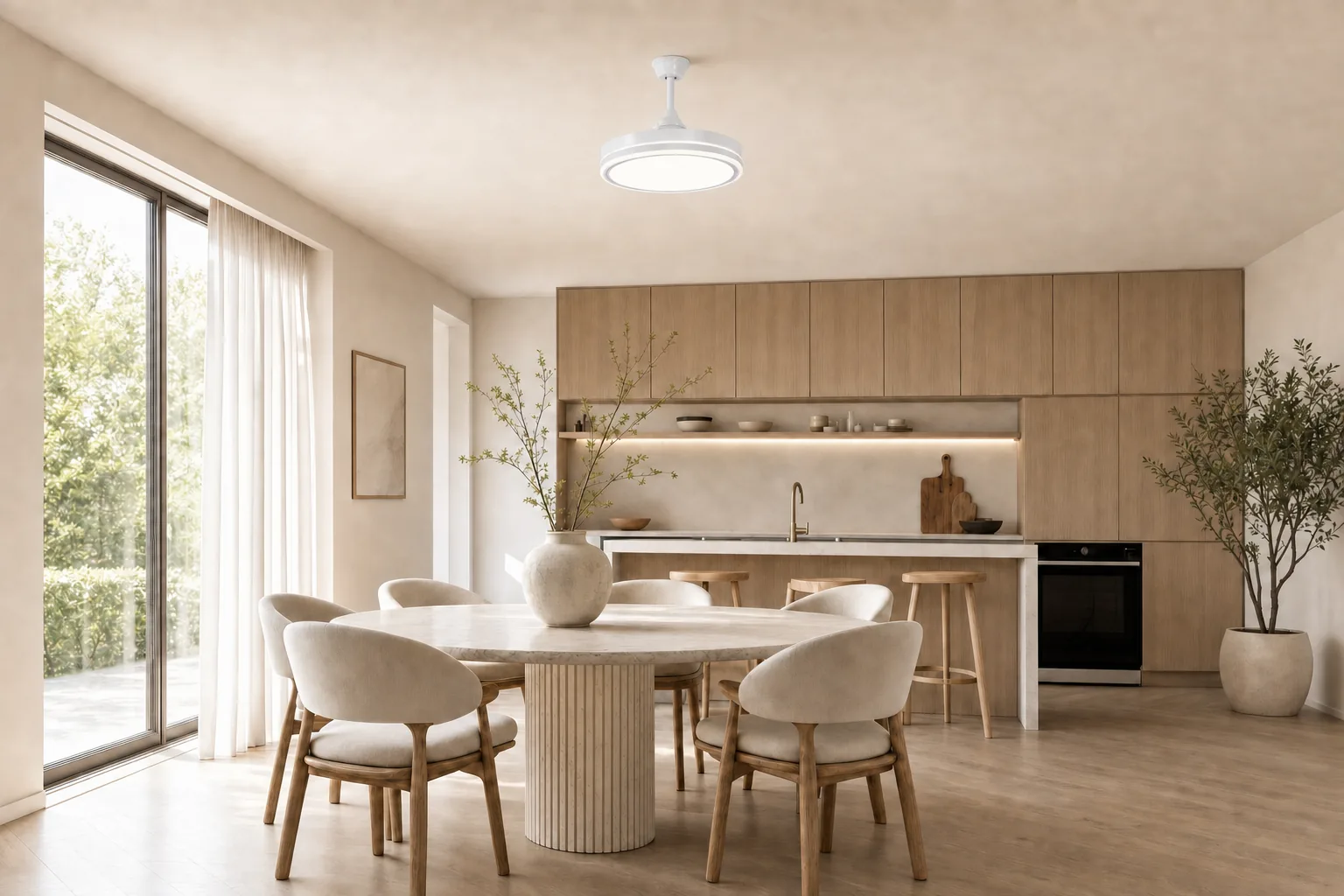
Recessed spots make a simple promise: a bare ceiling with nothing protruding, light coming from everywhere. That is true, and often beautiful. What is less so is the path to get there, which interior photographs never show.
Before choosing, it is worth setting out the three constraints that decide: the void available in the ceiling, the number of points needed, and reversibility.
Ceiling void, the entry condition
A recessed spot needs to house its body and its transformer above the board: count 8 to 10 cm of void, sometimes more. In a timber-framed house or under a ceiling already in plasterboard, that void often exists. Under a solid concrete slab, it does not.
Creating that void means fitting a dropped ceiling across the whole room, which costs, makes mess, and loses eight to ten centimetres of height. In a flat at 2.50 m, that is precisely the height you cannot give away.
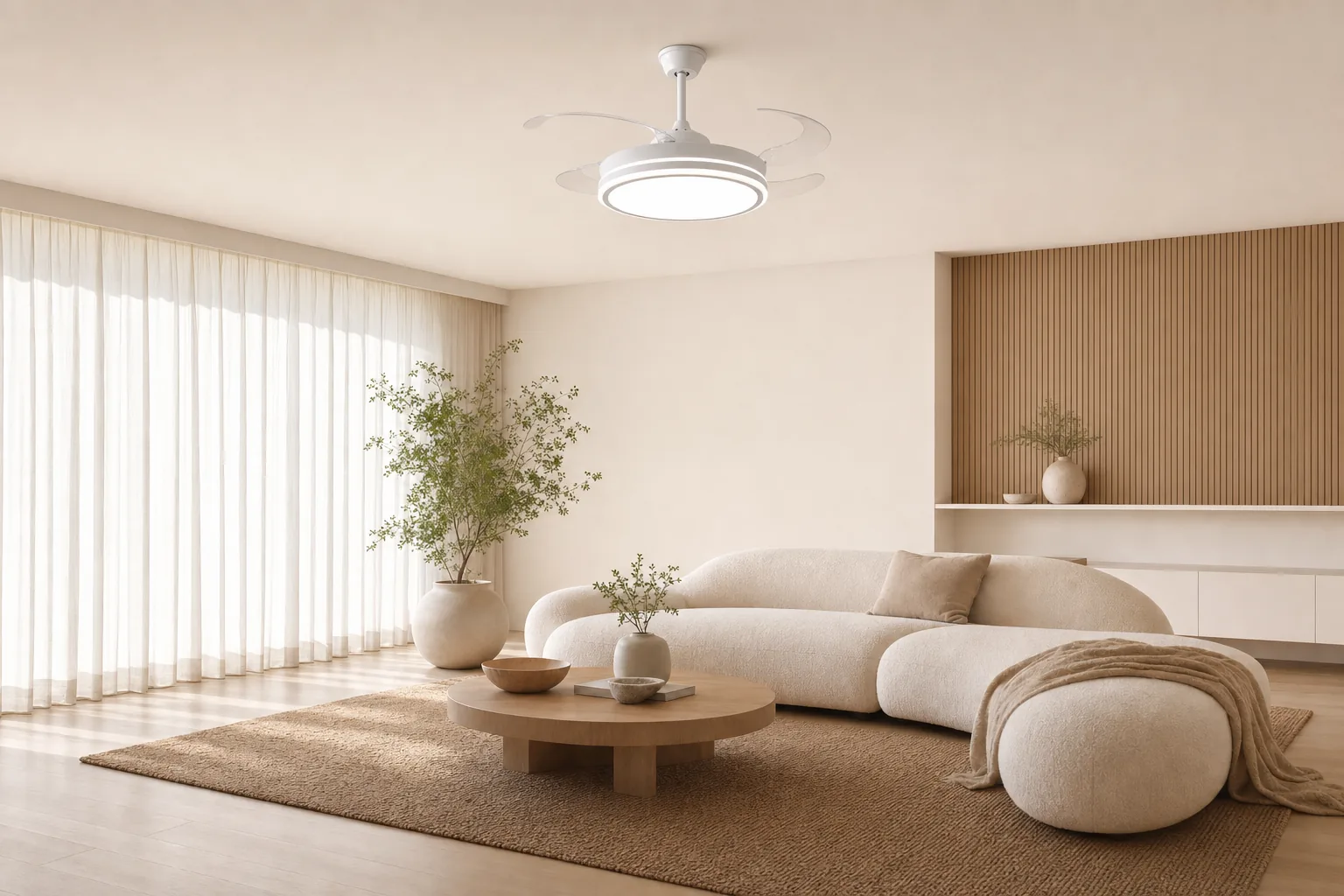
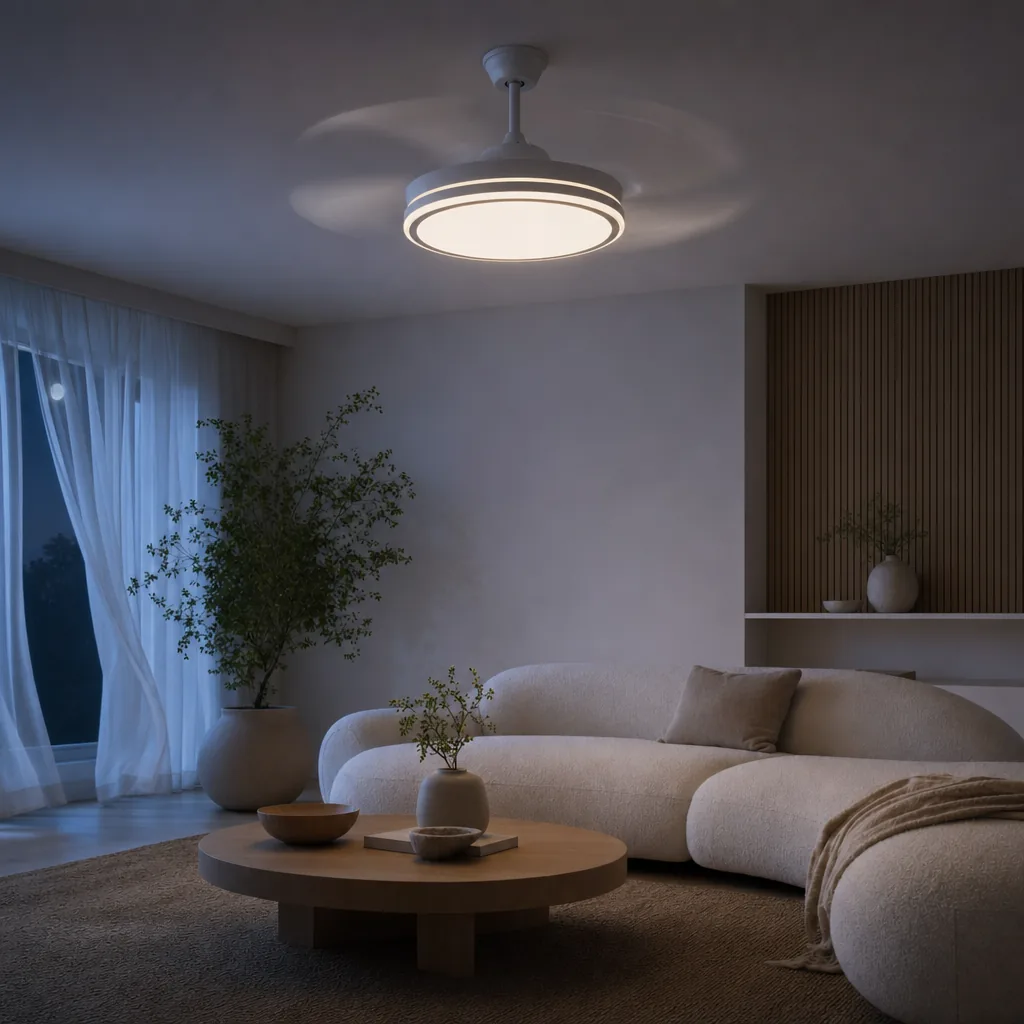
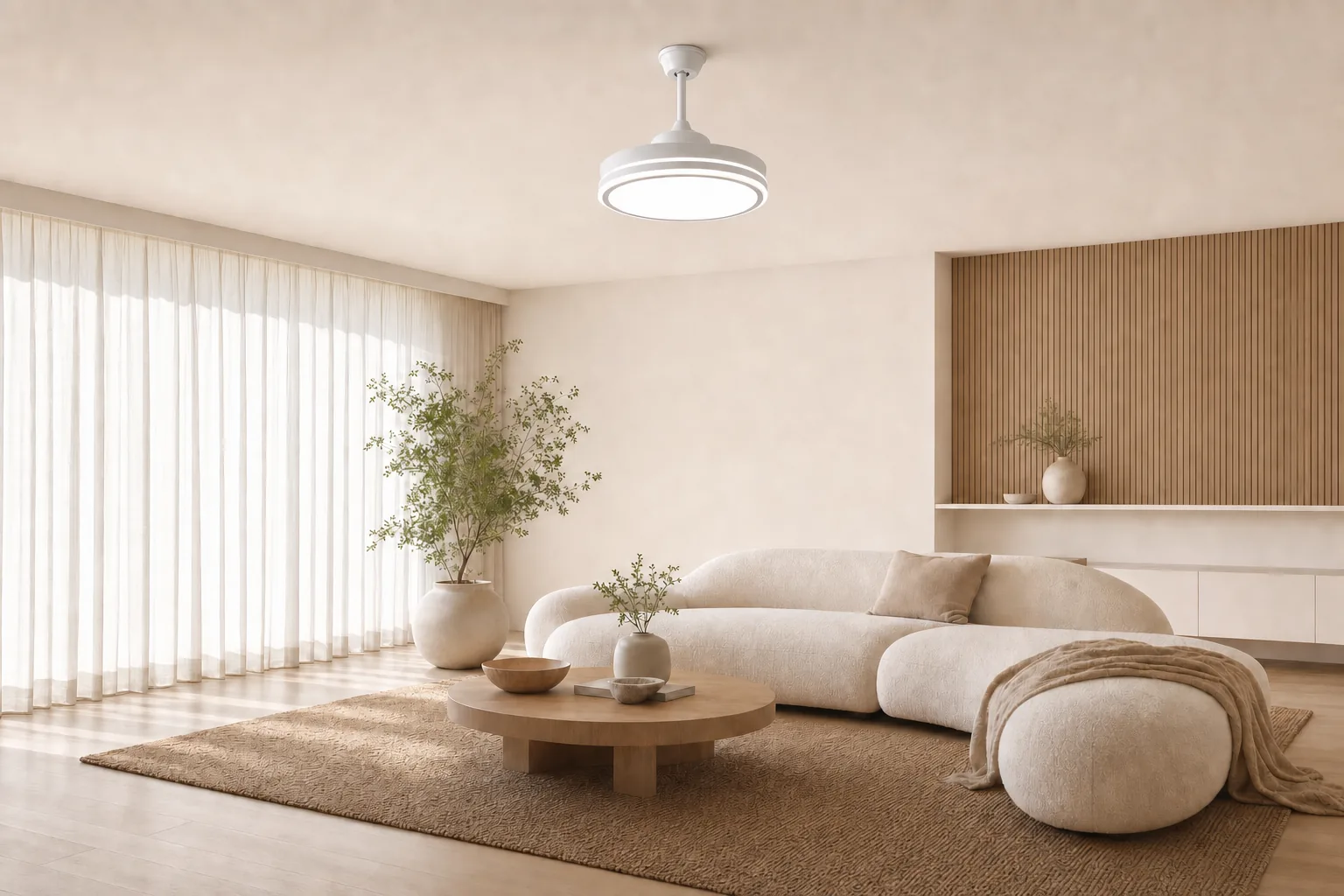
The Boréal 107
Retractable blades · Ø 107 cm · LED ceiling light & silent fan
- ✓Retractable blades: invisible when off, nobody guesses it's a fan
- ✓Sleep with windows closed, 30 dB, quieter than a whisper
- ✓Integrated LED 2700K → 6000K, dimmable: replaces your ceiling light
Six to ten points against one
A spot lights a narrow cone. To cover a living space without dark patches, you need six to ten, evenly spaced, which means drilling, running cables, and accepting a visible grid on the ceiling.
A correctly sized ceiling light does the same job from a single point, the one that already exists. The difference in light is not in quantity, it is in spread: spots create cones, a ceiling light creates a sheet.
- ·Spots: 6 to 10 points, drilling, wiring, a dropped ceiling if needed
- ·Ceiling light: 1 point, the existing one, half an hour to fit
- ·Spots: light in cones, hard shadows under objects
- ·Ceiling light: light in a sheet, soft shadows
What cannot be undone
This is the decisive point and the least discussed. A ceiling light you have tired of unscrews and is replaced in twenty minutes, with no trace. Ten 70 mm holes in plasterboard, on the other hand, stay: changing your mind means filling, sanding and repainting the entire ceiling.
That asymmetry should weigh heavily in a home you expect to evolve. It argues for spots where the function is stable and technical, a kitchen, a bathroom, a hallway, and for a ceiling light anywhere taste might change.
Spots are a building decision, a ceiling light a decorating one. If the dropped ceiling already exists and the room has a clear function, spots make sense. In every other case, one well-equipped light point costs less, takes half an hour, and comes off as easily as it went up.
Frequently asked questions
How many spots for a 25 m² living room?+
Six to ten depending on their beam angle and the ceiling height, spaced about 1.50 m apart. Below that, dark patches appear between the cones of light.
Can spots be fitted without a dropped ceiling?+
Only if the ceiling is already hollow, plasterboard on a frame, with at least 8 to 10 cm of void. Under a solid concrete slab, that void has to be created, which means fitting a dropped ceiling.
Do spots use more than a ceiling light?+
At equal illumination, the gap is small with LEDs. The real difference is elsewhere: ten spots mean ten sources to replace the day they fail, against one.
The SEY Maison Circle
Every month, an exceptional piece. Never reissued.
The Drops principle: one high-end furniture piece per month, in a numbered edition. Once it's gone, it never comes back. Circle members are notified 48 h early, access each drop 24 h before everyone else, and receive our guides before publication.
Discover the Drops →