Comparisons & guides
Memory foam pillow: the complete buying guide and 5 criteria
Published on ·5 min read
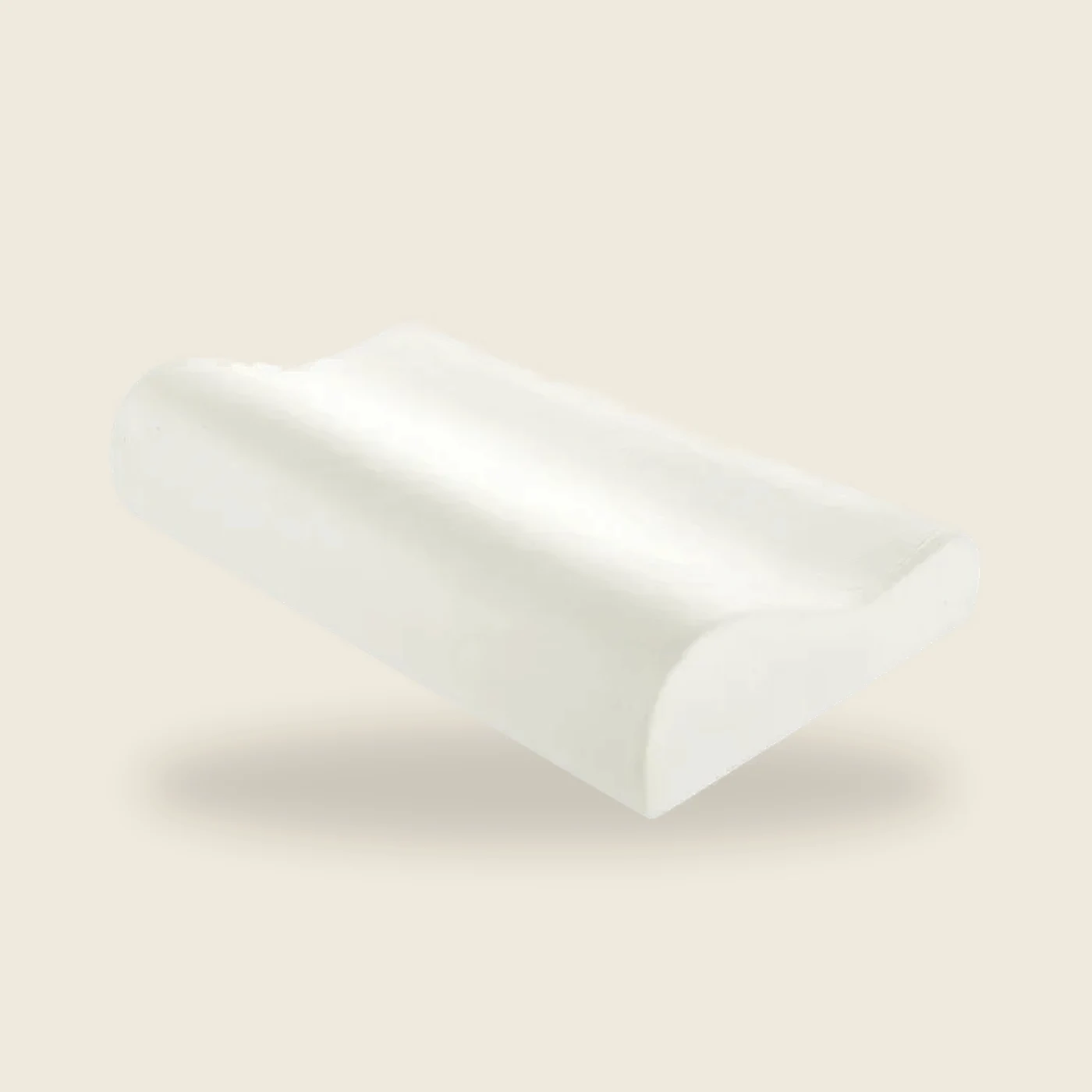
Memory foam has taken over bedding shelves, often with no explanation attached. Behind the name there is a specific material: a viscoelastic foam that reacts to the pressure and the heat of the body. It does not bounce, it hollows slowly and keeps the shape for a few seconds after you move. That behaviour, not the brand or the colour, is what changes the way the neck is supported all night.
The question is whether this type of pillow suits you, and above all which one to pick. A badly sized memory foam pillow is less comfortable than a plain pillow at the right height. This guide covers what slow rebound foam actually is, who it suits, the five criteria that decide real comfort, and the mistakes that come back most often at the moment of purchase.
What memory foam really is
Memory foam is a viscoelastic foam. Under the weight of the head it sinks gradually instead of resisting all at once. When you lift your head it rises again slowly: that is the slow rebound. A fibre or feather pillow does the opposite, it compresses fast then pushes back. The difference is felt mostly at the neck, which is a hollow area. Slow rebound foam fills that hollow instead of leaving it empty.
The second particularity: the foam responds to heat. It is firmer in a cool bedroom, softer after a few minutes of contact with the skin. Many people find the pillow a little hard for the first seconds, then perfectly suited afterwards. That is the normal behaviour of the material, not a fault. It is also why a three second test in a shop tells you nothing reliable: judging a memory foam pillow takes several nights.
Who this type of pillow suits
It suits side sleepers and back sleepers first, which covers the large majority of people. On the side, the gap between ear and shoulder is wide: you need material that stays in place instead of flattening within minutes. On the back, the gap to fill is far smaller, but it has to be filled precisely. In both cases, a foam that holds its shape does the job better than a filling that shifts around during the night.
It suits stomach sleepers much less. In that position the head is already turned and the gap to fill is close to zero: a thick pillow increases the twist of the neck. People who sleep on the stomach do better with a very flat pillow. Finally, if you like to fold, roll or hug your pillow, foam does not lend itself to that, since it keeps a fixed shape by construction.
The 5 criteria that decide comfort
Height comes before everything else. It has to match the gap between your mattress and your neck in your usual position. Then comes the felt support: foam that is too soft lets the head sink to the mattress and cancels the point of the pillow, foam that is too firm creates a hard press on the ear. Format matters too. An ergonomic 50 × 30 cm format, more compact than a large square pillow, keeps the head centred instead of letting it slide towards the edges.
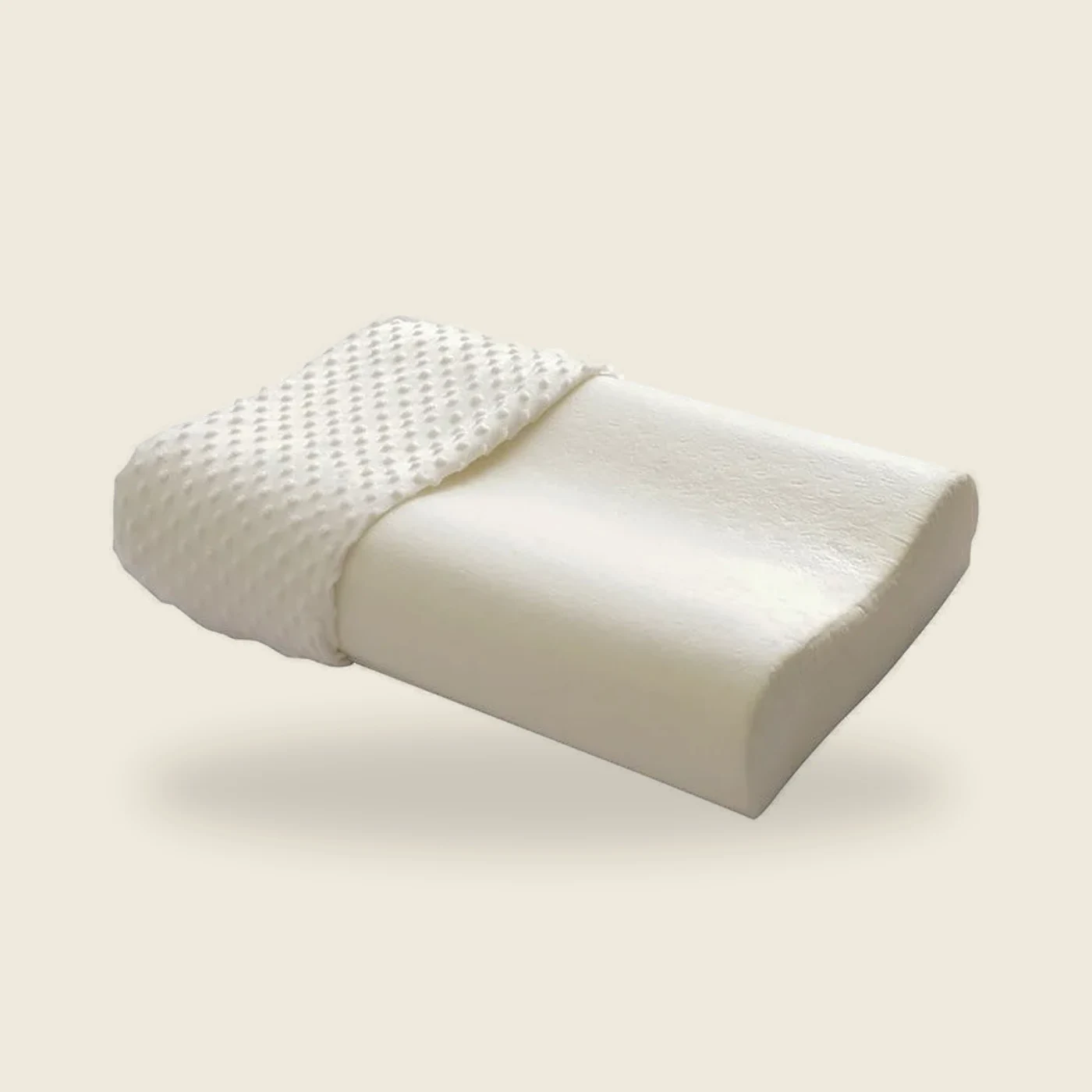
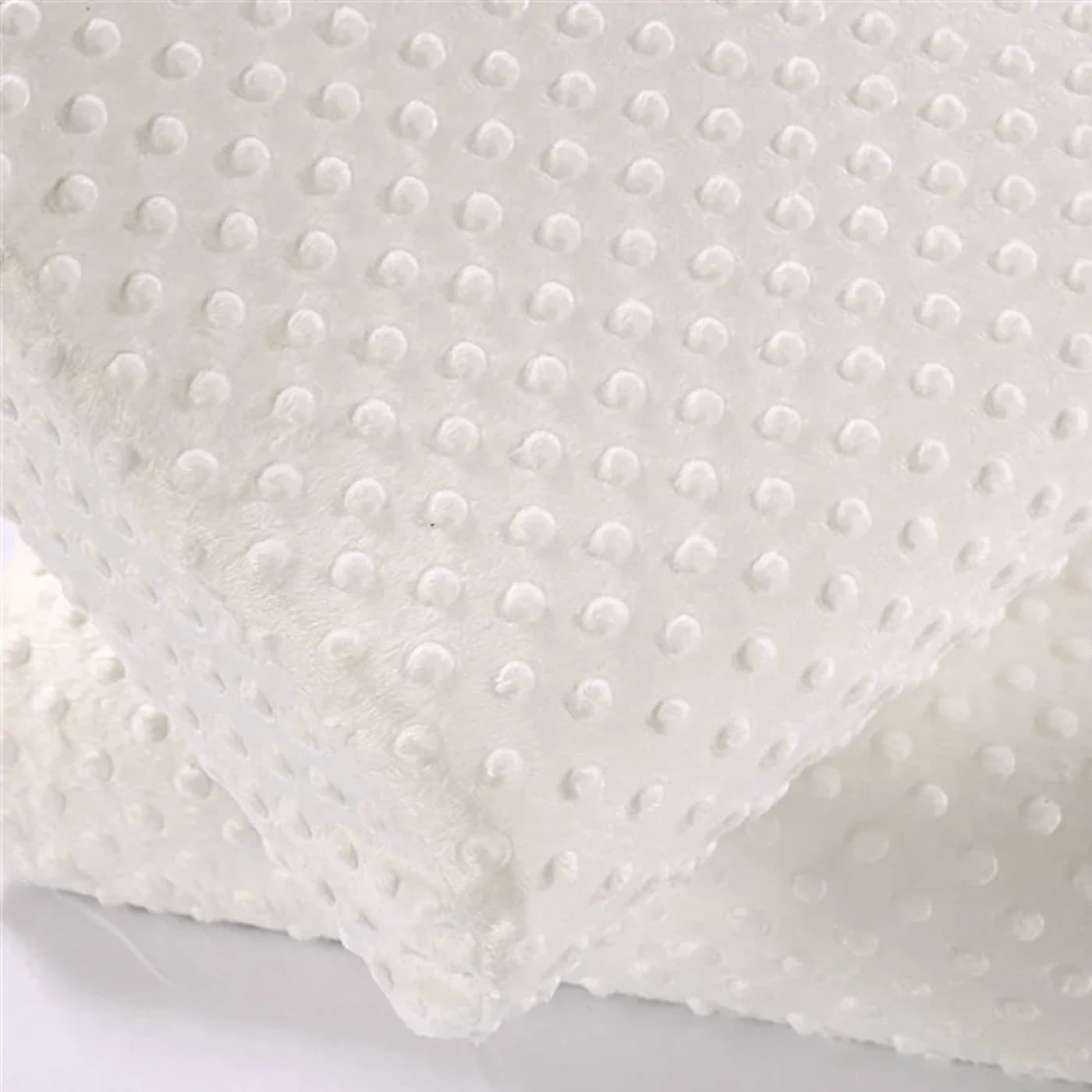
The last two criteria are often forgotten. The cover decides what your skin actually touches and, above all, whether the whole thing can be washed. Then care: a foam core does not go in the machine, only a removable cover keeps the pillow clean over time. The Nuage 50 brings these points together: 50 × 30 cm format, two wave heights of 10 and 7 cm on the same pillow, an optional removable textured cover and a core that airs. The cotton Nuage covers, cut to the same wave shape, sit flat on both heights.
- ·Height: about 10 cm on the side, about 7 cm on the back.
- ·Felt support: the head sinks without ever touching the mattress.
- ·Format: ergonomic 50 × 30 cm, more containing than a large square.
- ·Cover: removable and washable, otherwise the pillow ages badly.
- ·Care: foam core aired flat, never in the machine.
The mistakes people make when buying
The first mistake is choosing by material instead of by height. An excellent memory foam pillow that is too high for you will be less comfortable than a basic pillow at the right height. The second is keeping the same height while changing position during the night: what works on the side crushes the neck on the back. A pillow with two heights settles that point, since you only have to turn it over to move from the high wave to the low one.
The third mistake is judging the pillow on the first night. Out of the box, a pillow shipped compressed unfolds first, and the body needs a few nights to get used to a new support. The fourth is trying to wash it: the foam core is not washed, it airs, and it is the cover that goes in the machine. If neck discomfort lasts or wakes you, this comfort advice does not replace the opinion of a health professional.
A memory foam pillow is chosen first on height, then on support, format, cover and care. Slow rebound foam fills the hollow of the neck instead of leaving it empty, provided the height matches your position. The Nuage 50 offers both useful heights, 10 and 7 cm, on the same 50 × 30 cm pillow, on its own at 55 € or with its textured cover at 65 €.
Frequently asked questions
Is a memory foam pillow right for everyone?+
No. It suits side and back sleeping very well, and stomach sleeping much less, where a very flat pillow remains preferable. It also does not suit you if you like to fold or roll your pillow, since the foam keeps a fixed shape.
What height of memory foam pillow should I choose?+
About 10 cm if you sleep on your side, about 7 cm if you sleep on your back. The height has to fill the gap between the mattress and your neck without pushing the head upwards. A pillow with two heights avoids the choice: you turn it over depending on the position.
How do you wash a memory foam pillow?+
You do not wash it. The foam core goes neither in the machine nor under water: it airs flat, away from the bed, in a ventilated room. Only the cover comes off and is washed, which is enough to keep the pillow clean season after season.
The SEY Maison Circle
Every month, an exceptional piece. Never reissued.
The Drops principle: one high-end furniture piece per month, in a numbered edition. Once it's gone, it never comes back. Circle members are notified 48 h early, access each drop 24 h before everyone else, and receive our guides before publication.
Discover the Drops →