Comparisons & guides
Pillow height: how to choose it and measure it correctly at home
Published on ·5 min read
When looking for a pillow, people compare materials: feather, fibre, latex, memory foam. It is the first piece of information on display, and rarely the most useful one. Two pillows in the same material can give two opposite nights if their height differs by four centimetres. Comfort is decided first by a measurement, not by a material.
This article gives a method to measure at home the height that suits you, a simple table matching sleeping position to height, and explains why a pillow with two heights settles the most common problem of all: the sleeper who changes position during the night.
Why height comes before material
The job of a pillow is to fill the empty space between your head and the mattress, so that head, neck and spine stay on one line. It is a question of geometry. Material decides how it feels to the touch, how long it lasts and how it reacts to weight, but it does not decide the measurement to fill. That measurement depends on your build and your position, not on the product.
This explains a frequent frustration: buying a high end pillow and sleeping badly on it. If the height is wrong, no material makes up for the angle imposed on the neck for seven hours. Conversely, a plain pillow at the right height often gives better nights than a sophisticated model in the wrong size. Material comes second, to hold that height until morning.
Measuring the right height at home
The most reliable method needs no equipment. Lie on your bed, in the position you fall asleep in, with the pillow you currently use. Have someone photograph you from the side, at mattress level. In the photo, the head should extend the line of the back. If the chin moves towards the chest, the pillow is too high. If the head tips backwards or dives towards the mattress, it is too low.
A tape measure completes the diagnosis for side sleeping. Measure horizontally from the side of the neck to the outer edge of the shoulder, then subtract 2 to 4 cm for the shoulder sinking into the mattress. Always compare the result to the height of the pillow under the weight of the head, never to its height at rest in the packaging: the difference between the two can reach several centimetres.
- ·Side photo in your usual position, at mattress level.
- ·Head in line with the back: the height is right.
- ·Chin towards the chest: pillow too high.
- ·Head diving towards the mattress: pillow too low.
- ·For side sleeping, measure shoulder width minus 2 to 4 cm of sinking.
Matching position to height
The orders of magnitude are stable from one sleeper to another, even if the exact value varies with build and mattress firmness. On the side you fill a shoulder width: most adults land around 10 cm. On the back you fill only the hollow of the neck: about 7 cm. On the stomach the gap is close to zero and a very flat pillow, or none at all, remains preferable.
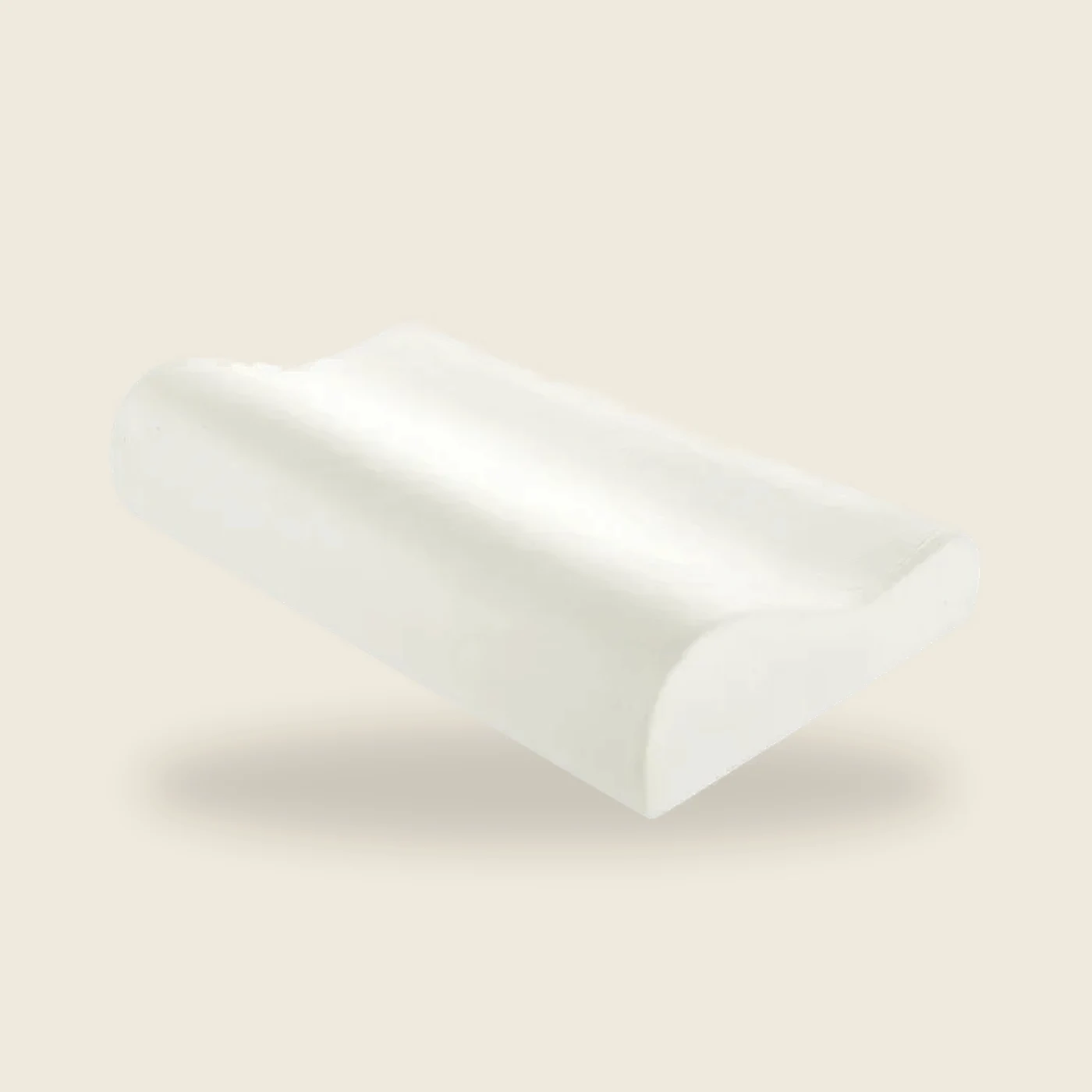
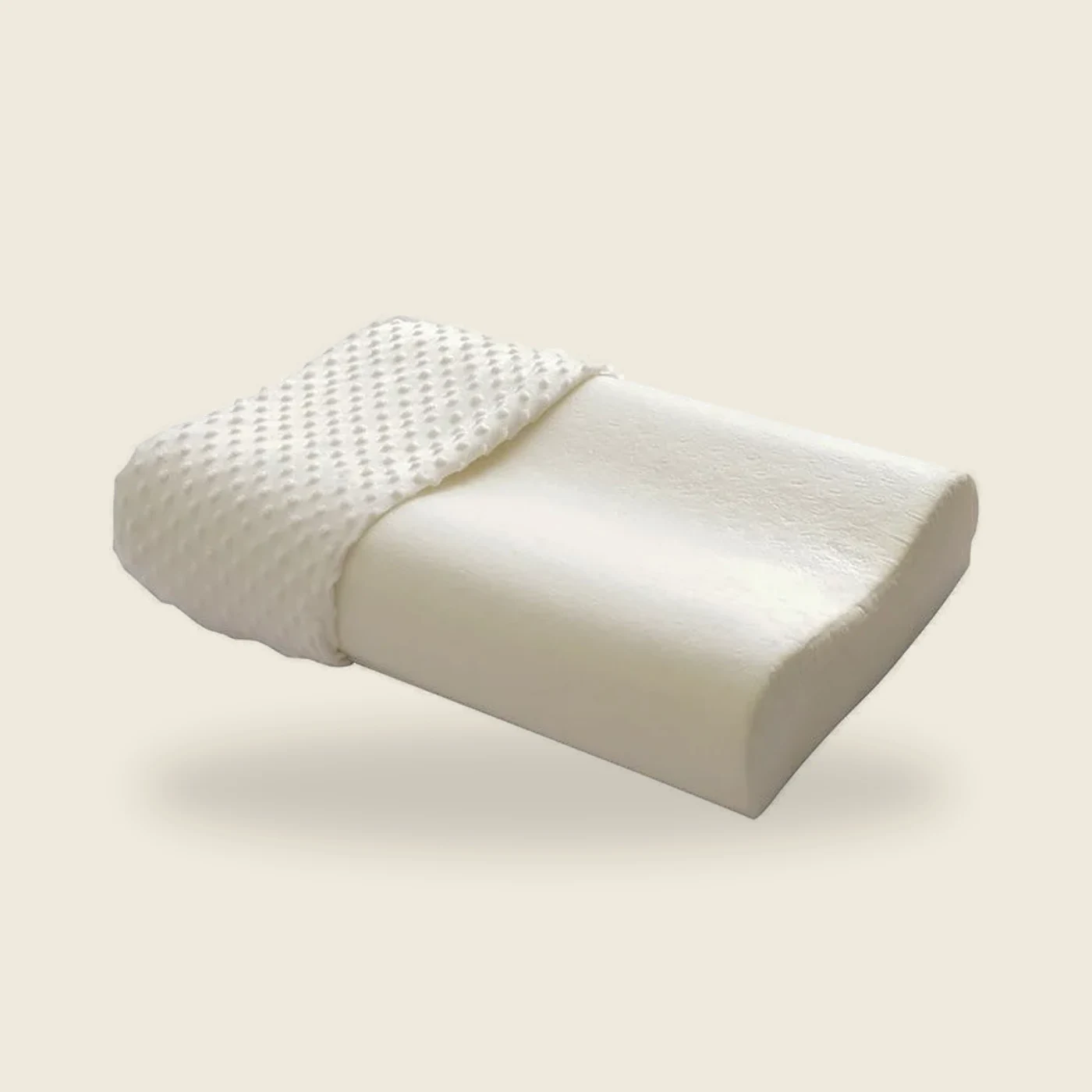
Two parameters shift those values. A soft mattress lets the shoulder sink further and reduces the height needed; a firm mattress increases it. A broad build raises it, a slight build lowers it. The Nuage 50 puts both markers on the same pillow, with a 10 cm wave for the side and a 7 cm wave for the back, in the ergonomic 50 × 30 cm format.
- ·On the side: about 10 cm, up to 12 cm for a broad build.
- ·On the back: about 7 cm, the hollow of the neck and nothing more.
- ·On the stomach: very low, often better with no pillow under the head.
- ·Soft mattress: subtract 1 to 2 cm from the values above.
Why two heights beat a compromise
Very few people sleep in a single position all night. You fall asleep one way, wake up another, and the ideal height changes between the two, almost twofold. The usual market answer is the in between pillow, around 8 or 9 cm. It is never plainly bad and never plainly right: a little high on the back, a little low on the side.
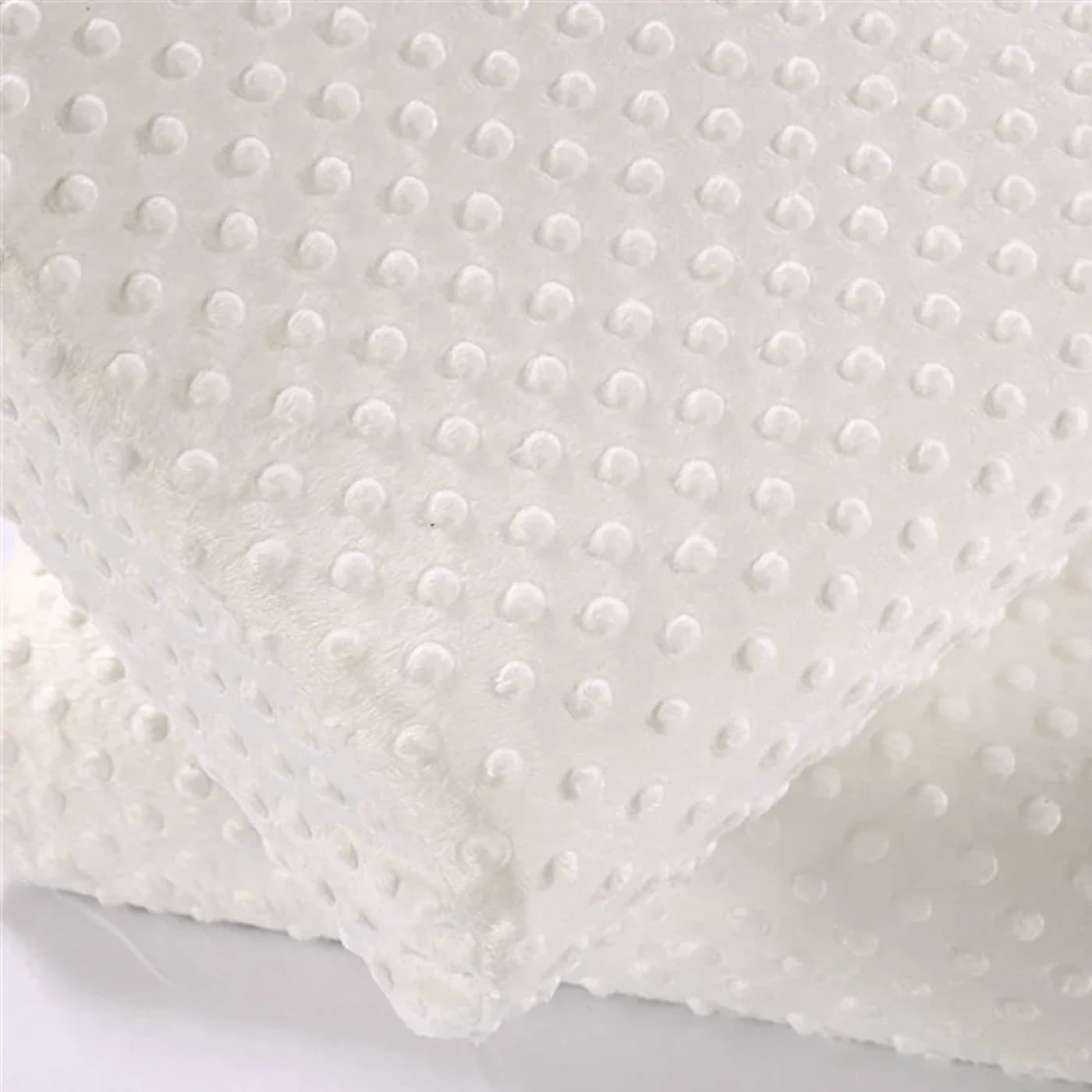
A pillow carrying two heights in one piece settles that without compromise. You turn it over, you change wave, you keep the same pillow. On the Nuage 50, the 10 cm wave serves the side and the 7 cm wave the back, the textured cover comes off and is washed, and the foam core airs. The cotton Nuage covers, cut to the same shape, sit flat on both heights. If neck discomfort lasts or wakes you, talk to a health professional.
Height is the one criterion that really decides the alignment of the neck, and it can be measured at home in a few minutes. Keep two markers in mind: about 10 cm on the side, about 7 cm on the back. The Nuage 50 carries both values on the same 50 × 30 cm pillow, on its own at 55 € or with its textured cover at 65 €.
Frequently asked questions
How do I know if my pillow is too high?+
Have someone photograph you from the side, lying in your usual position. If the chin comes closer to the chest and the neck looks stretched, the pillow is too high. Discomfort at the base of the skull on waking usually points the same way.
What pillow height should I choose for my position?+
About 10 cm if you sleep on your side, about 7 cm on your back, and as low as possible on your stomach. These values are the useful height under the weight of the head, not the height printed on the packaging.
What is the point of a pillow with two heights?+
It covers two positions with a single pillow. You use the high face for side sleeping and the low face for back sleeping, simply by turning the pillow over. That avoids the compromise of an in between height that fits neither position properly.
The SEY Maison Circle
Every month, an exceptional piece. Never reissued.
The Drops principle: one high-end furniture piece per month, in a numbered edition. Once it's gone, it never comes back. Circle members are notified 48 h early, access each drop 24 h before everyone else, and receive our guides before publication.
Discover the Drops →