
The art of the home
Pillow care: washing, airing and the mistakes that ruin it
Published on ·5 min read
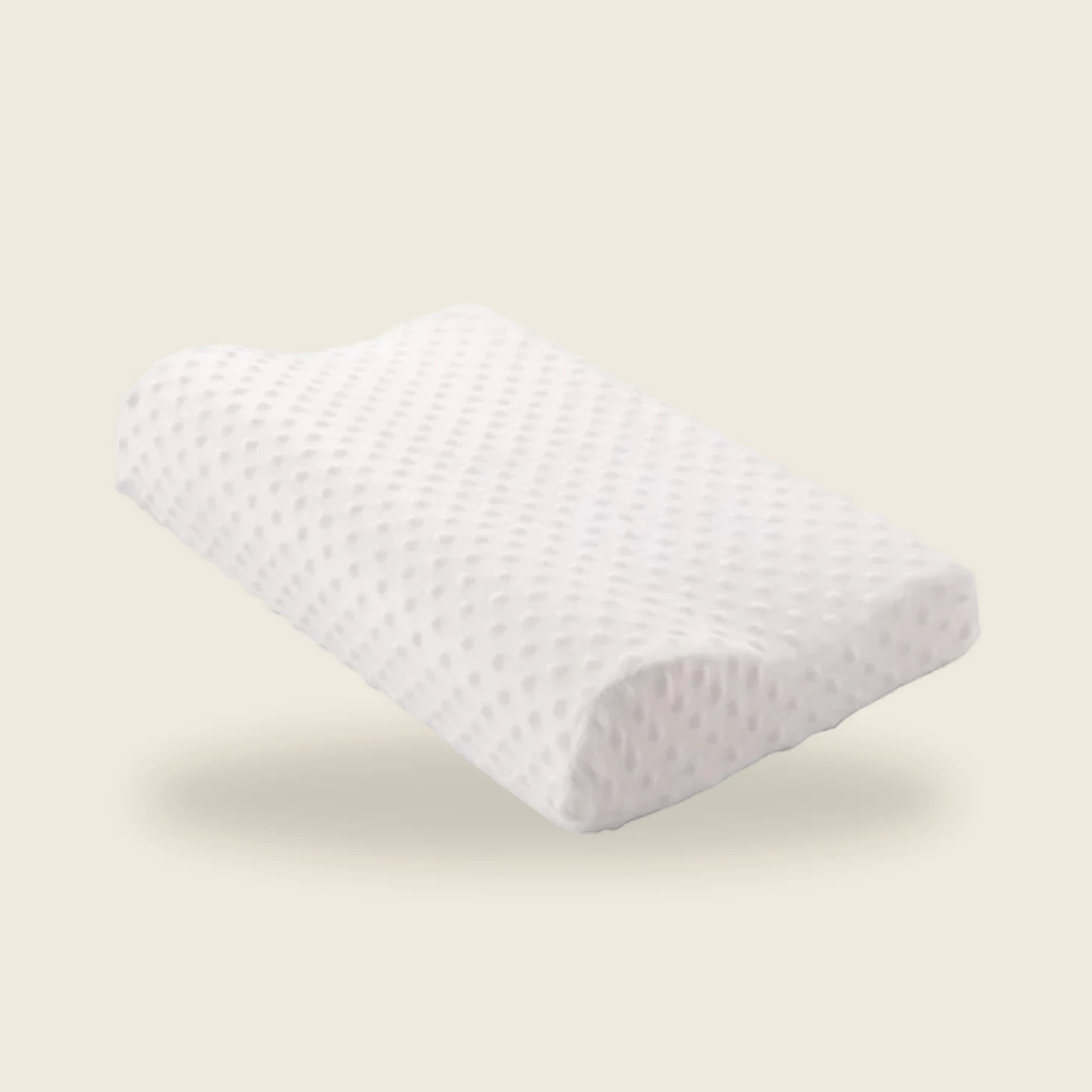
A pillow is kept for years, it receives sweat, sebum and skincare residue every night, and yet almost nobody knows what to do with it on cleaning day. The question always comes in the same form: can it be washed? For a memory foam pillow the answer is twofold, and that is what creates the confusion.
The cover washes, the core does not. Understanding that split avoids the most expensive mistake, the one that ruins foam in a single wash. This article gives the full manual: what goes in the machine, what airs, how often, how to dry, and the habits that wear a pillow out without you noticing.
What washes and what does not
A memory foam pillow is made of two very different things. On one side a dense slow rebound foam core, which holds its shape because its internal structure is intact. On the other a removable textile cover acting as a barrier. The core of the Nuage 50 does not wash, it airs. Its optional textured cover, in polyester and cotton, comes off and washes. The cotton Housse Nuage, sold separately, washes too.
That split is not a constraint, it is the whole principle of the object. Everything that soils a pillow arrives from above: sweat, sebum, hair, dust. A removable cover intercepts most of it before it reaches the foam. Caring for a memory foam pillow therefore mostly means caring for its cover, regularly rather than thoroughly. The core asks for almost nothing, provided it never sleeps bare.
Memory foam: air it, do not wash it
Water is the enemy of memory foam. It soaks into the structure, stays there a long time, and spinning crushes cells that do not reopen. Foam that has been through a machine comes out heavier, softer in places, and dries for days while holding a damp smell. Soaking it in a bathtub gives the same result. No delicate programme changes this rule: the core stays out of the machine.
What foam needs is air. At night it takes on body moisture even through a cover. Regular time in the open releases it. The Nuage 50 arrives compressed in its box: the first thing to do is take it out, lay it flat and let it regain its volume in a ventilated room before the first night. The same habit, shorter, then applies every week.
- ·Lay the core flat, without a cover, in a ventilated room, about an hour a week.
- ·Avoid direct sun and radiators: strong heat weakens the foam.
- ·For a local mark, dab with a barely damp cloth, never rub or soak.
- ·Never put the core in a washing machine, a tumble dryer or a bathtub.
Covers: frequency, washing, drying
A cover follows the rhythm of the sheets. Every one to two weeks suits most situations, once a week in summer, after a spell of fever, or if skin and hair are oily. It is as much a comfort question as a hygiene one: a freshly washed cover feels distinctly drier under the cheek, and many people blame the pillow for warmth that actually comes from a saturated textile.
For washing, the general rule for bedding cotton applies: a gentle cycle at moderate temperature, little or no fabric softener, since softener coats the fibre and reduces how much it absorbs. The care label stays the reference. Air drying is safest, flat or on a line, in the shade. Cotton dried too hot shrinks slightly, and on a cover cut to the pillow's shape a few millimetres are felt when fitting it. The Housse Nuage is 100 % cotton, with a side zip best closed before washing so it does not catch on the rest of the load.
The mistakes that ruin a pillow
The first is washing the core, already covered, and it cannot be undone. The second is hot drying a cotton cover, which shrinks it and leaves it rough. The third is quieter: putting back a cover that is still slightly damp. The moisture moves into the foam, which takes far longer to dry than a textile, and that is how the smells eventually blamed on the pillow itself begin.
Two other habits wear things out without warning. Folding or compressing a memory foam pillow for storage, when it should be stored flat. And sleeping without a cover just for one night while the machine runs: that is exactly the night the foam takes everything. Owning two spare covers settles that for good, and the buy three get two free offer on the Housse Nuage exists for that very practical reason.
Memory foam pillow care fits in one sentence: the cover washes often, the core airs and never sees water. An hour of air a week, a clean cover every one to two weeks and drying without excess heat are enough to keep a pillow healthy for years.
Frequently asked questions
Can a memory foam pillow be machine washed?+
No. Water soaks into the foam, spinning crushes its structure and drying takes days while leaving a damp smell. The core of the Nuage 50 airs flat in a ventilated room, only the cover washes.
How often should a pillow cover be washed?+
Every one to two weeks in most cases, once a week in summer or if skin and hair are oily. The simple benchmark is to wash it with the sheets, and to own a second one so the pillow is never left unprotected while the first dries.
How do you get a smell out of a memory foam pillow?+
By airing it flat, without a cover, in a ventilated shaded room, for several hours. Do not soak it, machine wash it or put it on a radiator. For a mark, dab with a barely damp cloth and let it dry completely before putting a cover back on.
The SEY Maison Circle
Every month, an exceptional piece. Never reissued.
The Drops principle: one high-end furniture piece per month, in a numbered edition. Once it's gone, it never comes back. Circle members are notified 48 h early, access each drop 24 h before everyone else, and receive our guides before publication.
Discover the Drops →Also worth reading

Ceiling fan in a child's bedroom: safety, height, noise and loft beds
Read the article →
Paying for a ceiling fan in three interest-free instalments: how it works, what it costs, what to know
Read the article →
Inside a ceiling fan box: what is supplied, what is missing, what to prepare
Read the article →