
Comparisons & guides
Ceiling fan or tower fan: which one really cools a room?
Published on ·4 min read
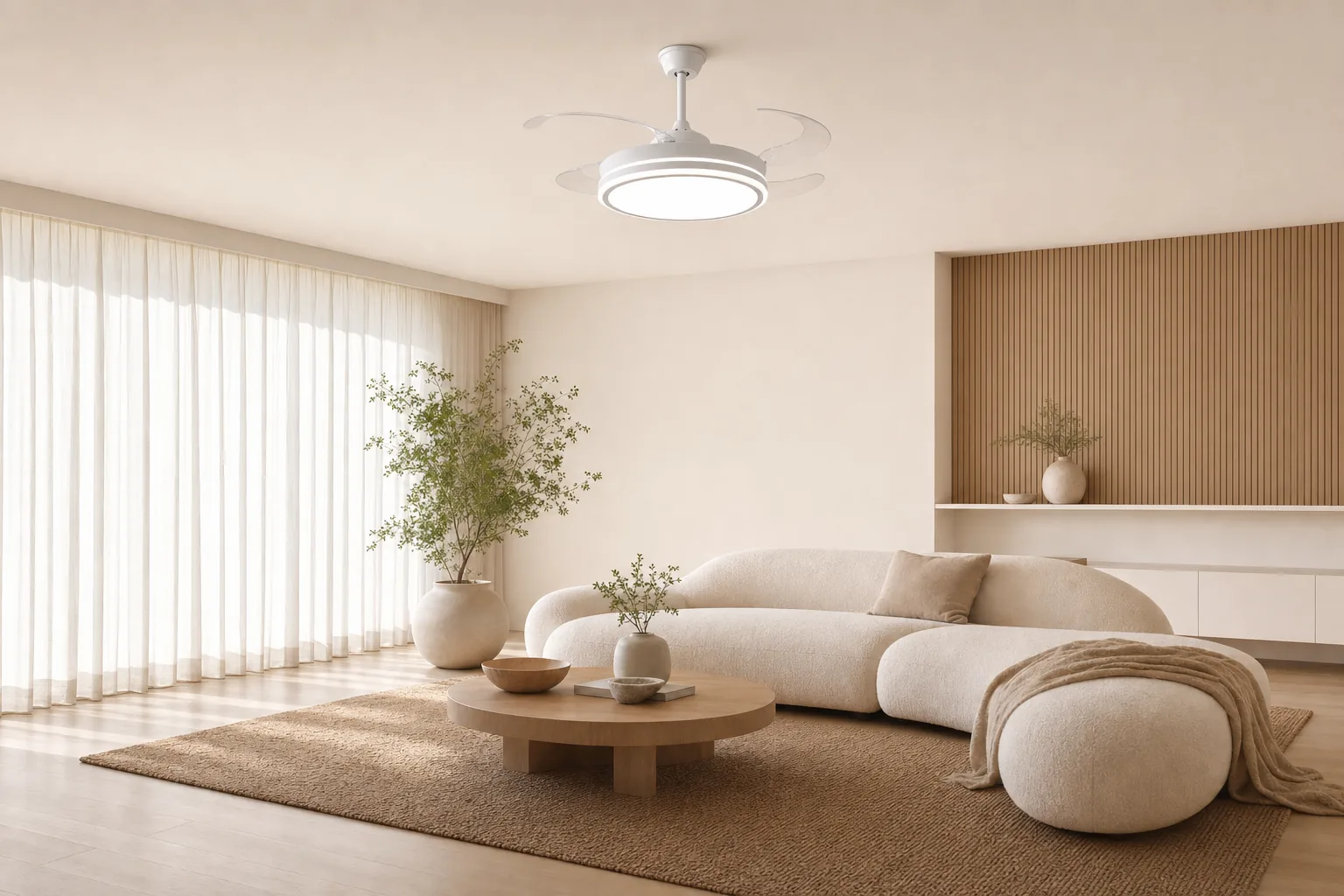
The tower fan is July's reflex purchase: picked up in a shop, put in a corner, plugged in. It helps. But when you look at what it really does, a localised, noisy, bulky jet of air, you understand why people end up looking for something else.
This comparison puts the two head to head on the criteria that matter for a living room or bedroom: area covered, noise, space, consumption, lifespan and real cost over ten years.
What each does with the air: jet versus circulation
A tower fan draws air in at the back and projects it forward in a narrow beam, 1 to 2 m. Oscillating, it sweeps a 70 to 90 degree arc: you get a puff every ten seconds, then nothing. Beyond 2 m, or beside the beam, the room stays as it was.
A ceiling fan works on the whole area: from the centre of the room it pushes a column of air down that spreads over the floor and rises along the walls. Every point in the room gets a light, continuous air movement. A 107 cm covers 10 to 21 m², a 132 cm up to 30 m². You are not in a draught, you are in a ventilated room.
Noise: 50 dB versus 30 dB
To blow hard through a narrow tube, the tower spins a turbine at high speed: 45 to 55 dB at medium speed, more at full. That is conversation level. At night you turn it down, and then it no longer cools. Many end up sleeping with the noise rather than without the air.
A ceiling fan moves a lot of air slowly, with large blades and a motor turning at a few hundred rpm: 30 to 34 dB for the Boréal 107 depending on speed. That is a whisper. At night on speed 1 you forget it within two minutes and sleep.
The Boréal 107
Retractable blades · Ø 107 cm · LED ceiling light & silent fan
- ✓Retractable blades: invisible when off, nobody guesses it's a fan
- ✓Sleep with windows closed, 30 dB, quieter than a whisper
- ✓Integrated LED 2700K → 6000K, dimmable: replaces your ceiling light
Space, year-round use, consumption
The tower takes 30 × 30 cm of floor, a corner of the room, a cable across it, and gets stored in September in a cupboard you do not have. The ceiling fan takes zero m²: it replaces the existing ceiling light and provides light, in three colour temperatures, all year.
In winter a tower is useless. A reversible ceiling fan switches to reverse rotation and sends warm ceiling air back to the floor: 1 to 2 °C less on the thermostat at equal comfort. On consumption, a tower draws 40 to 60 W, a ceiling fan 5 to 10 W at low speed and 30 to 40 W at full: under a cent an hour.
- ·Floor space: tower 30 × 30 cm, ceiling fan zero
- ·Light: tower no, ceiling fan yes, dimmable LED
- ·Winter: tower stored, ceiling fan in reverse mode
- ·Consumption: tower 40 to 60 W, ceiling fan 5 to 40 W depending on speed
The real ten-year cost
A decent tower costs 80 to 150 euros. Its turbine and motor, worked at high speed, generally last three to five years: over ten years you buy two or three. A ceiling fan costs 157 euros for a model like the Boréal 107, is fitted once in thirty minutes on the existing light point, and its copper motor turns slowly for fifteen years, with a two-year warranty.
The sum is quick: 250 to 400 euros of towers over ten years, noisy and bulky, against 157 euros fitted once, silent, invisible when off, with light and winter mode included. And to equip three rooms, the 2+1 offer brings it all to 378 euros.
The tower is a stopgap: a noisy jet of air at 2 m, stored in September. The ceiling fan is equipment: the whole room ventilated at 30 dB, zero floor space, light all year and heat better spread in winter, for less money over ten years. The Boréal 107 fits in thirty minutes in place of the ceiling light and settles the question for good.
Frequently asked questions
Does a ceiling fan cool better than a tower fan?+
Yes, at room scale. The tower projects a jet over 1 to 2 m; the ceiling fan moves the air of the whole area, 10 to 21 m² for a 107 cm, with a continuous, even air movement, at 30 dB instead of 50.
Is a tower fan noisy at night?+
Between 45 and 55 dB at medium speed, conversation level. Turned down to sleep, it no longer cools. A ceiling fan runs at 30 dB on speed 1 and ventilates the whole bedroom without waking anyone.
How does a ceiling fan compare to a tower on long-term cost?+
An 80 to 150-euro tower lasts three to five years: 250 to 400 euros over ten years. A 157-euro ceiling fan is fitted once and lasts fifteen years, with light and winter mode included. Over ten years the ceiling fan costs less.
The SEY Maison Circle
Every month, an exceptional piece. Never reissued.
The Drops principle: one high-end furniture piece per month, in a numbered edition. Once it's gone, it never comes back. Circle members are notified 48 h early, access each drop 24 h before everyone else, and receive our guides before publication.
Discover the Drops →Also worth reading
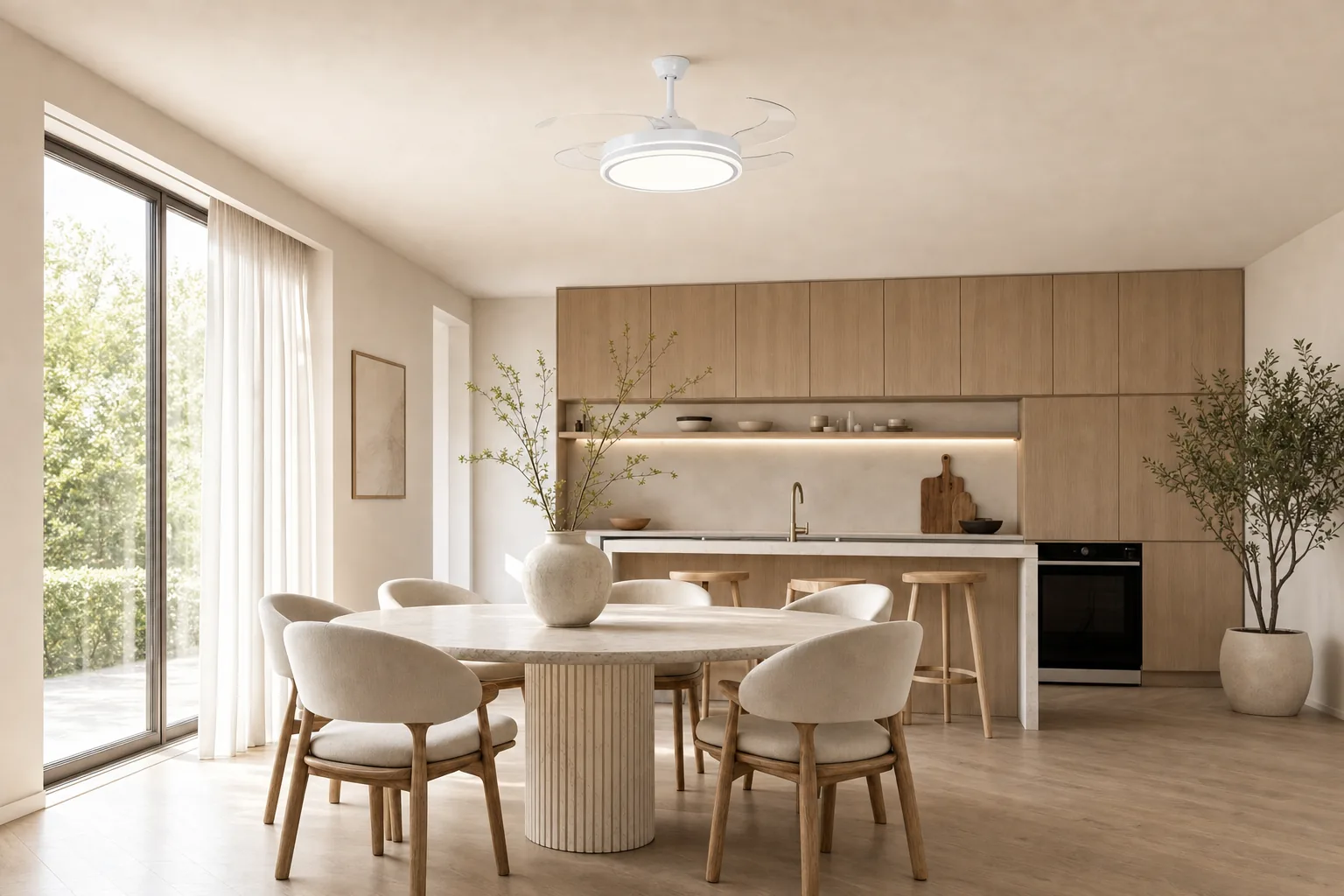
Ceiling fan 107 cm or 132 cm: which to choose by room, and why bigger is not always better
Read the article →
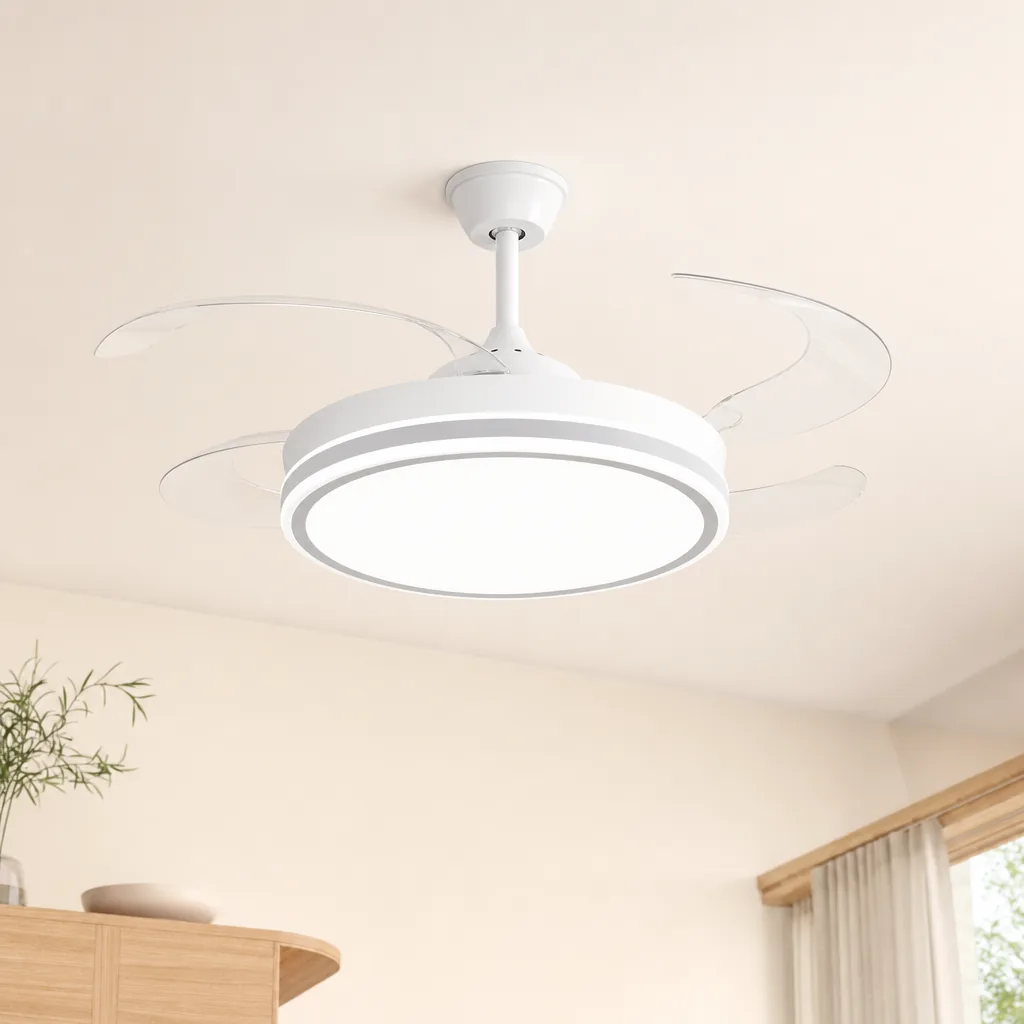
Ceiling fan and Black Friday: should you wait until late November to buy?
Read the article →
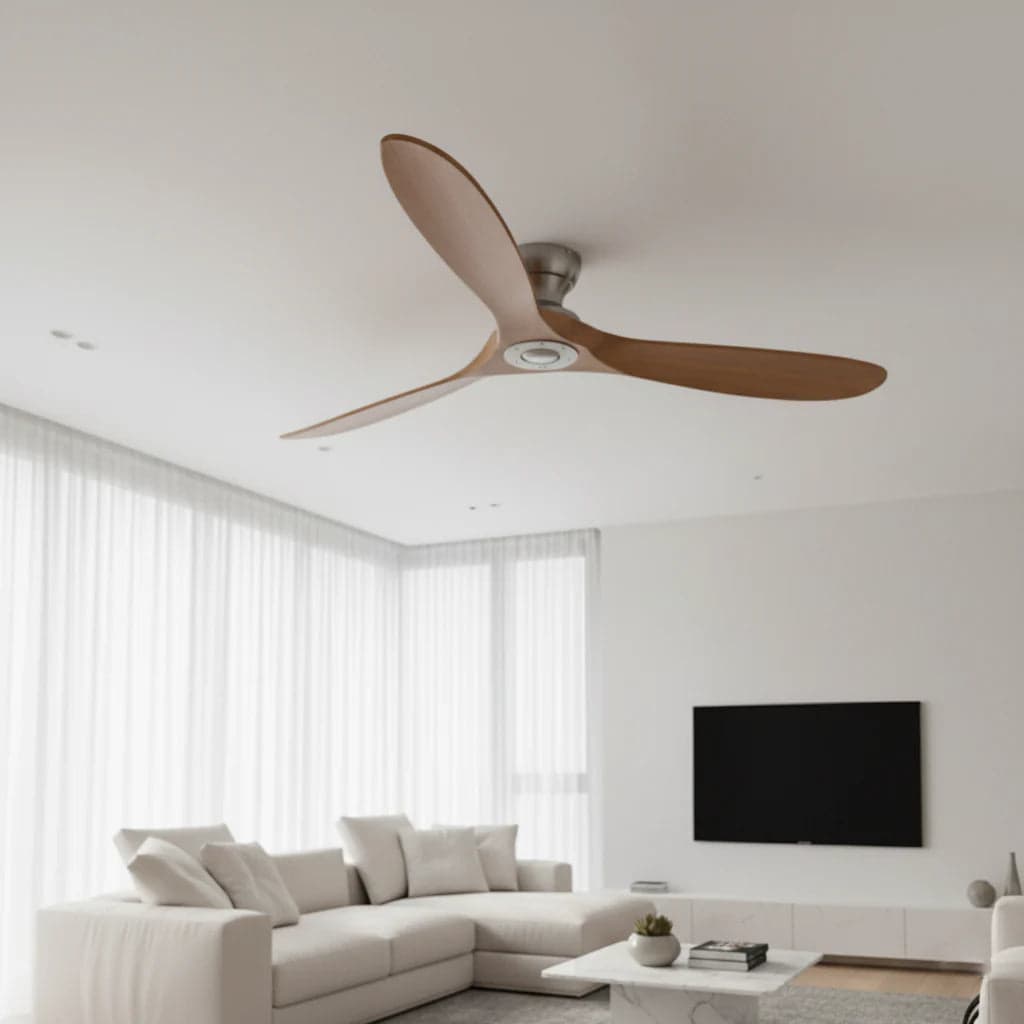
Reading ceiling fan reviews before buying: what counts, what is fake, what to look for
Read the article →