
Comparisons & guides
Ceiling fan or floor air circulator: the comparison for a living space
Published on ·4 min read

The air circulator, that compact circular floor fan that blows hard and far, has a deserved reputation: for moving air between two rooms or cooling a workshop, it is formidable. Many wonder whether it does not advantageously replace a ceiling fan.
The answer depends on the use. This comparison takes a living space, living room or bedroom, and looks at what each really does there: reach, evenness, noise, space, winter, price. With, at the end, the case where the circulator wins.
Reach versus evenness: a jet or a room
An air circulator concentrates its flow in a short tube and projects it in a straight line: at 3 to 5 m you still feel the breeze. That is its strength, and its limit: the jet is narrow. Placed in a corner and aimed at the sofa, it cools the sofa; the armchair beside it stays in still air. To cover a room you must aim it at the ceiling and let the air bounce, which loses most of its point.
A ceiling fan works the other way: a wide column of air, pushed from the centre to the floor, spreading and rising along the walls. The whole room gets 0.3 to 0.8 m/s of air movement, even, with no hot spot or jet. For a room where you sit or lie down, that evenness is what counts.
Noise: 50 dB versus 30 dB
To project air far, a circulator spins a short propeller fast: 45 to 60 dB depending on speed, conversation level. The maker knows it and offers a quiet speed, at which the jet only carries a metre. The circulator is effective or quiet, not both.
The ceiling fan moves a lot of air slowly, with large blades and a motor at a few hundred rpm: 30 to 34 dB for the Boréal 107. A whisper, compatible with a whole night. In a bedroom the question does not even arise; in a living room, a film under a 50 dB circulator is watched with the volume remote in hand.
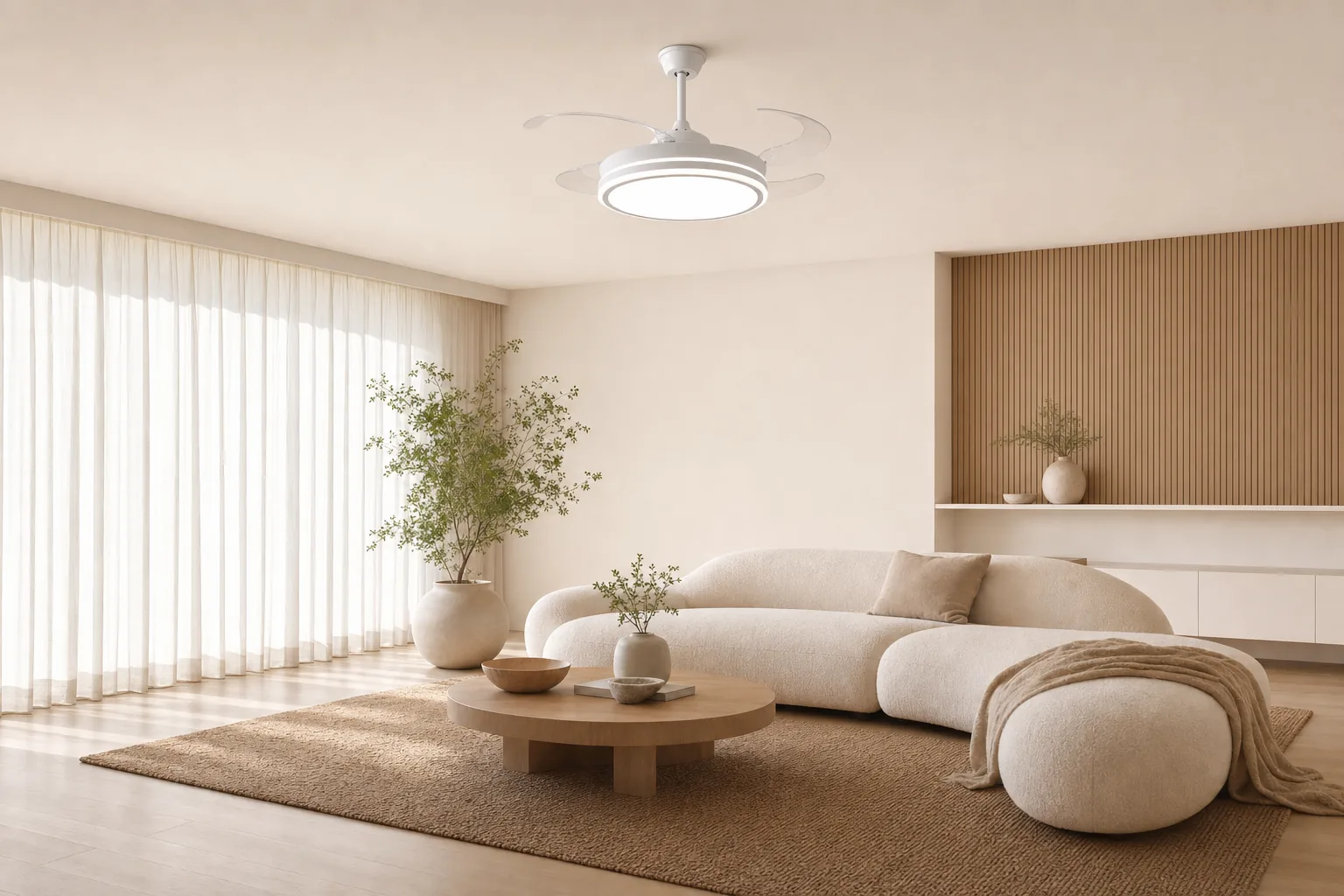
The Boréal 107
Retractable blades · Ø 107 cm · LED ceiling light & silent fan
- ✓Retractable blades: invisible when off, nobody guesses it's a fan
- ✓Sleep with windows closed, 30 dB, quieter than a whisper
- ✓Integrated LED 2700K → 6000K, dimmable: replaces your ceiling light
Space, winter and light
The circulator sits on the floor or a piece of furniture, with its cable to the socket. It takes a corner, moves around, is stored in September. The ceiling fan takes zero m², replaces the ceiling light, and stays in place all year. It provides light, dimmable in three colour temperatures, which no circulator will do.
In winter a circulator can push a stove's warm air to another room, which is a real use. A reversible ceiling fan, for its part, evens out the room it is fitted in: 1 to 2 °C less on the thermostat, no draught, at 5 W. Two different winter uses, but only the second happens silently, while you stay in the room.
- ·Space: circulator on the floor with cable, ceiling fan zero m²
- ·Light: circulator no, ceiling fan dimmable LED
- ·Winter: circulator to transfer heat, ceiling fan to even it out silently
- ·Night: circulator unusable at full effectiveness, ceiling fan designed for it
Price, and the case where the circulator wins
A good air circulator costs 80 to 150 euros. A compact ceiling fan with LED and remote 150 to 200 euros, 157 euros for the Boréal 107. At purchase the circulator is a little cheaper; in use it draws 40 to 60 W against 5 to 10 W, and its high-speed turbine lives less long than a copper motor turning slowly.
The circulator wins in three precise cases: pushing cool air from a ventilated room to a closed one, drying a room after works or a leak, ventilating a workshop or garage with no ceiling light point. For a living space where you sit, sleep and look at the ceiling every day, the ceiling fan wins on every criterion except purchase price, and catches up in two summers.
Air circulator to push air from one room to another, dry, ventilate a workshop. Ceiling fan to live and sleep in a room: even, at 30 dB, zero floor space, light and winter mode included. The Boréal 107 fits in thirty minutes in place of the ceiling light and settles the living space for fifteen years.
Frequently asked questions
Is an air circulator as effective as a ceiling fan?+
At projecting a jet far, yes, more so. At cooling a whole room evenly, no: the circulator concentrates its flow over 3 to 5 m in a straight line, the ceiling fan spreads gentle air movement over the whole area from the centre, at 30 dB instead of 50.
Can you sleep with an air circulator?+
With difficulty: at its effective speed a circulator runs at 45 to 60 dB, and its jet aimed at the bed cools locally. At its quiet speed it only carries a metre. A ceiling fan at speed 1, at 30 dB, is designed for the night.
When to choose an air circulator over a ceiling fan?+
To transfer air from one room to another, dry a room, or ventilate a workshop and garage with no ceiling light point. For a living space or bedroom, the ceiling fan is better suited on every criterion except purchase price.
The SEY Maison Circle
Every month, an exceptional piece. Never reissued.
The Drops principle: one high-end furniture piece per month, in a numbered edition. Once it's gone, it never comes back. Circle members are notified 48 h early, access each drop 24 h before everyone else, and receive our guides before publication.
Discover the Drops →Also worth reading
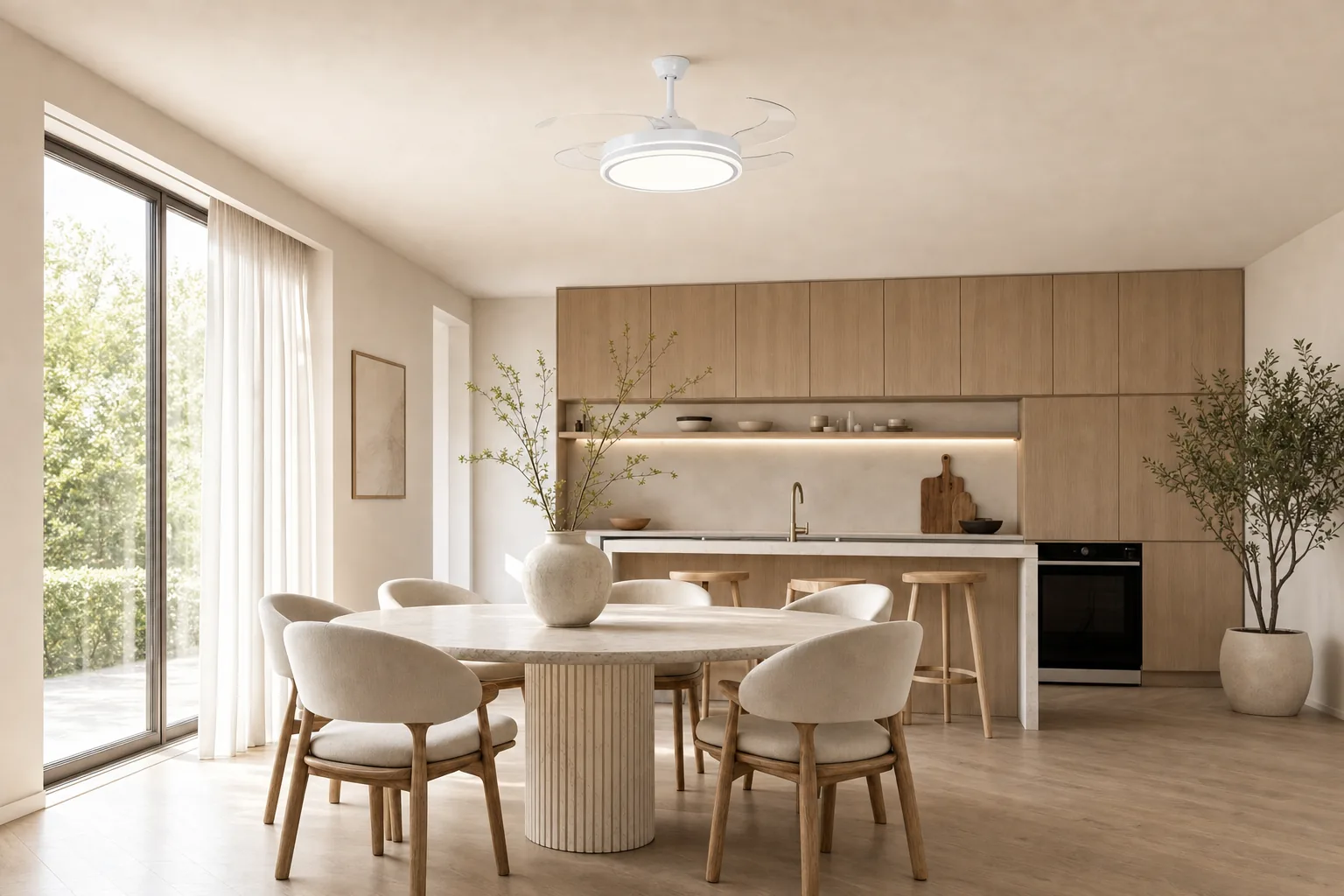
Ceiling fan 107 cm or 132 cm: which to choose by room, and why bigger is not always better
Read the article →
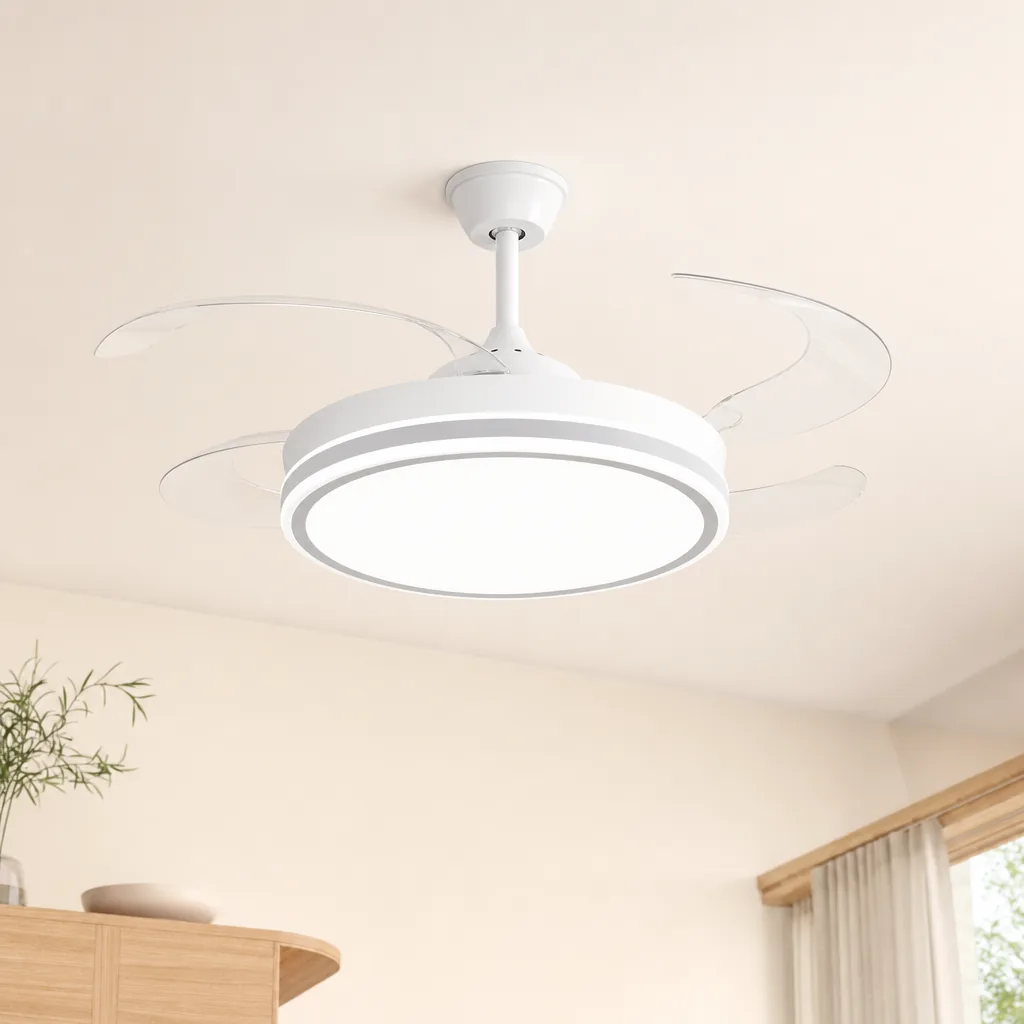
Ceiling fan and Black Friday: should you wait until late November to buy?
Read the article →
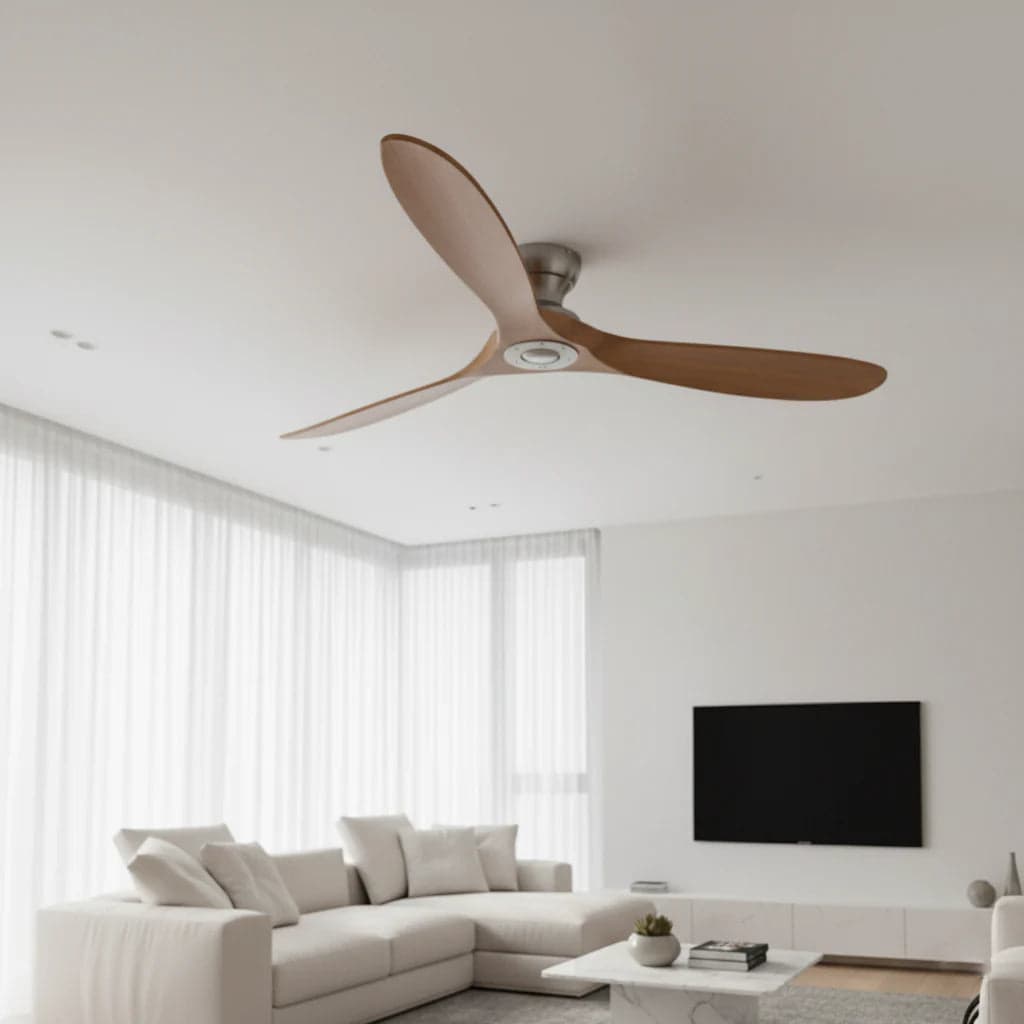
Reading ceiling fan reviews before buying: what counts, what is fake, what to look for
Read the article →