Silence & sleep
Silence as the ultimate luxury: why the world's finest spaces have gone quiet
Published on ·3 min read
There is something profoundly paradoxical about contemporary luxury. While brands compete on bold visuals and rare materials, the world's most desirable spaces, palace suites, mountain spas, the architect-designed homes that appear in design journals, all share a quality that cannot be photographed or worn: silence. This is not an oversight. It is an intention.
Silence has become the new scarcity. In a world of saturated attention and permanent notifications, finding a genuinely quiet space is as exceptional, and as meaningful, as finding a genuinely beautiful one.
Silence as a hotel experience: the palace benchmark
The most demanding hotel directors place one invisible criterion above all others: the noise level of the rooms. Historic palaces, Le Ritz in Paris, Badrutt's Palace in St. Moritz, Amangiri in the Utah desert, share one acoustic characteristic: nothing from outside the room can be heard. Nothing.
This is not accidental. It results from costly acoustic engineering: double-sealed doors, air-gap walls, reinforced glazing, floating floors, decoupled service ducts. The acoustic budget for a palace room can represent 8 to 12% of total construction cost, a positioning investment, not an accessory.
- ·Six Senses Douro Valley: rooms measured at 28 dB(A) background noise
- ·Amangiri (Utah): suite acoustic insulation ranked among the world's best
- ·Lefay Resort Lago di Garda: silence as an official component of the wellness programme
Spas and retreats: silence as treatment
The wellness industry has integrated silence as a treatment in its own right. In treatment rooms, the target is below 30 dB. Below this threshold, the parasympathetic nervous system takes over: heart rate drops, breathing slows, cortisol retreats.
'Silence retreats', stays dedicated to the experience of total silence for several days, are among the most expensive and fastest-selling wellness offerings in the world. Their central commercial argument is not gastronomy, spa facilities or views. It is silence.
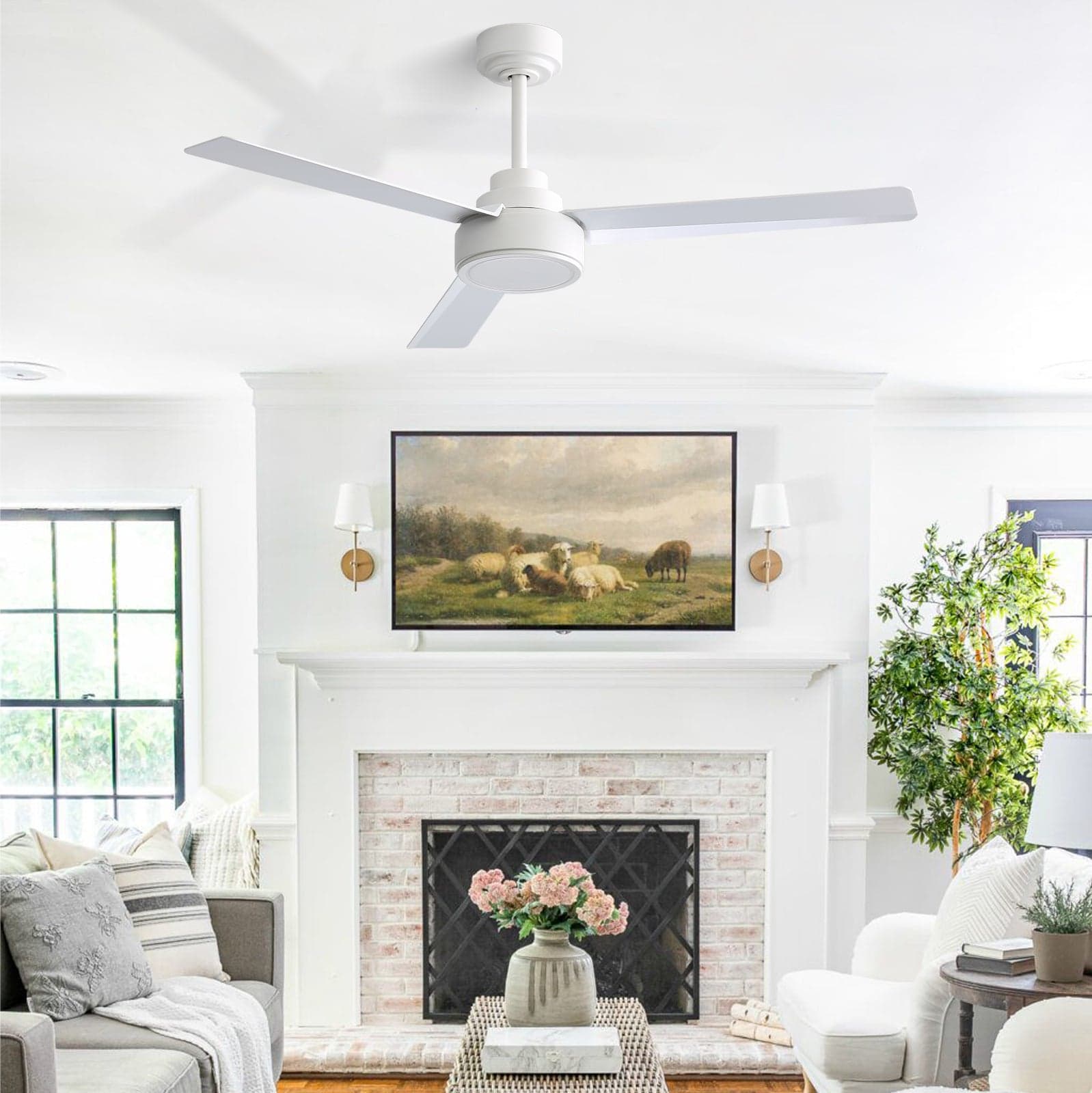
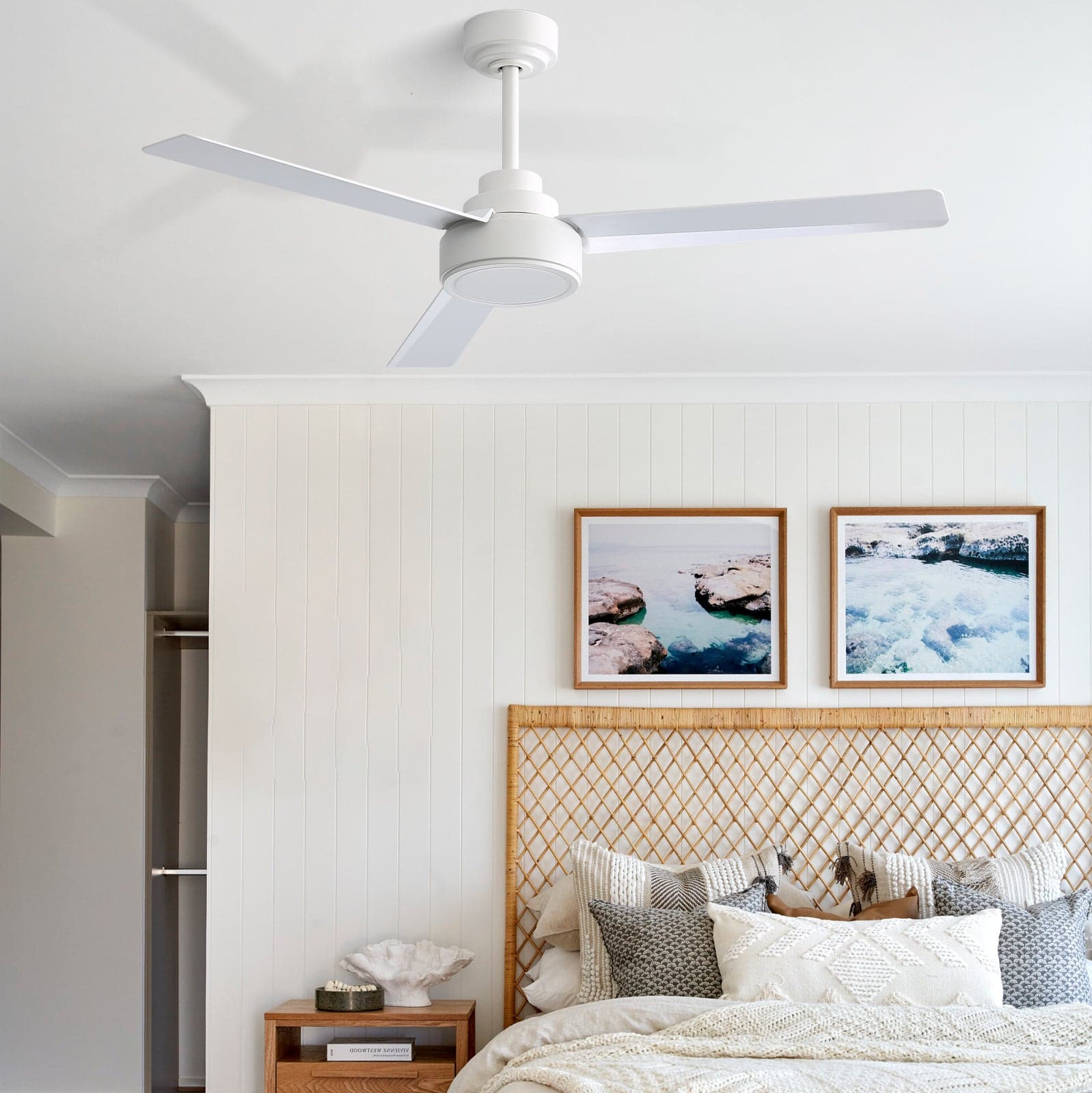
The Plume 132
Sculptural minimalism · Ø 132 cm · Pure white
- ✓Minimal sculptural silhouette, disappears into a white ceiling
- ✓Silent DC motor, 6 reversible speeds
- ✓No light kit: for already-lit rooms, zero glare
€389€349
Residential architecture: silence as a design principle
Architects working for high-end clients increasingly receive the same brief: 'I want the house to be quiet.' Not well-insulated. Quiet. The distinction is real: a well-insulated house cuts street noise; a quiet house integrates acoustics as a dimension of comfort alongside light, temperature and air quality.
Technical systems, ventilation, heating, plumbing, must be specified not only for thermal performance but for their acoustic signature. Standard HVAC fans run at 45-50 dB; equipment specified in premium programmes targets 25-30 dB.
What research confirms about silence and wellbeing
Environmental psychology research confirms that regular exposure to silence, even brief 2-minute sessions, reduces blood pressure, improves concentration and lowers biological stress markers. A study published in Heart (2006) showed that two minutes of complete silence produced deeper cardiovascular relaxation than soft music.
In this context, quiet domestic appliances are not premium accessories, they are health tools. A ceiling fan running at 30 dB does not just stay discreet: it actively keeps the space within the range where the nervous system can unwind.
Silence is not an absence. It is a presence, the presence of a mastered space, air that circulates without noise, a night that truly restores. Great hotel and architecture firms understood this before anyone else. Our ceiling fans at 30 dB were designed with exactly this in mind: to be present without imposing.
Frequently asked questions
Why is silence considered a luxury?+
Silence has become scarce in urban and domestic contexts. Quality spaces invest heavily in acoustic engineering because the absence of noise generates a measurable physical and psychological experience: lower cortisol, relaxed nervous system, a genuine sense of decompression.
Can a space be too silent?+
Absolute silence (anechoic chamber, below 0 dB(A)) is psychologically uncomfortable for most people. The optimal silence for wellbeing sits around 25-35 dB, quiet enough to relax the nervous system, but with a natural background sound (gentle ventilation, nature) that prevents hyperacusis.
How do you measure the noise level in your own home?+
Mobile apps such as NIOSH SLM or Decibel X offer reliable dB(A) readings accurate to ±2-3 dB. For domestic use they are sufficient to identify noise sources and measure the impact of any changes you make.
The SEY Maison Circle
Every month, an exceptional piece. Never reissued.
The Drops principle: one high-end furniture piece per month, in a numbered edition. Once it's gone, it never comes back. Circle members are notified 48 h early, access each drop 24 h before everyone else, and receive our guides before publication.
Discover the Drops →