Energy & ecology
Passive cooling: vegetation, albedo, shading and natural ventilation
Published on ·3 min read
Passive cooling is the art of keeping an interior cool without consuming energy. It relies on principles that Mediterranean, Middle Eastern and Asian civilisations have mastered for millennia: exploiting the thermal properties of materials, channelling natural airflows, reducing solar gains before they heat the walls. Modern bioclimatic architects achieve gains of 8 to 12°C without a single mechanical installation.
This guide covers the four levers of passive cooling, from the simplest to the most structural. Each acts on a different mechanism; their combination is far more powerful than the sum of its parts.
Albedo: reflecting heat before it enters
Albedo measures a surface's ability to reflect solar radiation. A dark roof absorbs up to 95% of incident solar energy and can reach 80°C in summer; a light or green roof reflects 60 to 80% and stays at 30-40°C. Repainting an exposed façade in a light tone is one of the cheapest and most effective gestures in this guide.
- ·Dark roof: albedo ≈ 5%, surface temperature up to 80°C
- ·Light roof (reflective paint): albedo ≈ 70%, surface at 30-35°C
- ·Green roof: albedo ≈ 30%, additional evapotranspiration cooling effect
Vegetation: the natural evaporative cooler
Plants cool through two mechanisms: shading (intercepting solar radiation before it reaches walls) and evapotranspiration (releasing water vapour that consumes heat as it evaporates, exactly like sweat on skin). A well-developed climbing plant on a south or west façade can lower the wall surface temperature by 10 to 15°C.
Deciduous climbers are ideal: they shade and cool in summer, lose their leaves in winter and let the low-angle sun warm the building naturally. Wisteria, Virginia creeper and hops grow fast and cover large surfaces.
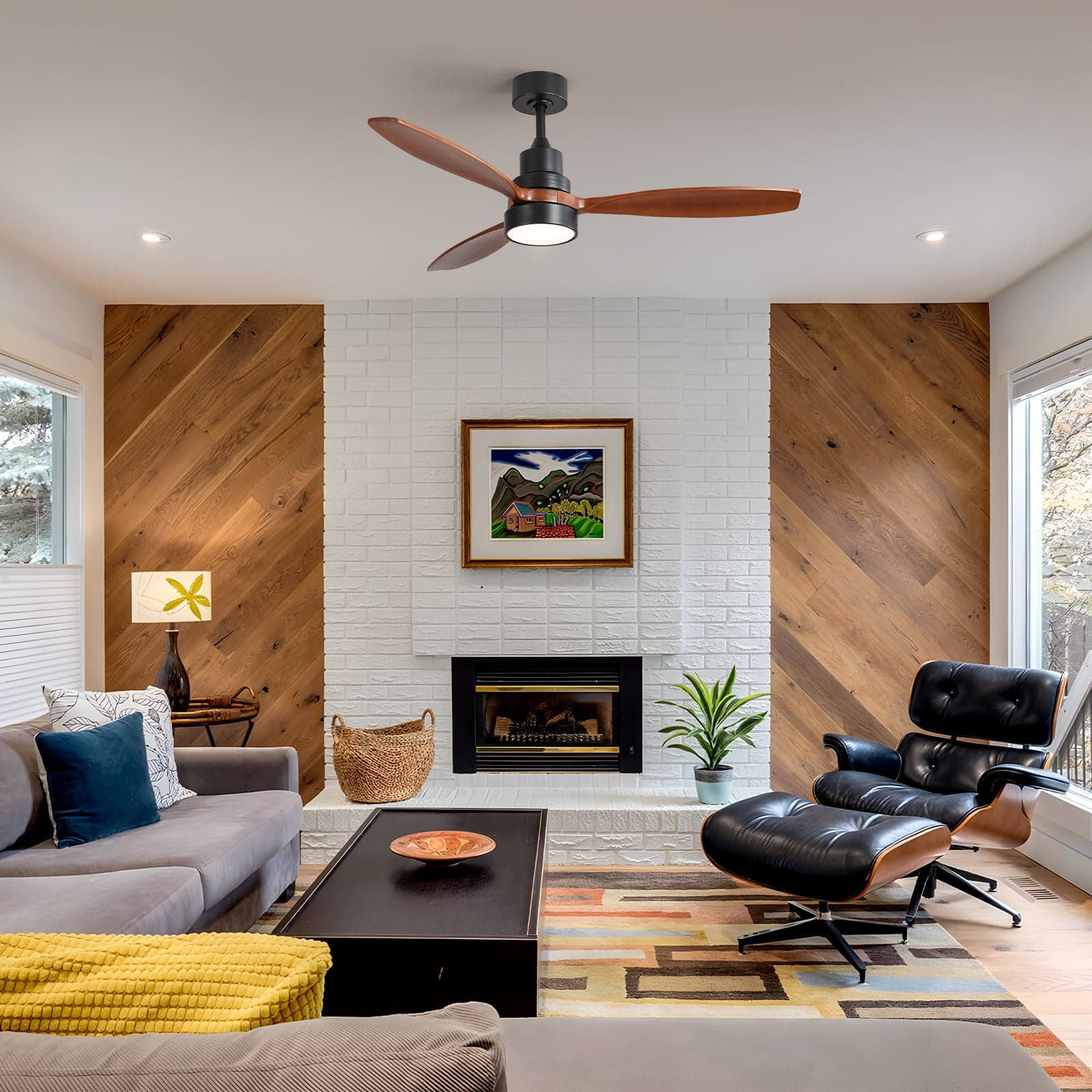
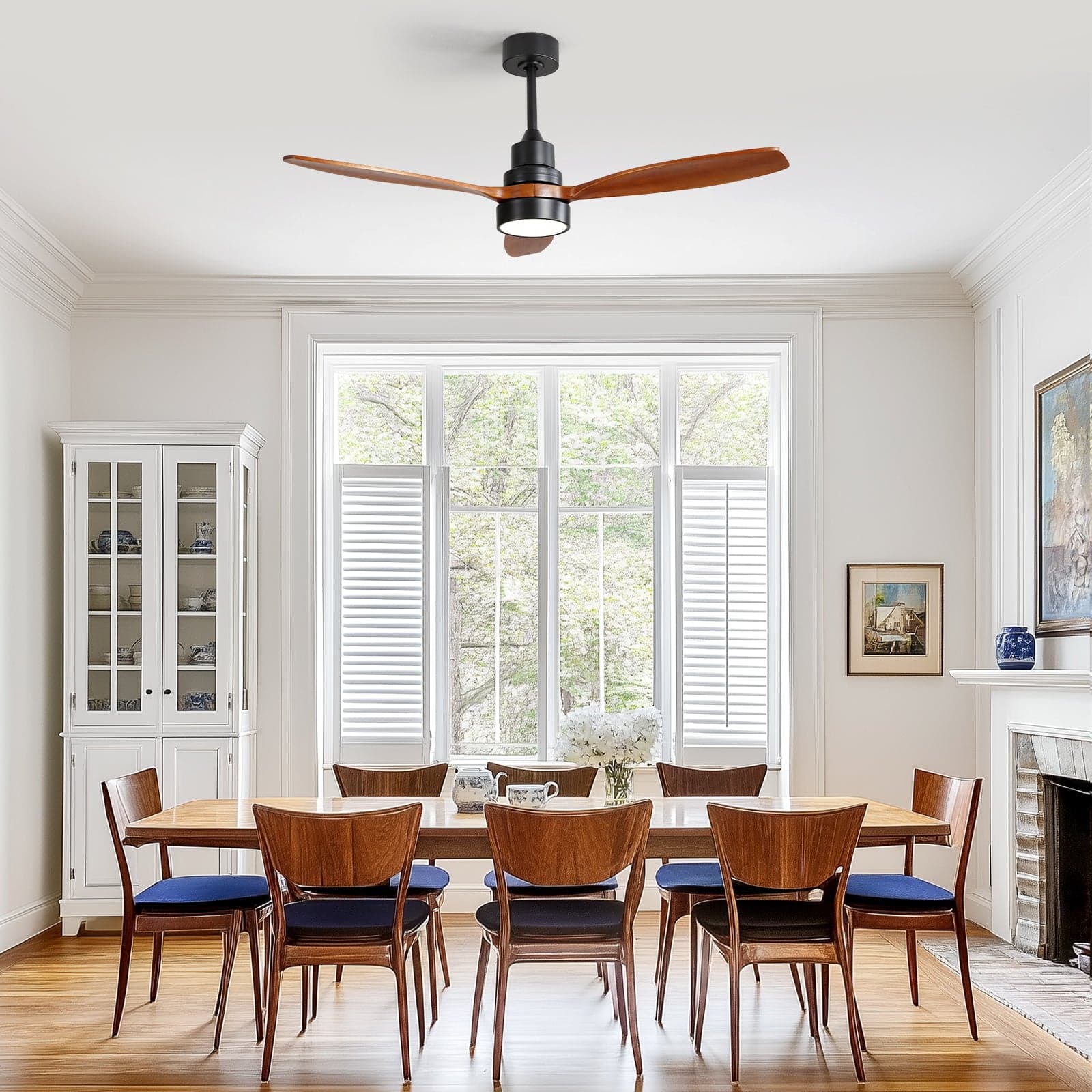
The Héritage 132
Solid walnut · Ø 132 cm · LED & reversible DC motor
- ✓Three carved solid-walnut blades: the warmth of wood on your ceiling
- ✓Low-consumption DC motor, 70% more efficient than AC
- ✓Reversible: cools in summer, spreads heating in winter
€399€419
Shading: block the sun before the glazing
A sun-exposed window lets in up to 500 W per square metre. An exterior blind positioned 30 cm in front of the glass blocks 70 to 80% of that flux before it enters, whereas an interior curtain stops only 15 to 25%. The rule is simple: the most effective shading is always on the outside.
Natural ventilation: channelling airflows
Warm air rises, the basis of stack-effect ventilation. Low openings (windows, grilles) and high openings (skylights, high vents) create a natural upward flow: cool air enters at the bottom, warms up and exits at the top. No motor required. Combined with cross-ventilation (two opposite façades open), this can keep an interior 5 to 8°C below outdoor temperature during the day.
- ·Stack effect: open low and high, passive renewal, no motor
- ·Cross-ventilation: two opposite facades open = full room sweep
- ·Interior courtyard: gravitational cool-air reservoir, the most effective architectural solution
Passive cooling is not an architectural constraint reserved for new builds. It is a set of accessible, step-by-step measures whose effects accumulate. When these principles are in place, the small amount of mechanics left to add, like a silent ceiling fan, operates with remarkable efficiency.
Frequently asked questions
What is passive cooling?+
All techniques that keep an interior cool without mechanical energy: surface albedo, vegetation, external shading, natural stack-effect and cross-ventilation. Well combined, these levers can maintain 5 to 12°C below outdoor temperature.
Which climbing plant is best for cooling a façade?+
Deciduous species are ideal: they shade in summer and let winter sun through (wisteria, Virginia creeper, hops). A well-covered façade sees its surface temperature drop by 10 to 15°C.
Is exterior shading really more effective than an interior curtain?+
Yes, significantly. An exterior blind blocks 70 to 80% of solar flux before it crosses the glazing. An interior curtain, even thick, stops only 15 to 25%, because the heat has already entered through the glass.
The SEY Maison Circle
Every month, an exceptional piece. Never reissued.
The Drops principle: one high-end furniture piece per month, in a numbered edition. Once it's gone, it never comes back. Circle members are notified 48 h early, access each drop 24 h before everyone else, and receive our guides before publication.
Discover the Drops →