
Cooling without AC
Cooling your home without air conditioning: the architects' complete method
Published on ·3 min read
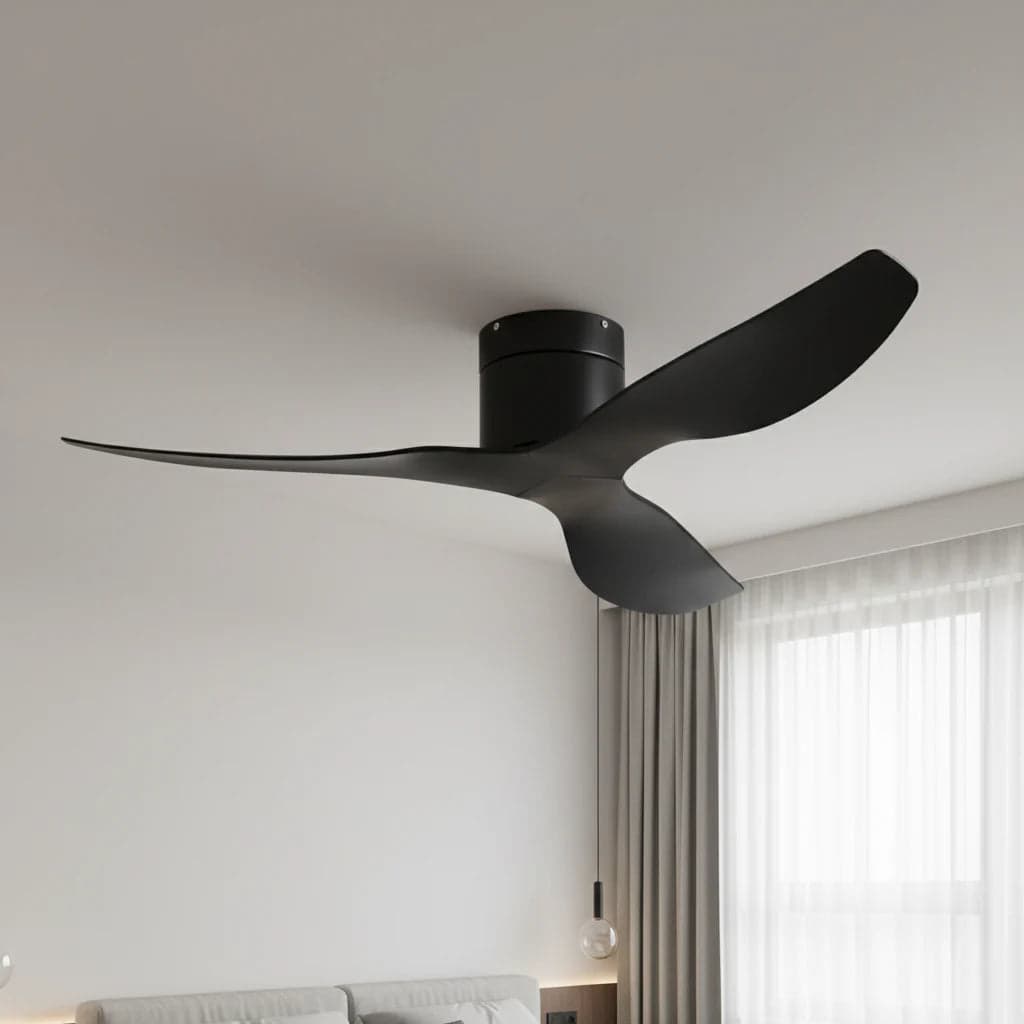
Every summer, the same reflex: the heatwave settles in, and we start shopping for an AC unit. It is almost always a mistake, not for ideological reasons, but for practical ones. Air conditioning is the most expensive, loudest and ugliest answer to a problem Mediterranean architects have solved for centuries with method.
This guide gathers the techniques that actually work, ranked by impact. None requires major work. Together, they keep a home around 24°C through heatwaves, for a few euros of electricity per summer.
The golden rule: stop heat from getting in
You don't cool a house that is heating up: you stop it from heating. 60 to 70% of summer heat enters through sun-exposed windows. The most profitable gesture of the summer costs nothing: close the shutters on the sunny side before 9 am, and only reopen after dark.
Glazing in full sun lets through up to 500 W per square metre, the equivalent of a small radiator running in your living room. Shutters closed, that figure collapses.
Cross-ventilation: the free night-time air conditioner
Between 11 pm and 7 am, outdoor air is often 8 to 12°C cooler than your interior. That is a free reservoir of coolness, provided you create a through-draught: two opposite openings, ideally north and south.
In the morning, everything closes: windows, shutters, curtains. The coolness captured overnight stays trapped in walls and floors, thermal inertia. A well-managed home drops 3 to 5°C every night.
- ·11 pm: open two opposite windows, interior doors open
- ·7-9 am: close everything, shutters included, sunny side first
- ·Daytime: limit oven, hobs and halogens, every appliance is a radiator
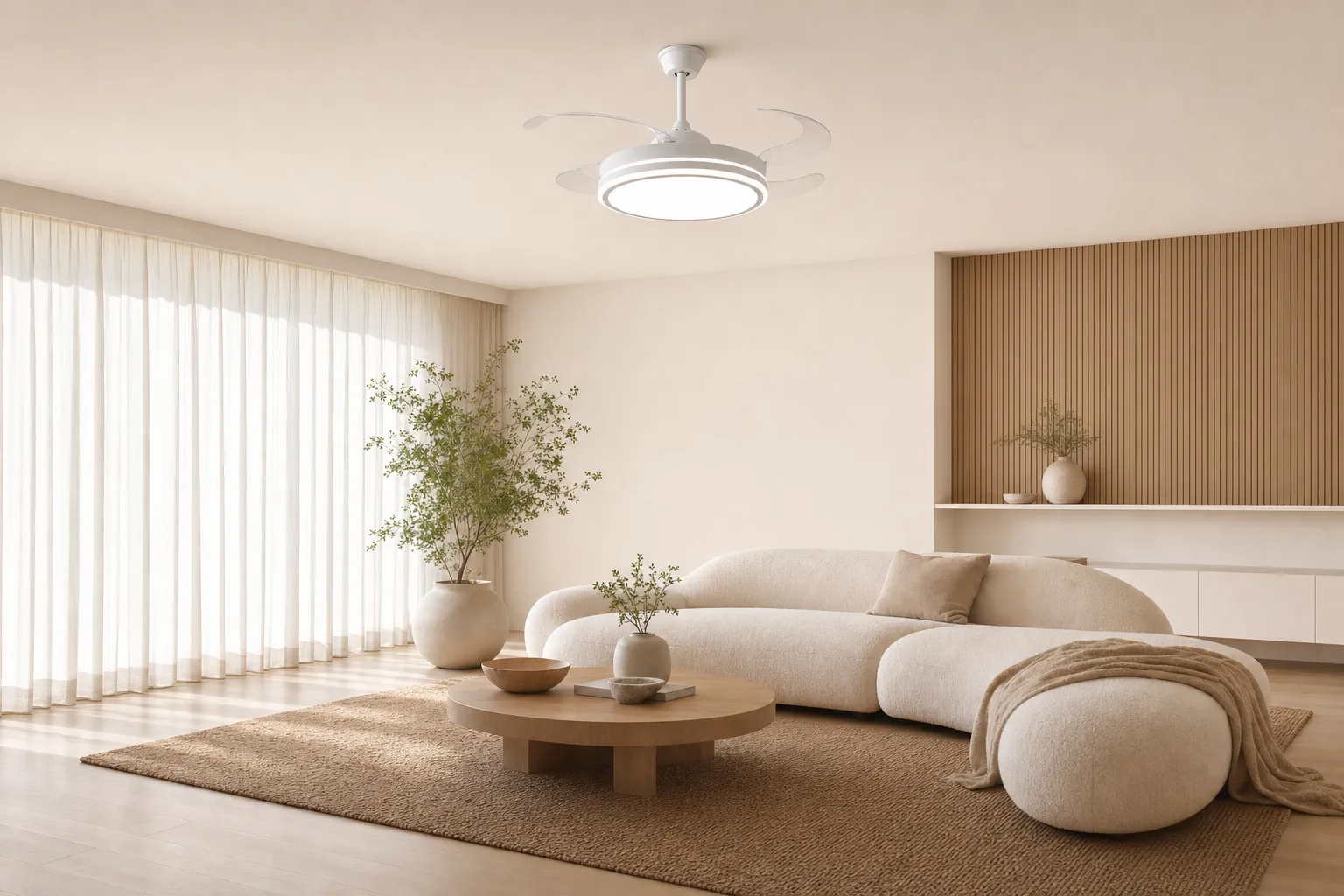
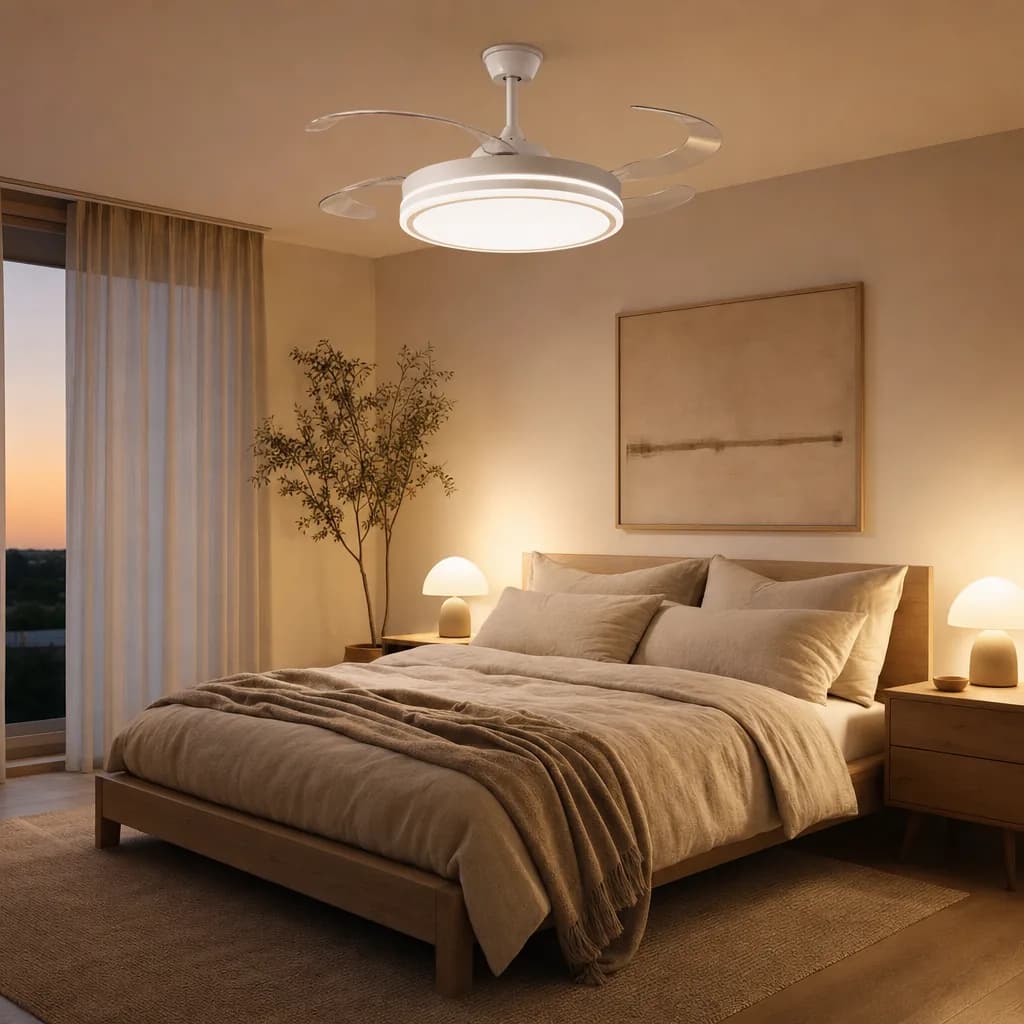
The Boréal 107
Retractable blades · Ø 107 cm · LED ceiling light & silent fan
- ✓Retractable blades: invisible when off, nobody guesses it's a fan
- ✓Sleep with windows closed, 30 dB, quieter than a whisper
- ✓Integrated LED 2700K → 6000K, dimmable: replaces your ceiling light
Air circulation: 3 to 4°C of perceived coolness
Here is the least known secret: moving air feels 3 to 4°C cooler than still air at the same temperature, the wind-chill effect. The right device doesn't lower the room's temperature; it lowers the temperature you feel.
That is exactly what a ceiling fan does: wide, slow, silent circulation covering the whole room. Where AC draws 2,500 W, a DC ceiling fan uses 5 to 30, about €2 of electricity for an entire summer.
At night: finally sleep with the windows closed
The real luxury of summer is not being cold, it is sleeping. Open windows bring coolness but inherit street noise. Closed windows keep silence but the bedroom climbs to 27°C. Air circulation solves the dilemma: windows closed, a ceiling fan on night speed maintains a felt 23-24°C at 30 decibels, less than a whisper.
Cooling without AC is not a compromise, it is a method. Block heat by day, capture coolness by night, keep air moving: three habits, a few euros per summer, and a home that stays beautiful. That philosophy is precisely what our ceiling fans were born from.
Frequently asked questions
Does a ceiling fan actually cool the room?+
It doesn't lower the air temperature but the perceived temperature, by 3 to 4°C, through the wind-chill effect. Combined with shutter discipline and night ventilation, comfort is comparable to AC in most situations.
How much cheaper is it than air conditioning?+
A DC ceiling fan draws 5 to 30 W versus 2,500 W for AC. Over a summer, that is about €2 of electricity versus €150-200, nearly 99% savings.
Can you sleep under a ceiling fan?+
Yes, it is its best use case. On night speed, a silent model drops to 30 dB, less than a whisper, letting you sleep with windows closed during heatwaves.
The SEY Maison Circle
Every month, an exceptional piece. Never reissued.
The Drops principle: one high-end furniture piece per month, in a numbered edition. Once it's gone, it never comes back. Circle members are notified 48 h early, access each drop 24 h before everyone else, and receive our guides before publication.
Discover the Drops →Also worth reading
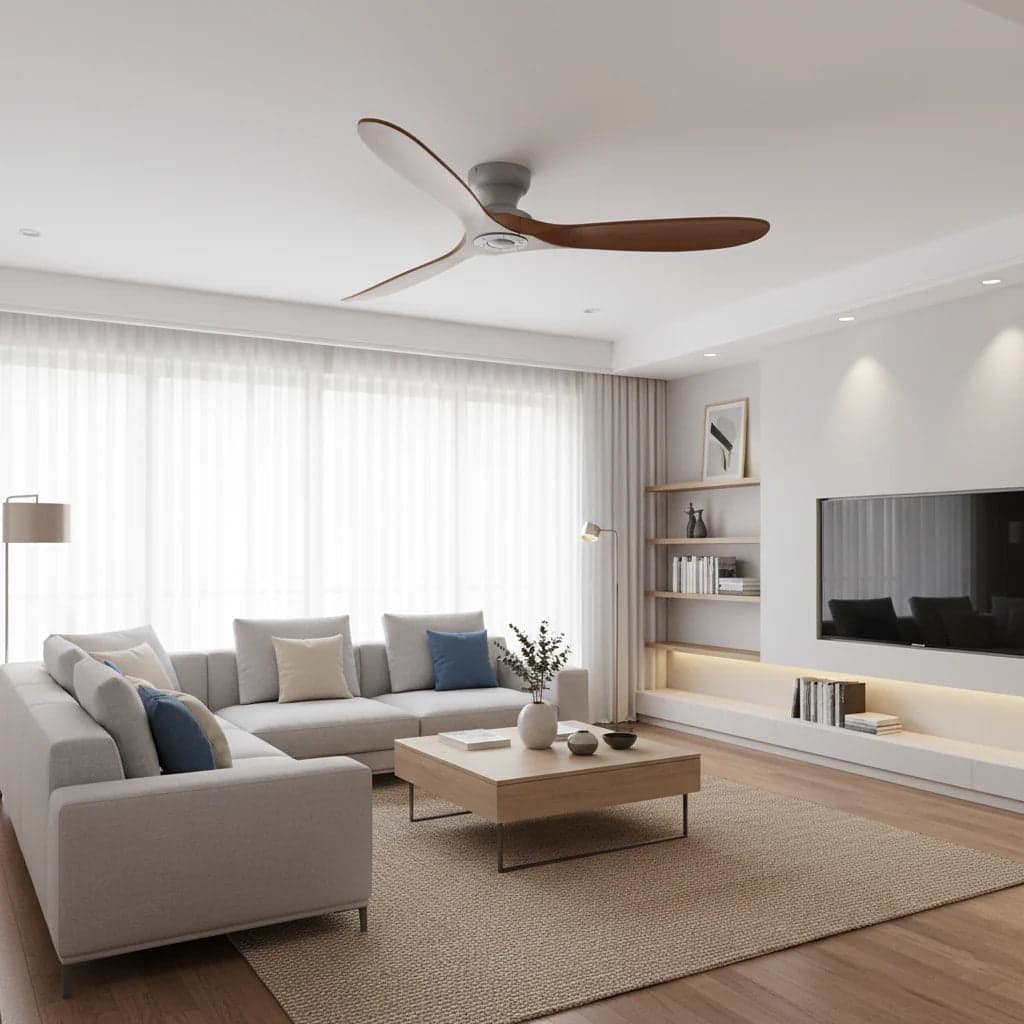
Does sleeping under a fan give you a stiff neck? What physiology says, and what really matters
Read the article →
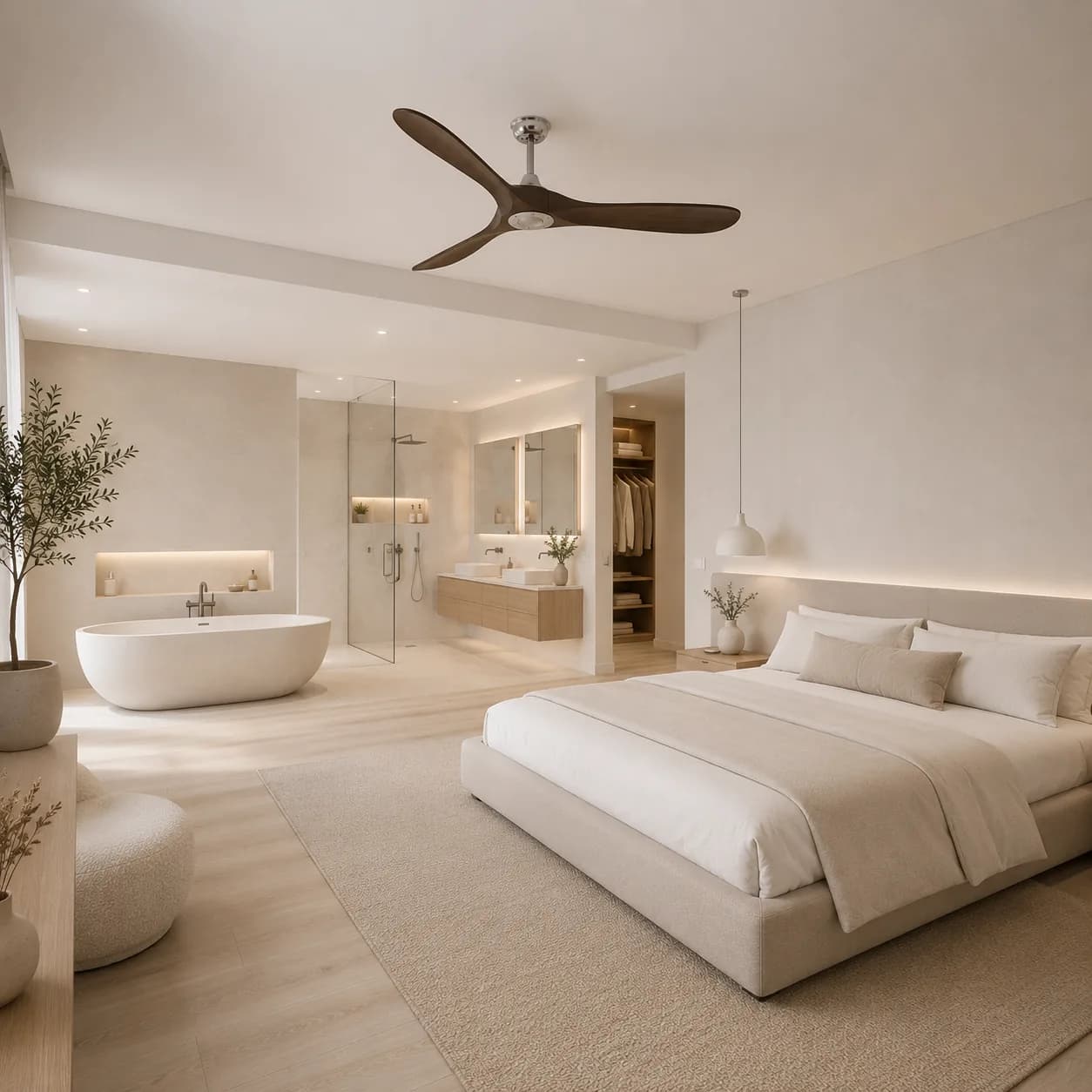
Buying a ceiling fan in autumn: four reasons not to wait until June
Read the article →
The upstairs is unbearable in summer while the ground floor stays cool: why, and what to do
Read the article →