Comparisons & guides
How much to spend on a ceiling light? Count over ten years, not on the label
Published on ·3 min read
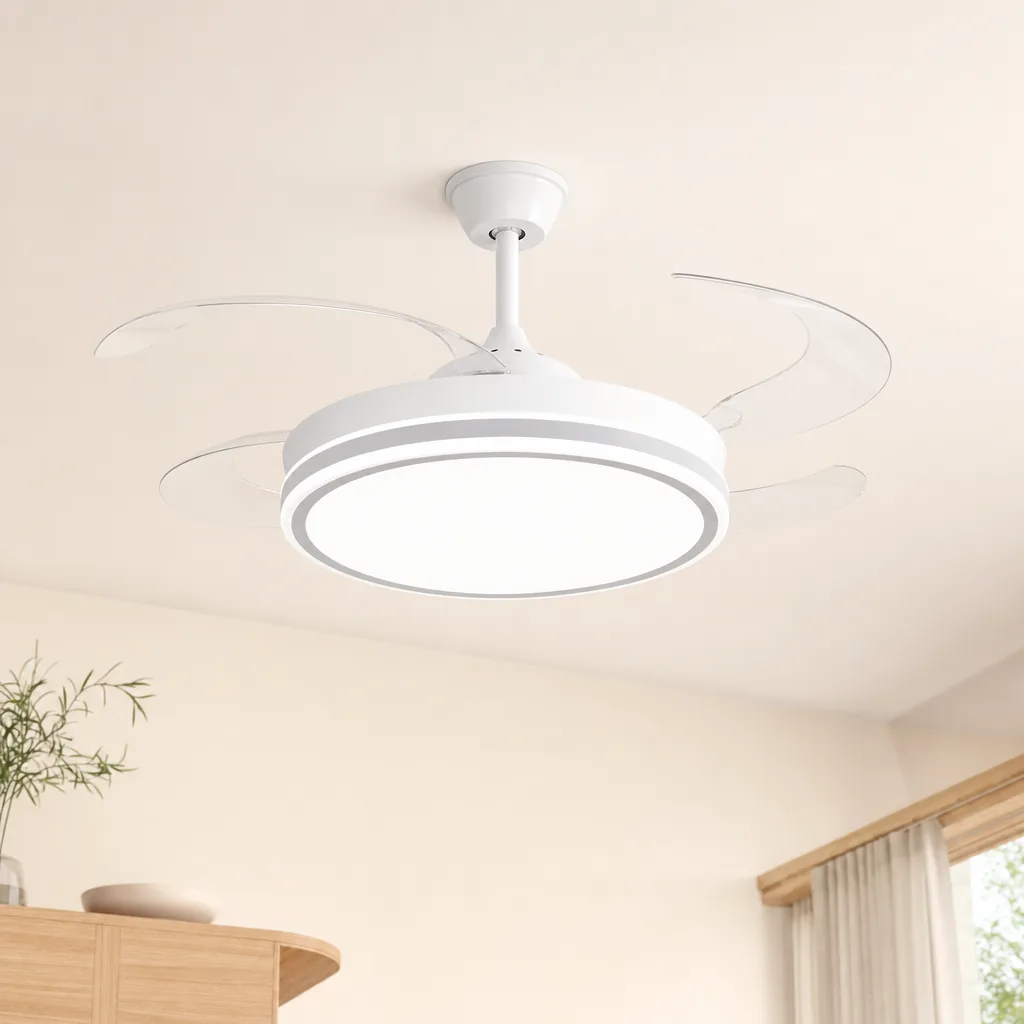
Ceiling light prices run from twenty euros to several hundred, for objects that look alike once they are up. The difference is not where you look for it, and it does not show on the label.
Here is how to reason, starting from the only certainty: how long you will live with it.
Ten years, the right unit of measure
People change sofa every eight to twelve years, mattress every ten, and ceiling light almost never. It stays until it fails or the room is redone. It is one of the longest-lived objects in a home, and yet the one chosen fastest.
Spread over that span, a hundred-euro difference at purchase is less than a euro a month. The real question is therefore not the price, but what happens the day the light goes out.
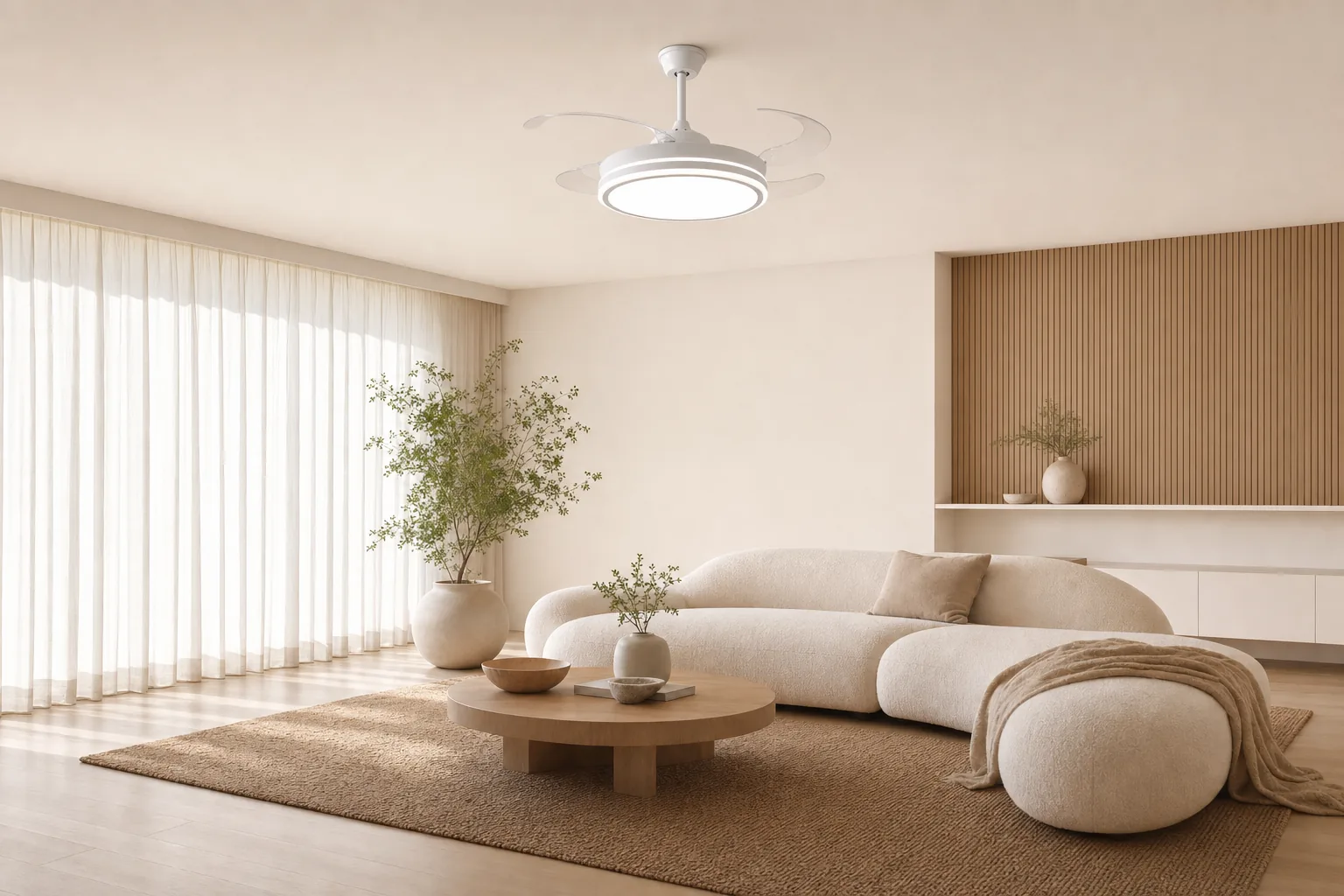
The Boréal 107
Retractable blades · Ø 107 cm · LED ceiling light & silent fan
- ✓Retractable blades: invisible when off, nobody guesses it's a fan
- ✓Sleep with windows closed, 30 dB, quieter than a whisper
- ✓Integrated LED 2700K → 6000K, dimmable: replaces your ceiling light
The integrated LED trap
Most modern ceiling lights no longer take a bulb: the LED is soldered into the luminaire. The argument holds, it allows thinner shapes and better heat dissipation, and the stated life is long, often 50,000 hours, around thirty years at five hours a day.
The problem is almost never the LED itself, it is the driver feeding it. That is a cheap electronic component, and it is the one that fails first, sometimes after three or four years. On a non-dismountable luminaire, the failure of a two-euro part condemns the whole object.
- ·Replaceable source: the luminaire outlives its light
- ·Integrated LED on a dismountable model: repairable by a professional
- ·Sealed integrated LED: the luminaire lasts exactly as long as its driver
- ·Manufacturer warranty: the only commitment you can verify over time
Where to put the money, at a given budget
Three features matter more than style, and cost money because they cost the manufacturer: a CRI above 90, real dimming, and a warranty that commits.
The rest is drawing, and drawing dates. A discreet luminaire with excellent light ages better than a striking object with an LED fixed at 3000K and an unstated CRI. To compare two models, the spec sheet is more useful than the photograph.
Reason over ten years, not on the label. Look at what the light is worth, CRI and dimming, and at what happens when it stops, repairable or disposable. A hundred-and-fifty-euro ceiling light that renders colours truly and adjusts beats two at seventy that end up in the bin, and costs less over the period you live with it.
Frequently asked questions
How much does a good ceiling light cost?+
Price matters less than three features: a CRI above 90, real dimming, and a warranty. Those are what cost the manufacturer, and they are rarely found below a hundred euros.
Is an integrated LED a problem?+
Not in itself: it often lasts thirty years in normal use. The risk is the driver feeding it, which sometimes fails in three or four years. On a sealed luminaire, that failure condemns the whole object.
Should you pay more for a designer name?+
It is a legitimate aesthetic choice, but it changes nothing about the quality of the light. At equal budget, a high CRI and a dimmer bring more daily comfort than a signature.
The SEY Maison Circle
Every month, an exceptional piece. Never reissued.
The Drops principle: one high-end furniture piece per month, in a numbered edition. Once it's gone, it never comes back. Circle members are notified 48 h early, access each drop 24 h before everyone else, and receive our guides before publication.
Discover the Drops →