Comparisons & guides
Memory foam, latex, feathers or fibre: which pillow filling?
Published on ·5 min read
Four materials share the pillow aisle: memory foam, latex, feathers and down, and synthetic fibre. Each follows a different logic, and none wins on every criterion. A very firm pillow is not comfortable for everyone. A washable pillow does not necessarily hold its height.
This article compares the four fillings criterion by criterion: support, heat, care, allergies, budget, lifespan. At the end, a choice guide by sleeping position. The aim is that you know what to buy even if you buy it elsewhere.
Four fillings, four different logics
Memory foam is a slow rebound foam. It sinks under high pressure and stays tall under low pressure, which fills the hollow of the neck. Latex is also a block, but its rebound is immediate: it pushes back, like a spring. Feathers and down are a loose filling of animal origin, very soft and very enveloping. Synthetic fibre imitates that behaviour with polyester clusters, for less money.
The practical consequence is simple. The two blocks, foam and latex, keep a stable geometry all night. The two loose fillings, feathers and fibre, adapt to everything but hold nothing: they flatten within an hour and get reshaped. That is not an absolute flaw, it is a choice. Some sleepers want a constant height, others want to fold their pillow in three.
Support and heat, criterion by criterion
Support comes down to one question: is the height of the first evening still there in the morning? Latex and memory foam answer yes. Feathers and fibre answer no. For a side sleeper that difference matters most of all, because the shoulder creates several centimetres of gap between mattress and head, and that gap has to stay filled. On the back the same question weighs less, since the head almost rests on the mattress and only the curve of the neck needs support.
Heat is judged differently. Down is the warmest of the four, welcome in winter and heavy in summer. Memory foam holds a little body heat, because it hugs the head over a large surface. Latex and fibre stay more neutral. A cotton cover changes a lot on this point, whatever the core underneath. If you sleep warm, that cover is the cheapest lever you have, and it can be swapped with the seasons instead of replacing the pillow.
- ·Memory foam: firm, stable support, slow rebound, medium perceived warmth.
- ·Latex: firm, dynamic support, immediate rebound, low perceived warmth.
- ·Feathers and down: soft support that flattens, very enveloping, high perceived warmth.
- ·Synthetic fibre: soft support that flattens, folds at will, low to medium perceived warmth.
Care, allergies, budget and lifespan
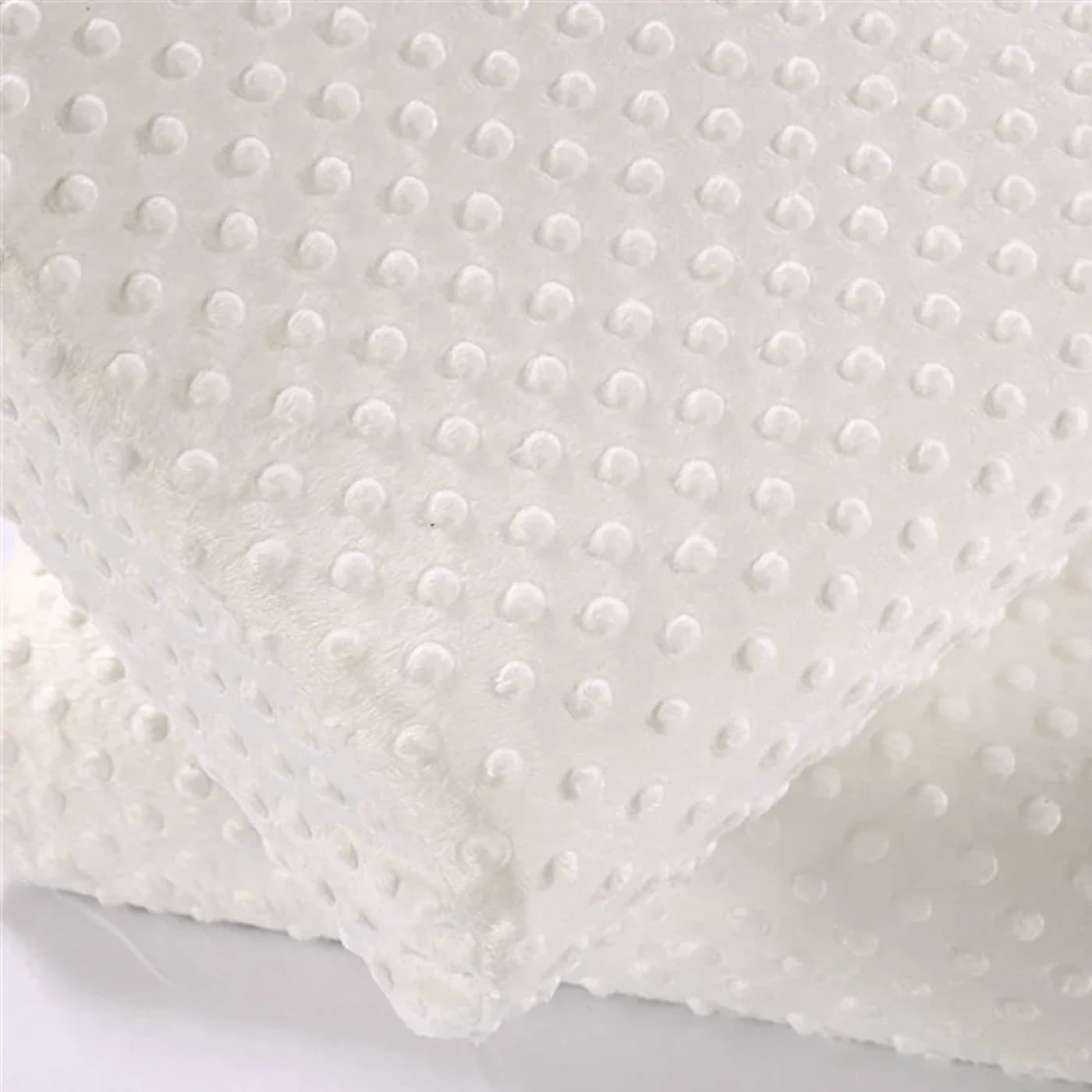
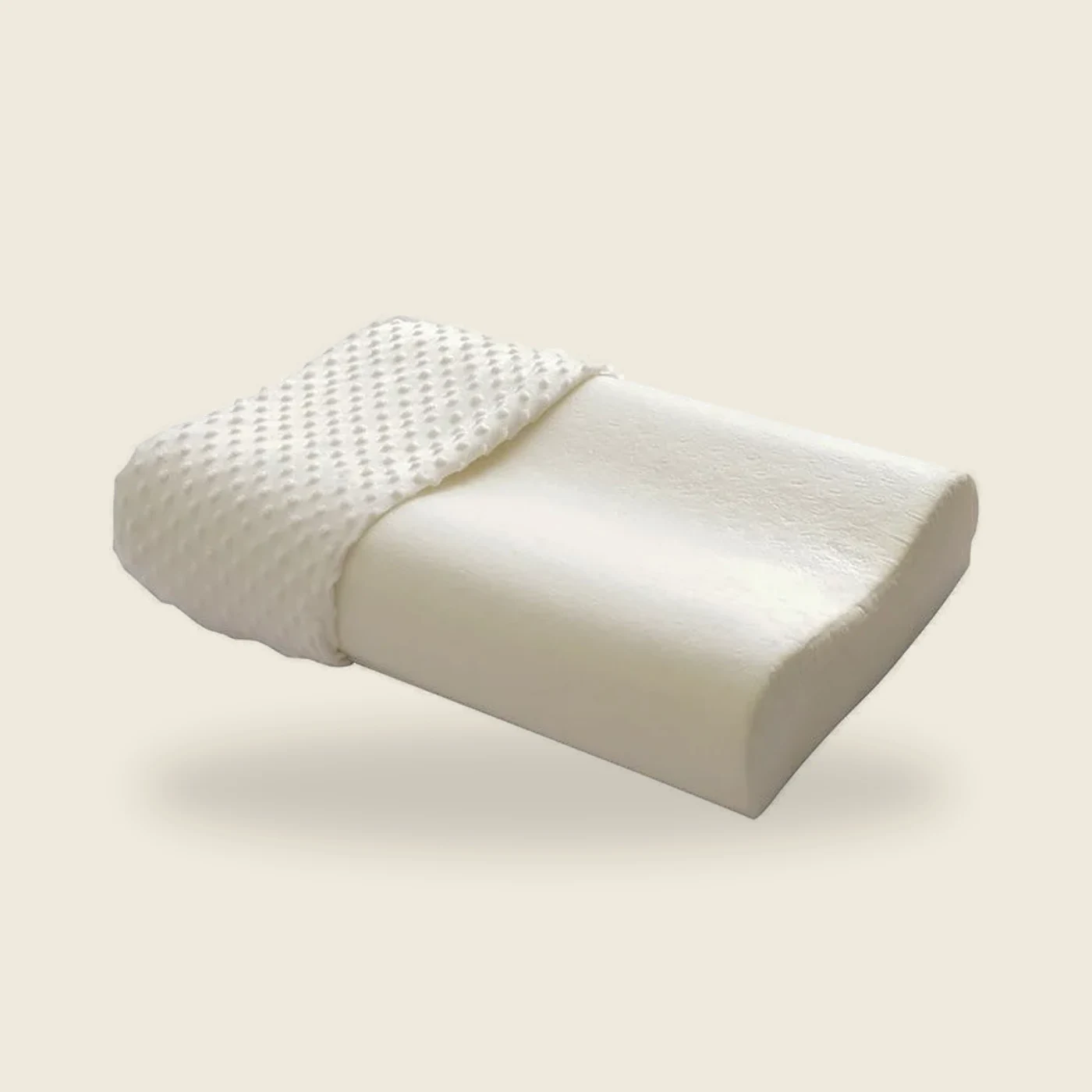
Care separates them quickly. Fibre and feathers often go into the machine whole, which is reassuring. Latex and memory foam are not washed: the core is aired, and the cover goes to the laundry. On the Nuage 50 the textured polyester and cotton cover comes off and is washed, the core is aired flat. It is not more demanding, just a different routine.
On allergies, many people sensitive to feathers turn to synthetic materials or latex, and a pillow that cannot be washed is protected by a regularly washed cover. On budget, expect roughly 10 to 30 € for fibre, 20 to 80 € for feathers and down depending on quality, 40 to 90 € for memory foam, 60 to 130 € for latex. Lifespan roughly follows price.
- ·Care: fibre and feathers often fully washable, latex and memory foam not washable, cover goes to the laundry.
- ·Allergies: people sensitive to feathers usually turn to synthetic filling or latex.
- ·Common budget: 10 to 30 € fibre, 20 to 80 € feathers, 40 to 90 € memory foam, 60 to 130 € latex.
- ·Common lifespan: two to three years fibre, three to five years memory foam and down, five to eight years latex.
How to choose by sleeping position
On the side you need height and stability, so a block. Memory foam and latex both work, and the difference is the feel: you sink into foam, you bounce on latex. The Nuage 50 carries two wave heights on the same pillow, 10 cm and 7 cm, and you switch by turning it over. The high wave is made for side sleeping.
On the back you need to stay low so the chin is not pushed towards the chest: the low 7 cm wave, a lightly filled fibre pillow, or a flat latex one. On the front you need as little height as possible, sometimes no pillow under the head at all. Finally, if neck or shoulder discomfort lasts or wakes you at night, speak to a health professional: a pillow is a comfort choice, not a treatment.
Latex and memory foam hold a stable height, feathers and fibre offer softness and wash more easily. Choose first by your dominant position, then by the feel you like, and only then by budget. A well chosen pillow is judged after three nights, not in a shop.
Frequently asked questions
What is the best pillow filling?+
None is best on every criterion. Latex and memory foam keep their height all night, which suits side sleepers. Feathers and fibre are softer, fold easily and wash more easily, which suits sleepers who change position often.
Latex or memory foam, what is the difference?+
Both hold their height, but the feel is opposite. Latex rebounds immediately and pushes back, memory foam sinks slowly and wraps the head. Latex runs cooler and lasts longer, memory foam follows the shape of the neck more closely.
Which pillow for someone allergic to feathers?+
People sensitive to feathers generally turn to a synthetic filling, memory foam or latex. In every case a regularly washed cover protects a core that cannot be washed. For personal advice, speak to a health professional.
The SEY Maison Circle
Every month, an exceptional piece. Never reissued.
The Drops principle: one high-end furniture piece per month, in a numbered edition. Once it's gone, it never comes back. Circle members are notified 48 h early, access each drop 24 h before everyone else, and receive our guides before publication.
Discover the Drops →